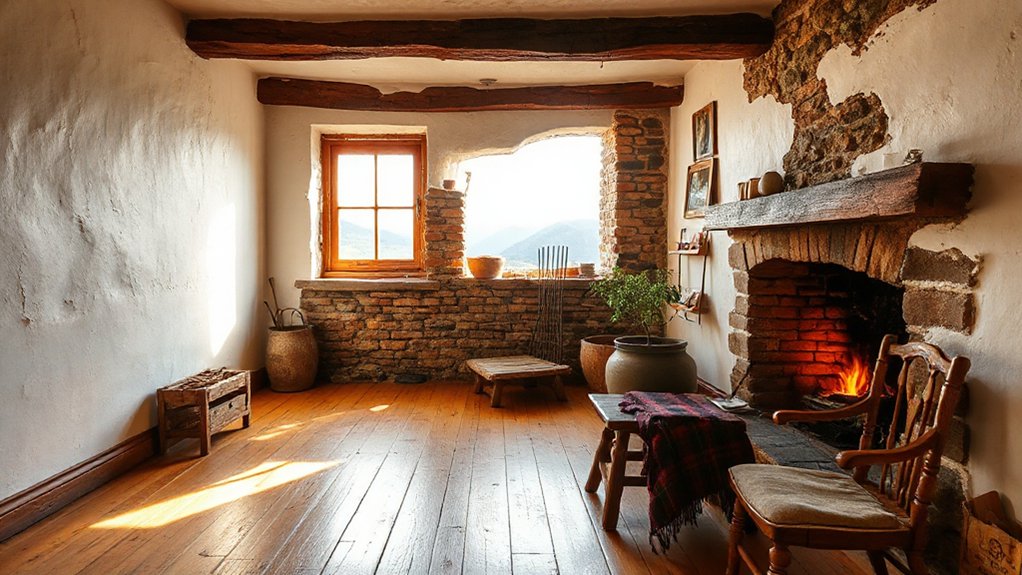
You’ll renew a Scottish cottage with a clear eye for heritage and modern comfort. Start by defining its character—assess style, structure, and story, then preserve beams and tracing while inspecting fasteners and joints. Use breathable plaster, lime-based finishes, and earth-toned palettes that patina over time. Plan layouts for contemporary living without breaking sightlines, and hide storage in alcoves or under stairs. Finish with authentic detailing, textures, and local crafts; more pragmatic steps await beyond this overview.
Define Your Cottage’s Character: Assess Style, Structure, and Story

To define your cottage’s character, start by measuring its style against its structure and its story: what era or lineage does the architecture whisper, and how have past lives shaped its layout, materials, and quirks?
You examine the Cottage entrance as a primary clue, noting door height, timber sash, and thresholds that hint at origin and intent.
Then, align floor plan with wind and light, tracing how stair lines, fireplaces, and chimney stacks speak to function and chronology.
Your Garden landscaping decisions should echo the same heritage logic, pairing stone paths with native groundcover, and selecting plants that honor age and context.
This precise, story-driven approach guarantees a cohesive identity without erasing defect or history.
Preserve Timber Beams and Tracing: What to Inspect
Preserving timber beams and tracing their history starts with a careful survey of every visible and hidden element—the shape, joinery, and patina that tell a story of craft and age. You’ll conduct a focused beam inspection, noting load paths, hollows, insect damage, and moisture signs that compromise stability.
Timber tracing becomes practical when you map posts, crowns, and ties against the original layout, preserving authentic connections and function. Document anomalies with measurements and close-up photos, ensuring future workers understand intent and materials.
Prioritize hidden cavities, fasteners, and treatment history to avoid speculative replacements. Maintain conservative restoration choices that honor historic fabric while ensuring safety and performance. Timely documentation supports informed decisions and respectful preservation.
- Inspect grain, joints, and fasteners for integrity
- Record moisture, rot, and insect indicators with timestamps
- Cross-reference findings with original plans and fabric clues
Cleaning and Stabilizing Plaster Without Damage
Cleaning plaster without damage starts with a careful assessment of the surface and substrate to determine compatible methods. You inspect for hairline cracks, moisture signals, efflorescence, and dusting, then document conditions before any intervention.
In plaster cleaning, you prioritize non-abrasive techniques: soft brushes, low-pressure misting, and gel cleaners that target grime without dissolving binders. Avoid over-wetting to prevent capillary damage and mold growth.
For stabilization, address loose fragments with a reversible consolidation resin, applied sparingly to anchor flakes without creating stiffness disparities. Test a hidden area first, observing for color change, gloss shift, or texture alteration.
Maintain historical integrity by selecting lime-based or compatible polymer blends when needed, ensuring breathability. Document every step for future maintenance, and recheck stability after cleaning to confirm long-term plaster stabilization.
Color and Material Palettes for a Timeless Scottish Look

A timeless Scottish look hinges on a palette that respects the landscape’s geology and the region’s architectural past. You’ll select colors and textures that echo stone, peat, and wood, ensuring every choice feels earned, not ornamental.
Material palettes prioritize honesty: lime plaster, slate, oak, and wool bring tactile truth to rooms, corridors, and nooks. Emphasize natural pigments that patina with age, while avoiding garish contrasts that shout modernization.
Artistic patterns emerge in subtle embroidery, tile work, and woven textiles, reinforcing heritage without pretension.
Color symbolism guides emphasis: greens for renewal, grays for restraint, earthy ochres for warmth, and inky blues for calm.
You fine‑tune lighting and finish to preserve texture, letting aging patina speak.
- Natural stone, lime plaster, and timber combos
- Subdued chroma with accent color cores
- Textile motifs rooted in regional heritage
Layout Foundations: Plan for Modern Comfort, Respect History
You design spatial flow with intent: keep rooms logically connected, but allow identity to breathe through careful thresholds, built-ins, and material shifts that echo stone, timber, and wool.
Layout foundations balance modern comfort with reverence for place, prioritizing adaptable cores—kitchens, baths, and entries—while preserving original sightlines and alcoves.
Define zones through subtle alignments of doorways, stairs, and variation in floor levels, so circulation feels natural yet legible.
Use landscape gardening cues outside to inform porch relationships and exterior thresholds, reinforcing indoor–outdoor connections.
Integrate interior art as a quiet anchor, selecting pieces that reflect Scottish heritage without overpowering spaces.
Specify durable finishes, scale-sensitive furniture, and hidden storage to reduce clutter, ensuring each room respects history while supporting contemporary living.
Durable, Traditional Fixtures With Modern Performance
You’ll start by selecting durable, traditional fixtures that honor Scottish craft while offering modern performance. Consider polished metal taps, enamel sinks, and timeless timber handles that resist wear without sacrificing character.
Together, these choices establish lasting reliability and a sense of heritage that supports everyday comfort.
Durable, Traditional Fixtures
- Select brass or pewter hardware with proven, corrosion-resistant finishes for door and drawer pulls, honoring craft while enhancing longevity.
- Pair period-inspired sconces and ceiling fittings with secure wiring and discreet LED performance, preserving glow without compromising safety.
- Integrate traditional joints and mounting methods that tolerate Scottish humidity, maintaining alignment and ease of maintenance.
Modern Performance Features
You’ll notice how landscape integration is achieved through discreet soffit lighting and weatherproof switch plates that disappear into eaves.
In the interior, durable brass or nickel fixtures pair with moisture-tolerant finishes, preserving patina while resisting humidity shifts.
You stay precise as you select performance glass for porch doors and lintels, ensuring airtight seals without compromising character.
Cabled interiors remain tidy, thanks to hidden conduits and modular outlets that respect architectural lines.
These choices create interior accents that read as timeless, not utilitarian.
The result is a residence that ages gracefully, combining heritage detail with modern reliability and effortless maintenance.
Lighting to Highlight Heritage Features
You’ll select accent lighting that draws attention to carved cornices and stonework without overpowering them. Consider heritage feature illumination that emphasizes texture and depth, using warm, reversible tones to preserve authenticity.
Layered warmth techniques will help you balance visibility and atmosphere, inviting closer inspection of every historical detail.
Accent Lighting Choices
Accent lighting can elevate heritage features without overpowering them, guiding the eye to timber beams, inlaid plaster, and stonework with precise, low-profile fixtures. You’ll select sources that deliver warm, dimmable light, avoiding glare that washes textures.
Position fixtures to cast soft shadows, enhancing dimensional depth while preserving charm. Use color temperature around 2700–3000K to sustain a cozy, historic mood and preserve the room’s authentic character.
Consider recessed rails or adjustable spotlights that stay unobtrusive yet intentional for mood enhancement.
- Install compact, glare-free track lighting to emphasize archways and cornices without drawing attention away from crafts.
- Choose hidden LED uplights along baseboards to reveal stonework with controlled spill.
- Pair warm pendant accents with dimmers for flexible, heritage-aware ambience.
Heritage Feature Illumination
Precision matters: choose narrow-beam, warm-temperature sources that reveal texture without glare. Heritage lighting should emphasize material truth, not theatrical effect, so avoid saturated colors or excessive brightness near delicate surfaces.
Position fixtures to skim along grain, cast gentle shadows, and reveal patina rather than conceal it. Favor discreet hardware and historic fixtures that align with your cottage’s era, ensuring compatibility with existing wiring and spacing.
Document the illumination plan for future maintenance, and prioritize consistency with the home’s character. Historic fixtures guide your choices, keeping the heritage glow authentic.
Layered Warmth Techniques
Layered warmth starts with a measured hierarchy of light that reveals texture without overpowering it. You layer sources from wall-wash to pin-point accents to sculptural grazes, so each cue reads clearly and supports the cottage’s character.
You emphasize thermal layering, balancing warmth with daylight to protect historic surfaces while creating inviting contrast. Use dimmable fixtures and warm-toned LEDs to maintain authenticity, avoiding harsh glare that erodes texture.
Subtle uplights can emphasize timber beams, while task lighting on work surfaces preserves readability of details. Layered warmth hinges on restraint, ensuring every lamp serves a purpose and fits the scale of rough-plaster walls, slate floors, and aged wood.
- Wall-wash palettes that enhance grain without washing color
- Pin-point accents aligned to architectural features
- Sculptural grazes tuned to material texture and heritage
Insulation That Keeps Heat Without Ruining Texture

If you’re renovating a Scottish cottage, choosing insulation that traps heat without compromising texture is essential. You’ll prioritize materials and assemblies that add warmth yet respect wall and ceiling character.
Opt for breathable, locally sympathetic options that reduce drafts without creating flat, modern surfaces. Cottage insulation should combine high performance with low visual impact, preserving lime plaster or exposed stone where it defines rooms.
Focus on airtight details at joints, eaves, and service penetrations—small gaps undermine heating efficiency more than bulk. Use mineral wool or natural fiber blends behind traditional claddings, paired with reflective barriers only where appropriate for heritage fabrics.
Maintain calibrated insulation thickness to avoid visual distortion of profiles, ensuring heating efficiency remains steady without muting the cottage’s texture.
Flooring That Honors History, Feels Modern Underfoot
You’ll feel the past in every plank, while the surface stays clean and contemporary with precise, tight grain.
Choose rustic yet modern boards paired with timeless wood finishes to balance character with durability. This approach invites you to walk a line between heritage detail and present-day comfort.
Rustic Yet Modern Planks
Looking for flooring that nods to history while staying current? You want rustic yet refined planks that pair well with today’s interiors. Precision matters: the right boards carry visible grain, tight joints, and authentic texture, while modern accents keep sightlines clean and light.
Choose planks with subtle variability to evoke craft without chaos, and seal with a matte finish to preserve breath of the old house. The result is flooring that feels lived-in yet intentional.
- Match rustic planks with muted taupes and charcoals to highlight grain without overpowering rooms.
- Combine with narrow trim and concealed fasteners for seamless, contemporary flow.
- Favor widths that vary slightly, yielding character while maintaining structural honesty.
This approach respects history, delivers durability, and invites calm, functional living.
Timeless Wood Finishes
Apply a low-sheen, matte finish to preserve subtle textures and prevent glare under Scottish light. Opt for oak, ash, or reclaimed pine in warm, honeyed tones to evoke Vintage charm while maintaining modern neutrality.
Plan for consistent, tight joints and square edge profiles to honor heritage without feeling fussy. Balance with characterful sites—wide plank seams, eased progressions, and purposeful bevels.
Consider UV-inhibiting finishes to slow patina shifts, ensuring rustic elegance endures across generations. Your floors become a quiet, durable backdrop that anchors heirloom furniture and everyday moments.
Sustainable Upgrades for a Cozier Cottage
Sustainable upgrades start with materials and methods that respect the cottage’s fabric, minimize waste, and reduce ongoing energy use. You select locally salvaged timber, low-embodied-energy insulation, and breathable lime plasters to preserve texture, while modern airtightness reduces drafts without masking character.
You tune interior color schemes to complement aged timber and stone, using earthy palettes that enhance light and space. You document detailing to guide future maintenance, ensuring reversible interventions.
You situate garden pathways to improve moisture management and access without altering heritage silhouettes.
- Use locally sourced, reclaimed timber for trims and shelves, sealed with breathable finishes.
- Implement lime-based plasters and clay paints, paired with high-performance ceilings and continuous insulation.
- Plan hardscape routes that channel rainfall, integrate native plantings, and echo cottage proportions.
Windows, Doors, and the Highlands’ Character
You’ll balance windows’ proportions and scale to reflect Highland light and views, choosing sashes and lintels that read as authentic yet practical.
Doors with Highland charm marry timber detailing, sturdy frames, and traditional thresholds to invite the landscape inside without losing energy efficiency.
Preservation meets modern updates by pairing historic glazing and hardware with contemporary safety and performance standards, ensuring clarity, durability, and character.
Windows Proportions and Scale
The proportions and scale of windows and doors define the Highlands’ character, so choose openings that read as integrated elements of the cottage rather than standalone features. You’ll guarantee harmony by aligning sill lines and glazing with existing chimney stacks and rooflines, preserving a steady rhythm across elevations.
Focus on proportionate glazing to frame views without overwhelming facades, and respect traditional sash proportions to maintain historical cadence. Window symmetry and balanced muntins contribute to a cohesive exterior, while detailed joinery and subtle rebates reduce visual bulk.
Allow daylight to permeate interiors without sacrificing solid, time-worn character.
- Use evenly spaced openings that mirror internal layouts and exterior rhythms.
- Prioritize sash proportions that echo classic Highland cottages.
- Match mullion and muntin treatment to surrounding materials for unity.
Doors With Highland Charm
Crafted doors are the tactile punctuation of a cottage’s exterior, weaving warmth and practicality into the Highlands’ rhythm. You select timber with tight grain and traditional joints, ensuring longevity and a heritage-accurate silhouette. Aged paint or subtle oil finishes highlight the door’s profile, with brass or pewter hardware that echoes hillside settlements.
You tailor openings to flow with interior circulation, balancing light and privacy while preserving scale with window alignment nearby. Details matter: mortised panels, chamfered edges, and a kick plate that protects against Highland weather.
Consider garden landscaping as an extension of entry character, guiding approach paths to frame the door. Inside, harmonize with interior color schemes that echo stone, moss, and timber, reinforcing cohesion from threshold to living spaces.
Preservation Meets Modern Updates
Preservation and modern updates can coexist gracefully, balancing the Highlands’ enduring character with today’s comfort. You’ll harmonize windows, doors, and surrounding features to maintain authenticity while improving efficiency and usability.
Precision matters: select profiles that echo historic forms, but use contemporary glazing for insulation, UV protection, and reduced drafts.
Preserve sightlines to historic gardens, framing them like living art rather than barriers to view. When updating openings, document original details and upgrade hardware with period-appropriate finishes.
Integration should feel seamless, not contrived, so choose textiles and textures that nod to Tradition—think Traditional textiles as accent cues and warm, era-inspired finishes.
1) Replace glazing with high-performance units that mimic old panes while meeting standards.
2) Use authentic moldings and astragals to retain scale.
3) Garden-facing frames optimize light and preserve Historic gardens.
Smart Storage That Keeps Charm Intact

Smart storage in a Scottish cottage should blend seamlessly with its character, so select solutions that disappear when not in use and reveal their utility only as needed. You aim for space optimization without shouting it, using built-in alcove shelving, pull-out pantry niches, and lid-stowed boxes that tuck beneath window seats.
Choose lidded chests for dining linens that double as seating, and wall-hung units that leave floor space untouched. Narrow, deep drawers fit in under-tarred stair recesses, preserving precious footprint while improving access.
Opt for traditional materials—oak, ash, or painted pine—finished with clear sealants to prevent glare. Prioritize quiet mechanics, soft-close doors, and rounded edges to honor heritage.
Smart storage becomes invisible, yet your cottage maintains its character and practical efficiency.
Kitchen Refreshes With Rural Soul and Modern Cadence
When you refresh a Scottish kitchen, you balance rustic warmth with contemporary rhythm, restoring the soul of the space while embracing modern cadence. You’ll weave heritage details with clean lines, ensuring every surface speaks with quiet intention.
- Integrate a reclaimed timber island and matte brass hardware to cue rural texture without overpowering the room.
- Layer subdued tones with a splash of garden-green accents, aligning cabinet fronts, countertops, and a compact pantry for cohesive flow—and place garden pathways imagery in interior artwork to mirror outdoor textures.
- Curate a gallery of restraint: one striking piece, balanced by two smaller works, maintaining visual focus and heritage tone.
This approach honors craft, supports practical use, and elevates the kitchen’s cadence without clutter.
Exterior Finishes: Stone, Render, and Curb Appeal
Exterior finishes anchor a cottage’s curb appeal by harmonizing texture, color, and light. You’ll weigh stone, render, and paint with an eye for longevity and legacy, ensuring every choice respects local craft.
Stone lends gravity and warmth; select rubble or cologne textures that weather evenly, avoiding sharp contrasts. Render can soften edges, but you’ll test lime-based mixes for breathability and patina.
A restrained palette—cream, gray, or moss—enhances landscape integration and reduces visual jarring.
Curb appeal hinges on proportion: consider door and window rhythm, eaves, and stair detailing. Plan garden pathways to guide movement toward entradas and porches without crowding sightlines.
Inside, let exterior tones influence interior decor, creating a cohesive flow that remains true to heritage and family story.
Personalizing Your Cottage While Keeping Its Story Alive
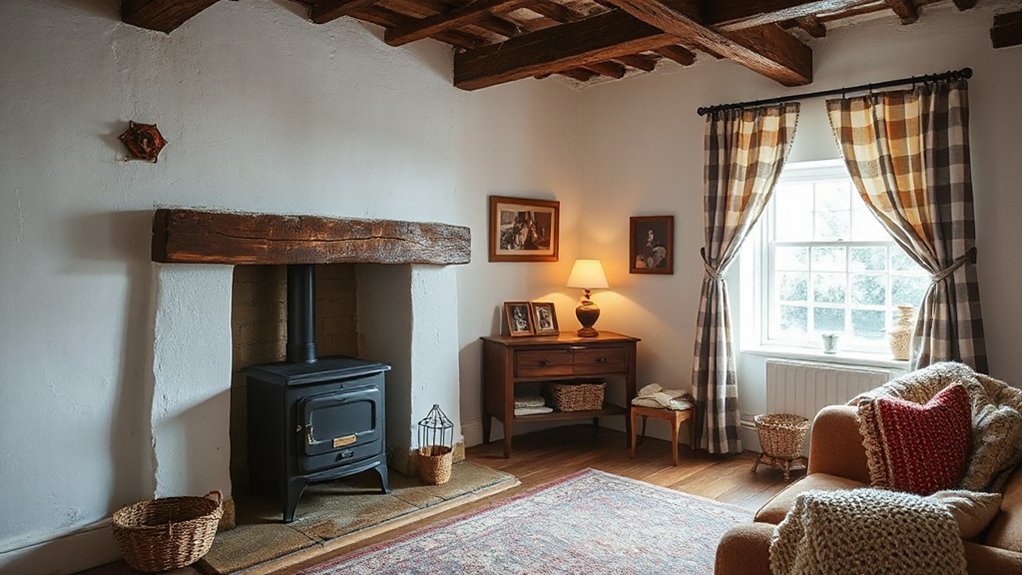
Personalizing your cottage while honoring its story means making thoughtful, tangible choices that reflect family history without eroding its character. You’ll weave memory into everyday details, selecting elements that age gracefully and age well, not clash with the original fabric. Precision guides you: preserve existing timber, reveal hidden patinas, and document every swap in a small, archival notebook.
Garden spaces become living anecdotes, blending gardening tips with heirloom varieties that thrive in Scottish climates. Local crafts anchor rooms in place and time, supporting artisans who respect proportion and patina.
- Integrate vintage hardware and locally sourced textiles for a cohesive narrative.
- Curate a rotating display of family artifacts alongside period-appropriate reproductions.
- Label changes with dates and sources to reinforce provenance.
Frequently Asked Questions
How to Balance Modern Comfort With Centuries-Old Textures?
You balance modern comfort with centuries-old textures by prioritizing interior lighting and thoughtful furniture placement, embracing warm materials, preserving original features, and layering contemporary comforts without overpowering historic charm.
Which Preservation Steps Require Professional Assessment?
You should seek expert consultation for preservation steps that require professional assessment, because sudden reveals threaten structural integrity if misjudged, and only a precise, heritage-aware plan protects your cottage’s future. Stay vigilant, and secure expert consultation now.
What Budget Range Covers Essential Character-Preserving Upgrades?
You should budget roughly £20,000–£60,000 for essential character-preserving upgrades, depending on scale, scope, and finishes. Beware restoration pitfalls and Budget constraints, as hidden repairs can spike costs while you maintain heritage integrity and structural safety.
How to Avoid Over-Restoration That Erases Scottish Charm?
Soft shadows guard authenticity; you’ll avoid over-restoration by prioritizing restraint. You balance interior lighting and landscaping design, preserving patina while modernizing only what enhances heritage, not overwhelms it, ensuring you retain Scottish cottage charm with careful edits.
What Licensing or Permits Apply to Historic Cottage Work?
You’ll need to check local authority permissions for historic properties; expect permissions tied to Architectural guidelines and Heritage restrictions. You’ll typically apply via the planning department, possibly listed-building consents, and guarantee inspections align with conservation officer recommendations.
Conclusion
You’ve mapped a cottage that honors its origin while embracing today’s comforts. By focusing on character-defining features—timber beams, plaster texture, and stone skin—you keep the story breathing. A compelling stat to drop: homes with preserved period elements report higher resale value and buyer interest, even in modern markets. Balance is key: reuse, repair, and smart storage preserve charm without clutter. Your refreshed layout, palette, and weathered finishes betray care for place—and invite future chapters in its long, Scottish life.