A nursery corner in your bedroom blends calm, safety, and play into one compact zone you’ll actually use. Start with layered lighting—ambient, task, and dimmable options—plus soft textiles in neutral or pastel tones to create a cocoon-like feel. Use modular, low-height storage with labeled bins, and keep cords tucked away. Include grow-with-your-baby sensory textures and gentle sounds, plus removable décor that grows with them. Want more tips and setup ideas to refine this space?
Why a Bedroom Nursery Corner Works for Sleep and Play
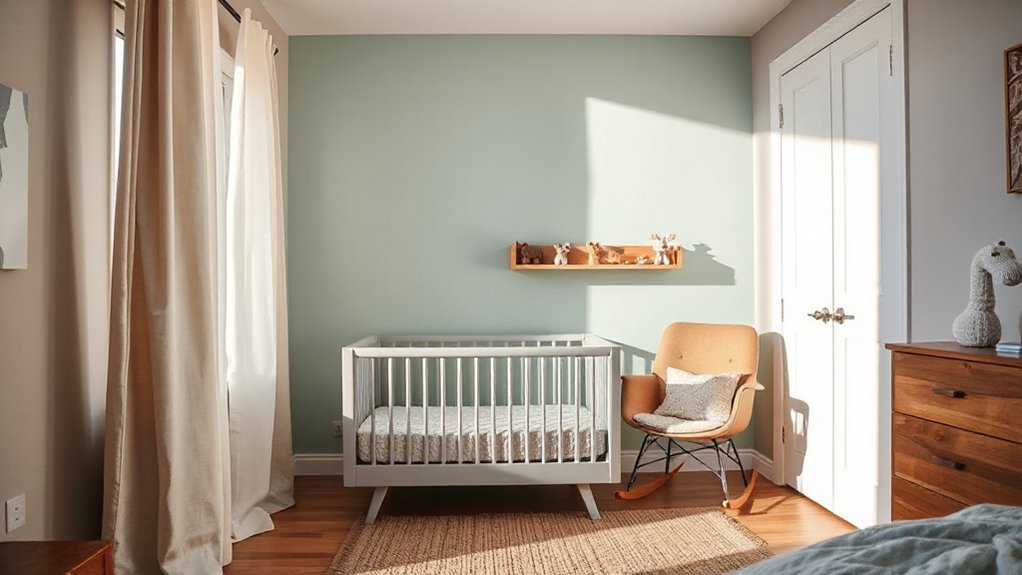
A bedroom nursery corner makes sleep and play feel cohesive rather than scattered, because design signals calm at rest and invites curiosity during wakeful moments. You create zones that align with daily rhythms, easing progressions between feeding, napping, and independent play.
Select nursery themes that resonate with your routine and space, then anchor each area with repeat elements—soft textiles, a low mirror, accessible storage. Prioritize safety considerations: stable furniture, electricals concealed, cords out of reach, and non-slip rugs.
Keep surfaces clean and uncluttered to reduce overstimulation, while generous floor space invites exploration without hazards. A thoughtful layout guides you toward calmer nights and more focused play sessions.
With intentional color, texture, and contrast, you’ll foster comfort, responsiveness, and enduring calm.
Cozy Lighting and Textiles to Create a Calming Corner
Soft, warm lighting and tactile textiles set the mood, so you’ll want a dimmable lamp and soothing fabrics within easy reach. Think gentle hues, natural fibers, and textures your baby can feel without overstimulation.
Let’s explore how cozy lighting ideas and calming textile touchpoints come together to create a serene corner.
Cozy Lighting Ideas
Create a calming corner with layered lighting that blends warm ambient, task, and accent lamps, then soften the glow with dimmable options and light-filtering textiles. You’ll balance brightness by pairing a low, steady ambient glow with a focused task light for late-night feeding or reading.
Add an accent lamp to highlight a favorite plush or wall art, creating depth and contrast. Choose dimmers to smoothly adjust mood without harsh changes. Favor warm color temperatures to support soothing wake-sleep patterns.
Use string lights sparingly as a gentle accent, avoiding overpowering illumination. Position lighting away from direct eye contact with baby and secure cords.
Integrate blackout-friendly curtains for daytime rest and maintain accessibility for quick dimming or switch-toggling. Practical, stylish, and easily adjustable for evolving nursery needs.
Calming Textile Touchpoints
Layer textures and temperature together to cue calm: choose textiles that feel soothing against skin and pair them with lighting that wraps the room in warmth.
You’ll design calming textile touchpoints by layering sensory fabrics that respond softly to movement and touch. Select fabric textures with depth—mohair, brushed cotton, velour, and jersey—that invite strokable interaction without overpowering the senses. Keep color restraint to maintain serenity: quiet neutrals or gentle pastels read as soothing in low light.
For practical setup, implement a small hierarchy: a plush rug near the crib, a breathable crib bumper, and a lightweight canopy or throw for tactile variety. Ensure textiles are easy to clean and durable, prioritizing safety and accessibility.
Integrate dimmable lights to synchronize warmth with texture, reinforcing a calm, cocoon-like corner.
Smart, Decor-Friendly Storage That Stays Tidy
If you want a nursery that looks polished and stays clutter-free, opt for smart, decor-friendly storage that hides the mess without sacrificing style. Choose compact storage solutions that fit your space and routine, like modular units that stack neatly or slim credenzas with closed drawers.
Use labeled bins and pretty baskets as decor accessories, so bins double as styling cues while containing toys, wipes, and essentials. Install wall-mounted shelves at eye level for quick access to the daily must-haves, and pair them with soft-close organizers to mute noise.
Keep cords hidden with encloses or cord clips. Prioritize white, soft neutrals, or wood tones to maintain cohesion. Rotation-worthy pieces make maintenance easy, reducing visual clutter and supporting a calm, grown-up corner.
Grow-With-Your-Baby Sensory Elements (Textures, Sounds, and Motifs)
Texture, sound, and motif matter as your baby grows: you want stimuli that are gentle, engaging, and easy to update over time. You’ll curate sensory textures that invite touch without overwhelming tiny hands, pairing sisal, velvet, and satin with high-contrast edges for visual interest.
Integrate soft soundscapes—crinkle fabric, rattle, gentle wind chimes—to evolve with milestones, not distract from sleep.
Choose motif designs that scale: simple shapes early, then patterned prints or embroidered icons that mirror growth stages.
Keep essentials close: a tactile play rug, a fabric book, and a noise-friendly mobile.
Rotate textures seasonally and swap motifs as preferences shift, preserving continuity with a cohesive color base.
This approach delivers adaptable, stylish stimulation that supports exploration and calm.
Calming Bedroom Nursery Color Palettes: How to Apply Them
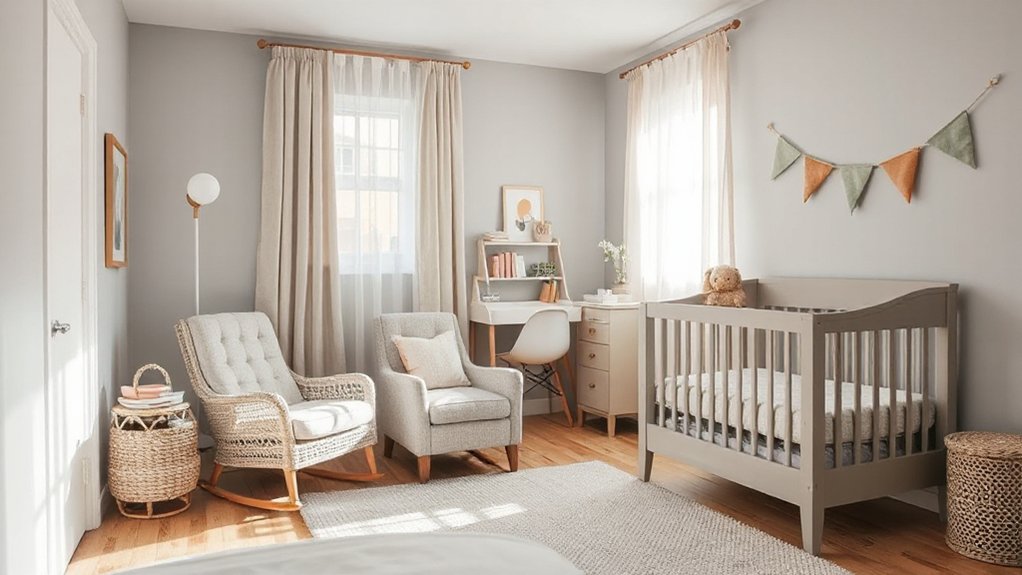
A calming nursery color palette starts with your baseline: a soft, cohesive set that travels across the room and through every milestone. You select muted neutrals as anchors, then layer with two complementary accent hues drawn from nursery color schemes. Aim for contrast—calm blues or gentle blushes paired with warm greige or sage—so you can switch accents as tastes evolve.
Apply color to walls, furniture, and textiles in balanced ratios: roughly 60/30/10 to keep harmony. In the bedroom, use calming bedroom palettes that support focus and rest: paint, curtains, crib linens, and rug in coordinated tones. Introduce texture with woven blinds or cotton blends to soften light.
Finally, test lighting scenes; dimmable options reinforce mood shifts without overwhelming the space.
Accessible Layouts for Night Feeds and Quiet Reading
We’ll map your night feeds and quiet reading into a seamless flow, prioritizing reach, light, and accessibility.
Arrange a compact, drift-friendly setup with a reachable switch, soft lighting, and a sturdy chair that supports long feeds or reads.
Let’s start a conversation about what works best for you and your little one.
Night Feed Accessibility
When you’re feeding at night, layout matters as much as lighting. You’ll optimize paths from bed to rocking chair, keeping noise minimal and distance short. Position feeding stations within arm’s reach of a soothing lamp, avoiding glare that jars baby settle.
Create a clear, unobstructed route so you don’t stumble for wipes or bottles. Use a compact changer near the feeding space so diaper changes stay seamless, with a small basket of essentials ready to grab.
Dim, consistent lighting helps you stay calm and focused, supporting quick progression between asleep and awake states. Choose a chair with ergonomic support and a footrest to reduce strain.
Prioritize accessibility, tidy storage, and discreet power access for pumps or monitors.
Quiet Reading Nook Layouts
Quiet reading nooks should pair quiet comfort with practical layout, so you can switch from night feeds to reading without displacing your routine. You’ll want a compact seating zone that stays tidy after feeds, with a small, supportive chair or a cushioned rocking seat placed near soft lighting.
Use a low, easily reachable shelf for baby essentials and a single, durable surface for a current book or tablet. Prioritize safe materials and rounded edges to support baby safety, and keep cords out of reach.
Choose nursery decor that blends soothing colors with tactile interest—plush throws, a textured rug, and a blackout curtain for nap times. Ensure easy-clean fabrics and keep the space free of clutter for calm, focused reading.
DIY Peek-A-Boo Shelves and Toy Stations
Peek-a-boo shelves turn play into organization. You’ll craft simple, sturdy shelves with cutouts or doors that reveal toys as you open them, keeping chaos tucked away. Choose low heights and rounded edges for safety, then mount at kid height to encourage independent access. Use shallow cubbies for books, plushes, and blocks, and deeper sections for larger toys.
Add hidden storage within the frames—pull-out baskets or flip lids—so you don’t sacrifice style for function. Finish with decor accents like soft touches, pastel trims, or wood grains that complement the nursery palette. Label fronts with gentle icons or photos to aid recognition.
Keep cleaning supplies out of reach and rotate a small toy set to maintain fresh interest. Your space stays organized, inviting, and visually cohesive.
Fast-Install Nursery Gear for a Neat, Ready Corner
Quickly ready your nursery with fast-install gear that keeps a neat corner within reach. You’ll set up a compact, modular station that minimizes clutter and maximizes accessibility.
Choose a closed-storage unit with adjustable shelves, a hanging organizer, and a quick-mount changing tray to reduce setup time. Keep essentials in reach, while tucking cords and bulky items away to maintain a clean look.
Look for rustproof hardware, non-slip bottoms, and wall-mount mounts that meet safety guidelines without sacrificing style. Opt for monochrome nursery decor accents that blend with existing furniture, plus labels on drawers to speed cleanup.
This approach delivers a polished, practical setup you can maintain with routine checks, ensuring your neat corner stays organized as baby gear grows.
Personalize the Space: Details That Make It Yours
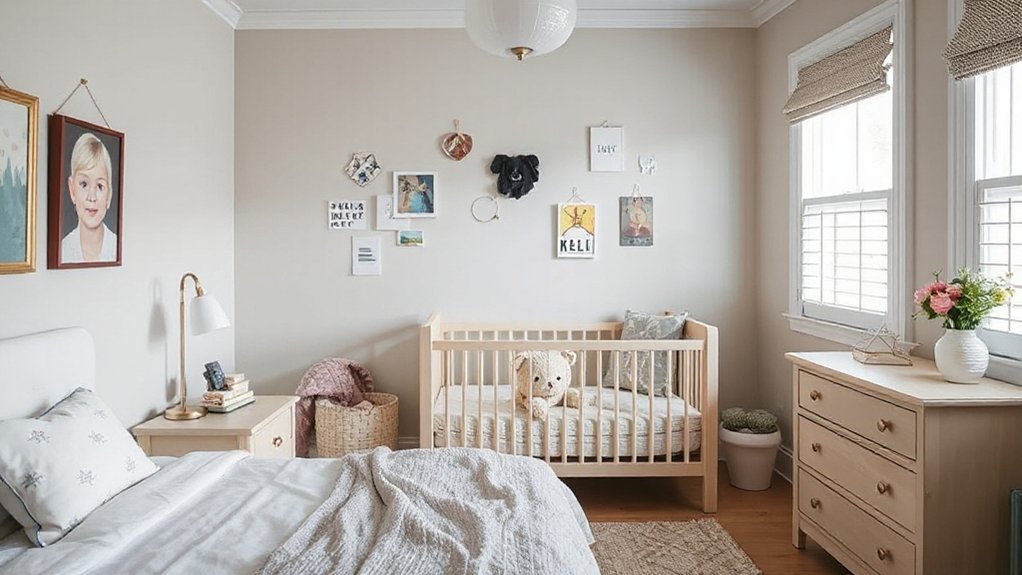
You’ve got the basics in place, now it’s time to tailor the space to your daily routines and personal vibe. Personalize the nursery by aligning decor with your rhythm, not trends you’ll tire of. Choose nursery wall decor that reflects your style—calm neutrals, bold accents, or playful illustrations—so you feel pulled into the room each day.
Reconsider nursery furniture arrangement to optimize flow: keep high-use items within easy reach, create a clear nursing corner, and ensure safe, open pathways. Add tiny, meaningful details—a rotating frame lineup, a favorite rug, or a soft blanket you love.
Keep surfaces clean and labels simple for quick tidying. A cohesive palette and purposeful accents make the space feel uniquely yours, practical, and inviting.
Frequently Asked Questions
How Can I Soundproof a Small Nursery Corner?
Yes, you can soundproof a small nursery corner using soundproofing techniques like door seals, acoustic panels, and soft furnishings. Minimize nursery corner noise with plush rugs, heavy curtains, and strategic furniture placement for practical, stylish results.
What Are Budget-Friendly Calming Decor Ideas?
Calmness blooms like a soft dawn: you mirror it with soothing wall art and plush floor cushions, creating a serene nook you’ll actually use. You’ll savor budget-friendly decor that feels curated, practical, and quietly luxurious for days ahead.
Which Plants Are Safe for Nurseries?
You should know safe options include snake plant, pothos (not ideal in bright spots), and spider plant for plant safety and nursery greenery. Avoid heavy scents. Prefer low-maintenance varieties and monitor soils; your nursery stays calm, airy, and safe.
How Often Should I Rotate Sensory Items?
Allegorically, you’re tending a garden of senses; rotate items weekly to keep growth steady. You should mix sensory play and item rotation, swapping textures and sounds to sustain curiosity and prevent overstimulation, while you stay practical and stylish.
What Is the Best Height for Storage and Shelves?
The best height for storage and shelves is eye-level for easy access, with lower bins for toys and higher closed cabinets. Use smart storage solutions and deliberate shelf placement to keep essentials within reach and visually balanced.
Conclusion
You’ve created a calm, multifunctional corner that grows with your little one. Keep items within easy reach, and swap textures and toys as needs shift. Let lighting do the mood‑setting work, not the glare of overheads. Your space should feel like a gentle retreat, practical and polished. Think of it as a well‑edited capsule, where every piece shines briefly and then quietly fits away. It’s a stylish, cozy nook—like a soft, well‑worn sweater you can’t stop touching.