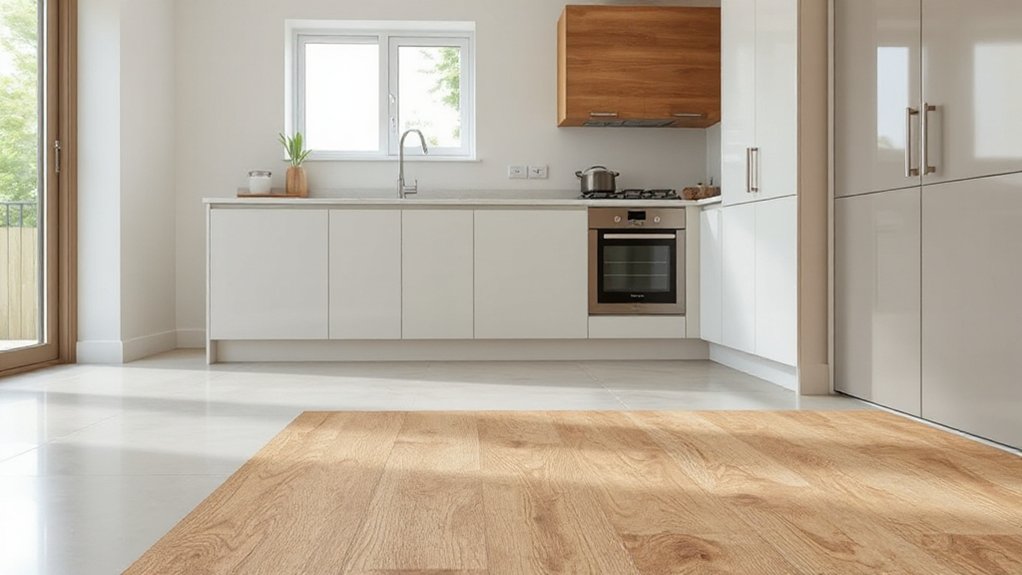
Take this kitchen scenario: you spill red wine on a vinyl floor and wipe it away without a stain, while a ceramic tile shows no wear after years of heavy use. You want durability, style, and easy upkeep, but you also need to take into account budget and fit with UK conditions. There’s more to it than looks—grout, moisture, and installation quality matter. So, what options best balance longevity and cost for your space? Let’s compare the top choices.
What Makes UK Kitchen Floors Durable

Durable UK kitchen floors blend hard-wearing materials with precise installation and smart maintenance. You prioritize resilience, so you choose proven flooring material that withstands spills, heat, and traffic.
Durability starts with the right backing, wear layer, or base, then aligns with your room layout and family habits. You’ll value consistent performance from a tight floor joint and steady substrate, reducing flex and cracking over time.
Installation techniques matter as much as the material itself, ensuring flatness, correct expansion gaps, and moisture control. Seek products with robust warranties and easy upkeep, since routine care prolongs life.
Avoid shortcuts, as subpar underlayment or rushed fitting erode longevity. With thoughtful material selection and precise installation, your kitchen floor stays stylish and sturdy for years to come.
How to Compare Vinyl and Laminate for Value and Upkeep
Vinyl and laminate flooring are common contenders for value and upkeep in a kitchen, each offering distinct strengths. You’ll see vinyl’s moisture resistance and cushioned feel, versus laminate’s crisp visuals and easier installation.
For value, compare price per square metre, longevity, and warranty terms, then weigh maintenance needs like cleaning products and reviving scratches. In daily use, consider spill resilience, stain resistance, and how often you’ll replace or refinish a section.
If you prize luxury finishes, vinyl now mimics stone or timber with convincing textures, while laminate earns points for sharp graphics at a lower cost. Eco-friendly options exist in both, so check for recycled cores or formaldehyde-free adhesives.
Choose the option that aligns with your kitchen’s traffic, style, and sustainability goals.
Ceramic vs Porcelain: Heat Tolerance and Grout Care
Ceramic and porcelain tile differ mainly in heat tolerance and grout care, so your choice hinges on the kitchen’s heat exposure and maintenance routine.
In practical terms, porcelain offers higher heat resistance, making it a safer bet near ovens, hobs, and radiant warming pads. Ceramic tiles can handle everyday cooking heat, but prolonged high temps may stress glaze and cause tiny cracking over time.
For grout maintenance, porcelain’s denser body resists staining and moisture better, simplifying cleaning and longevity. Both types benefit from proper sealing and routine wipe-downs, yet porcelain typically requires less ongoing upkeep.
If you prioritise low-maintenance heat resilience, choose porcelain; if you value more design flexibility at a gentler price, ceramic can still perform well with diligent care.
Engineered Wood: Warmth, Moisture Resilience, and Install Tips

Engineered wood brings the warmth of real wood with better moisture resistance and easier installation than traditional hardwood.
In kitchens, it blends a premium look with practical resilience, holding up to spills and humidity when properly installed.
You’ll benefit from a stable core that defeats warping, paired with a top veneer that mirrors solid wood’s aesthetics.
Choose bite-sized planks with click-lock or glue-down options for a tight, kitchen-grade fit.
For moisture resilience, guarantee underlayment and vapour barriers suit your space, and seal edges where moisture risk is highest.
Maintain with routine wipe-ups and UV-friendly finishes that resist scuffs.
Opt for boards with a robust wear layer and reputable accredited installers to secure longevity and a seamless, contemporary finish in your UK kitchen.
Natural Stone Floors: Beauty With Practical Maintenance
Natural stone floors deliver timeless beauty, but they demand practical maintenance to stay pristine. You’ll want to understand long‑term durability, wear patterns, and how to protect against etching and staining with smart care and sealing routines.
We’ll cover stain‑resistant tips, routine maintenance for durability and wear, and how to keep this luxe surface looking fresh.
Maintenance For Stone Floors
Stone floors demand practical care to keep their beauty intact. With natural stone, maintenance is ongoing, not occasional, so you preserve the finish and value over time. Focus on gentle cleaning, prompt spill management, and thoughtful protection to sustain that polished look.
Consider sealing techniques to reinforce stain resistance and prolong performance without altering your chosen aesthetic. Regular dusting and using pH-neutral cleaners prevent dulling and etching. Avoid abrasive pads and acidic cleaners that compromise stone integrity.
Schedule professional resealing as recommended by the installer to maintain the seal and appearance. Address high-traffic areas with mats to reduce wear.
For a fresh update, re-evaluate our polishing options when you notice micro-scratches; a targeted polish can restore luster without full replacement.
- Polished finish
- Sealing techniques
- Gentle cleaners
- Routine inspection
Durability And Wear
Durability in natural stone floors hinges on selecting the right material for the space and applying a consistent maintenance plan that resists wear. You’ll boost longevity by choosing dense stones like quartzite or honed granite for kitchen zones with high traffic and humidity.
Seal slabs correctly to minimize staining and moisture ingress, then maintain with breathable cleaners specific to stone. Regular light sweeping and prompt liquid spill cleanup prevent etching and dulling.
Consider finishing options that balance aesthetics with practicality; matte or satin sheens hide wear better than high gloss. Eco-friendly options exist, including recycled-content grouts and low-emission sealants.
Prioritize slip resistance to keep foot traffic safe, especially around sinks and countertops, while preserving a timeless, upscale look.
Stain-Resistant Care Tips
After investing in durable stone and proper sealing, you’ll want stains to resist their effects. With natural stone, maintenance isn’t guesswork—it’s routine. Focus on stain prevention and consistent cleaning techniques to keep surfaces pristine.
- Wipe spills immediately using a soft, damp cloth to nip spills in the bud.
- Use a pH-neutral cleaner and a microfiber pad for regular care.
- Seal stones as recommended, then re-seal when the warranty or appearance suggests.
- Place mats at entrances and avoid harsh acids or abrasive tools on the surface.
Stain prevention relies on prompt action and appropriate products. Adopting these cleaning techniques helps maintain colour, texture, and resale appeal without sacrificing style or ease.
Compare Installation, Longevity, and Total Cost
When comparing installation, longevity, and total cost, you’ll see real differences in maintenance needs and upfront investments across kitchen flooring options. You’ll weigh fit and ease of installation, especially if you’re updating under existing cabinets or underfloor heating.
Longevity matters: some materials resist scratches and moisture longer, while others require periodic refinishing or faster replacement. Total cost combines material price, underlayment, delivery, and skilled labour.
In the UK, you’ll notice that flooring material aesthetics influence perceived value, from classic timber looks to modern composites, yet maintenance needs differ. Eco-friendly options are rising in popularity, offering low embodied energy and renewability without compromising durability.
Choose a solution that aligns with your lifestyle, foot traffic, and long‑term budget, prioritising resilient performance and clear, honest pricing.
Quick Decision Guide: Matching Floor to Use and Budget

Choosing the right kitchen floor starts with your budget, foot traffic, and how you use the space; start by pairing your daily needs with a material that fits your price range, then confirm installation complexity and maintenance expectations.
- Match furniture styles with flooring tone to reinforce the room’s mood
- Prioritise color coordination to keep cabinets and walls cohesive
- Assess wear patterns: high-traffic areas benefit from durable, easy-clean options
- Consider underfoot comfort and acoustics alongside budget constraints
For quick decisions, align price bands with performance: vinyl or LVT for value, ceramic or porcelain for longevity, timber for warmth. Pick finishes that resist spills, scratches, and fading. Recheck installation ease and warranty, then finalize to suit your lifestyle.
Frequently Asked Questions
How Do Underfloor Heating Systems Affect Flooring Choice in Kitchens?
Underfloor heating interacts with flooring choice; guarantee radiator compatibility isn’t compromised and insulation considerations are prioritized. You’ll want compatible materials, even heat distribution, and moisture resistance to maximize efficiency and longevity in your kitchen space.
Which Kitchen Floors Are Most Resistant to Stains and Spills?
You want floor options with strong stain resistance and spill durability. Porcelain tile or luxury vinyl Tile (LVT) top the list, offering wipe-clean surfaces, durable finishes, and contemporary looks while staying affordable and trend-conscious for busy kitchens.
Are Eco-Friendly Flooring Options Available for UK Kitchens?
Yes, eco-friendly options exist for UK kitchens. You can choose sustainable materials and recycled flooring, boosting durability and style. Think of it as a green upgrade that still looks modern, practical, and trend-conscious for your home.
How Does Sound Transmission Differ Between Kitchen Flooring Types?
You’ll notice varying sound transmission: harder surfaces transmit more, while cork, rubber, or layered underlays dampen noise. Use soundproofing materials and acoustic insulation beneath floors to curb impact and airborne sounds without sacrificing style or practicality.
What Are the Resale Value Impacts of Different Kitchen Floors?
Shiny, timeless floors lift resale value, while durable materials keep your kitchen looking fresh longer. You’ll attract buyers with solid flooring durability, reducing maintenance hassles and boosting perceived quality, so your home feels modern and lasting in today’s market.
Conclusion
In short, your kitchen floor should blend durability, style, and upkeep to fit your life. If you crave warmth and easier install, consider engineered wood; for moisture resistance, vinyl/LVT shines. For ultra-long life and classic looks, ceramic or porcelain tiles win, with slip-resistant finishes. A quick example: a busy family switched from laminate to vinyl flooring and cut spill cleanup time by half while boosting water resistance. Choose the option that matches your traffic, budget, and aesthetic.