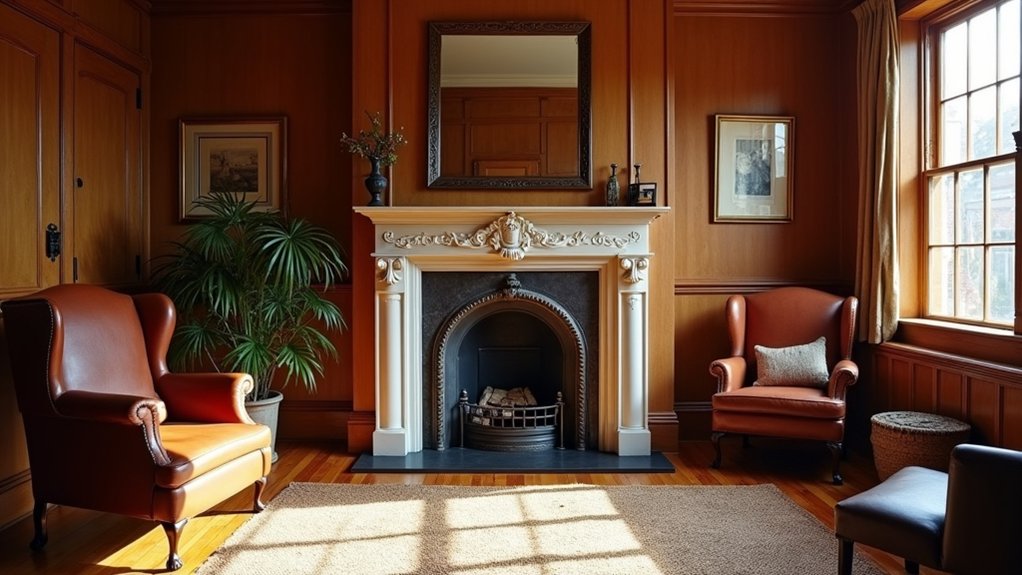
A Victorian fireplace can anchor a traditional room with authentic craftsmanship, from cast-iron details to era-appropriate tilework. You’ll want its scale, placement, and surrounding alcoves to reinforce flow without competing with existing architecture. Consider restoration vs. reproduction, the cost of materials, and how lighting will spotlight its features. Thoughtful sourcing and careful maintenance matter as much as the design choices themselves, because the right centerpiece stays timeless—if you’re prepared to balance history with modern use, you’ll see why this isn’t just decor.
Why a Victorian Fireplace Fits Traditional Spaces
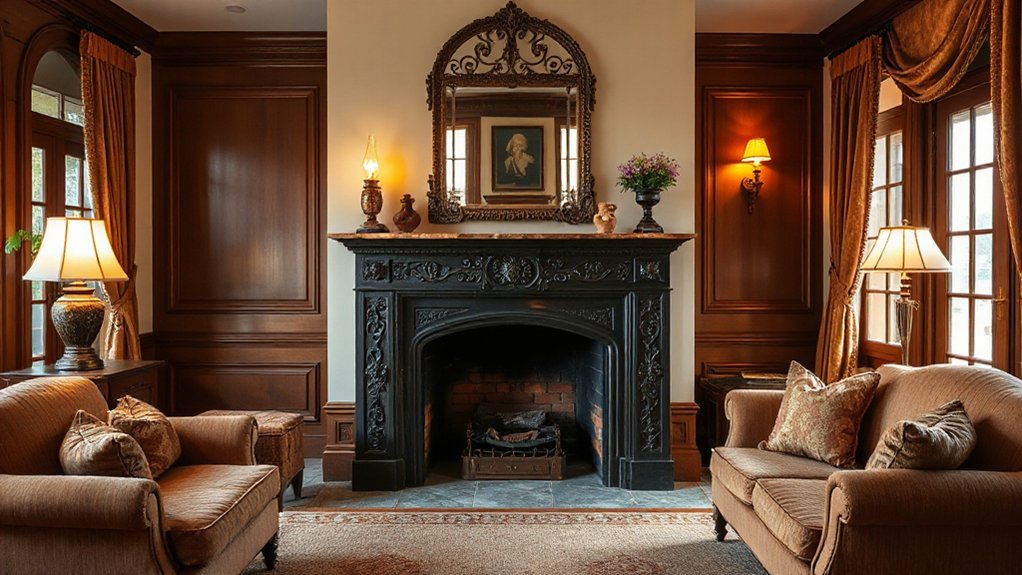
A Victorian fireplace is a natural fit for traditional spaces because its design captures the era’s craftsmanship and character. You’ll appreciate how Victorian craftsmanship elevates room presence, creating a focal point that anchors furniture layouts and lighting accents.
The hearth’s proportions, moldings, and mantel detailing harmonize with period architectural cues, reinforcing historical accuracy without feeling contrived. When you select a piece, consider how the surround’s lines echo door casings, window trim, and ceiling medallions, ensuring cohesive rhythm throughout the space.
Material choices matter: select refined stone, cast-iron accents, or timber with timeworn finishes to honor authentic construction methods. By aligning scale, ornament, and finish, you achieve a balanced, enduring look that respects tradition while staying visually fresh.
Choose Victorian-Era Cues: Cast Iron, Tilework, and Era Details
To capture authentic Victorian character, prioritize cast iron, tilework, and era-specific details that echo factory-made precision and artisanal flair. You’ll align your fireplace with Victorian craftsmanship by selecting cast-iron surrounds that showcase bold profiles, scrolls, and durable finish.
Tilework should feature geometric or floral decorative motifs, using glaze palettes common to the period to convey depth and texture. Look for precise moldings, riveted joints, and crisp seams that signal industrial-era manufacturing paired with handmade finesse.
Incorporate era details like stepped mantels, etched panels, and frieze decoration to reinforce authenticity without crowding the room. Balance ornament with restraint to avoid visual clutter, ensuring the focal point remains the fireplace.
You’ll achieve a coherent, timeless aesthetic by harmonizing metal, tile, and motif.
Restoration vs. Reproduction: What to Consider and Costs
When you weigh restoration versus reproduction, start with budget: factor initial costs, ongoing upkeep, and potential future renovations.
You’ll balance authenticity against practicality, weighing whether period-accurate elements justify higher prices and maintenance demands.
Consider long-term costs and what—if anything—you’re willing to trade for ease, durability, and timeless character.
Restoration Budget Considerations
Balancing restoration ambitions with a workable budget is essential when choosing between restoration and reproduction options for a Victorian fireplace. You’ll weigh material costs, labor intensity, and long-term upkeep, prioritizing value over novelty.
Begin with a detailed scope: identify original features worth restoring, and flag components better replaced with faithful reproductions.
Track hidden costs, such as masonry stabilisation, flue lining, and chimney supports, to avoid surprise overruns.
Compare supplier quotes for cast-iron surrounds, encaustic tiles, and timber mantels, checking finish quality and durability.
Consider modern adaptations discreetly; plan for integrated reignitions or efficient heat exchange without compromising aesthetic.
Adhere to safety regulations early—ventilation, clearances, and firebox standards influence budgeting and timing.
Document decisions to prevent scope creep and preserve long-term performance and character.
Authenticity vs Replication Dilemma
Should you chase authenticity or opt for replication when restoring or recreating a Victorian fireplace, the decision hinges on character, budget, and long-term performance. You weigh historical accuracy against practicality, balancing period detail with safe, code-compliant installation.
Authentic restoration prioritizes existing materials, patina, and proven methods, often demanding skilled craftsmanship and patient sourcing.
Replication leans into reliability, safety, and modern adaptations that preserve look while meeting contemporary standards.
Consider the budget impact, as genuine components can drive costs higher and complicate timelines.
Both paths require clear documentation, so you understand what qualifies as authentic versus acceptable reproduction.
Decide how closely you want the fireplace to reflect the era, and what you’ll sacrifice for ease and maintenance.
Your choice should align with deployment, aesthetics, and anticipated performance.
Long-Term Maintenance Costs
Choosing between restoration and reproduction impacts not just initial appearance but long-term upkeep and costs you’ll face. In this topic, you’ll weigh ongoing maintenance against upfront work, recognizing that restoration often demands skilled attention to original materials, potential lead-time, and periodic reconditioning.
Reproduction offers consistency but may require more frequent component replacement and updates as technology or standards evolve. Consider fuel type, venting, and sealing, since better systems reduce repairs but may incur higher initial investment with lasting savings.
Cleaning tips matter: regular dusting, soot management, and safe cleaners prolong efficiency and reduce restore cycles. Budget for fireplace accessories, such as dampers, grates, and hearth tiles, which influence performance and upkeep.
Finally, you’ll appraise warranty coverage, service availability, and the potential for resale value linked to long-term reliability.
Plan Size, Placement, and Room Flow for Optimal Use
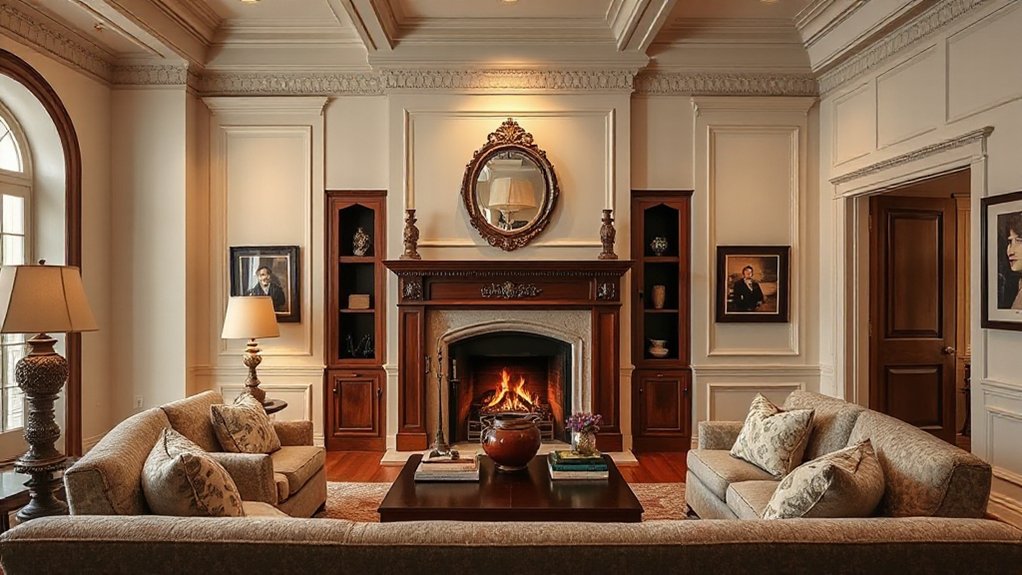
Careful plan size, placement, and room flow are essential to make a Victorian fireplace feel integrated rather than added-on. Start by measuring the space and marking sightlines from key seating areas, doors, and windows.
A balanced silhouette complements traditional architecture; avoid oversized masses that overwhelm the room. Consider the mantel height in relation to existing cabinetry and artwork, ensuring a cohesive focal point without competing with architectural details.
Plan for proportional clearances around the hearth for safety and traffic flow, and align the chimney chase with existing flues when possible.
In terms of fabrication, prioritize custom fabrication to match dimensions and detailing, while allowing for practical maintenance access.
Embrace modern adaptations discreetly, preserving character without sacrificing efficiency or usability.
Color, Texture, and Materials to Harmonize With Heritage Rooms
Color, texture, and materials should reinforce the room’s heritage without competing with the fireplace’s character. You select a restrained color palette that echoes period schemes—soft creams, muted greens, warm taupes—so the fireplace remains the focal point, not a competing loud feature.
Consider material textures that read as authentic: brushed timber, patinated metals, plaster with gentle hand-done imperfections, and natural stone with subdued veining. Harmonize with surrounding architecture by matching grout lines, tile scale, and wood grain to the room’s existing details.
Use consistent finishes across trim, mantels, and cabinetry to create coherence, avoiding high-gloss surges that jar a traditional mood. Document color palettes and material textures for consistency during updates or replacements.
Maintain balance, restraint, and timeless authenticity.
Lighting to Highlight the Fireplace as a Focal Point
To make the fireplace a true focal point, use strategic lighting that highlights its mantel and details without washing out color.
Layer warm ambience with a mix of ambient, task, and accent lighting to draw the eye to the hearth and create depth.
Position fixtures to illuminate the mantel and surrounding textures, guiding attention naturally toward the fireplace as the room’s centerpiece.
Highlight With Lighting
Lighting can turn the fireplace into a true focal point by layering illumination that emphasizes its details and texture. You’ll plan lighting that sculpturally defines the surround, mantel, and hearth, drawing the eye to subtle carvings and patina.
Use a mix of ambient, task, and accent sources to create depth without glare. Choose fixture styles that echo Victorian character—low-glare sconces, slim picture lights, and a discreet ceiling fixture—to maintain balance with the room’s proportions.
Position lighting to illuminate vertical edges and the mantle’s silhouette, so the fireplace reads prominently at dusk. Consider dimmable options to modulate mood and highlight architectural details during gatherings.
Remember to prioritize even coverage and avoid harsh hotspots that distract from the fireplace’s craftsmanship and overall room harmony.
Layer Warm Ambience
Layering warm ambience around the fireplace means selecting light layers that draw attention to its character without overpowering the room. You balance task, ambient, and accent lighting to illuminate architectural details while preserving a quiet, intimate mood.
Use warm color temperatures that mimic candlelight, avoiding stark whites that clash with Victorian craftsmanship. Employ dimmable fixtures to modulate intensity as the evening unfolds.
Downlight from alcoves or wall sconces emphasizes the hearth’s silhouette, while a softly glowing table lamp or centerpiece candle adds depth to surrounding Victorian craftsmanship and architectural details.
Reflective surfaces, like a brass or mercury mirror, amplify glow without glare. Guarantee shadows sculpt the fireplace’s mouldings, enriching the focal point without competing with adjacent furnishings.
Maintain cohesive finishes for timeless, refined ambiance.
Draw Eye To Mantel
In spotlighting the mantel, place a focused, warm-toned fixture at or just above eye level to draw the eye to the fireplace’s central character. You’ll guide attention without overpowering the architecture, so choose a light with a subtle glow and clean, Victorian-inspired lines.
Position controls for easy adjustment, enabling you to shift emphasis from subtle evening ambiance to a brighter focal point as needed.
Integrate complementary accents through fireplace accessories that echo the mantel’s carved details, avoiding clutter that competes with the fire’s drama.
Opt for mantel decor that frames the surround rather than obstructs it; a single, well-placed item often delivers the strongest statement.
Remember to balance shadows and light, preserving the hearth’s timeless charm.
Budgeting and Sourcing: Getting Value Without Losing Character
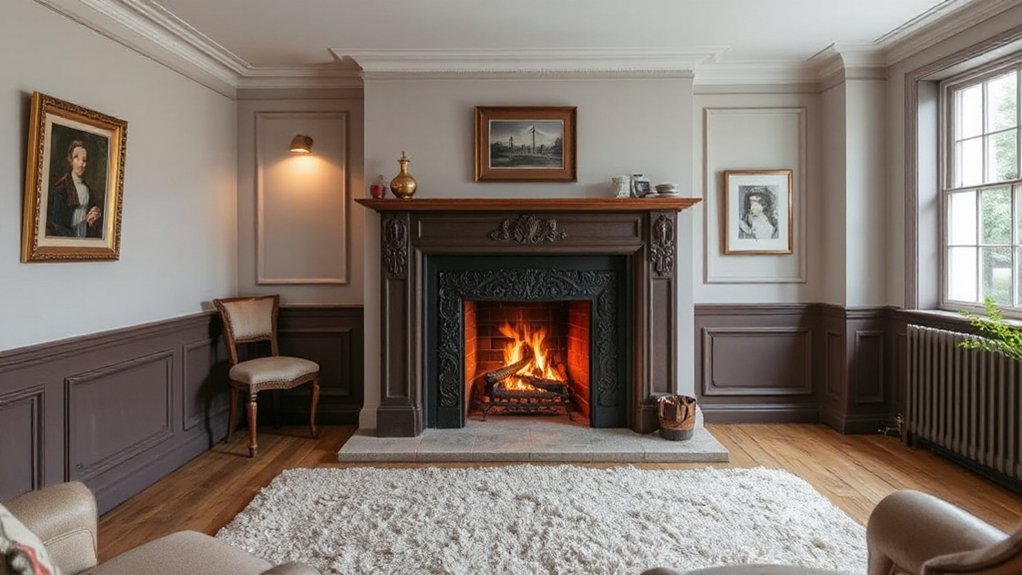
Where can you get the best value without sacrificing character when adding a Victorian fireplace? Begin with a clear plan: set a realistic budget, then prioritize authentic elements over modern adds that clash with provenance.
Seek reclaimed or period-appropriate mantels, tiles, and surrounds from reputable salvagers or certified auctions, ensuring provenance documentation.
If a factory replica suits your space, choose high-quality materials and a discreet finish to preserve proportion and patina.
Compare fit-for-purpose options, balancing cost with shipment and installation, and factor licensed trades for electrical or gas configurations.
Look for value through modern adaptations that respect form, not overshadow it. Consider technological integration only where reversible and sympathetic—smart controls or subtle lighting can enhance ambiance without erasing character.
Always document sourcing for future resale.
Long-Term Maintenance and Care for Lasting Charm
To keep a Victorian fireplace looking its best for years to come, establish a simple, ongoing maintenance routine that respects its age and materials. You’ll perform light dusting weekly with a soft cloth, then assess the surround for any signs of wear.
Use a gentle brush or vacuum nozzle to remove soot from crevices without aggressive scrubbing. For longevity, monitor mortar joints and brickwork for cracks and dampness, addressing issues promptly to prevent escalation.
Cleaning routines should be consistent but noninvasive, avoiding harsh chemicals that could erode historic finishes. If paint chips appear, perform discreet paint touch ups with a matching, breathable finish to preserve character without altering texture.
Schedule periodic professional checks for flue integrity and venting, ensuring safety and enduring charm.
Frequently Asked Questions
How Long Does Installation Typically Take in a Living Space?
A typical living space installation takes about one to three days, depending on scope. You’ll coordinate routing for gas lines or chimney rework, plus mantle integration and finishing touches.
You’ll want to plan for a brief final inspection and any required inspections.
If you’re focusing on fireplace maintenance and historical accuracy, factor in extra time for authentic detailing, material sourcing, and careful sealing.
You’ll appreciate precise workmanship that preserves character and reliability.
Can a Victorian Fireplace Be Gas-Fueled or Electric?
Flame and hearth symbolize comfort within tradition. Yes, you can have a Victorian fireplace that’s gas-fueled or electric.
You’ll still capture Victorian design, with period-accurate mantels and detailing, while modern fuels offer clean lines and safer operation.
For authenticity, choose fireplace materials that mimic marble or wood overlays, and guarantee venting or safety features meet code.
You’ll enjoy instant ambiance, efficient heat, and a timeless focal point in your space.
Are Permits Required for Installing Period-Style Hearths?
Permits requirements vary by location, so you should check local building codes. Many jurisdictions don’t require permits for purely decorative period-style hearths unless you install fuel or venting.
For gas or electric options, you’ll likely need inspections and compliance with building codes.
Focus on Historical accuracy in materials and finish, and guarantee any combustion appliance meets safety standards.
Coordinate with authorities early to avoid delays, and document your installation for future code reviews.
What Is the Resale Value Impact of Authentic Recreations?
Are you wondering how authentic recreations affect resale value? They typically boost it when you emphasize historical accuracy and material authenticity.
You’ll attract buyers who prize period charm, leading to a higher perceived value and faster interest. The key is credible detailing—genuine materials, period-appropriate finishes, and accurate proportions.
While improvements vary by market, well-executed authentic recreations tend to enhance appeal, supporting stronger offers.
Keep documentation ready to verify the craftsmanship and provenance.
How Often Should a Victorian Mantel Be Inspected or Repainted?
You should inspect your Victorian mantel annually and repaint as needed when you notice cracking, peeling, or moisture damage.
For typical finishes, plan a recoat every 5–7 years to maintain paint longevity.
Use proper prep, including cleaning, sanding, and priming, before applying a breathable topcoat.
Schedule inspections after seasonal shifts or humid periods to catch wood decay early.
This approach supports Fireplace maintenance and preserves finish integrity over time.
Conclusion
A Victorian fireplace can redefine a traditional room, marrying authentic details with timeless warmth. By planning scale, sourcing thoughtfully, and highlighting with layered lighting, you’ll create a focal point that feels both historic and livable. For example, in a sunlit sitting room, a restored cast-iron surround with tasteful tile elevated the space’s character while keeping modern comfort intact. With careful care, your hearth will enchant visitors for generations, without compromising era integrity or daily usability.