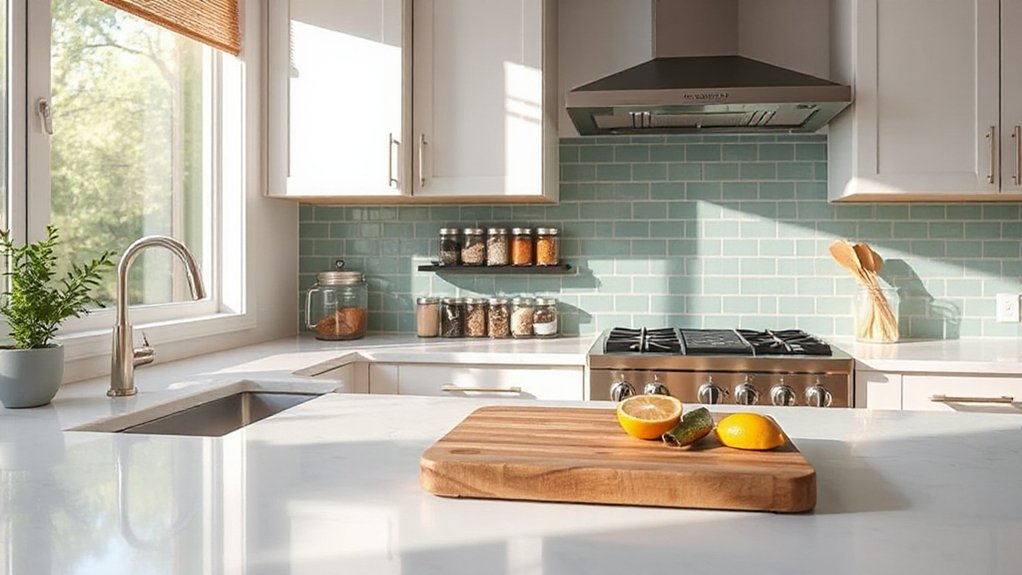
Want a kitchen refresh that doesn’t break the bank or require a full renovation? Start with a clear budget and target high-impact updates like new hardware, refaced cabinets, and affordable surfaces such as laminate or butcher block. Add cohesive color balance with bold accents paired to neutrals, and swap in a quick backsplash or peel-and-stick options. Layer lighting, improve storage, and finish with textiles and accents for personality. If you keep going, you’ll uncover more practical tips.
How a Kitchen Refresh Transforms Your Space on a Budget

A kitchen refresh can dramatically transform your space without breaking the bank. You’ll see impact through thoughtful layout tweaks, updated hardware, and smart organization rather than a full overhaul.
Begin with budget planning to prioritize high-leverage updates like cabinets, lighting, and countertops. Swap in affordable accents—drawer pulls, a new faucet, and fresh cabinet doors—or repaint frames to punch up color without a remodel.
Choose renovation alternatives that preserve function while minimizing cost: peel-and-stick backsplashes, laminate surfaces, and under-cabinet lighting.
Focus on consistent finishes to create cohesion, then declutter counters to reveal a cleaner footprint.
Measure twice, buy once, and avoid overcommitting to trendy finishes that won’t endure. Track costs, compare suppliers, and adjust choices to stay under budget while maximizing perceived value.
Set a Realistic Refresh Budget (Without Renovation)
Set a realistic refresh budget by defining what you’re aiming to improve and what you’re willing to sacrifice. You’ll pinpoint your priorities first, then assign a dollar cap to each area, so you stay centered on outcomes—not impulse purchases.
Begin with budget planning that focuses on practical upgrades and durable improvements, like hardware you actually use or surfaces you’ll touch daily. Track costs as you go, and adjust expectations before they derail the plan.
Use a simple spreadsheet or app to log purchases, timelines, and trades-offs, keeping leverage over cents and dollars alike. Maintain discipline by excluding vanity items that don’t boost function.
Swap Hardware for an Instant Modern Look
Measure hole spacing before shopping to guarantee a clean install, and opt for compatible mounting types to prevent surprises. A hardware swap is a straightforward fixture upgrade that delivers high impact with minimal disruption, so plan for a short installation window.
Avoid ornate details that clash with modern aesthetics; instead, align knobs and pulls with your faucet and lighting for cohesion. This budget-friendly tweak prompts an updated vibe, showcasing thoughtful design decisions rather than a full renovation.
Refinish Cabinets: Freshen Up on a Budget

If you’re aiming for a fresh kitchen without a full remodel, refinishing cabinets is a smart, budget-friendly move. You’ll start by removing doors and rough-sanding the surfaces so paint or stain grips evenly. Choose cabinet painting for a uniform look, or opt for a stained finish if you prefer warmth.
Clean thoroughly, fill dings, and seal with a durable topcoat to prevent chipping. Expect noticeable transformation with minimal downtime, since you can rehang doors once dry.
Hardware upgrades are a quick companion to refinishing, boosting impact without a full replacement—think updated pulls or knobs in a cohesive finish.
Prioritize multi-surface prep (cabinet faces, frames, and interiors) for lasting results. Maintain ventilation, follow manufacturer cure times, and avoid heavy-use dishes during curing.
Update Countertops and Surfaces on a Dime
Want to refresh your kitchen countertops without a full tear-out? You can update on a dime by choosing cost-effective options and careful prep.
Start with durable, affordable countertop materials like laminate or butcher block, then assess how each surface handles daily use. If you’re sticking with existing cabinets, opt for a cohesive edge profile and a simple, wipe-clean surface.
Prep matters: clean thoroughly, repair seams, and seal where appropriate to extend life.
For a quick upgrade, apply a reversible overlay or contact paper with a stone or granite look, ensuring proper alignment.
Protect resurface areas during project work, and understand maintenance needs to avoid quick wear.
Remember surface protection, and you’ll enjoy a refreshed look without costly renovations.
Upgrade Lighting for Ambience and Function
Start by layering lighting to balance task needs with mood, so you can brighten prep zones and soften evenings without a glare.
Aim for an even mix of task lighting, ambient glow, and accents, then fine-tune with dimmable fixtures to match the moment.
Upgrading to dimmable options gives you precise control over both function and atmosphere.
Layered Lighting Effects
A well-lit kitchen isn’t about a single fixture; layering light creates ambience plus practical task lighting where you need it most. Start with a general ceiling light to set the base, then add task-focused layers for efficiency.
Under cabinet lighting delivers glare-free prep visibility, keeping countertops clear of shadows. Choose cool to neutral color temperatures for work areas, and softer tones for dining or seating zones.
Integrate pendant illumination above islands or tables to anchor spaces and provide focused, stylish brightness. Include dimmers to flex lighting from bright prep to intimate dinner.
Use fixture variety with slim profiles to avoid visual clutter. Plan switches and zones so you can adjust layers independently, maintaining a calm, functional kitchen atmosphere without overlighting.
Task And Ambient Balance
Layering task and ambient lighting isn’t optional—it’s essential. You establish a clear hierarchy: task lighting where you work, and ambient lighting to shape mood and reduce harsh contrasts.
Start with a focused, bright layer for counters and stove, then add ambient sources to soften shadows and unify the space.
Think about task prioritization: prioritize high-use tasks first—prep, cooking, cleanup—and position lights to minimize glare on glossy surfaces.
Avoid relying on a single ceiling fixture; instead, mix under-cabinet strips, wall sconces, and a dimmable central light.
Control matters: use zones and a simple switch plan so you can brighten for efficiency and lower it for ambience.
A well-balanced scheme improves safety, speeds routines, and keeps the kitchen welcoming.
Dimmable Fixtures Upgrade
Dimmable fixtures give you precise control over both ambience and function, letting you brighten task areas for prep and cooking while softening light during cleanup or gatherings. With dimmable fixtures, you tailor lighting scenes to activity, mood, and time of day, avoiding glare and harsh shadows.
Start by upgrading key zones: overheads in the countertop workspace, under-cabinet task lighting, and eye-level accents near the dining area. Use compatible bulbs and verify your dimmer switches support smooth, flicker-free operation.
Prioritize lighting control that’s intuitive—consider wall controls, scenes, or smart options that integrate with your existing devices. Choose a warm to neutral color temperature for a welcoming kitchen.
This upgrade delivers functional clarity and atmosphere without a full renovation.
Rethink Storage With Smart Organization Hacks

If you’re aiming to reclaim counter space and simplify daily routines, start with smart storage that actually works for how you live. You’ll maximize efficiency by mapping tasks to zones: prep, cook, and store, then assign containers and shelves accordingly.
Prioritize vertical space with labeled bins and adjustable racks so items breathe instead of pile up. Use clear, uniform containers to spot mismatches at a glance and cut down on excess purchases.
For pantry organization, group similar items together and implement a periodic audit to remove stale products. In the cabinet, decluttering means removing rarely used gadgets and relocating staples to accessible shelves.
Invest in slim pullouts and door racks to free counter real estate while keeping essentials within arm’s reach.
Introduce Color, Then Balance With Neutrals
Add bold color accents first to energize your kitchen. Then balance them with neutral tones to keep the space calm.
Layer textures and patterns to create depth without clutter.
Keep the palette cohesive and practical, so the color pops without overwhelming the room.
Add Bold Color Accents
To energize a kitchen, start with bold color accents that grab attention and set the mood. Then balance them with calm neutrals for cohesion. You’ll introduce color through strategic, durable selections you can swap seasonally.
Consider a vivid backsplash, a statement appliance panel, or outlet covers in a saturated hue to anchor the room without overwhelming it. Pair these color bursts with neutrals—soft white, stone, or warm gray—to keep lines clean and approachable.
Draw on cultural influences and historical styles to guide your palette choices, ensuring the accents feel intentional rather than trendy. Keep scale in mind: small doses of color on key features work best.
Finally, test finishes under realistic lighting before committing, avoiding clashes and reinforcing lasting harmony.
Balance With Neutral Tones
After introducing color, balance it with neutral tones to keep the kitchen cohesive and calm. You’ll keep bold accents from Add Bold Color Accents but temper them with neutral palettes that ground the space. Choose whites, warm beiges, or cool greys as base surfaces to create a steady backdrop.
Then layer in color selectively—think a single vibrant accessory, like a toaster or a vase, rather than an overpowering sweep of hue. This approach cultivates calming environments while preserving personality.
Use natural materials and matte finishes to enhance understated sophistication. Keep cabinetry timeless, and opt for simple hardware in brushed metal.
Layer Textures And Patterns
Textures and patterns bring depth, so start with a base of neutral surfaces and then layer tactile elements—think matte woods, stone-look backsplashes, and fabric-backed stools. As you layer textures, you add interest without clutter.
Introduce restrained color through textiles, glassware, or a single accent piece, then balance with neutrals to prevent overwhelms. Layer textures to create rhythm: pair smooth quartz with linen drapes, or a rough concrete island with satin cabinetry.
Pattern mixing works when you vary scale and repeat—small motifs in textiles paired with larger motifs in tile or wallpaper. Keep the palette cohesive, repeating a unifying tone across elements.
You’ll achieve a cohesive feel by mixing natural materials and subtle prints, ensuring practicality and enduring appeal.
Refresh Backsplash Without a Full Tile Job
If you want a fresh look without tearing out wall or tile, you can refresh your backsplash with smart, budget-friendly updates. You’ll get a high-impact lift without a full install.
Start with removable backsplash options that suit your space; they’re lightweight, reversible, and protect walls as you test style. Peel and stick tiles offer quick drama, especially in glass, metal, or mirrored finishes that reflect light.
Clean surfaces, measure carefully, and cut with a utility knife for clean edges.
For cohesion, pick a color or pattern that ties to your cabinets and countertop. Add a slim, matte trim to finish lines, or use a coordinating grout pen to crisp gaps.
These steps deliver renewed focus without disruption or mess.
Add Textiles and Accessories for Personality

Textures add depth and warmth to your kitchen, while carefully chosen accessories set the mood. Start by layering textiles for practical texture and using well-placed pieces to cue the style you want.
Keep it focused: select a few high-impact textiles and accessories that reinforce the ambiance you’re after.
Textiles as Texture
Textiles bring warmth and personality to a space by adding tactile interest that you can see and feel. In the kitchen, texture isn’t decorative fluff; it’s a practical layer that helps everyday use feel better.
Start with a few high-contrast fabric textures—cotton, linen, or a textured weave—and pair them with durable essentials. Choose textile patterns that echo your cabinet colors or countertop hues to create cohesion without shouting.
For pillows, dish towels, and pot holders, prioritize tight weaves and colorfast dyes to withstand spills and washing. Layer textiles at different heights: window hangings, chair cushions, and a tabletop runner.
Keep patterns restrained to avoid visual clutter. This approach provides warmth, grip, and a polished, low-effort update.
Accessories for Ambiance
Looking to inject personality into your kitchen? Accessories for ambiance are your fastest route to character without a full remodel. Start with ambient lighting that softens evenings and highlights favorites without glare. A dimmer or warm bulbs create depth, making your space feel cohesive and inviting.
Next, curate decorative accessories that reflect your style—think mismatched bowls, a sculptural fruit bowl, or a statement clock. Balance is key: pair bold pieces with calm backgrounds to avoid clutter.
Textiles matter too; swap in a patterned runner, a few colorful towels, or a woven basket for texture and warmth. Keep surfaces clear and purposeful, rotating items seasonally to stay fresh.
Your kitchen should feel personal, intentional, and usable in daily routines.
Weekend-Ready Maintenance for Lasting Shine
Even with a busy weekend, you can preserve a gleaming kitchen by tackling a focused routine that takes under an hour. Start with cleaning routines that tackle high-contact surfaces: wipe handles, switch plates, and faucet bases with a microfiber cloth and a mild cleaner.
Move to a quick purge of crumbs in the sink and corners, then skim the stovetop, hood, and backsplash to remove grease buildup.
Next, switch to appliance maintenance: empty and wipe the fridge shelves, check expiration dates, and run a quick dishwasher or washing machine clean cycle.
Empty the trash and sanitize the bin.
Finish with a 5-minute sweep plus floor wipe to maintain shine. Schedule this once a week, so every weekend reinforces a pristine kitchen without disrupting your plans.
Frequently Asked Questions
How Long Does a DIY Kitchen Refresh Typically Take?
A DIY kitchen refresh typically takes a weekend or two, depending on scope. You’ll nail budget planning and gather DIY tools first, then trim time with a clear plan, efficient methods, and simple, durable finishes.
Do Refresh Projects Affect Home Resale Value?
Yes, refresh projects enhance resale value by boosting home staging and market appeal, attracting buyers, and speeding sales. You’ll improve perceived quality, curb interest, and justify asking prices, while avoiding full renovation costs and timelines.
What’s the Cheapest Upgrade With the Biggest Impact?
The cheapest upgrade with the biggest impact is updating hardware, lighting, and backsplash for a cohesive look. Budget alternatives like repainting cabinets help, while design inspirations guide placement and finishes you’ll love long-term.
Can I Refresh Cabinets Without Sanding or Painting?
Yes, you can refresh cabinets without sanding or painting. Swap Cabinet hardware, add decorative accents, and use quick slip-ons or overlays. Keep lines clean, select cohesive finishes, and tighten all hardware for a refreshed, polished look.
How Often Should I Re-Evaluate My Refresh Progress?
You should re-evaluate every 4–6 weeks, adjusting as needed. Think of your progress like decorative accents sprouting; lighting enhancements highlight gaps. You’ll stay practical and decisive, ensuring momentum while you refine, refresh, and keep momentum alive.
Conclusion
Ready to elevate your kitchen without the upheaval? A thoughtful refresh acts like a sunrise over tired cabinets—bright, immediate, and utterly doable. Swap hardware, spritz new life on surfaces, and weave color with calm neutrals. A clever backsplash and cozy textiles finish the scene, while quick maintenance keeps the shine from fading. You’ll gain a kitchen that feels refreshed, cohesive, and practical—proof that big impact can come from small, deliberate moves.