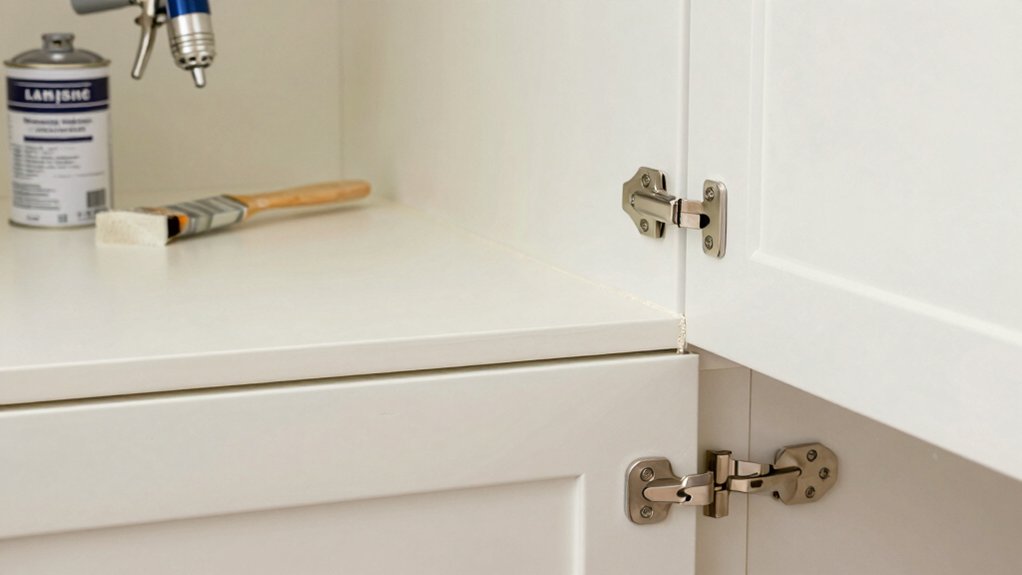
To get a lasting, professional finish on kitchen cabinets, start with a thorough inspection and prep. Remove hardware, clean surfaces, and test finishes to prevent adhesion issues. Choose a compatible primer and a durable, water-based topcoat in an eggshell or satin sheen for easy cleaning. Repair dents, seal gaps with matching caulk, and sand between coats for a smooth surface. Prime, then apply thin, even coats with careful brushing, and maintain steady conditions to prevent peeling—more secrets await.
Diagnose Cabinet Condition and Prep Plan

Before you start painting, assess the cabinet condition and map out a prep plan. You’ll inspect cabinet material and joints for integrity, noting loose doors, warped panels, or hinges needing adjustment.
Check the existing finish for compatibility—peel, flake, or glossy surfaces require different prep steps. Determine moisture exposure, mold risk, and prior repairs that could affect adhesion.
Create a targeted plan: repair defects, remove hardware, and label doors for exact reassembly. Decide on cleaning methods suitable for the substrate to avoid residue that could hinder adhesion.
Test a small area with a debonding solvent if you suspect enamel or varnish incompatibility. Document findings, then prioritize tasks, sequencing repairs before priming.
A thorough prep minimizes surprises and yields a durable, professional result.
Choose Primer, Sheen, and Paint for Cabinets
To achieve durable cabinet durability and a flawless finish, you’ll select the right primer, sheen, and paint based on your prep findings. Start with a high-quality primer compatible with your substrate and chosen topcoat; this anchors color and blocks stains.
For sheen, pick a durable, washable finish—eggshell or satin for cabinets—balancing light reflection with wipeability.
Choose paint with good adhesion, leveling, and stain resistance; water-based acrylics offer low odor and easy cleanup.
Consider color matching across doors, frames, and panels to ensure uniform appearance, then confirm swatches in your lighting.
Brush selection matters: use synthetic bristles for water-based paints and a quality angled brush for tight corners.
Apply in thin, even coats, allow proper drying, and sand lightly between coats for a professional seal.
Repair Dents, Seal Gaps, and Caulk for a Seamless Finish
Dents, gaps, and caulk spots can ruin a cabinet’s smooth, professional look, so address them before finishing. You’ll start by repairing dents with filler, choosing a compatible compound, and sanding flush with the surface.
Seal gaps with match-grade caulk, smoothing it evenly in all joints to prevent light lines behind the finish. Wipe away excess adhesive before it cures, then sand lightly for a seamless *passage* to the primer.
Caulk should cure fully before painting; cure times vary with product and temperature.
When repairing hardware, consider hardware replacement if fasteners are worn or misaligned, ensuring your repairs don’t interfere with future paint adhesion.
Use precise, deliberate decorative techniques to maintain drawer alignment and edge sharpness without compromising the finish.
Apply Paint in Durable, Even Coats
Apply paint in durable, even coats using a deliberate, controlled technique. You’ll prime the surface, then load your brush evenly to avoid thick edges. Use smooth, long strokes, maintaining a consistent angle to minimize rollers, drips, and lap marks.
For brush techniques, feather edges by slightly lifting as you finish each stroke, and work in manageable sections to prevent drying inconsistencies. Keep a steady pace so the paint dries uniformly, reducing brush marks and sags. Avoid overworking; once laid down, don’t scrub.
Maintain a wet edge to prevent visible seams. If you alternate between tools, match bristle stiffness to the acrylic enamel or urethane-based coat. Monitor paint drying closely; ambient temperature and humidity influence flow, cure time, and final appearance.
Cure, Maintain, and Prevent Peeling Long-Term
Curing, maintaining, and preventing peeling long-term requires a disciplined post-paint routine. After you finish, allow a full cure per manufacturer guidelines before handling cabinets. Keep humidity and temperature stable to avoid micro-cracking; this protects the finish from delamination.
Inspect regularly for early signs of wear, touching up only localized areas rather than overhauling large sections. When you recoat, use color matching to preserve a uniform appearance and prevent contrast between aged and new layers.
Employ deliberate brush techniques: load the brush properly, use smooth, even strokes, and avoid overbrushing that can introduce gloss variations or fibers. Clean spills promptly and avoid aggressive scrubbing.
Protect surfaces during daily use, and schedule periodic inspections to catch peeling at its inception and address it decisively.
Frequently Asked Questions
How Long Does Cabinet Painting Take From Start to Finish?
You’ll typically complete cabinet painting in 3–5 days: prep, prime, paint, and dry. Allow 24 hours between coats, and factor in longer drying time and the curing process before use. Plan for spot touch-ups during curing.
Is Spray or Brush-Roller Better for Durability?
Spruce it up: spray usually yields better paint durability, but brush-roller can deliver precision where you need it. You weigh convenience against finish quality in brush vs spray, aiming for durable results with careful technique and multiple coats.
Can I Repaint Existing Stained Cabinets?
Yes, you can repaint existing stained cabinets. Clean surfaces thoroughly, then scuff and prime before painting. Cabinet cleaning prepares adhesion. Choose a compatible paint color selection, ensuring durable finish; use long-lasting enamel for best results and minimal chipping.
What Ventilation Is Required During Painting?
Ventilation is essential; you need proper ventilation safety and good air circulation. Start with a well-vented area, use exhaust fans, open windows, and wear a respirator. I’ve seen a small room get smoky without it.
How Do I Dispose of Leftover Paint Safely?
Dispose of leftover paint safely by following local rules, sealing containers, and using community hazardous waste programs. Never pour down drains. For paint disposal, reuse, donate, or dry out with absorbents. Prioritize environmental safety in every step.
Conclusion
Conclusion: You’ve got the tools to deliver a durable, professional cabinet finish. Start with solid prep, pick the right primer and sheen, and apply even coats with steady technique. Let the finish cure fully and protect it with smart maintenance. One compelling stat: properly prepared and sealed cabinets can resist peeling up to 60% longer than neglect, saving time and money. Stay precise, follow steps, and your kitchen will look flawless for years, with minimal upkeep and maximum impact.