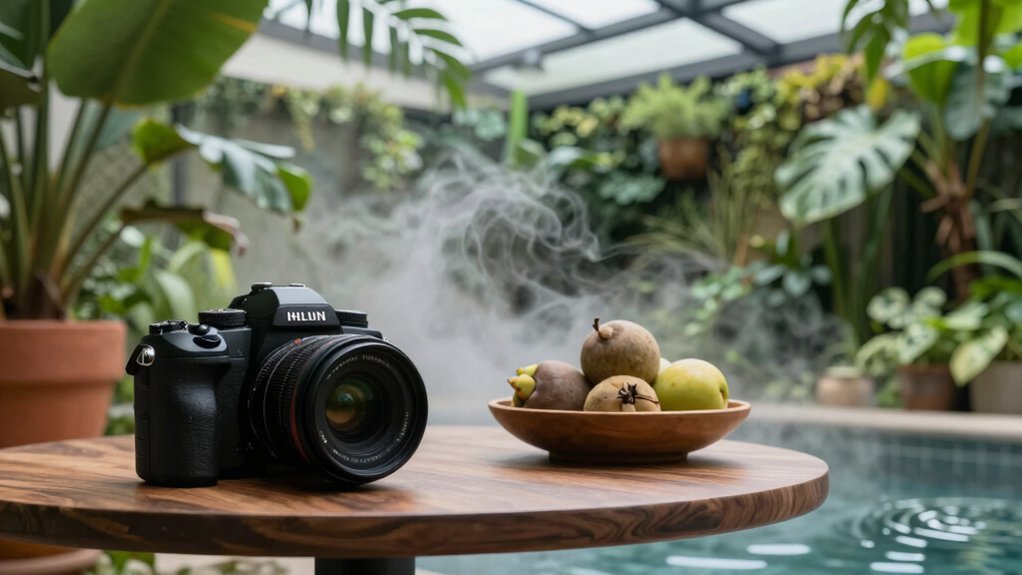
Biophilic design engages five interconnected senses to boost well-being and productivity: visual connections with nature through views and daylight; auditory experiences using calming soundscapes like birdsong and water features; olfactory stimulation from natural scents and fresh air; tactile engagement with textured natural materials such as wood, stone, and moss; and gustatory elements via edible plants and interior gardens. You’ll create spaces that feel restorative, coherent, and breathable. If you want deeper details, you’ll discover more as you continue exploring.
Visual Connection With Nature

A clear visual connection with nature can markedly reduce stress and boost well-being in built environments. You design with a deliberate visual connection, integrating views of natural landscapes through windows, skylights, or digital displays. This approach yields concrete benefits: greenery and natural vistas provide focal anchors that enhance focus and calm, while natural light and unobstructed outdoor environments support cognitive function and mood.
In practical terms, prioritize scenic views and egress that emphasize outdoor environments, ensuring sightlines to greenery from workstations and gathering areas. The result is heightened aesthetic appeal, with spaces that feel inviting, restorative, and technologically precise.
Auditory Experiences and Soundscapes
Auditory experiences and soundscapes in biophilic design leverage natural and ambient sounds to shape mood, concentration, and stress levels. You analyze how natural sounds, such as bird calls, flowing water, and rustling leaves, integrate as natural auditory elements to foster mental well-being.
Water features provide soothing auditory stimuli that contribute to calming atmospheres and stress reduction, while the broader soundscape—including ambient noise—modulates occupants’ focus and emotional health.
Olfactory Stimulation and Fresh Air
Olfactory stimulation and fresh air build on the calming soundscape of natural environments by prioritizing scent quality and air purity to support well-being. You optimize spaces with natural scents sourced from indoor plants and flowers, enhancing mood and reducing stress through subtle aromas.
Fresh air filtered through natural ventilation improves indoor air quality and supports olfactory health, while minimizing irritants and sensitivities associated with artificial scents.
Incorporating aromatic herbs like basil or mint in indoor gardens provides subtle fragrance that supports a balanced sensory experience without overpowering occupants.
Scent diffusion should be controlled, ensuring that natural airflow maintains consistent dispersion and avoids stagnation.
This approach strengthens well-being through a measured, evidence-based integration of natural scents, fresh air, and overall olfactory health.
Tactile Engagement With Natural Materials

Tactile engagement with natural materials actively enhances your space by inviting touch and deepening your connection to nature. You’ll leverage natural textures like stone, wood, moss, and bark to provoke tactile engagement and strengthen sensory connection to the environment.
These natural materials introduce calming tactile features that foster a deeper appreciation of surroundings. By selecting textured surfaces and materials that invite interaction, you create sensory variety that supports occupant well-being and reduces stress.
Tactile engagement becomes a deliberate design tool for grounding, helping individuals stay present through mindful contact with textures. Focus on natural elements that are visually appealing yet intentionally tactile, ensuring surfaces invite touch without compromising durability or maintenance.
This approach aligns with biophilic goals and measurable wellbeing outcomes.
Gustatory Elements and Edible Plant Integration
Gustatory elements and edible plant integration elevate biophilic design by tying food production directly to space, enabling tasting experiences that reinforce a tangible connection to nature.
You’ll leverage edible plants to create a multisensory interior design that pairs greenery with practical yield. By incorporating herbs, vegetables, and fruit trees into vertical gardens, rooftop farms, and intimate interior corners, you foster sensory engagement that links taste to natural materials and sustainable practices.
The result is a healthier eating pattern supported by convenient access to fresh produce, while reinforcing a connection with nature throughout daily routines. This approach supports sustainability, strengthens emotional well-being, and expands interior design opportunities by aligning aesthetics with culinary function and a genuine sense of place.
Conclusion
In biophilic design, you sculpt space with five senses, and results explode beyond expectations. Visual connections pull your clients into living galleries of light and leaf; soundscapes tune environments to calm or energize; fresh air and pleasant scents keep offices alert and healthy; tactile natural materials invite hands-on engagement, reducing fatigue; edible greenery delights the palate, turning spaces into usable, nourishing assets. Embrace this multi-sensory toolkit—your project, your value, your client’s well-being, all dramatically transformed.