To blend modern and traditional styles in UK homes, you balance clean lines with warmth, anchoring a cohesive palette of warm woods, matte metals, and subtle neutrals. Align furniture scale to ceiling heights, use architectural elements to bridge eras, and layer textures—from linen to boucle—while controlling lighting to sculpt depth. Let flooring and wall treatments unify the scheme, and introduce contemporary art to soften historic frames. Want more precise methods to master this balance? Keep exploring for detailed guidance.
What Blending Modern and Traditional Means in UK Homes
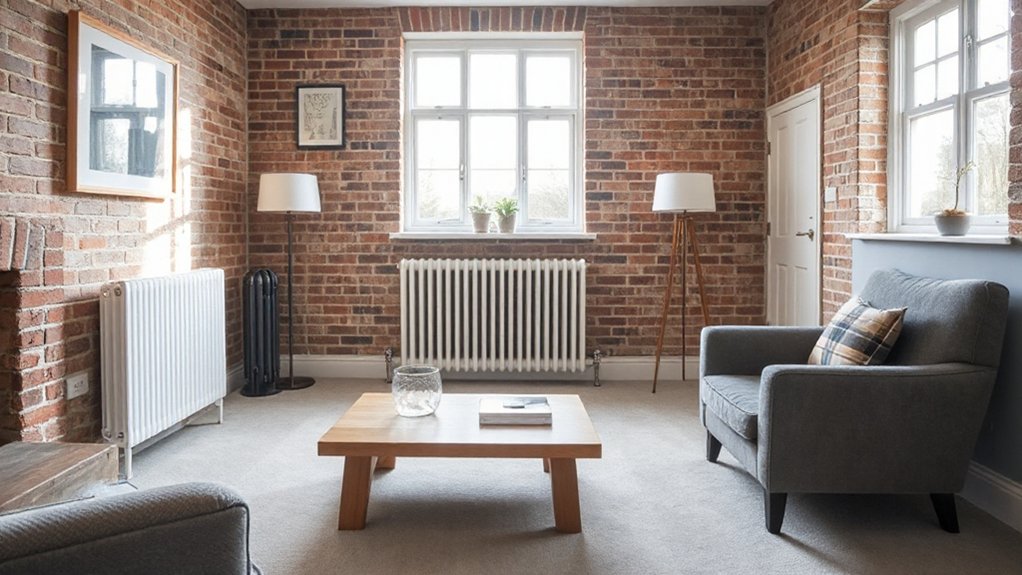
Blending modern and traditional styles in UK homes means weaving the clean, functional lines of contemporary design with the warmth and texture of classic elements to create spaces that feel both current and rooted.
You analyze spaces through a holistic lens, aligning structural honesty with calibrated ornament. Your approach privileges proportion, materiality, and light, ensuring both Colonial Revival and Victorian Influence cues read as purposeful references, not pastiche.
You select midtone woods, restrained metals, and tactical textiles to balance contrast and comfort. Function guides form: storage, acoustics, and surface durability integrate seamlessly with decorative statements.
You deploy adaptive layering—pattern, texture, and scale—so progression remain fluid across zones. The result: a coherent, technically resolved ambiance that respects heritage while embracing contemporary clarity.
Creating a Cohesive Color Palette Across Periods
Establishing a cohesive color palette across periods hinges on a disciplined framework: anchor tones, then layer complementary hues to bridge contrasts between era-specific elements. You align surfaces, textiles, and fixtures around shared undertones, ensuring color harmony without erasing identity. Precision in palette coordination lets modern accents breathe inside traditional contours.
- Establish a restrained base: neutrals with subtle warmth to unify disparate eras.
- Introduce accent motifs that recur across rooms for continuity.
- Calibrate saturation so vintage textures read current, not nostalgic.
You’ll test contrast with lighting, adjusting white balance to preserve tone integrity. Maintain consistency by documenting color codes, finish types, and exposure setups, then iterate until each room reads as a single narrative.
The result is a holistic scheme that respects history while enabling modern clarity, delivering cohesive, adaptable aesthetics across periods rather than a catalog of dissonant moments.
Choosing Hybrid-Silhouette Furniture for UK Spaces
Hybrid-silhouette furniture anchors UK interiors by marrying streamlined profiles with room-honoring curves, delivering pieces that read modern without severing traditional warmth. You choose hybrid furniture to balance scale, proportion, and function, ensuring silhouettes anchor spaces without overpowering architectural details.
Prioritize clean lines paired with subtle ornament, so intermediate design reads as cohesive rather than stitched. Consider modularity that adapts to room size, traffic patterns, and evolving needs, while preserving a sense of place.
Material choices should convey both durability and tactility, enabling a refined, tactile experience across daily use. Focus on precise dimensions, clear sightlines, and leg clearance to maintain fluid movement.
This approach supports holistic design thinking, where Hybrid furniture sustains rhythm between eras, and intermediary design remains legible, timeless, and elegantly understated.
Layering Textures: Fabrics, Materials, and Surfaces
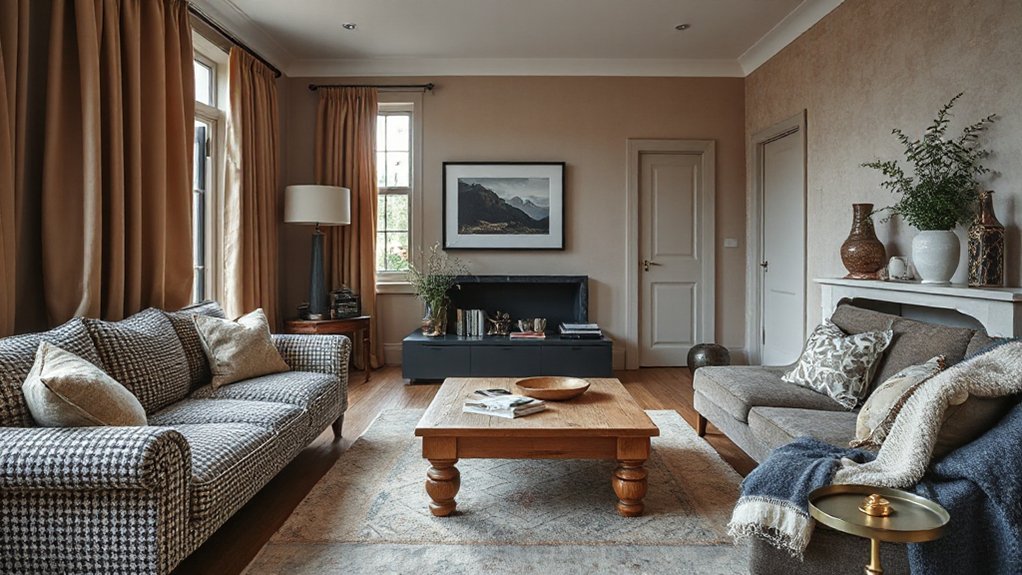
Textures layer depth and tactility into UK interiors, weaving fabrics, materials, and surfaces into a cohesive, climate-appropriate palette that supports motion, light, and acoustics. You balance weight, weave, and sheen to create a sensory hierarchy that guides the eye and ear.
Textile layering adds warmth without crowding space, while surface textures define zones and provoke touch. You mix natural fibers with engineered blends to tune softness, durability, and acoustical damping, aligning with traditional silhouettes and contemporary forms.
Surface textures—matte plaster, oiled timber, linen, boucle, stone—anchor the room and connect eras. You curate contrasts to reveal craftsmanship, not clutter.
- Textile layering
- Surface textures
- Material contrasts
Using Lighting to Bridge Old and New
You’ll orchestrate layered ambience by pairing warm, timeless fixtures with subtle modern glow to guide the eye through spaces.
Emphasize a holistic mix—classic silhouettes softened by contemporary LEDs, with dimmers and controls that modulate mood without sacrificing heritage details.
This approach creates technical precision and aesthetic finesse, inviting you to rethink lighting as a bridge between old character and new clarity.
Layered Ambience Through Lighting
Lighting is the bridge between old and new in UK homes: layered illumination brings era-appropriate character into dialogue with contemporary form. You’ll shape spaces by balancing ambient glow, task confidence, and accent accents, ensuring no single tone dominates. This layered approach favors fixture layering—carefully pairing period-inspired luminaires with modern fixtures for cohesive harmony.
- Establish focal glow with a dimmable ceiling light and a decorative pendant.
- Add task illumination under shelves or cabinets for practical clarity.
- Use subtle uplight and wall washers to sculpt architectural features.
This method respects material honesty, preserves heritage lines, and elevates mood through calibrated intensity. You feel the space breathe: warmth, clarity, and rhythm converge, guiding perception toward a refined, unified aesthetic.
Timeless Fixtures, Modern Glow
In blending old and new, choose timeless fixtures that speak to heritage while embracing today’s glow. You balance form and function, selecting lighting that anchors rooms without overpowering them. Prioritize warm color temperatures and dimmable options to morph mood from practical task lighting to intimate evening ambience.
Establish a lighting hierarchy: task, ambient, accent, then decorative, ensuring each layer complements vintage charm while nodding to contemporary efficiency. Integrate antique accents with modern fixtures through shared finishes—brass, patinated bronze, or matte black—so sightlines read cohesive rather than contrived.
Use fixtures with clean lines to contrast ornate details, preserving legibility. Consider smart controls for energy discipline, but retain tactile switches for human-scale interaction. The result feels intentional, refined, and timeless, with lighting that bridges eras harmoniously.
Accessorizing With Period Details and Modern Finishes
You balance period details with contemporary finishes to craft a cohesive narrative across spaces. By pairing authentic detailing—moldings, hardware, and trims—with sleek, modern surfaces, you create contrast that reads as intentional rather than eclectic.
This approach emphasizes proportion, material honesty, and a holistic rhythm guiding both texture and light.
Accessorizing Period Details
When accessorizing period details, you’re balancing heritage charm with contemporary practicality, ensuring every element reads as a cohesive, nuanced statement rather than a collection of disparate pieces. You coordinate scale, texture, and contrast, letting vintage textiles and antique hardware anchor the story while modern finishes provide clarity and function.
The goal is precise alignment between carved moldings, timber tones, and lighting, so the room feels curated, not curated-out. Maintain a disciplined palette, so patterns serve as accents rather than overwhelm.
- Select vintage textiles as strategic focal points to echo historic motifs
- Integrate antique hardware for tactile authenticity and lasting resilience
- Apply minimalist, modern finishes to preserve legibility and airflow
Pairing Modern Finishesนัน
Bringing modern finishes into a space that already honors period details requires a disciplined balance: let sleek, low-profile surfaces read against carved moldings and timber tones rather than compete with them. You’ll pair contemporary materials with traditional elements to achieve cohesion, not conflict.
Start by selecting finishes that share a common temperature—warm woods with matte metals, or cool stone alongside brushed brass. Use scale strategically: oversized panels contrast with fine cornices, while seamless joints minimize visual clutter.
Consider lighting as a unifier; diffused LEDs render modern textures without overpowering antique textures. Maintain proportion through repetition of shapes and profiles across spaces, reinforcing rhythm.
Pairing modern finishes with historic motifs yields a holistic narrative, where blending traditional elements and forward-looking surfaces creates timeless, finely tuned environments.
Proportions and Scale in Historic Rooms
- Align furniture scale with ceiling height and cornice detail
- Position focal artworks to honor doorways and windows
- Calibrate lighting to sculpt depth without overpowering ornament
Flooring and Wall Treatments That Unite Styles
Flooring and wall treatments are the unifying language of a space, bridging modern clarity with traditional detail. You select materials that balance tactile refinement with durability, aiming for a cohesive backdrop across zones.
Favor neutral palettes as anchors, then layer texture through textiles, plaster, and timber to echo historic character without overwhelming contemporary lines. Elevate contrast by pairing sleek floor finishes with warm wall surfaces, ensuring progression that feels intentional rather than coincidental.
Ceiling designs become architectural punctuation—consider recessed profiles or subtle coving to harmonize with both eras.
Window treatments should be crafted to unify sightlines: opacities that offer privacy while preserving daylight, and hardware with a refined, unobtrusive profile. The result is a holistic, precise, and elegant fusion across rooms.
Kitchen and Bath: ModernUX Within Traditional Context
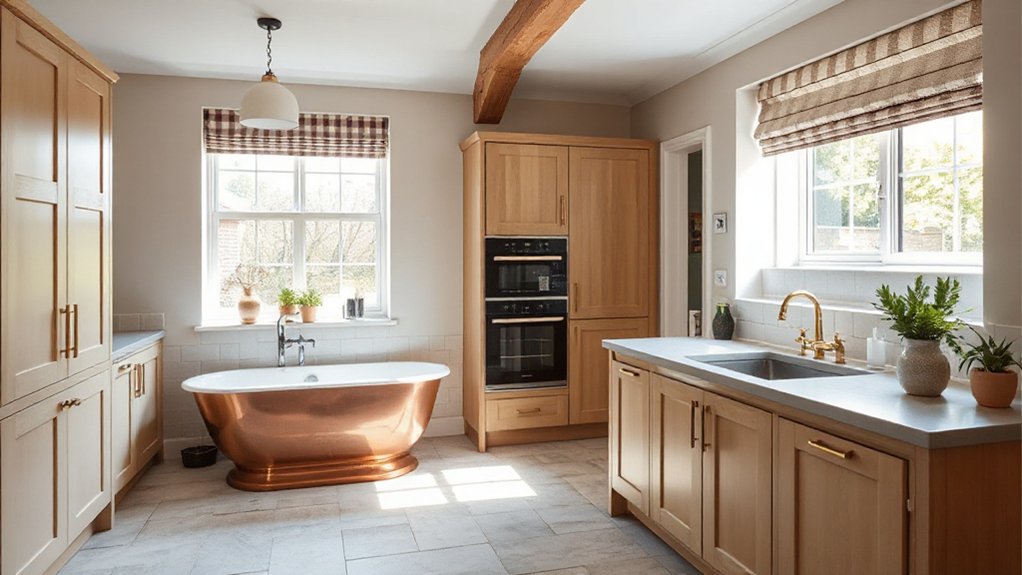
In kitchens and baths, ModernUX thrives by weaving sleek, functional design into a traditional context without sacrificing warmth or historic cues. You balance crisp lines with vintage charm, ensuring timeless silhouettes meet contemporary performance.
You’ll prioritize efficient layouts, robust materials, and tactile finishes that age gracefully, while maintaining cultural fusion through curated details. The approach emphasizes calibrated contrasts, clever storage, and ambient tech that remains discreet.
- Streamlined cabinetry paired with aged brass or patina hardware to honor tradition
- Quartz or natural stone surfaces that echo historic palettes, infused with modern durability
- Hidden tech, smart controls, and climate mastery integrated behind classic fronts
This holistic strategy delivers ergonomic efficiency, visual resonance, and lasting value, without erasing heritage or compromising modern UX.
Softening Historic Architecture With Contemporary Art
Start with a calibrated contemporary sculpture installation that references, rather than defies, original motifs, ensuring plinths and mounting systems align with heritage fabric. Abstract murals should echo historic palettes in a modern parsing of color-field, avoiding saturation overload.
You prioritize material honesty: concretely concrete, subtly patinated metals, and timber that breathes alongside plaster. Lighting design is essential, sculpting shadows to dramatize contours without erasing detail.
Your holistic method integrates acoustics, circulation, and viewing angles, so Contemporary sculptures and Abstract murals serve as focal anchors that enrich storytelling rather than compete with history.
Budget-Smart Upgrades That Respect Heritage
Blending heritage with practicality starts with smart, non-invasive upgrades that honor lineage while easing modern living. You’ll lift value by targeting finishes, fittings, and layouts that respect the past while boosting everyday comfort and efficiency.
Precision choices keep Vintage charm intact, while practical tweaks improve usability without erasing history. A holistic plan aligns structural integrity with user needs through measured adjustments rather than full reconstruction, promoting Heritage preservation.
- Restore, don’t replace: preserve original escutcheons, moldings, and hardware, then recoat with breathable finishes
- Retrofit thoughtfully: add discreet insulation, draft-proofing, and smart controls that don’t disguise character
- Focused updates: lighting, switches, and textures that echo period cues while delivering modern performance
This approach balances technical rigor with aesthetic finesse, delivering durable, elegant, affordable upgrades.
Sustainable Choices for Long-Lasting British Homes
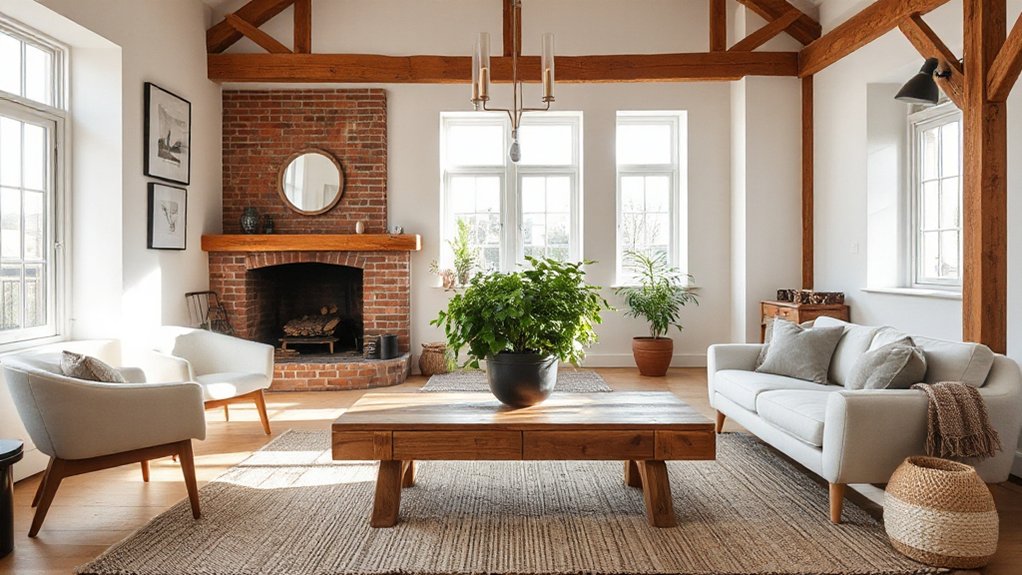
You’ll start by choosing reusable materials that reduce waste without compromising durability or character.
Emphasize long-lasting craftsmanship, so every joint and finish speaks to both performance and beauty.
Prioritize low-impact resources, weaving efficiency and resilience into the home’s fabric for sustainable, timeless British living.
Reusable Materials Choice
Reusable materials are essential for British homes that endure. You choose sources with lifecycle clarity, prioritizing durability, provenance, and minimal transport. You’ll assess embodied energy, moisture resistance, and end‑of‑life recovery to sustain long‑term performance.
Embrace an holistic approach, balancing aesthetic finesse with measurable efficiency through material zoning, joinery, and detailing that honors both heritage and modern standards. You’ll implement eco friendly practices by selecting locally available options, renewing rather than replacing, and maximizing reuse cycles across eras.
Maintain compatibility across textures, tones, and scales to preserve identity while optimizing carbon footprint.
- Local timber with certified provenance and low transport impact
- Recycled metal, ceramic, or glass components selected for durability
- Reclaimed finishes that preserve patina while meeting safety and compatibility requirements
Long-Lasting Craftsmanship
Choose materials proven for longevity—oak, maple, brick, and mineral-based finishes—that endure UK climates without frequent replacement. Precision detailing matters: square edges, balanced tolerances, and flush hardware reduce wear and maintain a seamless profile as aesthetics evolve.
You’ll weave modern systems—efficient insulation, smart controls—without compromising traditional touch, ensuring comfort and sustainability. Incorporate vintage textiles for patina and tactile depth, and feature antique hardware where appropriate to punctuate heritage.
This holistic approach sustains value, minimizes resource churn, and harmonizes enduring craft with contemporary living.
Low-Impact Resources
- Eco friendly materials chosen for longevity and minimal transport
- renewable resources integrated with airtight assemblies and durable coatings
- low embodied energy considerations guiding timber, stone, and mineral blends
This holistic method elevates durability, reduces maintenance, and honors traditional craft through modern efficiency, delivering timeless function with contemporary clarity.
Practical Troubleshooting: Common Pitfalls and Fixes
Common pitfalls in blending modern and traditional styles often stem from scope creep and mismatched finishes; start by defining a clear design brief that prioritizes harmony over novelty.
You’ll maintain a technical lens: assess proportions, lighting, and material notes to prevent clashes, then document tolerances for trims, veneers, and hardware.
When you encounter Vintage charm versus Modern simplicity, set measurable criteria: color cadence, texture balance, and focal points.
If finishes diverge, propose midpoints or unified sealants to curb sheen differences.
Revisit room sequencing to avoid abrupt shifts, and align furniture scale with architectural cues.
Use mockups to test integration, iterating until edges feel intentional, not accidental.
Finally, establish a review checklist for contractors and clients, ensuring cohesion, durability, and a timeless, holistic result.
Frequently Asked Questions
How Do You Balance Period Features With Current Tech Needs?
You balance period features with current tech by prioritizing architectural harmony and thoughtful material selection, tech discreetly integrated, cables concealed, and lighting tuned. You assess acoustics, durability, and efficiency, delivering a holistic, technically adept, aesthetically refined outcome.
Can You Blend Modern and Traditional on a Budget?
Yes, you can blend modern and traditional on a budget. Budget friendly decor relies on smart purchases and DIY tweaks; vintage modern accents shine, aligning technical prowess with aesthetic finesse in a holistic, cost-conscious approach.
What Lighting Plan Suits Mixed-Era Interiors Best?
A versatile lighting plan blends modern and traditional cues with layering, using lighting fixtures to create zones and ambient illumination that highlight textures, colors, and craftsmanship; you balance brightness, warmth, and contrast for a cohesive, tech-forward ambiance.
Which Fabrics Resist Wear in Historic-Inspired Rooms?
Durability textiles resist wear best in historic-inspired rooms; choose tightly woven weaves, leather, and wool. You’ll layer with vintage fabrics for texture, durability, and elegance, like a fortress of comfort you design, harmonizing technical prowess with aesthetic finesse.
How to Avoid Colonial or Cliché Fusion in the UK?
To avoid colonial or cliché fusion, you balance Colonial influences with original, locally inspired details, avoiding obvious pairings and stereotypes; you curate authentic textures, proportional contrasts, and mindful color palettes, ensuring cohesive, contemporary spaces that feel thoughtfully crafted, not dated.
Conclusion
Blending modern and traditional in UK homes is a discipline of balance, method, and distilled taste. You harmonize color, silhouette, and texture across eras, then light the space so old masonry glows with new intent. Picture a 19th-century fireplace as a canvas for a streamlined sofa and kinetic light—where history teaches restraint and contemporary pieces perform with reverence. Done right, your home reads as solved, layered, and endlessly adaptable—an enduring room you’ve crafted, not merely decorated.