Assess, assess, assess the space; assess the antique’s character. You balance contrasts with care, choosing pieces that echo modern materials and textiles without overpowering the room. You refine finishes to honor craft, place antiques where their details can shine, and weave in restrained color and texture to keep the look cohesive. Stay purposeful and precise, layer thoughtfully, and you’ll discover the subtle tension that makes the blend feel deliberate—and that tension begs a closer look at what comes next.
Foundations: Assess Space and Antique Identity
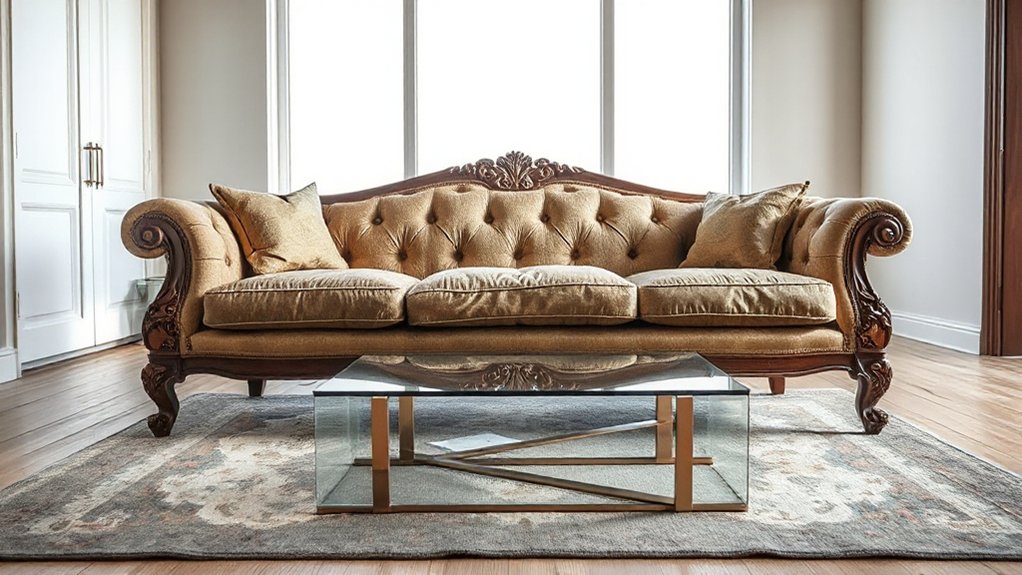
Assess your space and antique identity before you begin mixing styles. You’ll establish a clear framework by surveying room scale, traffic patterns, and focal points, then aligning them with your vintage pieces.
Determine which era or style resonates with you and how it signals Antique authenticity in daily life. Map dimensions, ceiling height, and natural light to anticipate how an item will sit visually and functionally within the room.
Understand Historical context without overloading the design; let it guide choices rather than overwhelm them. Prioritize a cohesive color story, material harmony, and a restrained silhouette to prevent clashes.
Your evaluation shapes deliberate pairings, ensuring modern accents support rather than overshadow your antiques. This foundation sustains balanced, purposeful interiors.
Choose Antiques That Pair With Modern Materials and Textiles
Blending antique pieces with modern materials and textiles hinges on selective contrast: choose antiques that highlight today’s fabrics and finishes rather than compete with them. You’ll aim for pieces whose structural elegance remains legible when placed beside contemporary materials.
Prioritize contrasts in texture, weight, and sheen: a drawer with subtle, distressed finishes can anchor a room of sleek metals and matte textiles, while a highly polished surface might clash with rougher upholstery.
Seek vintage fabrics that echo current palettes but still feel tactile and real, avoiding overly ornate patterns that overwhelm modern fabrics. Let the antique’s restraint guide your mix, ensuring distressed finishes, patinas, and carved details complement rather than dominate.
Essentially, select antiques that amplify modern materials, not upstage them.
Placement Rules: Where Antiques Shine in a Modern Room
Antiques don’t belong scattered randomly; they need intentional placement that foregrounds their strengths without overpowering a modern space. You’ll maximize impact by anchoring a piece with clean sightlines, choosing nearby surfaces that echo its period without competing textures.
Prioritize contrast over competition: a single, well-lit antique can become the room’s focal point, while surrounding modern furniture stays minimal. Consider sight paths—avoid blocking doors or natural flows—and place items where they’re appreciated from multiple angles.
Use lighting to sculpt presence: a discreet spotlight or vintage lighting fixture can highlight craftsmanship without shouting. Remember practicalities: guarantee stable placement, protect against everyday bumps, and document restoration work for provenance.
When in doubt, curate a quiet, purposeful display that respects both antique restoration and modern restraint.
Layering for Balance: Color, Pattern, and Texture
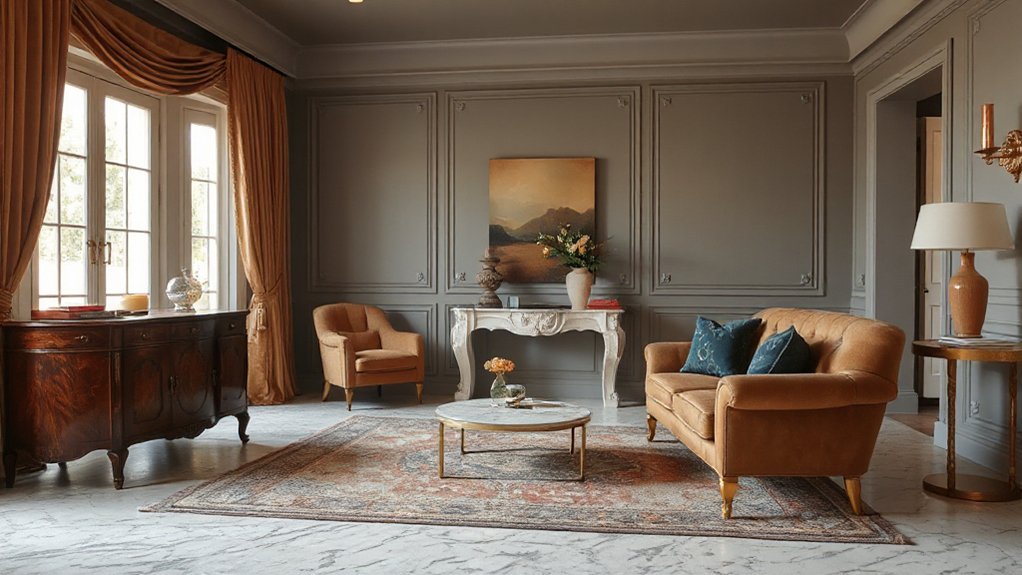
Color harmony sets the base, with layered tones tying antique and modern pieces together. You’ll apply pattern mixing techniques that balance bold motifs with quiet backups, letting texture balance strategies cue contrast without clutter.
Start by aligning Color Harmony Layers, Pattern Mixing Techniques, and Texture Balance Strategies to create a cohesive, multi-dimensional room.
Color Harmony Layers
To achieve harmony, layer color, pattern, and texture intentionally so antique pieces feel both cohesive and contemporary.
You establish color harmony by selecting a restrained core palette and feeding it with accents that echo architectural notes. Begin with a dominant neutral or muted tone to anchor space, then introduce one or two complementary hues as anchors for furniture and textiles.
Guarantee color cohesion by repeating accents across surfaces—throw pillows, rugs, and drapery should reference the same hues without overmatching.
Introduce texture through fabrics, finishes, and materials that catch light differently, creating depth without visual clutter.
Use vintage charm as a cue, not a statement, so contrasts stay subtle. The result is balanced, modern, and timeless.
Pattern Mixing Techniques
Pattern mixing, when done thoughtfully, balances bold and subtle to keep antique pieces from dominating or fading. You’ll layer color, pattern, and texture so each element supports the others, creating a cohesive room that reads intentional rather than cluttered. Focus on quiet backdrops that let vintage motifs stand out with deliberate contrast.
1) Establish a unifying color base to anchor all patterns and prevent visual discord.
2) Choose one dominant pattern, then introduce a second with high pattern contrast for emphasis.
3) Use texture variety to add depth without overwhelming vintage motifs.
4) Alternate scales—large, medium, small—to maintain rhythm and balance.
This approach maintains pattern contrast across seating, textiles, and accessories, ensuring antique furniture remains integrated rather than isolated.
Texture Balance Strategies
Texture balance is about layering tactile variety so antique furniture feels intentional within modern spaces. You measure impact by pairing surface textures with color and pattern, then watching for harmony rather than competition.
Start by identifying three tactile cues: rough, smooth, and somewhere in between. Use vintage contrasts to highlight edges of antique pieces while keeping surrounding surfaces restrained.
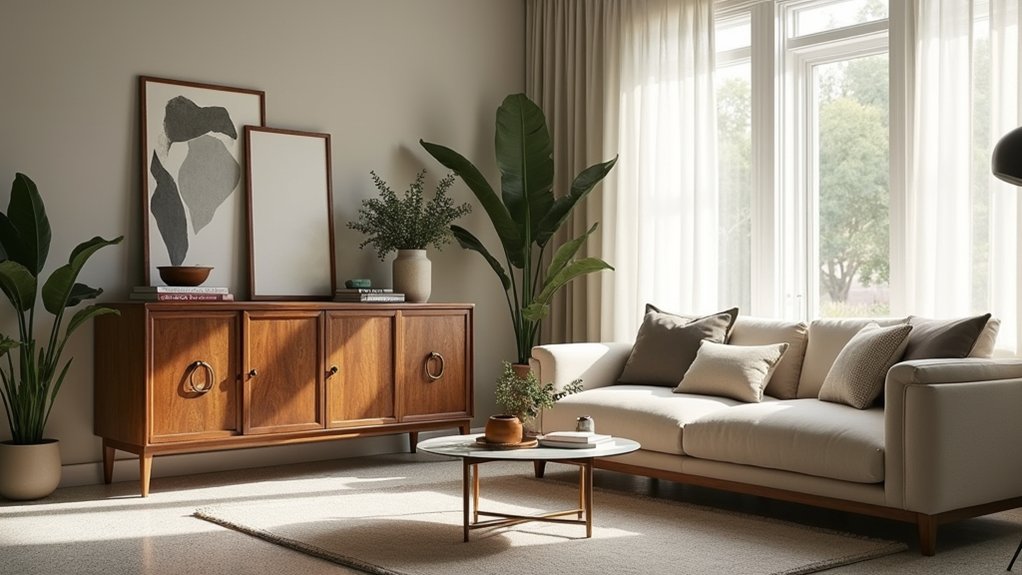
Animate depth with textiles: a woven rug against a lacquered table, a velvet chair beside a matte wood sideboard. Maintain a unifying palette so textured extremes don’t clash.
Avoid competing finishes; let the room breathe with controlled repetition. Prioritize proportion: larger textural elements anchor rooms, small details polish progressions.
Surface textures should read as complementary, not discordant, ensuring your antiques contribute intentional warmth without overwhelming modern lines.
Budget, Sourcing, and Quick Renovations for Modern Living
You can start by prioritizing budget-friendly sourcing sources, like local dealers, estate sales, and online marketplaces.
Focus on pieces with solid frames and classic lines. Quick renovations should center on easy upgrades—new hardware, fresh finishes, and targeted repaints—that respect original character while modernizing function.
Stay pragmatic by evaluating each piece’s core value, estimated renovation effort, and market alternatives to guarantee both affordability and impact.
Budget-Friendly Sourcing Tips
To stretch your budget without sacrificing style, start by prioritizing pieces with strong silhouettes and durable construction that can endure daily use. You’ll maximize value by focusing on antique restoration potential and confident resale appeal, then weigh provenance against price. Seek sources that offer documentation, condition notes, and return policies. Avoid overpaying for trends that fade.
- Target reputable vintage resale stores with clear condition ratings and return options.
- Attend estate sales and auctions early for access to well-made classics.
- Inspect joints, veneers, and hardware; negotiate bundled deals for multi-piece purchases.
- Consider refinishing or minor restorations to boost value without major upheaval.
Prioritize items you can love now, but that can appreciate with careful care and periodic maintenance.
Quick Renovation Approaches For Modernizing
Quick renovations can refresh antique pieces for modern living without breaking the bank. You’ll prioritize simple upgrades that yield highest impact, staying faithful to original character.
Begin with antique restoration basics: fresh wax or a sealant to protect wood, light sanding to remove grime, and even minor hardware replacements that match era style.
Focus on structural fixes before cosmetic changes; stability sustains value.
For lighting, consider vintage lighting alternatives that complement the piece and room. Integrate clean, modern fixtures only if they enhance usability and balance, not overwhelm.
Refinish surfaces in muted tones to preserve patina, then add contemporary accents sparingly to maintain cohesion.
Document changes for resale value, and avoid over-embellishment.
Result: improved function, preserved charm, smoother blend with contemporary spaces.
Troubleshoot Common Mixes: Quick Fixes When Antiquity Feels Off
When an antique piece feels off in a modern setting, start with a quick diagnostic: assess scale, finish, and context before adjusting decor. You’ll reestablish harmony by identifying where antiquity clashes and where it harmonizes, then apply targeted tweaks.
- Check scale relationships with room flow; midsize pieces often bridge gaps between bold statement items and minimalist surroundings.
- Reassess finish compatibility; blend patina with similarly toned neutrals to reinforce Antique authenticity.
- Adjust surrounding textiles and hardware to enhance Modern contrast without overpowering the piece.
- Introduce a unifying color or material across accents to create cohesive, purposeful contrasts.
Result: cleaner integration, less clutter, and a more confident, deliberate mix.
Frequently Asked Questions
How to Avoid Clutter When Mixing Antique and Modern Pieces?
To avoid clutter, you curate deliberately: prioritize a few standout antique pieces, pair them with clean lines, and use neutral backgrounds. Embrace negative space, scale, and purposeful storage to maintain balance.
Focus on Antique preservation by treating patina as a feature, not a distraction.
For Modern decor integration, synchronize metals and textures, and limit patterns. You’ll create cohesion by repeating a single, muted accent color.
You’ll feel calmer, organized, and visually intentional throughout the room.
What Lighting Enhances Antique-Modern Furniture Harmony?
You should choose lighting that softly silhouettes antique pieces while preserving modern clarity.
Opt for Antique lighting with warm dimmable bulbs to evoke history, and pair it with crisp Modern illumination for balance.
Use layered sources: wall sconces, table lamps, and ceiling fixtures that blend metallics and patinas.
Avoid harsh whites; aim for 2700–3000K.
Your goal is cohesive glow, not glare, so you can appreciate intricate details without overpowering surrounding furniture.
Which Finishes Best Bridge Old and New Surfaces?
You’re the hinge between eras, choosing finishes that bridge history and today. The best options are satin woods, low-sheen lacquers, and soft waxes that let vintage textures and material contrasts breathe.
Use these finishes to echo patina while preserving the legibility of lines. Matte sealers on antique surfaces marry with contemporary metals, while a subtle glaze adds depth.
You drive cohesion, signaling timelessness through refined, deliberate touch.
How to Mix Styles Without Compromising Resale Value?
You can mix styles without hurting resale value by anchoring your spaces with timeless basics and clear lines. Choose vintage accessories as statement pieces and balance them with contemporary art to keep rooms fresh.
Maintain a cohesive palette, avoid over-cluttering, and preserve original antique integrity where possible. Invest in quality frames and finishes that wear well.
Document provenance, keep receipts, and show customization that respects value while showcasing your personal taste.
Can Electronics Work With Antique Furniture Without Mismatch?
Yes, electronics can work with antique furniture without looking mismatched if you proceed thoughtfully. You’ll blend vintage accessories with clean lines and consider proportionality so technology feels integrated, not dominant.
Keep cords hidden and choose discreet devices, pairing them with finishes that echo the antique piece. Prioritize technological integration that respects history, and use soft, euphemistic detailing to soften contrasts.
This approach guarantees cohesive, deliberate styling rather than gimmicky contrasts.
Conclusion
Blending antiques into modern interiors isn’t about replication; it’s about dialogue. You’ll notice rooms feel more layered when you pair authentic character with contemporary restraint, and you’ll use lighting, textiles, and color to harmonize contrast. An eye-opening stat: homes with thoughtfully mixed periods report a 28% higher perceived design quality than those with uniform styles. Trust the process—preserve the piece’s soul, place it intentionally, and let modern textures finish the story. Your space will read as both timeless and current.