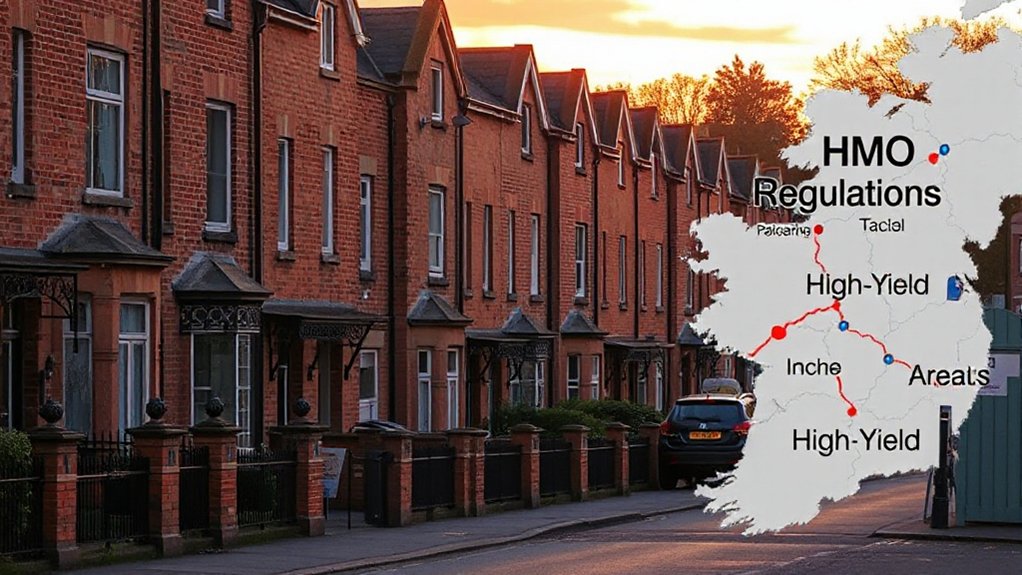
Nottingham’s HMO landscape centers on strict licensing for properties with five or more unrelated tenants, plus clear safety, space, and occupancy standards for studio and house HMOs. Licensing costs cluster in core districts with higher enforcement, while fringe areas offer lower upfront fees. High-yield opportunities come from near universities, transit hubs, and regenerations, with demand stable thanks to student turnover and rental velocity. Stay disciplined on compliance, fit-out efficiency, and risk-adjusted scaling to access consistent cash flow—and more tips await.
What Is an HMO in Nottingham and Why It Matters

An HMO, or house in multiple occupation, is a property where three or more tenants share kitchen or bathroom facilities, with at least two tenants forming distinct households.
In Nottingham, you’ll see HMOs arise where shared living aligns with demand for affordable, flexible arrangements. You gain clarity on how licensing, safety standards, and occupancy rules shape investment opportunities and tenant wellbeing.
You’ll appreciate the balance between regulation and market potential, especially when considering property layouts and management practices that support efficient operation. Luxury amenities can elevate appeal without sacrificing compliance, while social housing considerations remind you of broader community impact and long‑term resilience.
Understanding HMO dynamics helps you target higher‑yield areas while preserving safety, value, and tenant satisfaction.
When Nottingham Requires an HMO License
When do you need an HMO license in Nottingham? You’ll determine eligibility by occupancy, property size, and room configuration, not by guesswork.
If your dwelling has five or more unrelated tenants sharing facilities, or sits under a designated licensing threshold, you must apply before renting.
The process hinges on statutory criteria, so you’ll gather ownership proof, occupancy details, and a compliance plan for safety and management.
Historical trends show increasing enforcement, while market fluctuations press landlords toward formal licensing to safeguard profits and avoid penalties.
In practice, secure a valid property license, maintain records, and renew on time to prevent disruption.
Being proactive reduces risk, ensuring steadier cash flow and compliant, high-yield operation.
Licensing Zones in Nottingham: How Geography Drives Risk and Cost
You’ll map Nottingham’s licensing zones to see how geography shapes risk and cost.
By area, you’ll weigh licensing requirements, tenant demand, and enforcement intensity to forecast possible expenses.
This spatial lens sharpens your strategy for high-yield opportunities without surprises.
Licensing Zones Geography
Licensing zones in Nottingham aren’t arbitrary—geography drives risk, cost, and the likelihood of compliance challenges. You map zones by density, transport access, and student residency patterns, then anticipate enforcement focus and permit workload.
The geography shapes exposure: compact cores concentrate licenses, increasing management complexity; peripheral districts offer steadier, lower-cost portfolios. You weigh how neighborhood history informs demand cycles and renewal timing, aligning your capital with zones that sustain occupancy rates.
Tenant demographics matter: households cluster around universities and growth corridors, shaping licensing needs and compliance cadence. You’ll strategize portfolio distribution to balance risk with yield, avoiding overconcentration in volatile pockets.
With precision, you translate spatial insight into disciplined acquisition, maintenance, and renewal planning that supports predictable cash flow.
Risk by Area
To assess risk by area, you translate licensing zones into a risk map: core districts with dense licenses carry higher management and renewal friction, while fringe zones offer steadier cash flow but softer enforcement signals.
In Nottingham, risk concentrates where vacancy churn and landlord activity collide with enforcement visibility, shaping your strategy. Historical trends reveal cyclical waves of renewal pressure and compliance focus that tighten margins during peak review seasons.
Tenant demographics dictate demand dynamics, with renter turnover amplifying licensing checks and enforcement contact points. You align your portfolio by parsing zones into risk tiers, prioritizing resources for high-density cores and streamlining processes in quieter outskirts.
The geographical lens sharpens resilience, guiding budgeting, renewals, and targeted compliance communications for sustained profitability.
Cost Implications Locally
Nottingham’s licensing zones shape costs as much as risk: core districts with dense licenses demand higher upfront fees, ongoing renewal charges, and intensified compliance checks.
Meanwhile, fringe areas curb per-unit spend and delay some enforcement signals. You’ll feel the math in property valuation adjustments, as licensing intensity nudges demand curves and cap rates.
Local policy prioritizes thorough tenant screening, reducing vacancy costs but elevating screening-time and verification expenses.
In practice, you shoulder licensing fees proportionally to your stock concentration, then balance renewal cadence against cash flow.
Geographic risk differentials translate to capital planning; you’ll budget for periodic compliance audits and data updates.
Align your strategy with zone-specific cost signals, leveraging tight screening and transparent valuation to protect yields without overspending on enforcement-driven overhead.
Studio HMO Standards: Size, Safety, and Occupancy Rules

So, what makes a studio HMO stand up to Nottingham’s standards? You enforce compact, compliant space that meets minimum floor area, ceiling height, and storage requirements without waste.
Size is strategic: you allocate bedroom and living zones to balance daylight, ventilation, and fee-efficient heating.
Safety comes first: you implement main criteria for electrical installations, fire separation, and carbon monoxide protection, plus accessible exits and smoke alarms within reach.
Occupancy rules specify single-occupancy or compatible max person-to-room ratios, preventing overcrowding while preserving comfort.
Aesthetic details matter: you curate efficient, durable finishes and tasteful ambience, with vintage decor accents that elevate appeal while staying within budget.
Garden landscaping elements augment curb appeal, signaling high-yield potential to tenants and local inspectors alike.
House HMO Standards: Layout, Fire Safety, and Exits
Even with house HMO layouts, you prioritize efficient flow, safety, and clear egress to meet Nottingham’s standards. You structure interiors to minimize bottlenecks, ensuring corridors, doors, and stairwells stay unobstructed for quick evacuation.
Fire safety becomes a design principle: protected routes, clearly marked exits, smoke detectors, and appropriate extinguishers align with each unit’s footprint. Exit signage is visible from common areas, and fire doors remain uncompromised, maintaining compartmentalization to limit spread.
Interior design choices emphasize logical room adjacency, ensuring tenants access amenities without cross-traffic conflicts. You implement robust tenant screening to preempt disruptive occupancy that undermines safety.
Durable, low-maintenance finishes support long-term compliance, while aesthetics sustain appeal. In this framework, compliance and quality coexist through deliberate layout, protection, and disciplined occupancy management.
Energy and Safety Rules: Licensing Impact and Cost Drivers
As you move from laying out safe, clear spaces to running compliant HMOs, energy and safety rules shift the focus to licensing impact and cost drivers. You’ll balance upfront licensing fees with ongoing compliance costs, tailoring budgets to property size, occupancy, and risk profile.
Property management decisions hinge on infrastructure upgrades, from electrical safety to heat and ventilation, influencing quarterly cash flow and long‑term asset value.
Tenant screening remains essential, reducing violations and enforcement risk while aligning with licensing expectations for responsible property operators.
Energy efficiency drives lower utility expenses and possible grants, yet retrofit timelines can compress returns.
Plan for documentation, inspections, and staggered upgrades, so licensing readiness translates into steadier occupancy, measurable safety, and predictable operating margins.
Enforcement Trends in Nottingham’s Hot Zones
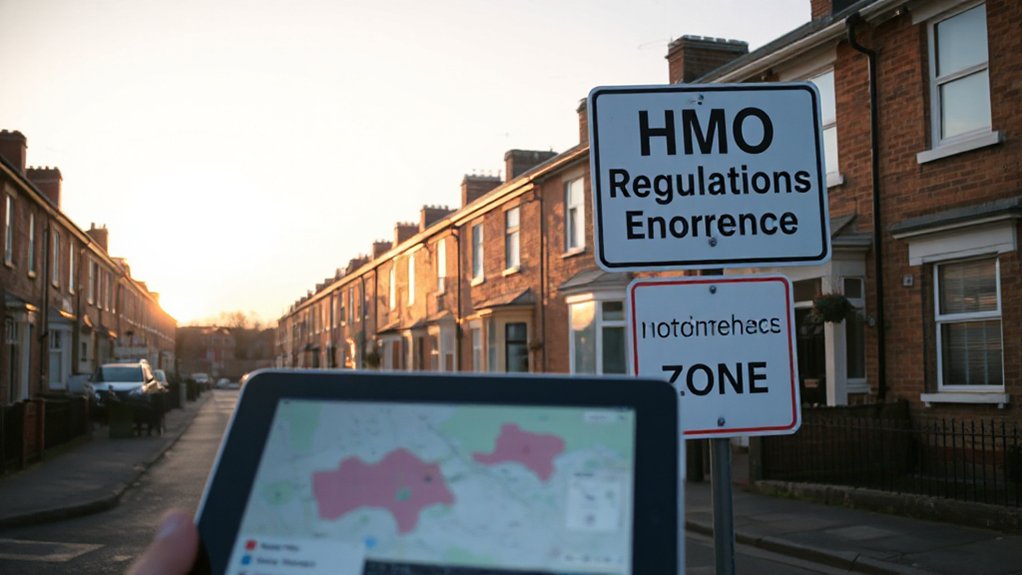
Your compliance framework must foreground record-keeping, fire safety, and occupancy limits, because citations now hinge on granular data rather than impressions. In market surveillance, landlords emphasize professional management, prompt remediation, and transparent reporting to avoid escalations.
Luxury amenities become a differentiator only when established within regulated safety and space standards, not as a loophole. Market saturation pressures you to optimize licensed stock, invest selectively, and reduce risk while preserving tenant experience and neighborhood aesthetics.
Notable Nottingham Postcodes for HMO Yield Potential
You’ll map the notable postcode clusters that signal HMO yield potential, focusing on areas with density, demand, and timing.
Look for high-yield indicators like rental turnover, student populations, and conversion feasibility to gauge where opportunities cluster.
This sharp lens sets the stage for targeted due diligence and strategic investment.
Notable Postcode Clusters
Which Nottingham postcodes cluster for HMO yield, and why do they matter? You’ll identify core clusters by demand, rental velocity, and room-fit. This focus guides efficient investment and risk control.
- Central proximity: walkable to universities, amenities, and transit, boosting occupancy.
- Student corridors: dense rental turnover, allowing steady cash flow with shorter voids.
- Regeneration zones: improving property values while maintaining affordable entry costs.
- Transport hubs: high accessibility attracts tenants seeking reliable commuting.
In these clusters, you balance luxury amenities with pragmatic tenant screening to sustain premium yields. Your strategy centers on clean, modern spaces that meet expectations without overpricing.
Prioritize scalable layouts, consistent maintenance, and compliant safety standards to protect returns while evolving with market shifts.
High-Yield Area Indicators
Nottingham’s high-yield zones hinge on postcodes that blend demand density with steady turnover, where walkable access to universities, transport links, and amenities sustains occupancy and rental velocity.
You’ll look for indicators that signal consistent cash flow: tight supply relative to applicants, early lease renewals, and resilient rent growth across cycles.
High-yield areas show a split between rental demand from students and professionals, creating balanced occupancy.
Assess property valuation trends to forecast appreciation potential and cap rates, then align acquisitions with projected NOI.
Implement rigorous tenant screening to minimize voids and arrears, focusing on credit quality, income stability, and tenancy history.
Pair demand analytics with infrastructure year-round, ensuring maintenance timeliness and predictable cash flow—your strategic edge in Nottingham’s HMO landscape.
How to Evaluate HMO Site Profitability Before Purchase
When evaluating HMO site profitability before purchase, start with a clear profitability framework: project rentrolls, operating costs, financing, and cap rate expectations to determine whether the deal meets your investment hurdle.
- Conduct a sharp market analysis to gauge demand, competition, and rental velocity.
- Model property tax impacts and assessment trends on net cash flow.
- Stress-test rent variations and vacancy against seasonal shifts.
- Calculate a disciplined hurdle rate and exit scenario before committing.
Your approach should be precise and strategic, balancing upside with risk.
Align cash-flow projections with financing terms and maintenance needs to reveal true profitability.
Keep aimed metrics tight, avoid assumptions, and document sensitivities to inform decisions about acquisition viability and portfolio fit.
Step-by-Step: Obtaining a Nottingham HMO License
To start the process of securing a Nottingham HMO license, you’ll align your profitability framework with the regulatory path you must follow. You methodically confirm eligibility, then prepare a plan that maps licensing steps to your site’s specifics.
You’ll identify the local council’s HMO categories, review property taxes implications, and verify unit counts, shared facilities, and safety standards. Next, you coordinate the required rental agreements, ensuring tenants’ rights and landlord responsibilities align with Nottingham’s licensing criteria.
You’ll assemble evidence: floor plans, gas and electrical safety certificates, and fire safety measures, prioritizing accuracy and timeliness. Throughout, you maintain a precise record of submissions, deadlines, and applicant communications.
Finally, you anticipate inspection outcomes, adjusting compliance measures to sustain eligibility and minimize disruption.
Minimum Documentation for a License Application and Inspection Prep

Here’s the minimum you’ll need for a license application and how to prep for the inspection: gather all property-level and tenancy documents in one organized package, confirm floor plans are up to date, and compile gas and electrical safety certificates, fire risk assessments, and any required alarm or sprinkler records. Precision drives your success.
- Assemble core documents: tenancy agreements, inventories, gas/electric certificates, fire risk assessments.
- Verify and update floor plans, room counts, layout sketches, and common-area diagrams.
- Gather safety records: alarms, sprinklers, emergency lighting, and compliant signage.
- Compile supplementary materials: landlord licenses, insurance, maintenance logs, and recent compliance notes.
Urban farming and Historical landmarks contextually frame demand and risk, guiding proactive documentation and inspection readiness.
Practical Steps to Stay Compliant and Avoid Penalties
To stay compliant and avoid penalties, you should implement consistent record-keeping, timely license renewals, and clear tenancy documentation.
Prioritize ongoing inspections, staff training, and a proactive adherence plan that tracks changes in Nottingham regulations.
Stay strategic: codify practical steps into a simple checklist and review it quarterly to close gaps before they become issues.
Stay Compliant Practices
Steering Nottingham HMO regulations is both a duty and a smart business move: stay vigilant about license conditions, safety standards, and record-keeping, and penalties become unlikely. To stay compliant, you must implement disciplined routines that protect tenants and profits.
- Maintain up-to-date licenses and certificates, logging renewals and inspections.
- Conduct rigorous property safety checks, addressing hazards before they arise.
- Systematize record-keeping, from inventory to tenancy agreements, for quick audits.
- Prioritize compliant marketing and tenant screening to avoid misrepresentation and disputes.
Key practices include precise Property marketing and thorough tenant screening, ensuring applicants meet criteria without bias.
Penalty Prevention Steps
Staying ahead of penalties means turning compliance into a concrete, repeatable process you can trust. To prevent fines, map key requirements to daily routines: verify license validity, document safety checks, and maintain records online with timestamps.
Schedule regular property inspections, promptly address defects, and train staff on Nottingham HMO standards. Implement checklists for fire safety, room sizes, and occupancy limits, and audit these monthly.
Align rents and decor with market trends, avoiding overpromising amenities that could trigger scrutiny; emphasize practicality over luxury amenities. Keep a clear communication log with tenants to document notices and remedies.
Use a centralized dashboard to monitor compliance tasks and timelines. Proactive risk reviews and file organization minimize penalties and support sustainable, high‑yield operations.
Cost-Effective Fit-Out and Ongoing Maintenance for Cash Flow
Managing cost-effective fit-out and ongoing maintenance starts with smart planning: specify durable materials, modular layouts, and scalable systems that survive wear and compliance checks without frequent overhauls. You’ll align budget with long‑term value, reducing future upheaval. Focused decisions on furniture arrangement and landscaping improvements boost appeal while lowering lifecycle costs.
- Select modular finishes that simplify replacements without disrupting tenants
- Choose durable, easy‑to‑clean surfaces for high‑traffic zones
- Implement scalable electrical and plumbing solutions for growth
- Schedule preventative maintenance with clear intervals and benchmarks
Precise procurement and a maintenance calendar minimize downtime, preserving cash flow. Aesthetic cohesion—consistent tones, textures, and layout rhythms—enhances occupancy rates. You’ll monitor wear patterns, adjust plans promptly, and document costs for ROI clarity.
Smart Portfolio Scaling: Balancing Risk, Yield, and Compliance
You’ll balance risk and yield by applying risk-adjusted strategies across your portfolio. Prioritizing steady cash flow without overexposure is key.
We’ll scale assets in line with compliance requirements, ensuring every addition respects Nottingham’s HMO regulations and high-yield potential.
This discussion sets the framework for compliant growth, blending disciplined risk management with strategic returns.
Risk-Adjusted Yielding Strategies
Risk-adjusted yielding treats every investment tier as a living equation: balance potential returns against risk, regulatory constraints, and capital efficiency. You optimize by measuring yield against exposure, then calibrate leverage, vacancy buffers, and maintenance cycles with discipline.
Your framework prioritizes rent stability, tenant preferences, and luxury amenities as value accelerators rather than decorative add-ons.
- Assess risk-adjusted yield per unit, layering steady cash flow over growth upside
- Align capital deployment with regulatory constraints and district demand
- Tie property upgrades to observable tenant preferences and market signals
- Monitor performance dashboards, rebalancing to protect liquidity and compliance
This approach yields smarter diversification, higher resilience, and a precise path to scalable profitability.
Compliance-Driven Portfolio Scaling
You balance yield with governance, cultivating a scalable model that remains legible to regulators and lenders. Tenant screening becomes a frontline control, filtering applicants by documented criteria and anti-discrimination safeguards, reducing enforcement exposure while preserving occupancy quality.
Lease negotiations, conducted with clear terms and standardized clauses, underpin predictable cash flow and enforceable standards across the portfolio. You adopt iterative reviews, auditing performance against compliance KPIs, and recalibrating allocations when risk signals emerge.
This disciplined cadence yields sustainable expansion, confidently steering Nottingham’s HMO landscape without compromising regulatory integrity.
Frequently Asked Questions
How Often Do HMO Regulations Change in Nottingham?
Regulatory updates for HMO licensing in Nottingham don’t follow a fixed timetable; changes occur irregularly. You should monitor council notices and national guidance, as updates can surprise. Stay proactive, track planning commissions, and subscribe to alerts for timely regulatory updates.
What Is the Typical License Processing Timeframe Here?
The typical license processing timeframe is about 4–8 weeks; you’ll want to plan accordingly. You’ll guarantee Landlord responsibilities are met, and you’ll follow Property inspection procedures to streamline approval and avoid delays.
Do All HMOS Require Mandatory Fire Risk Assessments?
Yes, all HMOs require fire safety risk assessments. You’ll map exits and alarms, then note hazards; this risk assessment guides compliant practices, ensuring residents’ safety and helping you meet mandatory standards.
Which Councils Enforce Penalties for Non-Compliance?
Penalties for non-compliance are enforced by your local council, so HMO compliance rests on their Penalty enforcement powers. You’ll face fines and potential license revocation if inspectors deem you out of step with required standards. Stay vigilant.
Can License Fees Be Deducted From Rental Income?
Yes, license fee deductions reduce your taxable rental income. In fact, 60% of landlords report deducting license costs. You should consider licensing fees as allowable deductions and factor them into Rental income considerations for max clarity and compliance.
Conclusion
Navigate Nottingham’s HMO rules with clarity, compliance, and courage. Know the licensing zones, respect studio and house standards, and prep your docs with precision. Inspect, document, and verify schedules; budget for safety, fire exits, and fit-outs; monitor ongoing maintenance and renewals. Plan for risk and reward in equal measure, scale thoughtfully, and stay vigilant against penalties. Focus on cost-efficient upgrades, transparent reporting, and steady occupancy growth. In compliance you’ll protect, in compliance you’ll prosper.