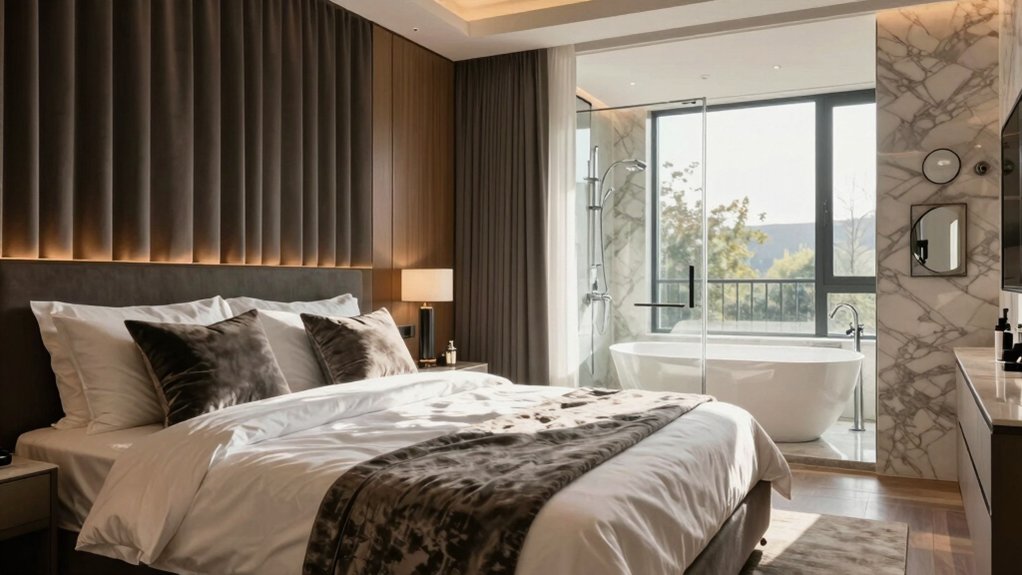
Building a master suite costs vary by size, finishes, and system complexity, and budgets don’t scale linearly as scope grows. Expect costs to cover demolition, framing, plumbing and electrical work, HVAC upgrades, finishes, fixtures, and design and permitting fees, with a contingency of 10–20%. Larger spaces, higher-end materials, and structural changes raise prices quickly. You’ll pay for lighting plans, smart home integration, and inspections. If you keep exploring, you’ll uncover practical budgeting tips and typical ranges.
Factors Driving Master Bedroom and Bath Costs
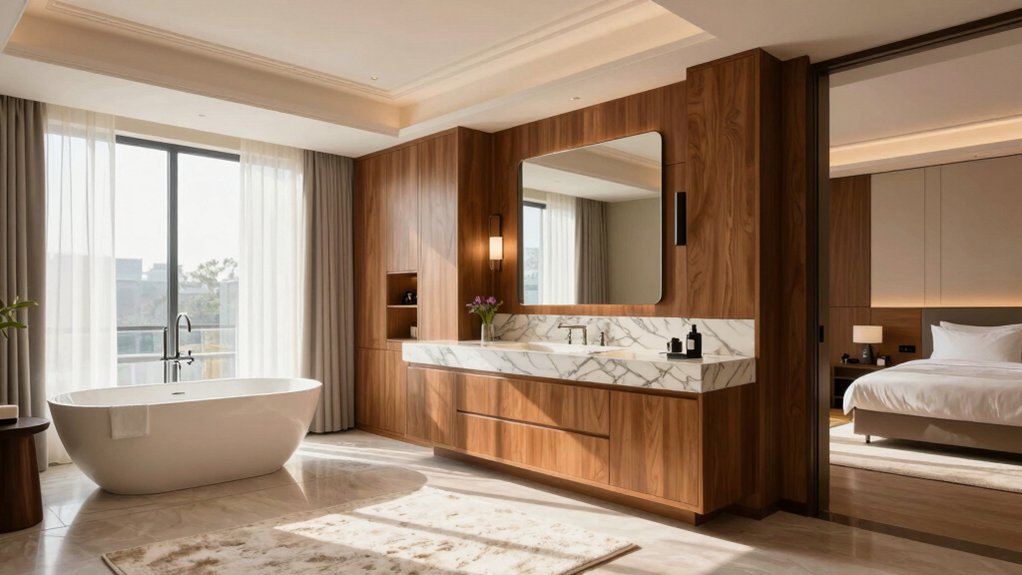
Several factors drive the total cost of a master bedroom and bath. You assess project scope, material quality, and finish levels to determine baseline expenditures.
Structural work, such as plumbing reroutes, electrical upgrades, and load-bearing assessments, adds variable costs dependent on existing conditions.
Finishes, fixtures, and fittings drive price per square foot, with higher-grade options increasing budget volatility.
Lighting design and furniture selection influence both immediate purchase prices and installation complexity, impacting labor time and required specialty contractors.
Energy efficiency goals, such as dual-pane windows or low-E glass, contribute long-term savings yet raise upfront costs.
Permitting, inspections, and design fees establish non-linear overhead.
Schedule constraints, sequence logic, and contractor coordination affect labor rates.
You mitigate surprises with detailed material lists, phased approvals, and contingency planning.
How Square Footage Impacts Budget
How does square footage shape your budget? In this topic, you quantify area to forecast costs with precision. Larger footprints raise material, labor, and permitting assumptions proportionally, but not linearly, due to fixed costs and efficiency gains.
For master bedroom and bath spaces, you’ll see incremental cost steps tied to common room shapes, ceiling height, and mechanical runs. As you expand square footage, allocate budget for bedroom lighting circuits, switch gears, and accessible paths; for baths, plan plumbing cores and venting lengths carefully.
Consider envelope efficiency, HVAC load implications, and insulation needs, since these affect monthly operating costs alongside upfront expenditures. Track area in net usable terms to avoid overestimating layout complexity, and allow a modest contingency for unexpected scope shifts.
Finishes and Fixtures: Choosing Your Look and Budget
Material choices set the base cost and long-term maintenance, so you’ll want to compare durability, aesthetics, and installability across surfaces.
Fixture finishes influence perceived value and coordination, requiring clear standards for metals, textures, and coatings.
Balance the budget by aligning materials and finishes with your overall look goals and anticipated usage.
Material Choices
Choosing finishes and fixtures defines the room’s look within your budget, so set clear targets for materials, durability, and installation complexity from the outset. Material choices hinge on performance data, supplier lead times, and compatibility with HVAC, plumbing, and electrical runs.
Prioritize moisture resistance in baths and low-silhouette maintenance in bedrooms. For lighting options, evaluate lumens per watt, color rendering index, and dimming compatibility across zones to balance ambience and task needs.
Flooring materials should align with traffic, moisture exposure, and subfloor conditions, favoring stabilized substrates and proven installation methods. Specify thickness, error tolerances, and warranty coverage to minimize rework.
Confirm finish schedules early to avoid clashes with doors, trim, and cabinetry. Document material hardness, slip resistance, and cleaning regimes for long-term performance.
Fixture Finishes
Fixture finishes set the room’s character while aligning with budget and maintenance needs. You select finishes that balance function with aesthetics, ensuring compatibility with structural constraints and moisture exposure. Focus on durability and care requirements for each material, linking procurement costs to lifecycle performance.
You should evaluate examples such as faucet finishes, door hardware, and cabinetry hardware for consistency with overall design. When planning, consider lighting options—finishes interact with light to alter perceived color and texture, influencing brightness and ambiance.
Similarly, choose flooring materials that resist wear and moisture while matching the finish palette. Document finish schedules, noting finishes, providers, and warranties to prevent mid-project changes.
Prioritize evidence-based selections rather than trend-driven choices to protect long-term value.
Budget Balancing
Budget balancing hinges on aligning finishes and fixtures with both design intent and cost constraints, so you can achieve the look you want without overrun.
In this phase, you evaluate Lighting design and Flooring options against budget tiers, ensuring selections support durability, maintenance, and resale value. Begin with a baseline material cost for each room, then map shifts between high-end accents and midrange framework pieces to maintain cohesion.
Prioritize universal measurements, standard sizes, and off-the-shelf components to reduce fabrication delays and waste. Use performance ratings—water resistance, fire ratings, and acoustic properties—as objective filters when choosing finishes.
Document unit costs, installation labor, and contingency percentiles to prevent scope creep. Finally, align selections with schedule constraints, confirming that procurement lead times won’t trigger costly overruns.
Plumbing and Electrical: Essential Systems and Expenses
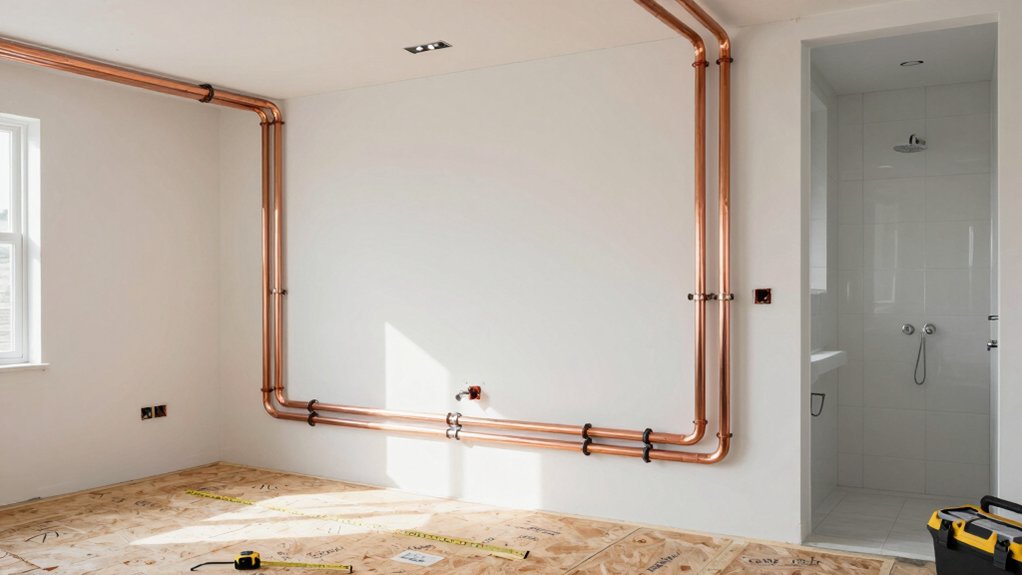
In this phase, you’ll evaluate wiring and circuit requirements, including load calculations and dedicated lines for high-draw devices.
You’ll also plan plumbing layout costs, covering pipe routing, fixture placement, venting, and access for future maintenance.
This initial assessment sets the groundwork for safely delivering reliable power and water distribution throughout the master suite.
Wiring and Circuits
Wiring and circuits are critical to a master bedroom suite, dictating safety, reliability, and future adaptability. You’ll plan circuit layouts that support essential loads, lighting, outlets, and data/communication needs without oversizing feeders. Use dedicated circuits for high-draw devices and HVAC controls to maintain stable voltages and minimize nuisance tripping.
Install arc-fault and ground-fault protection where required, and size conductors to code while allowing for unforeseen future upgrades. Use scalable wiring strategies that enable changes in lighting design and room configuration with minimal disruption.
Integrate smart home technology thoughtfully, including centralized controller access, modular wiring trunks, and concealed conduit paths for clean aesthetics. Budget for receptacle density in sleeping zones, task lighting, and bedside charging, ensuring code-compliant conduit and labeling throughout.
Plumbing Layout Costs
How much will plumbing layout costs affect the overall project, and where can you optimize without sacrificing function? You’ll map piping routes early to minimize trenching, material waste, and fixture relocation. Start with load-bearing constraints, then plan principal lines for cold water, hot water, and drainage, prioritizing tub/shower, vanity, and toilet positions to reduce long runs.
Consider a wet wall approach to consolidate supply and waste stacks, lowering labor and material costs. Bathroom ventilation and window placement influence ducting and vent routes, so coordinate with mechanical design to avoid rework.
Use compact fixtures and centralized cleanouts to simplify access and maintenance. Specify unused zones for future expansion or retrofit, maintaining serviceability. Document elevations, slopes, and trap sizes to prevent future adjustments.
Permits, Inspections, and Design Services
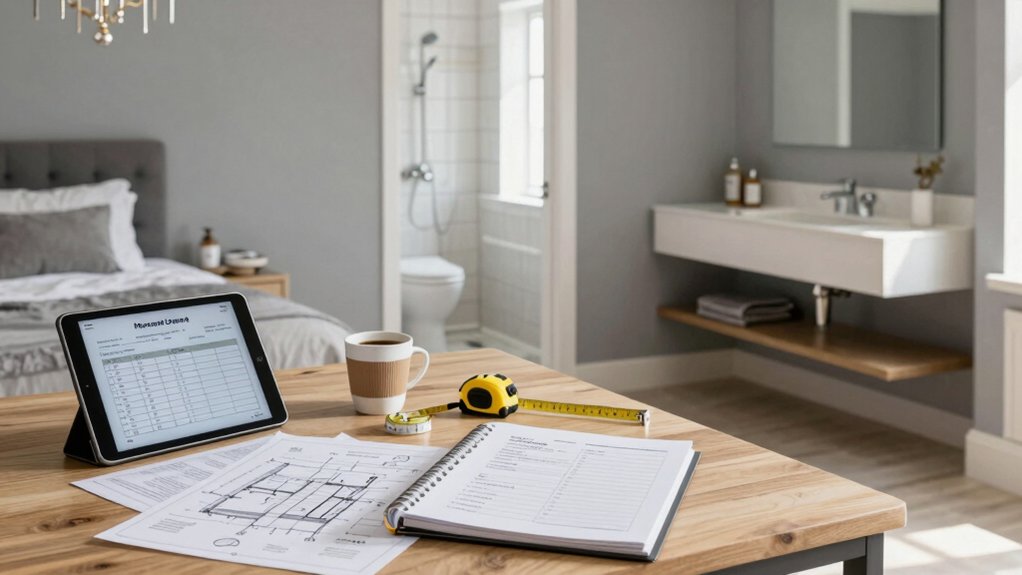
Navigating permits, inspections, and design services is a critical early step in a master bedroom and bath project. You’ll identify applicable local codes, plan review requirements, and agency timelines before work begins.
Permits cover electrical, plumbing, HVAC, and structural changes, with reviewer feedback guiding scope, materials, and sequencing. Inspections occur at defined milestones to verify compliance, accuracy, and safety; failing an inspection can pause progress and incur rework.
Design services translate your vision into constructible plans, elevations, and details, including cabinetry layouts and fixture placements, while guaranteeing code compliance and constructability. Budget for design timelines, permit fees, and potential revisions.
Prioritize design approvals and contractor licensing early, coordinating with your chosen professionals to minimize delays and guarantee a compliant, orderly build.
Structural Changes and Renovation Challenges
Structural changes and renovation challenges require careful alignment with existing systems and structural integrity. You’ll evaluate load paths, framing integrity, and utilities to determine feasible alterations without compromising safety.
Expect retrofit work to reveal hidden conditions, such as outdated wiring, compromised joists, or moisture damage, which can trigger additional reinforcement or rerouting.
Plan for temporary supports during demolition to prevent floor or wall failures and to protect adjoining spaces.
You may face constraints from load-bearing walls, HVAC ducting, and plumbing stacks that limit room expansion or bathroom relocation.
Budget for thorough structural reinforcement if loads shift or new fixtures demand greater support.
Accurate assessments reduce renovation setbacks, minimize rework, and ensure code-compliant, long-lasting performance of the master suite.
Sample Cost Ranges and Budgeting Tips
Sample costs for a master suite renovation vary widely based on scope, location, and finishes, but you can anchor budgeting with realistic line items and contingency.
In this section, you’ll see typical cost bands for core elements: demolition and framing, plumbing, electrical, HVAC, finishes, and fixtures. Assign unit costs to each trade, then cap with a contingency buffer—commonly 10–20%—to absorb design changes and permit delays.
Estimate luxury upgrades, such as high-end millwork, spa showers, digital thermostats, and premium lighting, separately to avoid conflating baseline costs.
For DIY considerations, identify tasks you can safely perform (demo, painting, tiling) versus items requiring licensed trades.
Develop a phased budget aligned with priorities, track changes in real time, and compare actuals to estimates weekly to preserve financial control.
Conclusion
You review the numbers, measurement by measurement, as if inspecting a blueprint under a flickering light. The room narrows to choices—finishes, fixtures, and the hidden costs behind walls that never rest. Each decision tightens or loosens the budget, inch by inch. You sense the cliff between dream and detail approaching, with permits and layouts guiding your path. When the last switch hums to life, you’ll know exactly what your master retreat will cost—and what it must become.