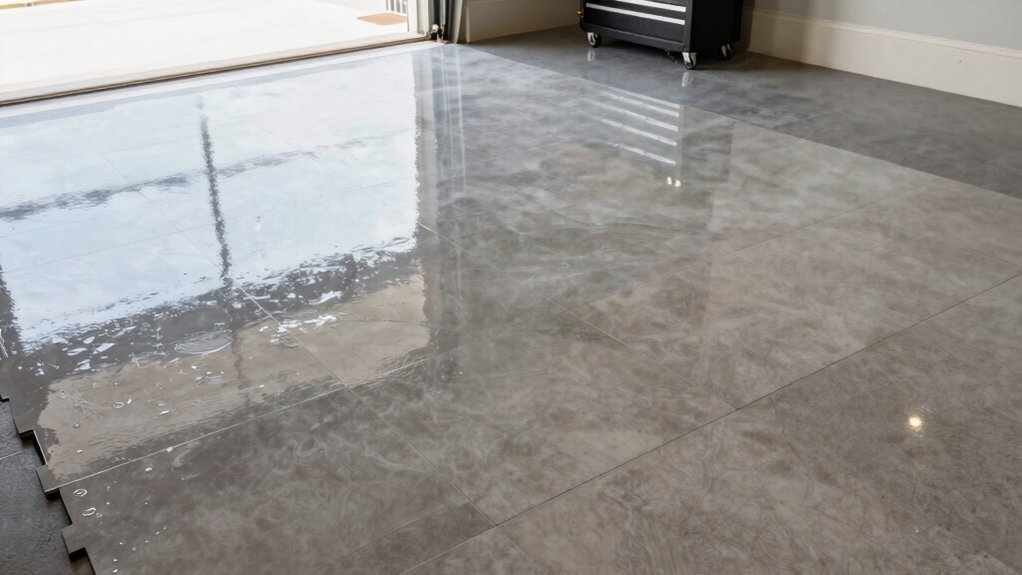
When you choose between garage floor tiles and epoxy, you’re weighing modular repairs against a seamless, low-maintenance surface. Tiles offer quick fixes and better impact resistance, while epoxy delivers chemical and stain resilience with fewer joints to clean. UV exposure, maintenance needs, and long-term costs all shift with your priorities. The decision hinges on how you value durability, repairability, and appearance over time — and what scenario you expect to face most often.
Durability and Wear Resistance
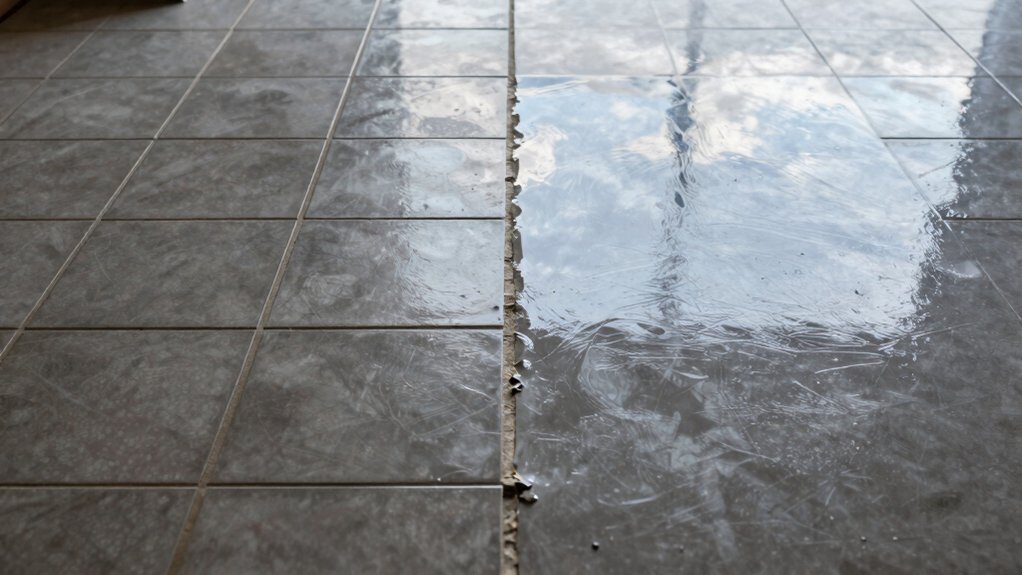
When it comes to durability and wear resistance, garage floor tiles and epoxy each have distinct strengths. You’ll experience solid impact tolerance from tiles, especially with thicker configurations, which helps against dropped tools and heavy equipment. Tiles also resist chipping and cracking when installed properly, and their modular nature makes localized replacements straightforward.
Epoxy, by contrast, forms a seamless, dense surface that minimizes porous wear and chemical damage, protecting against spills and solvents. The trade-off is that epoxy can be more susceptible to surface abrasion if the topcoat isn’t maintained, while tiles may show grout lines wear over time.
Long-Term Aesthetics and Color Retention
Color retention varies with time-based fading factors, UV exposure, and material chemistry. So you’ll want to compare how tiles and epoxy hold their hue over years.
Consider color retention trends for each option and how environment, traffic, and cleaning impact appearance over time.
This discussion sets the stage for evaluating long-term aesthetics and how you’ll weigh initial look against future changes.
Color Retention Trends
Color retention is a key long‑term consideration when choosing garage floor tiles versus epoxy. You’ll notice trends in how each material holds color after exposure to light, heat, and traffic.
Epoxy often shows strong initial color stability, but UV exposure can cause yellowing or fade in sunny spaces, especially with lighter tints. Tiles tend to retain color more consistently because coatings are layered and can include UV stabilizers; however, some ceramic or vinyl options may fade at different rates depending on pigment quality.
When evaluating trends, compare manufacturers’ color-fast guarantees and documented test data rather than impressions. Consider your exposure profile, such as direct sunlight or frequent cleaning, and select a finish with proven longevity.
In practice, color retention should align with your maintenance plan and expected ambiance.
Time-based Fading Factors
Direct sunlight, heat, and cleaning frequency drive long-term fading in garage flooring, so understanding how these factors interact with epoxy and tile finishes matters for color retention. Over time, you’ll notice gradual color shifts as coatings degrade at different rates.
Epoxy tends to retain gloss longer but can yellow with prolonged exposure to heat cycles, while tile finishes may fade unevenly if grout seals aren’t maintained. Temperature fluctuations cause micro-cracks, which invite color loss through micro-abrasion and staining.
Regular cleaning with non-abrasive methods reduces surface wear, preserving pigments. You should track fade patterns: consistent hue changes indicate a dominant fading mechanism, guiding maintenance choices.
Choose periodic resealing or recoat schedules aligned with observed fade tempo. This proactive approach keeps aesthetics stable without overreacting to short-term changes.
UV Light Effects
UV light steadily affects long-term aesthetics and color retention by driving photochemical reactions in both epoxy and tile finishes. As you’re exposed to sunlight, pigments can fade or shift hue, and clear layers may yellow or amber with prolonged UV exposure.
In practice, epoxy resins often resist staining but can darken slightly over time, while tiles may experience glaze fading or microcolor changes. Consider UV stabilizers used in coatings and the quality of pigments chosen for each system.
Expect slower color drift on darker, high-fidelity pigments and faster, more noticeable shifts on vibrant or light-tinted options. Installation environment matters: shade, glare, and reflected light accelerate aging differently.
Regular inspection helps catch discoloration early, enabling timely maintenance or protective recoding to preserve appearance.
Chemical and Stain Resistance
When you compare chemical resistance, you’ll see how each option withstands cleaners and fuels under load.
We’ll look at chemical resistance levels, then move to how stains perform in durability tests.
Finally, we’ll cover spill cleanup ease to help you choose the flooring that stays reliable with everyday mishaps.
Chemical Resistance Levels
Epoxy flooring generally offers stronger chemical resistance than most garage floor tiles, but resistance varies by formulation and topcoat. You evaluate chemical resistance by identifying common household chemicals you’ll encounter, then match them to the material’s tested exposure.
Epoxy excels against solvents, fuels, and caustics when a proper rugged topcoat is used and maintained. Tile systems improve with a sealed grout and a compatible wear layer, yet single-layer tiles may show vulnerability to prolonged exposure.
In practice, expect epoxy to maintain gloss and integrity after spills of gasoline, acetone, and cleaners if you choose a high-build resin and an approved topcoat.
For tiles, verify resistance ratings for chosen colors, sizes, and grout, and confirm maintenance steps to preserve performance. always consult manufacturer data sheets for precise ratings.
Stain Durability Tests
Stain durability tests compare how epoxy and tile systems resist common household stains under real-world conditions. In these tests, you apply typical substances like coffee, red wine, oil, ink, and cleaning solutions to set surfaces and observe discoloration, penetration, and surface finish changes over time.
You’ll note the rate at which each material shows staining, whether seals or coatings influence transfer, and how uniform the appearance remains after exposure. Epoxy often resists most aqueous stains better when properly cured, but oil-based or strong solvents can still penetrate seams or scratched areas.
Tile with a protective grout may exhibit color retention if grout sealer is intact. Document recovery methods, environmental factors, and measurement criteria to compare long-term stain stability objectively.
Spill Cleanup Ease
Spill cleanup is where real-world performance shows up, linking stain resistance to practical ease of maintenance. When a spill happens, you’ll notice how quickly you can wipe, blot, or rinse without spreading.
Tiles resist acids, oils, and solvents better than some epoxy surfaces, so you won’t wrestle with pH changes or etched marks. Epoxy may trap pigments if you don’t act promptly, increasing cleanup time and risk of lingering stains.
Ceramic or polymer tiles spread liquids less, making containment simpler and faster. For maintenance, your routine matters: immediate blotting, mild cleaners, and a quick rinse preserve luster and color.
Choose a system with low porosity, smooth grout, and sealed edges to minimize soak-in and future cleanup effort.
Temperature and Moisture Tolerance
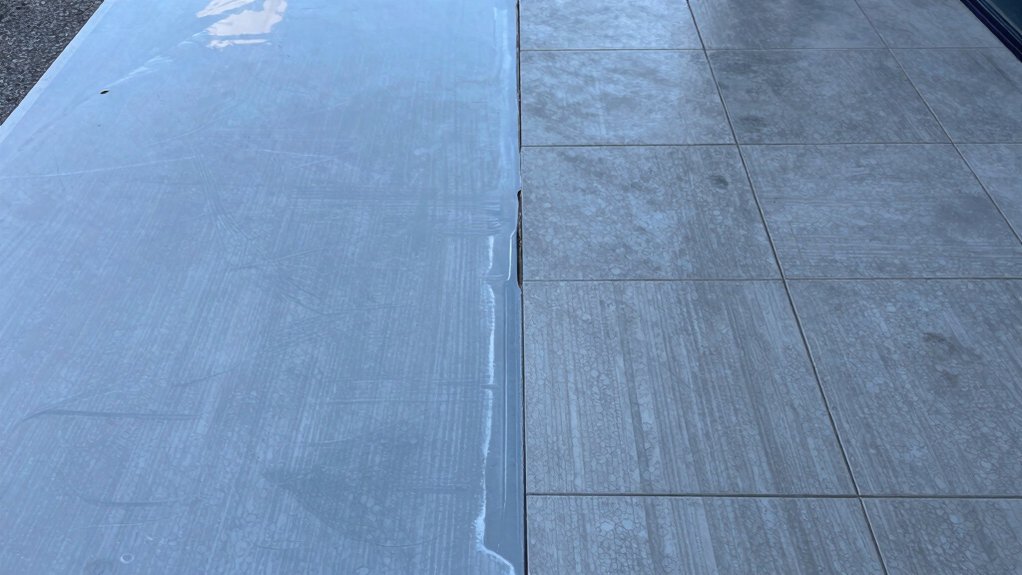
Temperature and moisture tolerance are key differences between garage floor tiles and epoxy. You’ll notice tiles resist surface damage from temperature swings better, thanks to internal cushioning and flexible joints that absorb expansion and contraction.
Epoxy, by contrast, can become brittle in cold environments and soften under high heat, risking microcracks and delamination if substrates shift.
Moisture handling diverges as well: tiles provide a breathable seam and ample tolerance for occasional seepage without peeling, while epoxy requires a dry, properly prepared surface; lingering moisture can trap beneath and undermine adhesion.
In humid spaces, tiles maintain grip and reduce slipperiness, whereas epoxy may regain gloss briefly but degrade over time with moisture ingress.
Installation Time and Hassles
Installing garage floor tiles typically goes faster and with fewer steps than epoxy, but the process varies by product. You’ll assess subfloor flatness first, then plan layout and edge cuts to minimize waste.
With tiles, preparation is usually straightforward: sweep, clean, and level high spots. Many systems require minimal primer or adhesive, or use interlocking designs that don’t need messy mixing.
Epoxy, by contrast, demands precise mixing ratios, temperature control, and extended cure times between steps, which adds planned downtime. Timing hinges on product type and room conditions; you’ll typically tolerate shorter installation windows with tiles, while epoxy may require multi‑phase applications and longer dry periods.
Expect occasional rework from imperfect seams, but overall tiles often deliver consistent progress and fewer delays.
Maintenance and Cleaning Needs
Maintenance and cleaning needs for garage floor solutions differ in upkeep requirements and frequency. You’ll see tile floors resist staining and cleans with mild detergent, though grout lines demand periodic scrubbing to prevent grime buildup. Regular sweeping clears debris that can scratch tiles or epoxy, and you should seal grout if you choose tiles.
Epoxy floors wipe clean quickly with a damp mop and a nonabrasive cleaner, but you shouldn’t use strong solvents that could dull the surface over time. For both options, establish a routine: daily dirt removal, weekly damp cleaning, and monthly inspections for chips or wear.
Address spills promptly, especially oils or solvents. Note maintenance costs trend higher for tiles due to grout upkeep, while epoxy benefits from fewer contact points.
Repairability and Longevity
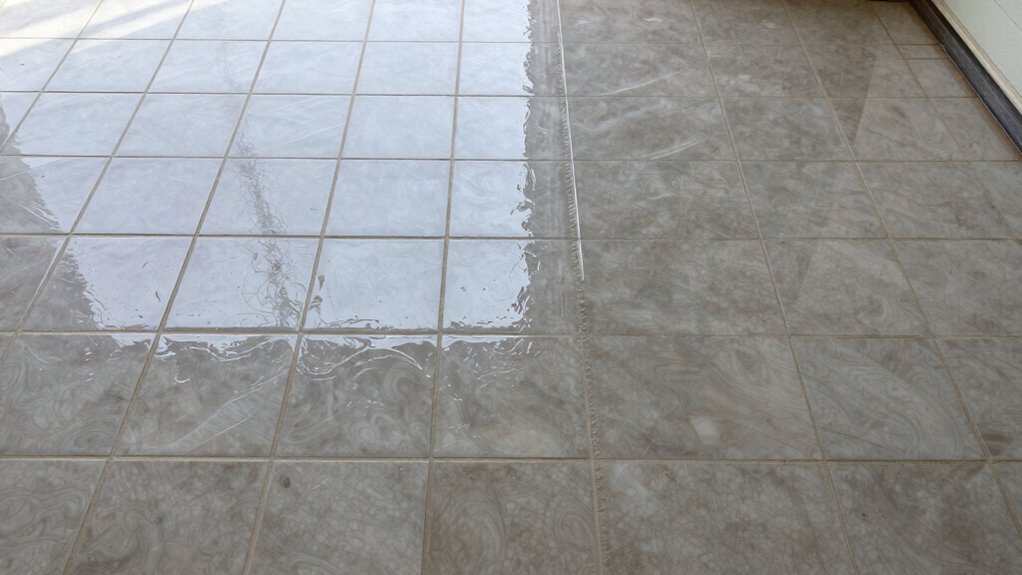
Repairability and longevity hinge on material resilience and how the surface is designed to endure wear. You assess repairability by how easily damaged tiles or epoxy can be accessed, replaced, or patched without full removal.
Garage floor tiles offer modularity: a single cracked tile can be swapped without downtime, preserving the rest of the surface. Epoxy, by contrast, requires targeted repair mixed with color matching and potential recoating, which can extend downtime.
Longevity depends on substrate prep, UV resistance, and resistance to chemicals or impact. Tiles with high wear ratings and thicker wear layers endure traffic better; epoxy benefits from reinforced formulations and proper curing.
You should plan for maintenance cycles, inspect seams, and address micro-cracks promptly to maintain performance over time.
Cost Over Time and Value
Cost over time represents the total value you get from your garage floor solution, not just the upfront price. When evaluating tiles versus epoxy, consider installation costs, maintenance, and expected lifespan.
Tiles may incur higher initial material and labor costs but offer easier replacement of damaged areas without redoing the entire floor. Epoxy often provides a lower upfront price and a seamless surface, yet repairs can be disruptive and require specialized resurfacing.
Over time, durability matters: fewer annual maintenance items save labor and materials. Factor in downtime costs, cleaning requirements, and resistance to chemicals, heat, and heavy loads.
Calculate total ownership by combining purchase price, installation, upkeep, and the expected replacement interval. The option with lower lifetime cost and predictable performance delivers greater value.
Practical Scenarios and Best Uses
When choosing between garage floor tiles and epoxy, practical scenarios help reveal the best fit for real-world use. You evaluate foot traffic, chemical exposure, and maintenance tolerance to determine suitability.
For hectic workshops, tiles offer quick replacement, modular repair, and easier spills containment. Home garages with light uses benefit from epoxy’s seamless surface, easier broom cleaning, and a cohesive look.
If moisture and temperature swings are frequent, tiles resist cracking and provide insulating benefits, while epoxy may crack under heavy impact.
Consider installation time, downtime, and future reconfigurations: tiles install fast, can be rearranged, and minimize downtime. Epoxy suits wide-open spaces needing a uniform finish with minimal seams.
In rental spaces, tiles reduce tenant disruption. Choose based on durability, maintenance, and adaptability to your workflow.
Frequently Asked Questions
How Do Garage Tiles Handle Heavy Vehicle Traffic Over Decades?
Garage tiles handle heavy vehicle traffic decently, but over decades you’ll notice wear patterns, potential chipping, and slight flex. Choose high-density, rigid tiles, proper underlayment, and edge restraints to maximize longevity and minimize damage under constant use.
Do Epoxy Floors Require Professional Resealing or Recoating?
Yes, epoxy floors typically need professional resealing or recoating every few years, depending on wear. You’ll notice dulling or chips; a pro can prepare, repair, and apply a fresh coat for lasting protection and a glossy finish.
Which Option Resists Oil Spills and Battery Acid Best Long-Term?
Epoxy resists oil spills and battery acid better long-term; tiles can wick and stain. You’ll benefit from a sealed, epoxy-coated surface for maximum chemical resistance, easier cleanup, and durable protection against harsh automotive fluids.
Can Tiles or Epoxy Tolerate Freeze-Thaw Cycles Indoors?
Yes, epoxy tolerates freeze-thaw cycles better indoors than tiles, but both need proper surface prep; think of the floor as a fortress. You’ll seal gaps, control moisture, and cycle calmly, maintaining resilience with consistent maintenance.
Are Repairs Simpler With Tiles or Epoxy in Aging Garages?
Yes, repairs are simpler with tiles in aging garages because damaged tiles are replaceable without resurfacing the whole floor, while epoxy repairs often require sanding, patching, and re-coating; tiles offer quicker localized fixes and minimal downtime.