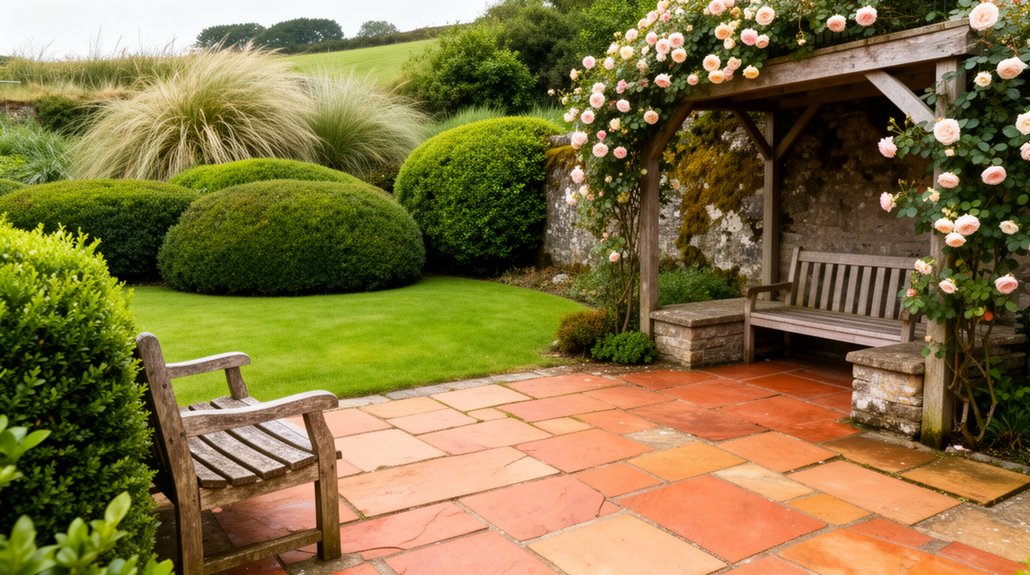
You’ll notice—almost by coincidence—that rustic patios and lush lawns suit the South-West’s mild, damp climate, where warm sandstone or limestone with non-slip finishes pairs well with reclaimed timber for soft, gradual progressions. You’ll want practical paths, drought-tolerant planting, and privacy hedges that survive wet winters, yet thrive in sunlit summers. Start with sturdy foundations, choose grasses suited to wetter soils, and plan layouts that adapt from seaside terraces to rural courts, but the best move is still ahead of you.
Why South-West UK Landscapes Benefit Rustic Patios and Lush Lawns
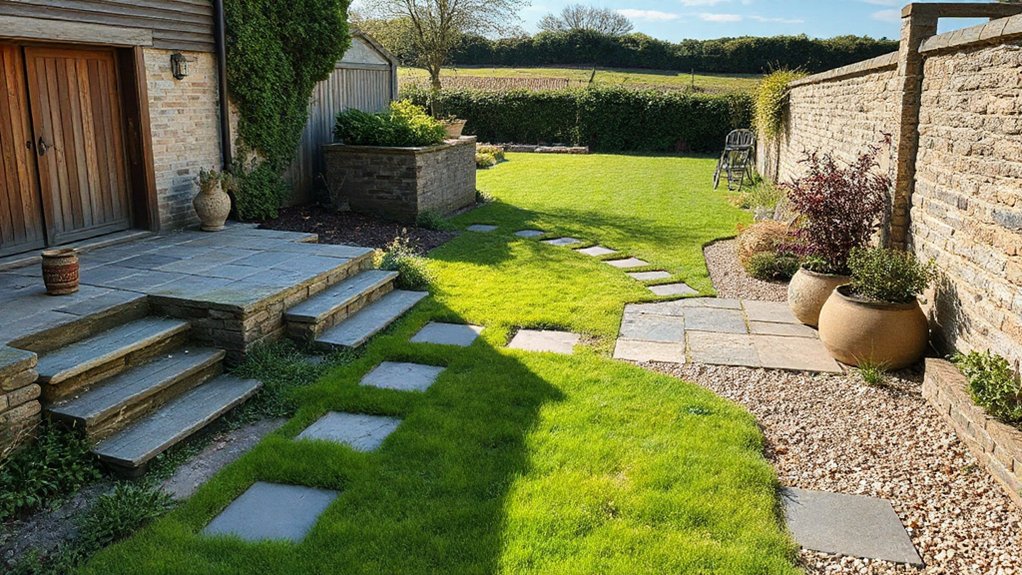
The South-West’s mild, wet winters and long growing seasons create ideal conditions for rustic patios and lush lawns, so your landscape can stay inviting year-round with minimal fuss. You benefit from extended planting windows, enabling sturdy groundcovers and durable grasses that tolerate damp soils.
Choose grasses with good wear tolerance and low maintenance to keep paths clear and lawns resilient after rain. Integrate wildflower meadows along margins to reduce mowing and boost biodiversity, while native hedgerows provide windbreak, privacy, and habitat for pollinators.
Plan irrigation to match rainfall patterns, avoiding overwatering. Favor permeable surfaces and well-drained substrates to prevent puddling. Regular trimming, mulching, and seasonal reseeding maintain vigor.
This combination yields enduring curb appeal and practical, low-effort appeal for year-round enjoyment.
Start With Warm, Weathered Materials for Your Patio
Warm, weathered materials immediately set a welcoming tone for your patio and pair beautifully with the South-West’s light-filled days.
Begin with natural stone pavers in warm sandstone or limestone, choosing a non-slip finish for wet UK mornings. Dry-stack or minimal grout lines preserve a rustic, continuous surface that’s easy to sweep.
Add reclaimed timber decking edges to soften gradual changes and create seating nooks without overpowering the space.
Incorporate Vintage furniture with simple lines and durable finishes, kept at a comfortable height for conversation.
Choose outdoor lighting that highlights texture rather than brightness: warm LEDs in shaded niches, wall sconces with amber glass, and low-level path lights.
Keep color restrained—terracotta, slate, and moss greens work best with aged surfaces.
Choose Grasses for Milder, Wetter South-West UK Climates
Choosing grasses that thrive in the milder, wetter South-West UK climate means prioritizing species that tolerate shade, regular moisture, and occasional drought gaps without losing form. You should select cool-season grasses with robust rhizomes that recover quickly after wet winters and dry spells.
Favor varieties known for shade tolerance and low nutrient demand, such as certain fescues and fine grasses, which maintain color and structure under damp conditions.
Establish and sustain a uniform sward by applying even moisture during establishment and avoiding overwatering once rooted.
Implement mowing techniques that keep leaf blade height around 25–40 mm, depending on usage, to preserve density and reduce disease risk.
Use slow-release feeds sparingly, and monitor for moss on damp days, removing it before it spreads.
Grass varieties suited to your site ensure year‑round lawn resilience.
Designing Interfaces: Blending Hardscape With Soft Greenery
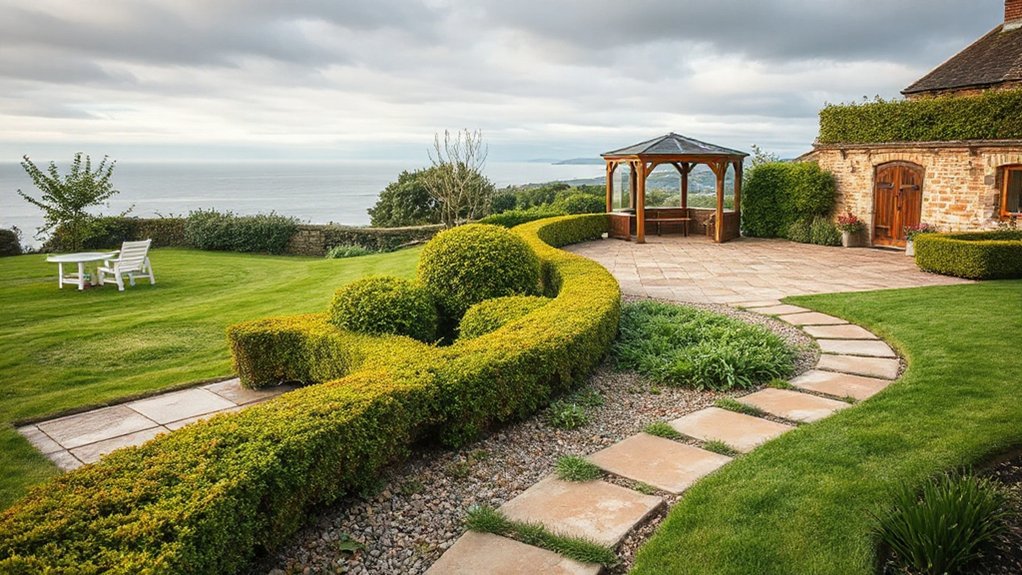
Want a seamless shift between hardscape and greenery? You can achieve this by aligning materials, textures, and scale from edge to bed. Use transitional borders that taper from stone to mulch, then soften corners with low-growing evergreens. Balance hard edges with rounded planting pockets to invite foot traffic without crowding views.
Integrate digital features discreetly for lighting scenes, irrigation, and seasonal cues, so tech feels like part of the landscape, not an add-on. Incorporate water features that reflect sky and neighboring lawns, creating a tranquil focal point that ties zones together.
Plan sightlines from key seating areas to living borders, ensuring year-round texture. Think modular paving that shifts to stepping stones, guiding movement naturally.
- Choose compatible textures and colors
- Use softened borders between habitats
- Align lighting with planting rhythms
- Integrate digital controls subtly
- Position water features for focal balance
Native and Drought-Tolerant Planting Palettes for the Region
Native and drought-tolerant planting palettes thrive in the Southwest UK when you prioritize local species and microclimate data. You choose species adapted to chalky or loamy soils, and map sun exposure across seasons to align water use with demand.
Favor native shrubs for structure and pollinator support, positioned to reduce wind burn on exposed sites. Pair these with wildflower meadows that seed reliably in summer droughts, selecting local mixes that mimic meadow diversity without invasive risk.
Minimize irrigation by grouping planting zones with similar water needs and using mulch to conserve moisture. Consider insect-friendly choices, like nectar-rich perennials and grasses that survive local winters.
Document performance annually, swapping underperformers with proven natives, and maintain soil health with light seasonal amendments.
Practical Maintenance Routines for Patios and Lawns
Seasonal maintenance keeps patios and lawns looking tidy and performing well year-round. You’ll establish a quick rhythm that protects surfaces and turf, emphasizing efficiency and results. Start with regular cleaning to prevent debris buildup, then schedule targeted checks for wear, drainage, and weed pressure. Apply actionable practices that reduce effort over time.
- Water conservation: water early, use mulch, and irrigate with a smart timer to avoid waste.
- Lawn care cadence: mow at the right height, reseed thin areas, and aerate annually to keep roots healthy.
- Surface upkeep: sweep or leaf-blow lightly, remove algae, and brush joints to prevent cracks.
- Pest control: inspect for pests, deploy non-toxic deterrents, and address hotspots promptly.
- Seasonal touchpoints: reseal patios as needed and monitor shade-drying for even wear.
Seasonal Care Guidelines for the South-West Climate
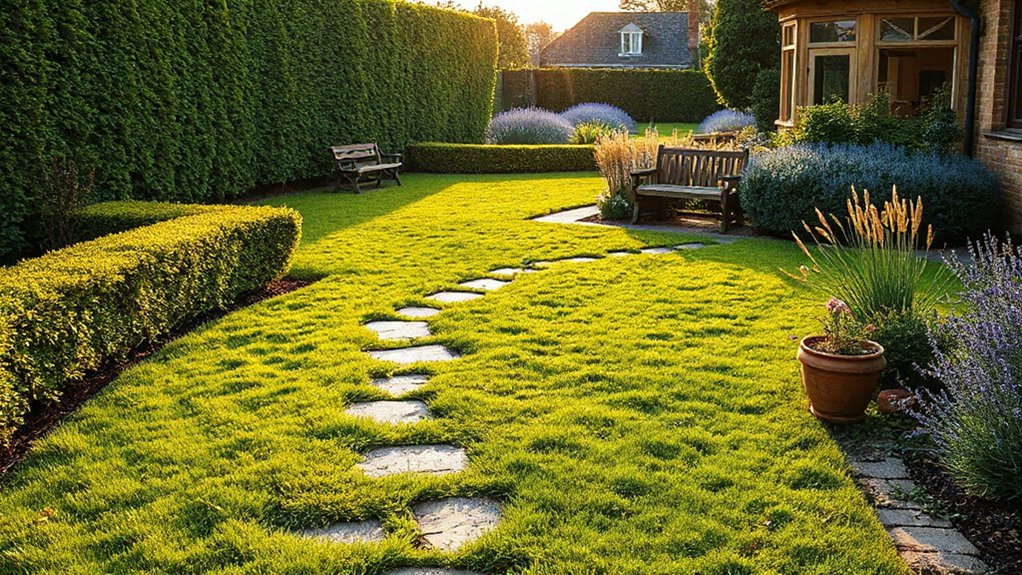
Seasonal care in the South-West hinges on anticipatory planning and timely actions that match our mild winters, dry summers, and Atlantic-influenced weather. You’ll align tasks with reliable forecasts, targeting soil readiness and moisture balance.
In spring, implement Seasonal planting strategies that favor drought-tolerant perennials and native grasses, mulching to suppress weeds and conserve dampness.
Summer demands consistent irrigation—deep, infrequent cycles to encourage deep roots—and shade provision for vulnerable specimens.
Autumn focuses on pruning for structural integrity and leaf-mold enrichment.
Winter care centers on frost protection for delicate specimens and windbreak maintenance.
Integrate wildlife corridors by planting native shrubs along hedgerows and leaving modest ground cover to sustain pollinators.
Regular soil tests guide amendments, reducing disease pressure and supporting long-term plant robustness.
Adapting Layouts: Seaside Terraces to Rural Couryards
Seaside terraces and rural courtyards share just two goals: efficient flow and durable surfaces that suit coastal moisture or rural shade.
You’ll start by prioritizing weather-ready materials, then tailor layouts to site angles, wind exposure, and sun paths, switching between compact paths and open pauses as terrains demand.
Use modular planting and adaptable boundaries so your design scales from sea skeins to pasture edges without sacrificing coherence.
Seaside to Courtyard Adaptations
Seaside terraces and rural courtyards share constraints and opportunities, so adapting layouts requires a clear plan that translates coastal compactness into courtyard openness. You’ll balance wind, glare, and shade while preserving a breezy feel with thoughtful scale and materials.
Prioritize essential zones: seating, eating, and connection paths, then layer textures to unify spaces. Use Seaside plantings to introduce salt-tolerant foliage, structural evergreens for year-round interest, and containers for seasonal color.
Keep circulation direct, avoiding clutter, with sightlines from entrance to focal points. Integrate Courtyard lighting to extend usability after dusk, choosing low-profile fixtures and subtle uplighting on focal walls.
Materials should resist corrosion and fading, pairing weathered timber with stone or brick for timeless cohesion.
- Define zones and sightlines
- Select salt-tolerant plantings
- Use containers for color
- Elevate with subtle lighting
- Choose durable finishes
Layouts For Diverse Terrains
Diverse terrains demand flexible layouts that convert coastal compactness into rural openness without sacrificing flow or function. You tailor boundaries to the site’s microclimate, choosing materials that read as unified while accommodating slope, wind, and sunlight.
For seaside terraces, prioritize stairwise progressions and continuous sightlines to brighten retreat zones. Then adapt into rural courtyards by widening paths and inserting focal lawn pockets. Use modular pavers to reconfigure spaces as needs change, and align seating with prevailing winds for comfort.
Consider an Urban rooftop concept where compact plant beds and low screens maximize sky exposure and heat management. Incorporate Vertical gardens to reclaim vertical space on sloped walls and barn facades, boosting greenery without consuming valuable ground area.
Precision planning guarantees adaptable layouts thrive across terrains.
Budgeting and Sourcing Local Timber, Stone, and Suppliers in the Region
Start by evaluating local timber availability and seasonal pricing in your area, so you can set a realistic budget for any timber framing, fencing, or decking.
Then map regional stone sources and quarry types, noting transport distances and lump-sum delivery options to avoid hidden costs.
Finally, connect with regional supplier networks to compare mill prices, bulk discounts, and lead times, ensuring you build a reliable, cost-efficient supply chain.
Local Timber Availability
Where can you reliably source local timber in the South-West UK, and how can you budget effectively for stone and other materials? You’ll prioritize timber durability, selecting regional species to reduce import costs and emissions. Seek reputable sawmills and cooperative suppliers with transparent provenance, moisture content tests, and batch warranties.
Compare delivery windows, offcuts, and return policies to minimize waste. For budgeting, price shade and grade shifts, and include finishing materials early in the plan to avoid late surprises.
- Verify supplier certifications and local woodworking credentials
- Request mill run assortments for consistency and smart matching
- Check moisture content and grade before purchase
- Plan for seasonal price changes and bulk discounts
- Inspect storage conditions to prevent warping and decay
Regional Stone Sourcing
Assess stone hardness, porosity, and slip resistance to suit patio and path applications, matching stone craftsmanship to your design intent. Request batch tests and finish options, and insist on detailed sourcing records for provenance and sustainability.
Compare price per square meter, considering installation weight and waste factors, not just sticker price. Favor contiguous batches to avoid color mismatch in larger runs.
Integrate landscape architecture goals with practical constraints: durability, maintenance, and regional aesthetics. Maintain flexible timelines to accommodate custom cuts, ensuring a coherent, enduring outdoor space.
Regional Supplier Networks
By mapping regional supplier networks, you’ll balance cost, quality, and sustainability when budgeting for local timber, stone, and other materials. You’ll build resilience by vetting suppliers for consistency, lead times, and waste reduction, while prioritizing urban wildlife considerations and water conservation in sourcing choices.
- Compare regional mills and quarries for lifecycle impacts
- Prioritize suppliers with reforestation and habitat-friendly practices
- Choose waterwise finishes and low‑dust options to protect nearby streams
- Request bulk quotes with transparent breaking of transport costs
- Validate delivery windows to minimize site disruption and waste
Engage locally, document supplier performance, and adjust orders as seasons shift. You’ll save money, reduce emissions, and support green workflows throughout your rustic patio and lawn projects.
Frequently Asked Questions
How Can I Source Locally Grown Grasses for My Lawn Mix?
To source locally grown grasses, start with native grasses from regional nurseries or seed banks that emphasize sustainable sourcing. Check labels for provenance and avoid long transport.
Visit local garden centers or agriculture fairs to verify year-round availability and talk to staff about drought tolerance and soil compatibility.
Request suppliers who document seed lot origin, consent to traceability, and offer region-specific mixes.
Buy in small lots to ensure freshness and adapt your lawn mix to your site conditions.
What Are Cost-Saving Options for Rustic Patio Furniture?
You can save by choosing Rustic furniture options built from Cost effective materials like untreated timber, recycled metal, or durable composites.
Opt for pallet-wood benches, crates repurposed into side tables, and DIY cushions from outdoor fabric.
Buy secondhand or local yard-sale pieces and refinish them.
Finish with weatherproof sealant and simple, modular designs to adapt over time.
Prioritize sturdy frames, avoid ornate detailing, and check for warranty on coatings to keep costs predictable.
Which Microclimates Affect Shade Exposure in SW UK Yards?
You’ll find shade exposure in SW UK yards is dictated by sun angle, building walls, fences, and nearby trees, creating distinct shade patterns across the day. The key microclimate zones are sun-exposed, partial shade, and deep shade.
Track how walls and windbreaks alter warmth and moisture, then position plants and seating accordingly.
Use reflective surfaces to brighten deep shade, and pair heat-tolerant species with shaded microclimates for year-round usability.
Monitor seasonal shifts and adjust.
How Do I Handle Soil Drainage for Wet South-West Plots?
“Immediate action beats ideal plans.” You should tackle wet plots by improving drainage first: install a perforated pipe or trench to redirect excess water, and use gravel layers to speed flow.
Air out soil with aeration, then add organic matter for structure.
For soil improvement, mix compost and coarse sand where needed, raise beds above existing grade, and mulch to retain moisture.
Maintain gravity-driven drainage, monitor flushes after rain, and choose plants tolerant of wet feet.
Are There Wildlife-Friendly Plant Choices for Patios?
Yes. You can choose wildlife-friendly plants for patios by prioritizing native species and creating pollinator gardens.
Opt for compact natives like Salvia flowers, thyme, rosemary, and lavender alongside grasses that tolerate pots.
Include evergreen shrubs for year-round shelter, and a shallow water feature to attract insects.
Use layered planting, avoid pesticides, and deadhead regularly to encourage blooms.
Group species with similar moisture needs, and rotate containers seasonally for ongoing wildlife benefit.
Conclusion
In the South-West, your landscape should feel like a lived-in invitation. Start with warm, weathered patio stones and mix in reclaimed timber for soft shifts, then layer lawns and wildflowers for year-round texture. As an anecdote, imagine a seaside cottage where a sandstone patio catches the morning sun and a native hedge shelters bees by afternoon—a microcosm of resilience. With precise spacing, local materials, and seasonal maintenance, your space ages gracefully and sustains biodiversity.