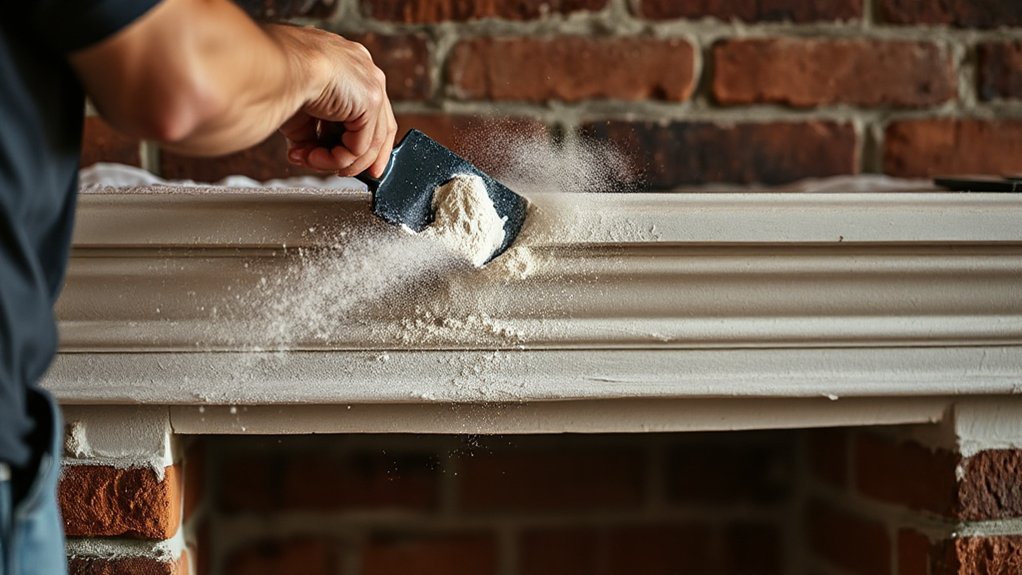
Plastering a fireplace demands restraint: a rough, ugly brick can become a polished centerpiece if you control every step. You’ll prepare a stable surface, dampen, and apply a scratch coat, then embed mesh for strength, keeping each pass even and deliberate. Once set, you’ll cure under steady moisture and temperature, sand smooth, and inspect for blemishes before finishing with a heat-resistant surface. The outcome hinges on your next move, so keep the process precise and consistent.
What Plaster to Use for a Heat-Ready Fireplace Surround

When choosing plaster for a heat-ready fireplace surround, select a material rated for high temperatures and direct heat exposure, such as a high-temperature plaster or cement-based mix formulated for fireplace surrounds. You’ll want materials that resist cracking, spalling, and thermal cycling, ensuring long-term integrity.
Opt for plaster systems designed for radiant heat and masonry substrates, with proper expansion tolerance and bond strength. Follow manufacturer guidelines for mixing ratios, curing conditions, and substrate preparation, including a clean, dry base and primer if recommended.
Consider color options and decorative finishes that remain stable under heat, and verify compatibility with any protective sealers.
Document installation steps, curing times, and testing procedures to confirm uniform heat resistance and surface performance.
Assessing the Fireplace Surface for Plaster Readiness
To assess the fireplace surface for plaster readiness, begin by inspecting the substrate for soundness and compatibility with plaster systems. You should verify substrate flatness, bearing, and adhesion potential, noting any delamination, cracks, or voids that could compromise a uniform finish.
Probe for moisture sources and rising damp, testing with a moisture meter and performing a simple sniff-test for efflorescence.
Assess surface texture, ensuring it accepts keying profiles without excessive porosity or overly smooth patches.
Confirm substrate composition aligns with the plaster type you plan to apply, and identify any contaminants or gypsum layers that would impede bonding.
Consider historical techniques as context, but prioritize a stable base.
Plan for decorative finishes only after achieving a consistent, durable base.
Clean and Repair Brick to Create a Smooth Base
Begin by evaluating the brick surface for plaster readiness and identify any obstacles that could hinder bonding. You’ll assess texture, residue, and brick integrity, then plan targeted repairs to guarantee a flat, sound base. Remove loose mortar, address efflorescence, and consolidate cracks with appropriate repair material.
Smooth any rough patches with controlled trowel pressure to prevent peak high spots. After repairs, wipe the surface to remove dust, leaving a clean, accepting substrate. Confirm joints are even and recessed for a flush plaster finish.
Color options and historical styles guide your final look, so you can match or contrast as needed.
- Assess texture and damage with a critical eye
- Remove loose material and clean dust
- Fill cracks and re-mortar where needed
- Key keyways for adhesion and evenness
- Preview color options and historical styles for cohesion
Safe Removal of Old Plaster and Debris

Wear goggles, a respirator, gloves, and a long-sleeve shirt; seal doors and vents to control debris. Remove large fragments by hand to prevent shock to surrounding masonry and preserve existing decorative finishes where feasible.
Use a utility knife to score peeling sections, then carefully detach plaster in manageable layers. Collect debris in labeled bags to separate clean brick from waste.
Vacuum with a HEPA attachment after each pass, and damp-wipe surfaces to reduce airborne dust. Document findings for Historical preservation, ensuring any reuse respects original methods while protecting surrounding structure.
Prime and Bond: Surface Preparation for Masonry
You’ll start with surface contaminant removal to guarantee the masonry grips the bonding agent.
Choose a compatible bonding agent and apply it according to label instructions for ideal adhesion.
Use moisture screening techniques to identify hidden dampness that could compromise plaster bond and address it before proceeding.
Surface Contaminant Removal
Surface contaminants must be removed before bonding to masonry, because any coating, oil, dust, or loose paint will prevent proper adhesion. You’ll guarantee a clean, sound surface by targeted prep that preserves substrate integrity while exposing the masonry’s true texture.
- Detergent wash removes surface oils without over-wetting.
- Scrape loose paint and flaky material with a stiff scraper.
- Power-wash or rinse and air-dry completely.
- Inspect for efflorescence; treat with appropriate sealer if present.
- Vacuum joints and crevices to remove grit and dust.
This step supports Historical renovation integrity and prepares for Decorative finishes, preventing ghosts of past coatings from telegraphing through the plaster. Maintain a methodical pace, document any irregularities, and proceed only when the substrate is dry and visually uniform.
Bonding Agent Selection
After you’ve established a clean, dry surface, selecting the right bonding agent becomes the decisive next step. Choose a product compatible with your mortar mix and substrate, ensuring adequate adhesion without compromising workability.
For masonry fireplaces, prefer primers that penetrate slightly and improve cohesion between old brick or stone and new plaster. Read labels for substrate compatibility, cure time, and recoat windows, avoiding oversaturation that could trap moisture.
Apply evenly in a thin, uniform layer, then observe tack before embedding plaster. Consider color options for the bonding agent or primer to minimize final shading differences.
While color choices matter, prioritize performance: strong bond, crack resistance, and flame-area tolerance. Historical styles may guide your finish depth, but bonding integrity remains essential for lasting results.
Moisture Screening Techniques
Moisture screening is essential before bonding; it reveals whether masonry is dry enough to accept plaster and if any moisture migration could compromise adhesion. You’ll perform Moisture analysis to gauge relative dampness, ensuring surface conditions meet spec.
Identify rising moisture risks and confirm substrate stability before proceeding with primer and bonding.
- Inspect substrate for sheen or damp patches that signal latent moisture
- Perform rapid tests to detect surface moisture before any reactivity occurs
- Measure interior RH and substrate temperature to model drying behavior
- Use vapor barriers where elevated moisture is detected to regulate movement
- Document findings to verify compatibility with plaster system and future inspections
This disciplined approach reduces failure risk, supports durable adhesion, and aligns with Prime and Bond guidelines.
Mixing Plaster: Ratios for Fireplace Applications
When mixing plaster for fireplace applications, achieving the correct ratio is essential for workability and durability. You’ll balance lime or gypsum-based plaster with clean, breathable water to prevent cracking and guarantee a smooth, cohesive coat.
Use a measured approach: begin with the manufacturer’s recommended base-to-water ratio, then verify consistency by achieving a paintable, slip-free texture. For traditional fireplaces, a slightly slower-setting mix improves open time, enabling precise troweling without laitance.
Maintain uniform mixing to avoid hotspots that cause cold joints. Record ratios for future projects, adjusting only by tested increments.
Consider color options after curing to match surrounding masonry, then plan your finish to reflect historical styles. Precision in ratios yields predictable adhesion, minimal shrinkage, and lasting aesthetic integrity.
Choosing a Heat-Resistant Plaster Mix for Durability

Choosing a heat-resistant plaster mix is the next step after dialing in the right base ratios, because durability hinges on composition as much as timing. You select a mix with high fire resistance, low shrinkage, and good bond strength to brick and stone.
Prioritize a gypsum-lime or cement-lime base that’s formulated for heat exposure, not decorative plaster alone.
- Color options that won’t fade under heat and won’t stain soot
- Historical styles compatibility for authentic look
- High alkali tolerance to resist efflorescence
- Improved early-strength gain for quicker handling
- Uniform aggregate size for smooth, crack-free surface
Apply in thin, even coats, cure gradually, and test bake temperatures.
Consider historical styles for texture and color harmony, then seal with a breathable finish.
Set Up a Clean, Ready-to-Work Workspace
Set up a clean, organized workspace before you start. Clear the area of debris, dust, and flammable materials.
Lay down a sturdy, flat surface for mixing and tool placement.
Keep all plaster tools within easy reach, and label containers so you can grab what you need without hesitation.
Clean Work Area
Before you begin plastering, clear the area of any debris, tools, and obstacles. Then cover nearby surfaces with drop cloths to protect them. You’ll establish a dedicated, dust-minimized space that supports precise work and consistent results.
Keep surfaces dry, vents clear, and lighting glare minimized to reveal true texture and alignment. Maintain a quiet, orderly workflow to reduce mistakes and rework.
- Clear a defined work zone with controlled access
- Position tools within easy reach for immediate use
- Seal dust paths to adjacent rooms
- Use stable lighting that reveals subtle texture
- Protect surrounding surfaces with accurate coverings
This setup supports decorative finishes and Historical restoration goals by ensuring clean lines, stable substrates, and predictable plaster behavior.
Tool Organization Ready
Are you ready to transform your workspace into a clean, ready-to-work zone? You’ll set up a precise layout that minimizes movement and maximizes efficiency. Begin with Tool storage that keeps every tool in its dedicated spot, labeled and accessible. Place frequently used items within arm’s reach, and store seldom-used materials on higher shelves or in labeled bins.
Establish a clear workflow path from tool retrieval to the plastering area, eliminating cross-traffic.
Ensure safety gear is organized and visible: goggles, gloves, respirator, and hearing protection all within easy reach. Inspect gear for damage and replace as needed. Use a rugged tote or wall-mounted rack for quick access, and keep a waste-bin nearby for cleanups.
Maintain a clutter-free surface; a disciplined setup prevents accidents and primes you for precise, controlled plastering.
Apply a Scratch Coat for a Solid Base
To establish a solid base for your plaster, apply a scratch coat evenly across the fireplace surface, using a trowel to score a rough, keying texture that will grip subsequent layers.
- Grip the wall with deliberate pressure, creating shallow grooves that interlock.
- Work in small sections to maintain consistency and control.
- Keep your trowel edge clean to prevent dragged material.
- Maintain a uniform thickness for an even foundation.
- Check for flatness with a straightedge, correcting high or low spots promptly.
This step integrates Fireplace accessories into the process and underscores Fireplace safety by avoiding gaps that could compromise adhesion and heat protection.
Finish with a light mist spray to prevent ember-dry cracking before proceeding.
Embed Mesh or Lath for Reinforcement
After establishing a solid scratch coat, you’ll reinforce the plaster system by embedding mesh or lath into the fresh base. Place expanded metal lath or fiberglass mesh over the surface, ensuring full contact with the base coat. Press firmly and smooth to eliminate gaps, using a trowel to bed the mesh into the plaster without tearing it.
Overlap corners and seams by at least 2 inches, then embed the joints with additional plaster to lock the mesh in place. Check for binding by gently tapping; a solid, muffled sound indicates proper adhesion.
Maintain consistent thickness across the area to avoid ribbing. Remember fireplace venting and chimney maintenance during curing, as heat exposure can affect bond.
Schedule inspection after initial set to confirm reinforcement integrity.
Apply the Brown Coat for Strength and Stability

To start the brown coat, you must establish a solid bonding layer that bonds to the reinforced base. Make certain the bonding coat is applied evenly to create a true, stable bed for the subsequent plaster.
This foundation supports the plaster’s strength, setting the stage for a durable, reliable finish.
Apply Proper Bonding Coat
Applying a proper bonding coat is essential for strength and stability. You establish a solid base by preparing the surface, mixing plaster to the right consistency, and applying evenly with controlled trowel pressure.
Use a scratch coat technique to enhance adhesion, then score the plaster to key into the brown coat later. This bond ensures crack resistance and durability, supporting the decorative finishes you’ll add later.
- You spread a thin, uniform layer, gripping the trowel at a shallow angle
- You level high points to create a plane that captures heat evenly
- You scratch the surface to provide keying for the next layer
- You wipe edges clean to prevent imperfections
- You verify coverage, allowing proper set before the next stage
Historical techniques guide your method, while decorative finishes follow.
Achieve Strong Structural Base
With the bonding coat in place, you’re ready to lay down the brown coat that forms the core strength of the fireplace plaster. You apply a thick, cohesive mix, then gauge it to the substrate with a straightedge, keeping the surface uniform and free of hollows.
Work in controlled, small sections to prevent possible separation or shrinkage cracks. Trowel in even layers, blending edges to avoid ridges that disrupt consistency. The brown coat should achieve a true, solid plane that resists settlement while still allowing final detailing.
Maintain temper and adhesion by checking for formless air pockets and filling promptly. This step supports fireplace aesthetics and historical restoration goals, delivering a robust base for finishes without compromising structural integrity or long-term performance.
Trowel Techniques for a Smooth, Even Finish
Achieving a smooth, even finish starts with proper trowel handling: hold the trowel at a slight angle and keep a steady, controlled pressure as you pull the plaster across the surface. You’ll blend edges with confident passes, avoiding heavy strokes that create ridges. Maintain a consistent speed to minimize inconsistencies and to preserve a uniform thickness.
Use light, sweeping motions to level highs and fill lows, then rotate the trowel to feather joints. Check for tool marks and address them before set.
- Visualize a glassy, seamless surface as you work
- Apply uniform pressure to prevent pinholes
- Preserve flat planes with deliberate, repeatable passes
- Sweep corners with controlled angles
- Consider decorative finishes and historical techniques for texture
Prevent Cracking During Curing and Drying
Cracking during curing and drying is best prevented by controlling moisture and temperature from the moment you apply the plaster. You’ll monitor humidity, avoid rapid drying, and keep the surface from drying too fast with consistent misting or humidity control.
Maintain a steady temperature within the recommended range to prevent thermal stress as the mix cures. Use proper plaster thickness and uniform trowel strokes to minimize stress concentrations that cause hairline cracks.
Avoid drafts and direct heat sources until the plaster reaches initial set, then continue gradual drying. For decorative accents and features, cure carefully to preserve detail without distortion.
In historical restoration work, document curing conditions and adapt strategies to preserve original textures while preventing cracking and shrinking. Finally, inspect regularly and address micro-cracks promptly.
Finish Plaster: Skim Coat vs. Final Pass
Skim coat and final pass serve distinct roles in finish plastering: the skim coats refine texture and close surface imperfections, while the final pass establishes true contour, uniformity, and a smooth but not overworked finish. You control depth, sheen, and color response by selecting coats aligned with desired contrast and historical preservation goals.
- A whisper-thin skim smooths ridges while maintaining brick-joint cues.
- A second pass locks in contour without overfilling detail.
- Color contrast emerges through controlled sheen and mineral tint.
- Timing respects curing tolerance to avoid dust or cracking.
- Final texture remains matte, authentic, and true to historic restraint.
Use skim for refinement, final pass for fidelity, and document color and finish decisions for future restoration.
Edge and Shape the Fireplace Surround
With the finish decisions in mind, framing the fireplace surround establishes the stage for the plaster to meet the brick and stone beneath. You shape the edge with deliberate measurements, marking true plumb lines and level horizontal guides.
Use straightedge and coping saw for precise, clean corners, avoiding micro-ovals that trap plaster. Prioritize proportional shift to decorative moldings, ensuring your curves and chamfers align with the overall profile.
Protect adjacent surfaces with tape and sealant, then install a brief, tight framework to guide the plaster edge.
Consider Fireplace insulation placement to maintain consistent heat zones without cracking at shifts.
Apply a firm, steady hand when applying the first coat near edges, feathering inward to eliminate ridges. Check symmetry from multiple angles before the skim coat.
Sand and Prep for Paint or Tile
Sand the surface thoroughly to create a uniform, key-ready base for paint or tile; start with a coarse grit and progress to finer grades until the plaster is smooth and dust-free. You guarantee no ridges, gaps, or hollows remain, then wipe with a damp cloth to remove fallout.
Now, prep for finish by inspecting for blemishes and addressing them with a lightweight skim coat where needed. Consider Historical techniques to understand why a solid underlayer matters for durability and tone. For decorative finishes, your base must be perfectly flat and clean.
- Lightly feather joints to vanish transitions
- Vacuum or wipe all dust before coating
- Seal porous areas to minimize suction
- Test adhesion on a small area
- Plan your final decorative approach with color and texture in mind
Curing Times and Humidity Considerations for Fireplaces
Curing times for plastered fireplaces hinge on the material mix, substrate, and ambient conditions, so you shouldn’t rush the process; instead, wait until the plaster reaches its stated set before handling or applying any finish.
In practice, you’ll monitor the cure daily, avoiding drafts and direct heat that can cause cracking or uneven drying. Maintain stable ambient conditions and keep the area free from rapid temperature changes.
Indoor humidity plays a critical role: high humidity slows curing, while excessively dry air can cause surface shrinkage. Plan for the full curing duration specified by the manufacturer, plus a conservative margin for safety.
Record environmental readings during cure and adjust cladding or masking as needed to guarantee a uniform, durable finish.
Troubleshooting Common Plaster Issues on Fireplaces
To prevent cracks and rework, you start with crack prevention tips and guarantee the substrate is sound before you plaster. Prepare the underlying surface correctly, verify flatness, and address any voids or laitance to support a tension-free finish.
Then apply tension-free plastering methods, keeping moves steady and edges clean to minimize defects.
Crack Prevention Tips
Crack prevention starts with proper substrate and mix preparation; if you address these factors upfront, you’ll reduce the chances of future cracking on your fireplace plaster.
- Guarantee substrate moisture is controlled and stable before plastering.
- Use a matched gypsum or cement-based mix with appropriate bonding agents.
- Verify temperature and humidity stay within recommended ranges during cure.
- Apply a proper scratch coat with even thickness for grip and shrinkage control.
- Maintain consistent layering and curing conditions to prevent differential movement.
Seasonal maintenance checks help you spot early signs of stress and keep it aesthetically enhanced, while disciplined practice preserves structural integrity.
Proper Substrate Preparation
Before applying plaster, you must verify the substrate is sound, stable, and properly prepared to accept finish coats. Begin by evaluating existing masonry or board composition for loose units, efflorescence, oil, or paint residues that can cause bond failure. Remove debris and clean surfaces with a rigid brush, then dampen to control dust without saturating.
Repair cracks with compatible filler, then prime porous sections to balance absorption. Ensure studs, lath, or backing are securely fastened and dry, avoiding hidden moisture pockets.
Provide adequate ventilation during application, and plan for consistent heat exposure that won’t warp substrates. Address fireplace insulation as needed to prevent thermal bridging, maintaining steady temperatures that won’t skew plaster cure.
Finally, test bond by applying a small scratch coat to confirm adhesion before proceeding.
Tension-Free Plastering Methods
When you face tension-related issues in fireplace plaster, identify the root causes—rapid temperature fluctuations, substrate movement, or poor bond—and choose a method that maintains elasticity while ensuring a solid bond.
Tension-free approaches blend flexible mixes with reinforced control joints, reducing crack propagation and accommodating movement without sacrificing finish quality. Historical techniques inform durability, while modern additives optimize creep resistance.
You’ll prefer a breathable, elasticity-forward plaster that still grips firmly to the prepared surface. Cultural influences shape aesthetic seams and joint detailing, guiding texture and finish nuance without inviting stress.
- A warm trowel glides smooth, like a calm river over stone
- Layering mirrors seasonality, flexing with walls
- Netting or mesh provides discreet reinforcement
- Sealants prioritize adhesion and vapor balance
- Curing mirrors room rhythms, preventing sudden stress
Quick-Reference Checklist for a Flawless Fireplace Plaster Job
To guarantee a flawless plaster job on your fireplace, use this quick-reference checklist as your step-by-step guide: verify surface readiness, gather the right materials, mix at correct ratios, apply in controlled layers, and perform final smoothing with precise trowel work.
Begin by inspecting the substrate for dust, spikes, and moisture; repair as needed. Choose plaster mix, bonding agent, and primer appropriate for high-heat environments.
Measure ratios meticulously, then mix to a smooth, workable consistency. Apply thin coats, maintaining consistent thickness and curing intervals.
Use a straightedge to monitor flatness and a damp sponge for clean edges. Finish with deliberate trowel passes, avoiding overworking.
Historical inspiration informs texture choices, while fireplace safety remains paramount during curing and inspection. Document any deviations for future reference.
Frequently Asked Questions
Can Plaster Withstand High Heat Around a Fireplace?
Yes, plaster alone isn’t heatproof; it can crack or crumble near high-heat areas. Use heat resistance, fireproof materials, and proper clearances to guarantee durability and safety around your fireplace. Follow manufacturer guidelines for best results.
How Long Until Plaster Fully Cures Indoors?
You’ll see plaster dries in about 24 to 48 hours indoors; precise temperatures and humidity matter. You’re guiding the indoor curing process, mindful of dust and airflow. Expect full cure in roughly 7 days for strength and durability.
What Finish Options Prevent Glare on Fireplace Plaster?
Glare is minimized by selecting fire resistant finishes and glare reducing coatings. You should apply matte or satin sheens, avoid high-gloss paints, and verify heat tolerance; make certain of consistent lighting angles to prevent reflective hotspots on the fireplace plaster.
Can I Plaster Over Existing Brick Without Removal?
Yes, you can plaster over existing brick without removal if you properly prepare. Start with Brick preparation, clean and key the surface, then apply a bonding agent, followed by a crack-resistant plaster texture for a durable finish.
Is a Sealer Required Before Tiling or Painting Over Plaster?
Sealer necessity depends on your finish, but for tiling or painting over plaster, you generally seal first. You must perform surface preparation meticulously: clean, smooth, and dry the plaster, then apply a compatible primer before tiling or painting.
Conclusion
You’ve got this. With a clean base, the right heat-ready mix, and disciplined curing, your fireplace will glow more flawlessly than a showroom display. Every scratch, every bead of moisture, every pass of the trowel is a step toward a flawless finish that laughs at heat and time. Double-check bonds, textures, and seams, then seal and enjoy. Your perfectly plastered fireplace isn’t just rustic charm—it’s enduring artistry under heat, proven by your precise, meticulous prep.