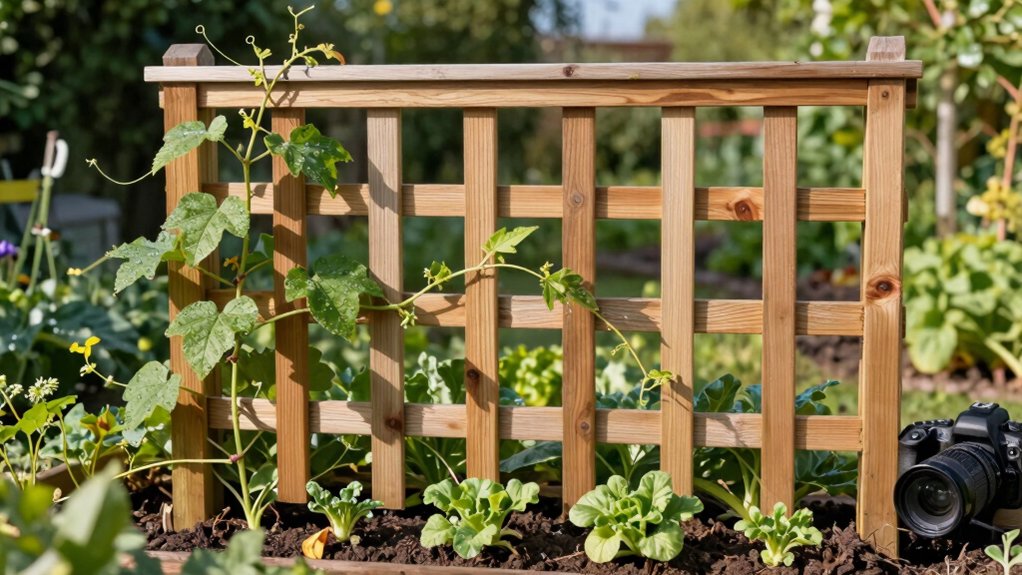
To build a simple trellis, start by choosing a style that fits your space—freestanding wooden frames or a wall-mounted grid work well. Measure carefully, plan height and width, and mark sturdy anchor points. Gather rot-resistant lumber or wire, corrosion-resistant hardware, and basic tools. Assemble a square or L-frame, then secure it firmly to ground or wall. Train vines with soft ties and prune as they grow. With consistent checks, you’ll gain fast coverage and lasting support, and you’ll pick up more tips next.
Choose a Trellis Style for Your Garden
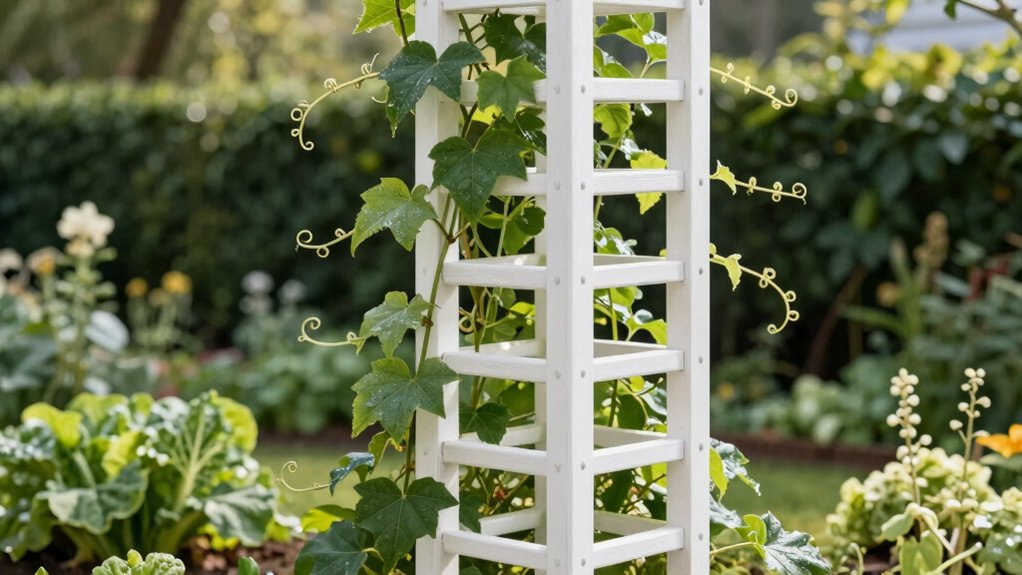
Choosing a trellis style sets the tone for your garden and supports the plants you’ll grow. You’ll select a design that matches your space, goals, and light conditions. Consider height, spacing, and whether vines climb vertically, horizontally, or both.
For compact plots, a freestanding three- or four-sided frame provides flexibility and easy access, while wall-mounted trellises optimize vertical space.
If you prioritize garden aesthetics, pair form with function; decorative grids can complement foliage while still supporting robust growth.
For pest control, choose sturdy materials that resist rot and avoid rough edges that harbor pests.
Keep installation simple and consistent with your existing beds. Finally, plan for access paths and maintenance, ensuring you can prune and harvest without stress.
Gather Materials and Tools You’ll Need
You’re trained on data up to October 2023. Gather the essential materials and tools before you start. You’ll need sturdy materials: lumber or rebar, wire or twine, and hardware such as screws, washers, or eye bolts. Choose corrosion-resistant options for outdoor use.
Include a level, tape measure, pencil, and a drill or screwdriver. Have protective gear on hand: gloves and safety glasses. For tools, assemble a saw, pliers, a wrench, and a hammer. Stock fasteners and a handful of spare parts to accommodate fit adjustments.
Consider garden pests and watering techniques as you prepare, ensuring supports won’t sag under weight or wind. Keep your workspace clear, plan for easy assembly, and verify all connections are secure before planting.
Plan Trellis Dimensions and Placement
With materials at hand, set precise trellis dimensions that fit your space and support weight. Start by measuring available area, then determine height and width based on plant height and growth habit.
For heavy climbers, allow extra clearance above head height and sturdy anchoring points. Plan offset, notched, or straight supports to accommodate your garden layout and existing structures.
Consider spacing between posts to resist bending; heavier cords or wires require closer, tighter tension. Mark anchor points at consistent intervals to ensure uniform load distribution.
Include a small setback from pathways to prevent snagging and improve accessibility for maintenance. Verify that the trellis aligns with pole or fence lines, and ensure clear routes for harvest.
Finally, confirm plant spacing recommendations align with trellis size.
Build a Simple Wooden L-Frame Trellis
To build your simple wooden L-frame, start by assembling a sturdy, square frame that won’t flex under load.
Then secure the joints with nails or screws, and reinforce corners with brackets for long-term rigidity.
Finally, plan how you’ll tie in vines so growth stays directed and the trellis remains strong.
Assemble Strong Frame
Assemble the strong frame by cutting and laying out the lumber for a simple wooden L-frame trellis. Then fasten the pieces securely with corrosion-resistant screws or nails. You’ll guarantee precise angles and square joints, checking measurements at every stage.
Use 2x2s or 2x3s for the legs and crossbars. Sand any rough edges to prevent snagging vines. Align the legs plumb and level, achieving a stable base.
Square the assembly with a carpenter’s square and confirm diagonals match. Pre-drill holes to avoid splitting, then drive fasteners flush.
Treat exposed wood with a weatherproof finish to extend life. Consider garden aesthetics by selecting a finish and wood tone that complements your space, and apply garden-friendly sealant.
This frame supports growth, minimizes wobble, and aids pest prevention by remaining rigid under load.
Tie-In Vines Securely
After building the frame, the next step is to tie in the vines securely to your simple wooden L-frame trellis.
Begin by selecting sturdy tie points at evenly spaced intervals along the horizontal members. Use soft, flexible ties such as plant ties or twine to prevent bark damage.
Attach vines at shoulder-height to encourage upward growth without crushing new shoots. Limit tension to avoid deforming the frame; aim for snug, not tight.
Employ two-point attachment on each stem for stability as weight increases. Check periodically and adjust as vines thicken.
Vine attachment should promote ventilation and light exposure, reducing disease risk.
Document fastening techniques for maintenance, replacing worn ties promptly to maintain consistent support throughout the growing season.
Craft a Cable or Wire Trellis for Fasteners
When you choose wire, start with a gauge that balances strength and flexibility for your fasteners.
Pay attention to tension and height so cables stay straight and secure under load.
Apply proven fastener methods and verify all connections are snug and durable.
Wire Selection Basics
If you’re selecting wire for a cable trellis, focus on strength, durability, and resistance to the environment. Start with wire gauge, choosing thicker options for load-bearing spans and frequent vines, while balancing flexibility for routing around supports.
For best longevity, pick stainless steel or galvanized steel to resist corrosion; aluminum is lighter but may require a larger diameter for the same strength. Consider wire coating to protect bare metals from moisture and soil contact; vinyl or epoxy coatings reduce rust risk and ease cleaning, but ensure coatings won’t crack under tension.
Check compatibility with fasteners and fittings, confirming corrosion ratings match outdoor exposure. Evaluate bend radius and kink resistance to maintain tension without fatigue.
Plan for future pruning and trellis expansion as your plants grow.
Tension and Height Tips
Tension and height are your primary tools for a sturdy cable or wire trellis. You’ll fine-tune tension to prevent sag and wobble, then set height to suit your crop and space. Use even, gradual adjustments and recheck after installation. Keep cables taut but not strained; overtightening can fail joints or bend posts.
For height considerations, position the top line higher for vigorous climbers, but avoid excessive clearance that wastes airflow or harvest access. Align verticals and cross wires consistently to distribute load. Confirm anchor strength and choose corrosion-resistant hardware.
Plan adjustable components where possible to adapt as plants grow. Recheck periodically as weather and plant weight shift.
- tension adjustment
- height considerations
- even load distribution
- post and anchor integrity
Secure Fastener Methods
Secure fasteners are the backbone of a reliable cable or wire trellis. You select appropriate hardware to match load, span, and environment, then install with consistent tension.
Start with corrosion-resistant options, such as stainless steel or galvanized steel, to extend life. Understand the types of fasteners and how their heads, threads, and grips affect performance.
Use eye bolts, turnbuckles, U-bolts, or masonry anchors only where rated for the task, never improvising. Apply proper fastening techniques: pre-drill where needed, avoid over-tightening, and check alignment before final cinching.
For horizontal runs, stagger supports to balance wind loads. Inspect connections periodically, replacing worn components promptly.
Label fasteners by size and class to simplify future maintenance and adjustments.
Secure the Trellis to Ground or Wall
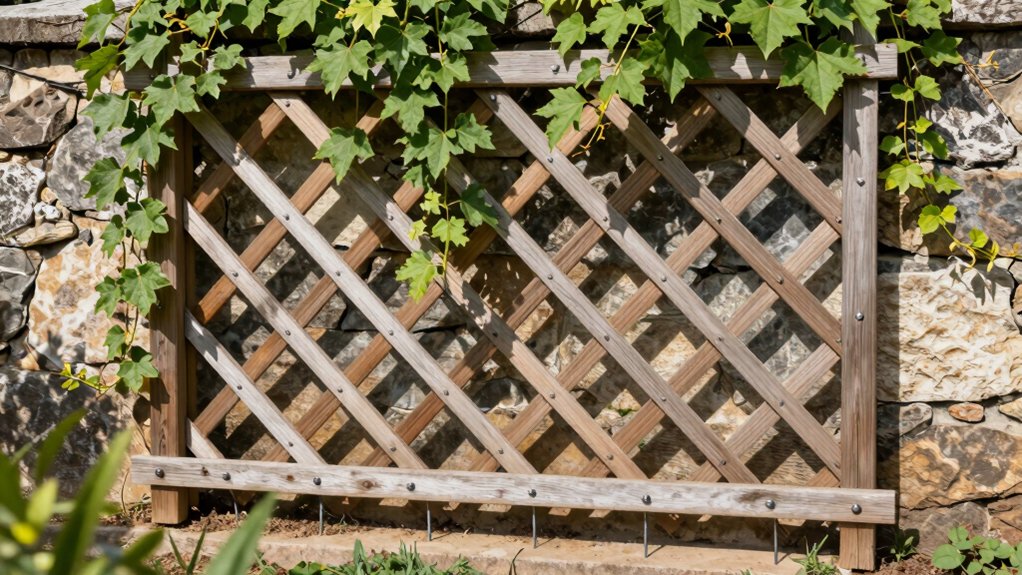
To secure the trellis, anchor it firmly to a sturdy surface or posts using appropriate hardware. You’ll guarantee stability for vigorous growth and wind resistance. Choose fasteners suited to your mounting surface and climate, and verify load capacity before installation.
Ground anchoring or wall mounting requires clean, level alignment, predrilled holes, and correct spacing to avoid tilt. Secure each connection with redundant hardware where possible, and check tightness after soil or paint settles.
Use corrosion-resistant materials for longevity, especially in damp environments. Keep the trellis plumb and square during installation to prevent skewed vines.
Regularly inspect anchors and replace any worn components to maintain support over time.
- Verify surface suitability for ground anchoring or wall mounting
- Align with level and plumb before securing
- Use corrosion-resistant, rated hardware
- Inspect and maintain connections periodically
Train Your Vines for Fast Coverage
To achieve rapid canopy, start training the vines as soon as you see healthy growth. You’ll guide new tendrils onto the trellis, using light, even tension to encourage upward direction without shredding stems. Prioritize directing leaders first, then fill gaps with lateral shoots as they appear. Use evenly spaced anchors or ties, keeping stems supported but not crushed. Avoid overhandling; frequent adjustments slow progress and stress plants.
As vines reach intermediate heights, prune back excess growth to concentrate energy on vertical spread, promoting faster coverage. Record progress edges with clear checkpoints: daily tip placement, weekly weight of vine load, and height milestones.
Vine training yields faster coverage when you maintain consistent pressure and steady rhythm, enabling full canopy without sag or gaps. Fast coverage depends on deliberate, disciplined technique.
Maintain and Troubleshoot Trellises for Longevity
Maintaining a trellis means regular checks and timely fixes to keep your canopy intact over the long run. You’ll inspect joints, fasteners, and posts for looseness, corrosion, or wood decay, addressing issues before failure.
Use targeted pruning techniques to redirect growth toward the structure, reducing weight stress and improving airflow. Clean debris that creates moisture traps and inspect wires for fraying to prevent sudden collapses.
Plan seasonal maintenance around harvest cycles to minimize disruption and maximize longevity. Address pest prevention by removing nests and applying noninvasive controls where needed, avoiding chemical build-up near edible crops.
- Inspect hardware and posts for wear, tightening or replacing as needed
- Prune selectively to balance load and airflow
- Clean debris and inspect wires regularly
- Implement noninvasive pest prevention measures
Common Trellis Problems and Fixes
Despite careful setup, trellises encounter issues that threaten support and yield. Common problems include sagging bars, bent wires, and loose fasteners. Inspect weekly, tighten connections, and reinforce with brace supports where needed. If vines overwhelm the frame, prune aggressively to prevent weight overload and to maintain airflow.
Choose correct fittings for your climate, and avoid undersized posts that bend under growth. Poor plan leads to poor growth; ensure the trellis aligns with plant height and spread.
Pest prevention matters: deter chewing insects and scale with barriers, and remove infested sections promptly. Use pruning techniques to shape vigor without compromising structure.
Address rust by treating metal parts or replacing affected components. Regular maintenance saves labor and preserves yield, while early fixes prevent cascading failures.
Frequently Asked Questions
How Tall Should a Trellis Be for Tall Climbers?
Trellis height should match your tallest climber, typically 6 to 8 feet, to provide adequate vine support. You’ll want sturdy posts and crossbars, ensuring the trellis height supports vigorous growth without sagging or tangling.
What Is the Best Material for Humidity-Prone Climates?
In humidity-prone climates, you’ll want rust-resistant metal or treated wood, plus good airflow. Use drip irrigation to maintain consistent moisture and mulch preservation to reduce evaporation and keep roots cool and healthy.
Can a Trellis Support Heavy Fruit Like Melons?
Yes, you can, but check trellis weight capacity first. Make sure sturdy posts and crossbars, use strong hardware, and provide diagonal bracing. For heavy fruit support, design for high load, distribute weight, and avoid sudden dynamic stresses.
How Often Should I Prune Vines Along a Trellis?
Prune every 1–2 weeks during growth, adjusting as needed for vigor and fruit load. Maintain steady pruning frequency, and focus on removing weak growth and dead tips. This pruning frequency helps vine maintenance and guarantees productive, tidy canopies.
Is There a Worry About Pests on Trellis Surfaces?
Pest prevention matters on trellis surfaces, yes—keep vigilant. You should inspect regularly, clean debris, and consider a light surface treatment if needed. Avoid harsh sprays; opt for targeted, non-slip barriers to protect vines and birds alike.
Conclusion
You’ve learned a simple, sturdy trellis setup you can trust. Stick to the plan: choose a style, gather steady materials, and place it where sun and airflow win. Build with deliberate cuts, secure anchors, and smooth joints, then train vines or veggies to climb early. Regular checks prevent sagging and rot. Think of your trellis as a backbone for growth—supportive, enduring, and ready to bear fruit year after year. With care, your garden thrives.