Maximize your tiny outdoor space by choosing a compact garden office with a smart footprint, accessible layout, and built-in storage. Prioritize weatherproof cladding, durable flooring, and cable management to keep things tidy year-round. Add space-saving furnishings that fold, nest, or stack, and use modular pieces to reconfigure as needed. Bring in natural light with clerestory glazing and vertical greenery that reflects light without glare. Layer lighting for ambient, task, and accent zones, and stay budget-smart—you’ll reveal more practical tips below.
Pick the Right Compact Garden Office for Your Space
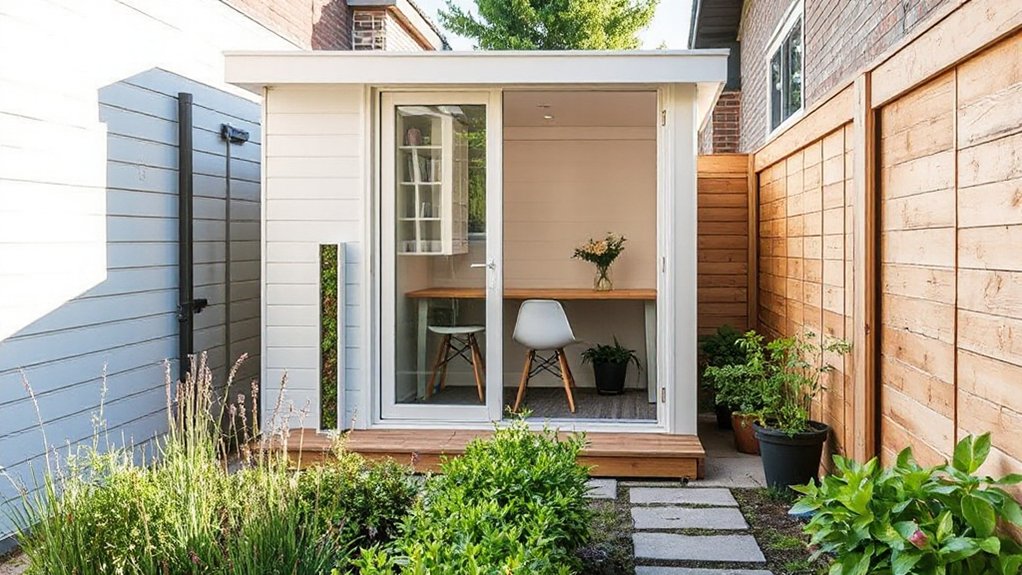
Choosing the right compact garden office starts with your space and work needs. You’ll evaluate footprint, access, and how many tasks you’ll juggle daily. Prioritize a compact design that fits without crowding your yard or driveway, and guarantee layout supports focused work, storage, and cable management.
Consider panel height, glazing, and door placement to maximize natural light while keeping insulation tight. Material durability matters: opt for weather-ready cladding and a sturdy floor that won’t bend under furniture or equipment.
Choose a system with simple assembly and solid warranty, so you aren’t chasing repairs. Plan for ventilation and sound damping to protect concentration.
Finally, align color and texture with your home’s exterior for a cohesive, long-lasting addition.
Weatherproof Outdoor Work Zones Effectively
To weatherproof your outdoor workspace, start with a materials guide that prioritizes durability and weather resistance, so you can select panels, membranes, and sealants that suit your climate.
Then apply solid insulation and sealing techniques to keep heat in and moisture out, using tight joints, vapor barriers, and breathable yet waterproof layers.
Finally, design for continuous protection with easy-access drainage and discrete weatherproofing details that maintain aesthetics while ensuring longevity.
Weatherproofing Materials Guide
Weatherproofing outdoor work zones starts with selecting materials that can endure moisture, temperature swings, and UV exposure without compromising safety or comfort. You’ll want weatherproof, low-maintenance options that resist cracking and fading while staying visually cohesive with your garden office.
Prioritize durable substrates like powder-coated metal, composite decking, or capped composites for footing and surfaces.
Install storm resistant windows to reduce drafts and glare, ensuring airflow control without sacrificing light.
For roofs, apply waterproof roof coatings that form seamless, UV-stable protection against rain and heat.
Seal joints with corrosion-resistant hardware and gasketed connections to minimize leaks.
Choose breathable, moisture-tolerant finishes on exterior walls to prevent mildew.
Finally, plan for drainage and clearance to maintain longevity and a tidy, distraction-free workspace.
Insulation And Sealing Techniques
Effective insulation and sealing are the backbone of a comfortable, energy-efficient garden office. You’ll maximize comfort by choosing high-performance materials and detailing to minimize drafts, heat loss, and moisture problems.
Start with a well-sealed envelope: airtight seals around doors and windows, and continuous insulation that stops thermal bridges at studs, corners, and joints. Use thermal barriers where wiring or plumbing penetrates walls to prevent cold spots.
Install a radiant or foam board base layer for consistent floor warmth, then vapor barriers to manage humidity. Prioritize precision in fit and finish to avoid gaps.
- Airtight seals at all penetrations and interfaces
- Continuous insulation with minimal thermal bridges
- Moisture control via vapor barriers and proper flashing
Space-Saving Desks and Seating for Patios and Balconies
When space is tight on a patio or balcony, choosing compact, multi-functional furniture makes all the difference. You’ll want desks that fold flat or nest beside seating, so workflow remains smooth without crowding.
Pick compact furniture with clean lines and modular components that can reconfigure as needed, supporting both work sessions and casual breaks.
For seating, consider stackable chairs or slim benches with built-in storage to keep supplies out of sight.
Use a balcony table that doubles as a return surface for the laptop or coffee breaks, then folds away when not in use.
Prioritize materials that resist weather and require minimal maintenance.
This approach supports space optimization, delivers ergonomic comfort, and preserves a clear, unobstructed outdoor zone for focused work.
Maximize Natural Light With Vertical Greenery
Natural light sharpens focus and makes a small garden office feel airier, so start by guiding that glow with vertical greenery. You can maximize daylight by installing vertical gardens on the sunniest wall, using lightweight panels and layered plant heights to create depth without crowding.
Choose foliage with reflective leaves and airier textures to bounce light around the room, and pair greenery with light-colored walls and clerestory windows where possible. Position plants to avoid glare on screens while still channeling daylight deeper into the space.
- Use modular vertical gardens with adjustable shelves for seasonal plant changes
- Favor pale pots and reflective surfaces to amplify natural light
- Schedule weekly light checks to ensure foliage doesn’t obstruct key viewing angles
Smart Storage and Organization for Tiny Outdoor Areas
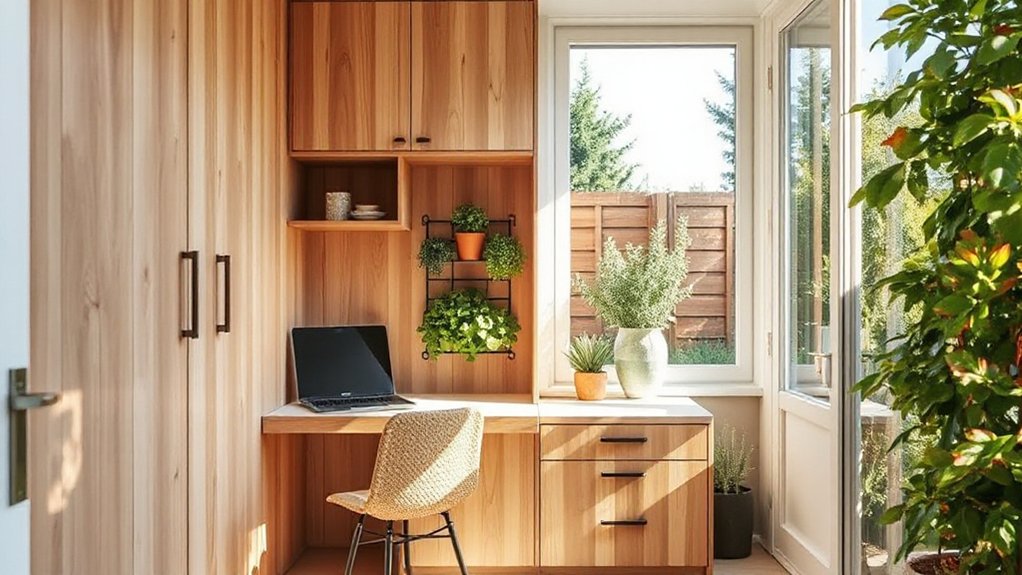
Smart storage in a tiny outdoor area hinges on clever zoning, multi-use furniture, and vertical potential that keeps every inch accessible. You’ll maximize every corner by pairing compact seating with hidden compartments beneath cushions, so tools, cables, and craft supplies stay out of sight yet within reach.
Choose modular shelving that can reconfigure as your needs shift, swapping vertical stacks for horizontal displays without clutter. Implement wall-mounted hooks and narrow benches that double as storage chests to minimize footprint.
Use labeled containers inside weatherproof bins to simplify retrieval. Prioritize durable, low-maintenance finishes and a monochrome palette to reduce visual noise.
Regularly prune excess gear to maintain order, and rotate items seasonally so your workspace remains efficient, inviting, and ready for focus.
Hidden compartments, Modular shelving.
Lighting, Power, and Safety for Outdoor Offices
Smart lighting and a robust power plan set the mood and keep your outdoor office productive, safe, and comfortable. I’ll cover Lighting Safety Tips, how to size a Power Supply, and simple tactics for Outdoor Office Security so you can design confidently.
Let’s start with practical, design-forward choices that blend aesthetics with reliable performance.
Lighting Safety Tips
Looking for reliable lighting safety for your outdoor office? You’ll want clear guidelines that protect people and equipment while keeping design sleek.
Prioritize weather-rated fixtures and sealed connections, and choose solar powered lighting where feasible to reduce tripping hazards and wire clutter.
For safety, always follow outdoor electrical safety best practices: use GFCI outlets, keep plugs off damp surfaces, and route cables away from walkways.
Regularly inspect cords for wear and replace damaged components promptly.
Opt for integrated LED solutions that stay cool and emit even, glare-free light, enhancing productivity without hotspots.
- Choose IP-rated, shaded fixtures to minimize moisture exposure
- Use low-profile, concealed cabling with proper strain relief
- Schedule seasonal checks and battery maintenance for reliability
Power Supply Planning
Choose a weatherproof circuit layout with GFCI protection and outdoor-rated wiring to minimize hazards. Consider solar panels to offset daytime usage and reduce clutter, pairing them with a discreet battery reserve for evenings.
Backup generators offer resilience during outages, but place them away from work zones to limit noise and fumes.
Plan integrated lighting that prioritizes task visibility without glare, using dimmable LEDs and motion sensors.
Finally, document maintenance windows, protective enclosures, and grounding diagrams to sustain safety and performance year round.
Outdoor Office Security
- Security cameras
- Lock systems
- Visibility and maintenance
Personalize on a Budget: Finishes, Decor, and Mood
A tight budget doesn’t have to limit your garden office’s impact; smart finishes, selective decor, and mood-enhancing lighting can transform a simple space into a productive sanctuary.
You’ll prioritize durable, budget-friendly finishes like vinyl flooring that mimics wood, composite panels, and washable paint in a neutral base. Add contrast with a single bold feature, such as a bright wall or task chair, to avoid clutter.
For decor, lean into cozy decor ideas that feel intentional rather than crowded: a few potted plants, smart storage baskets, and a focused desk setup.
Lighting matters—layer ambient, task, and accent light to reduce eye strain.
Finish with a small, personal touch, and your workspace becomes both efficient and inviting.
Frequently Asked Questions
How Do I Budget for a Small Garden Office Project?
Set a clear budget first, then itemize essentials and contingencies. Use Budget planning to estimate costs, prioritize a compact structure, and apply Cost saving tips like off-peak builds and modular components to stay under budget. Reassess regularly.
Can I Install a Garden Office on a Rental Balcony?
Yes, you can install a garden office on a rental balcony, but check balcony privacy and rental restrictions first; choose compact, UV-safe materials, maintain weight limits, and use modular screens, low profiles, and hidden storage to maximize space.
What Permits or Restrictions Apply to Outdoor Structures?
“Rules are your compass.” You must check building codes and zoning laws before installing outdoor structures, ensuring permits, setbacks, and maximum size compliance; you’ll need approvals, inspections, and possible HOA permissions to avoid fines and removals.
Which Plants Best Reduce Glare on Screens Outdoors?
Plant shade you should target to curb glare reduction: select tall, broad-leafed species and layered greenery to diffuse light. Use evergreen backdrop for year-round cover, and position screens with angled shading to maximize glare control and visual comfort.
How Do I Secure a Garden Office From Pests and Insects?
Pests flee when you deploy pest proof materials and insect repellent plants. You secure a garden office by sealing gaps, adding screens, and using natural barriers, while choosing durable finishes, airflow, and discreet, design-focused containment.
Conclusion
Small spaces don’t have to limit your productivity. With a compact garden office, you can carve out focused hours and still enjoy outdoor air. I once helped a client fit a 6×8 shed with a fold-away desk and vertical storage, and their energy bill dropped while creativity rose. Even a 1% increase in natural light boosts mood by 10%. Start small, prioritize layout, and let smart choices compound into a calm, efficient workspace you’ll actually use.