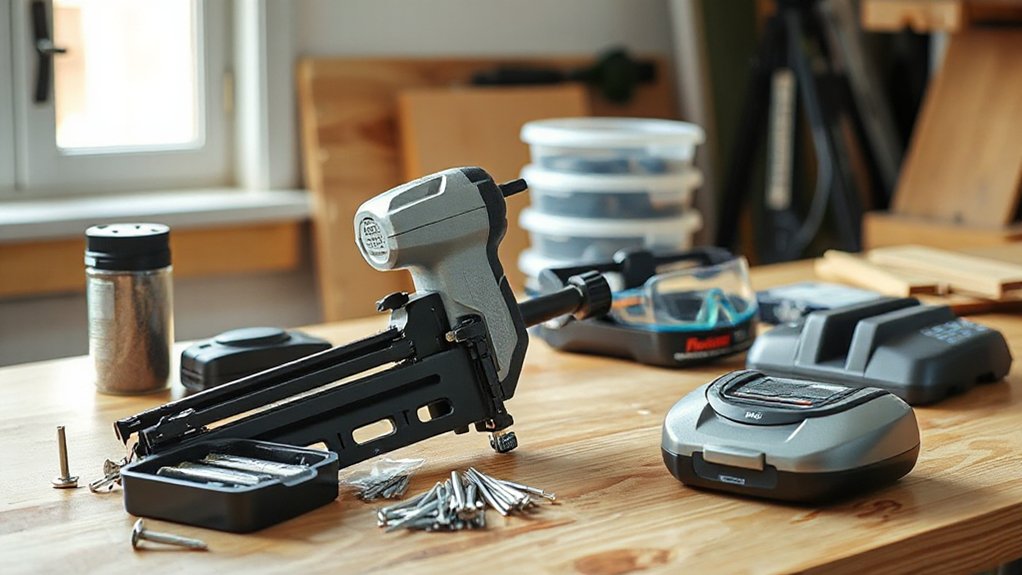
For home projects, choose cordless nail guns that balance power, precise depth control, and comfort. Prioritize framing for strength, finishing for clean drives, and roofing for lightweight handling. Look for lithium-ion packs with solid runtime, adjustable depth, jam resistance, and a reliable trigger. Check magazine size, shank type, and compatibility with your tasks, plus ergonomic grips and minimal vibration. Safety features and easy maintenance matter too. If you keep exploring, you’ll uncover how to optimize your setup for better results.
What Cordless Nail Guns Do for DIY Projects

Cordless nail guns streamline DIY projects by offering mobility, speed, and precision without a compressor or hoses. You’ll see immediate impact on framing, trim, and cabinetry tasks, as you target clean drives and consistent countersunk heads.
In this discussion, focus on reliability, battery chemistry, and cycle life to meet demanding schedules. You’ll evaluate power-to-weight, shoot depth, and control options, ensuring each model maintains steady performance across materials.
Key criteria include tool ergonomics, jam reduction, and ergonomic balance for all-day use. Prioritize nail gun maintenance practices that maximize longevity, such as timely blade and driver cleaning, nozzle inspection, and battery care.
Never overlook cordless nail gun safety—read manuals, wear eye protection, and test fire in safe zones before committing to critical assemblies.
Choosing by Use Case: Framing, Finishing, or Roofing
When you’re selecting by use case, start with framing’s higher power profile for speed and reliability. Then match finishing tools to precision and control to reduce splitting.
For roofing, prioritize a balance of sustained power and lightweight handling to keep momentum without fatigue.
Across all use cases, compare each model’s framing power profiles against finishing tool precision to ensure you’re choosing the right cordless nail gun for the job.
Framing Power Profiles
To frame with confidence, focus on the power profile that suits framing tasks: high driving force, consistent energy delivery, and rapid cycle times. You evaluate framing power by maximum driving depth, load management, and voltage consistency under load.
Nail gun profiles should demonstrate repeatable performance from first pull to last nail, with minimal recoil and stabilized magazine feed. Prioritize tools engineered for sheaths of framing material, where dense lumber and horizon-wide nailing require sustained punch.
Compare cycle times, battery chemistry, and ram speed—these determine overall productivity. Consider torque curves and stall resistance to prevent jams in rapid-fire sequences.
In essence, framing power means predictable, high-impact shots, balanced by endurance and reliability, evidenced by robust nail gun profiles and reproducible field results.
Finishing Tool Precision
Choosing the right finishing tool hinges on the specific use case—framing, finishing, or roofing—and hinges on precision in drive depth, magazine reliability, and trigger responsiveness.
You assess finishing tool performance by precision accuracy of nib depth and dent resistance in delicate trim. Look for calibrated depth adjustment, minimal drift, and repeatable flush countersink without zknee.
Magazine consistency reduces misfeeds during long sessions, while a robust magazine latch prevents jams.
Trigger ergonomics matter; a responsive, clean trigger with consistent travel delivers controlled nailing for tight joints and clean finishes.
Consider tool weight balance and vibration control to sustain accuracy over hours.
In finishing tasks, marginal tolerances determine professional results, so prioritize tools with stable drive, predictable reloading, and repeatable precision across cycles.
Battery Options Demystified: Lithium vs. Higher-Capacity Packs
Battery efficiency and runtime can make or break a cordless nail gun project, so understanding lithium-ion cells versus higher-capacity packs is essential. You’ll evaluate energy density, discharge rate, and real-world runtime to choose the right balance of weight and power.
Lithium-ion options maximize starter-weight efficiency and cadence, but higher-capacity packs extend sessions between charges, trading extra weight for longer continuous use. Consider charger compatibility and charging speed, since a faster recharge reduces downtime on site.
Look for smart packs with state-of-charge indicators and firmware-tyned protection to avert premature degradation. Battery longevity hinges on proper cycling, ambient temperature tolerance, and the tool’s duty cycle.
In professional-grade kits, select cells rated for higher C-ratings and verified safety standards to sustain peak performance without sacrifice.
Drive Power and Nail Types You’ll Actually Use
You’ll want to match drive power to your materials and fastener size, so we’ll compare common cordless models by PSI or joules and the nail diameters they drive cleanly. Consider the nails you’ll actually use—finish, framing, or brad nails—and note how each gun’s power and actuation type affect material crush, penetration, and hold strength.
We’ll cut through the jargon with practical, criteria-driven guidance to help you pick a tool that delivers consistent results in real-world home projects.
Drive Power Essentials
Drive power matters because it determines how reliably a nail goes in without crushing the surface or jamming. You’ll prioritize consistent drive force, stroke length, and cycle speed to maximize project speed and finish quality.
Evaluate peak psi, anvil design, and collision detection as core criteria, ensuring jams are rare and predictable. Nail gun maintenance and battery life optimization become practical levers: choose rugged platforms with accessible magazine diagnostics, tool-free clearance, and simple lubrication points.
For home use, select models offering adjustable depth and sequential or contact modes to suit framing versus trim. Compare weight distribution for fatigue reduction and balanced reach in tight spaces.
Prioritize battery chemistry and charging efficiency to maintain power envelopes and reduce downtime.
Precision doesn’t forgive inconsistency—optimize drive power for reliable, professional results.
Nail Types Practically Used
Ever wonder which nails actually pair best with your cordless gun for real-world jobs? When you choose nail types, you’re selecting drive power, shank style, and head type to match material and finish.
For framing, use 2-inch to 3-1/2-inch common nails with sufficient shaft thickness to prevent bending under load.
For trim and finish work, opt for 1-1/4-inch to 2-1/2-inch finishing nails with corrosion resistance and a slim head to reduce visibility.
For decking, select coated ring-shank or collated screws where applicable, ensuring proper penetration.
Nail gun compatibility hinges on shank type, collated strip, and magazine size. Always verify material compatibility, resistance to shear, and fastener spacing guidelines to maximize accuracy, hold strength, and tool longevity.
Depth Adjustment for Precision in Trim Work
Setting the nail depth correctly is essential for clean trim joints and avoiding surface damage; start by understanding your nail gun’s depth adjustment mechanism and how it interacts with the material you’re working with.
You’ll prioritize precise depth control to prevent nail heads from sitting proud or sinking too deep. Align your adjustment with material hardness, thickness, and the trim’s intended flush look.
For ideal trim accuracy, test on scrap before committing to final boards, then fine-tune in small increments. Use calibrated settings for baseboards, casing, and overlays, documenting successful values for repeat projects.
Maintain consistent pressure and trigger control to ensure repeatable depth results. When depth control is accurate, you gain faster installations, fewer touch-ups, and professional-grade finishes.
Ergonomics That Reduce Fatigue All Day

You’ll notice how a lightweight grip design reduces hand strain over long sessions, helping you maintain control without fatigue.
Balanced weight distribution keeps the tool steady from start to finish, minimizing wrist twist during prolonged use.
Lightweight Grip Design
A lightweight grip design reduces hand fatigue by distributing weight more evenly and requiring less grip force during extended use. You’ll notice improved control as the tool sits securely in hand, enabling precise placement without compensatory tension. Prioritize models with slim profiles and balanced balance points to sustain power through long sessions.
Ergonomic comfort hinges on how the grip accommodates finger thickness, palm girth, and natural hand curvature, so assess circumference ratings and test a sample during purchasing. Favor grip materials that resist heat transfer and sweat, maintaining a secure hold without slipping. Look for textured, non-slip surfaces and responsive trigger access that minimizes reach.
Balanced Weight Distribution
Balanced weight distribution directly influences fatigue over long use. When you evaluate cordless nail guns, prioritize models whose mass centers align with your hand and forearm, not your palm. An ideal balance reduces wrist bending, minimizes grip torque, and sustains steady drive force through extended sessions.
Look for a design that pairs a compact front with a counterweight at the rear, so the tool sits naturally in line with your forearm during firing cycles. Ergonomic design matters because control remains precise, recoil feels manageable, and fatigue accumulates only where you want it—in performance, not in grip.
Prioritize grip comfort features, such as soft-touch surfaces and balanced trigger access, to maintain accuracy and drive consistency across long projects.
Reduced Trigger Fatigue
When selecting cordless nail guns, prioritize trigger design that minimizes finger strain over long sessions. Reduced trigger fatigue matters because you need sustained performance without a decline in accuracy or control.
Look for a light yet solid trigger with a consistent press force across the trigger’s travel, ensuring repeatability from first light contact to full drive. Trigger comfort shouldn’t sacrifice sense of feedback; you want tactile assurance that you’re engaging the tool without hiding motion.
Pair this with refined grip ergonomics: a well-shaped handle, balanced weight distribution, and texture that maintains grip under sweaty conditions.
In practice, prioritize models offering adjustable trigger sensitivity and a comfortable finger position for all-day tasks, ensuring power remains precise and fatigue stays minimal.
One-Battery-Fits-Most: Brand Compatibility Explained
While you’ll find “one-battery-fits-most” claims common across cordless nail guns, the reality hinges on brand-specific battery packs and voltage standards rather than universal compatibility. You should evaluate each model for battery compatibility and how the cell chemistry aligns with its charger ecosystem.
In practice, brand interoperability isn’t guaranteed between major makers, even if voltages match; circuitry and firmware enforce restrictions to protect performance and longevity. Look for standardized voltage ranges (for example, 20V platforms) paired with documented tolerance envelopes.
Assess whether adapters exist or implied cross-compatibility claims are marketing fluff. A robust choice prioritizes documented compatibility lists, official trainers’ guidance, and field-tested performance data.
Your decisive criteria: reliable power delivery, predictable cycle life, and a clear, manufacturer-supported battery ecosystem.
Weight, Balance, and Vibration Across Models
Weight, balance, and vibration across models matter as much as raw power when you’re choosing a cordless nail gun. You’ll prioritize ergonomic design to reduce fatigue on extended projects and maintain precision.
Assess weight distribution so you can control the tool with minimal rear heft, especially in overhead tasks. A balanced chuck and compact magazine profile improve line accuracy and reduce wrist strain.
Vibration management—shock-absorbing pads, responsive triggers, and low-recoil drives—directly impacts bite control and speed. Compare grip texture for secure handling without excessive grip force.
Consider feel in your dominant hand during routine cycles, not just stall tests. Heavier models aren’t inherently worse if weight is evenly distributed; look for balanced heft paired with low user fatigue.
Quick-Change Coils, Magazines, and Basic Maintenance
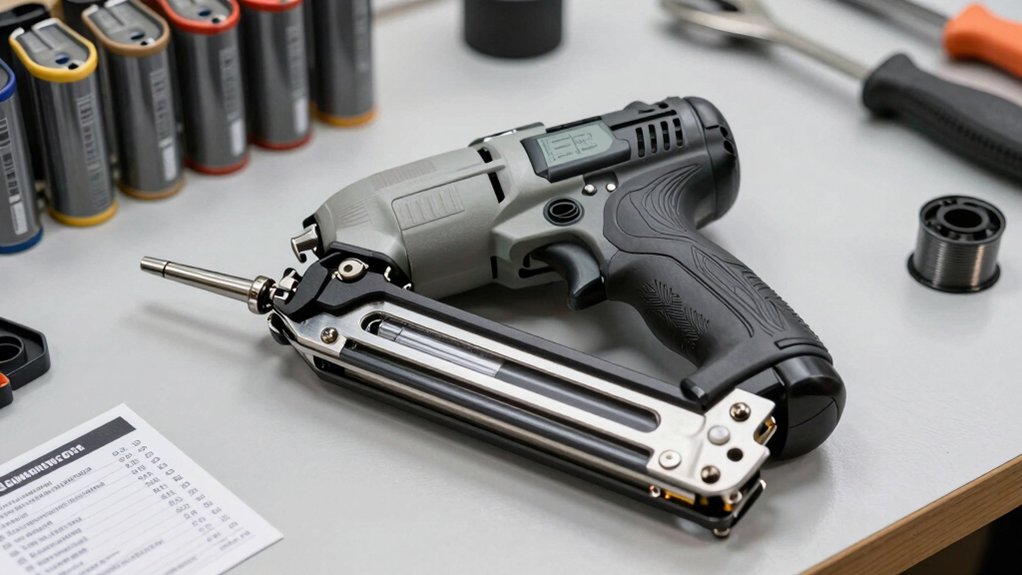
You’ll start with quick-change coil tips and reliable magazine maintenance to keep your cordless nail gun ready for any job. We’ll cover selecting coils that match your tool’s pressure and nail size, plus routine magazine care to prevent jams and misfeeds.
This section focuses on practical steps you can implement now to improve consistency, reduce downtime, and extend your tool’s life.
Quick-Change Coil Tips
Quick-Change coil tips streamline nail gun setup by letting you swap coils, magazines, and driver blades without disassembling the tool. You’ll evaluate coil tips for compatibility, cycle speed, and reliability under load, focusing on repeatable nailing without wrecking workpieces.
Prioritize fast, tool-free changes that preserve alignment, reducing downtime between roofing, framing, and cabinetry tasks. Look for coil tips that support consistent depth adjustment and minimal jam risk, which is critical when you push for high magazine capacity across longer runs.
Make certain the system maintains seal integrity and dust resistance during rapid changes. Assess efficiency gains against total cost of ownership, including spare parts, serviceability, and field-replaceable components.
For power-driven users, coil tips should deliver precise feed, robust retention, and dependable performance across demanding applications. coil tips, magazine capacity.
Proper Magazine Maintenance
A well-maintained magazine and quick-change coils are essential for reliable, high-efficiency operation across roofing, framing, and cabinetry tasks. You keep performance sharp by confirming magazine alignment before every job, then testing dry-fire to verify feed consistency.
Inspect the nail magazine lubrication schedule and apply lubrication only where the manufacturer specifies; avoid over-application, which invites gum and jams. Clean the track and follower spring with a lint-free wipe to prevent debris buildup that slows cycles.
When replacing coils or seals, match parts to model codes to maintain power transfer and torque accuracy. Store tools with batteries removed to prevent phantom feeding.
Regular maintenance reduces downtime, extends life, and preserves firing force, ensuring you deploy maximum reliability for demanding applications.
Real-World Use Cases: Finishing, Decking, and Framing

Real-world use cases for cordless nail guns span finishing, decking, and framing, where each task demands specific tool settings, fastener choices, and safety practices to maximize efficiency and hold.
In finishing, you prioritize low driving depth and precise countersinking to avoid splitting and ensure clean manifolds of trim.
For decking, select longer fasteners, staggered rows, and controlled trigger work to prevent mushrooming and ensure solid joist connections.
Framing requires high drive power, consistent cycle times, and proper nail alignment to maintain plumb and square walls.
Nail gun calibration matters across all tasks, as does disciplined cordless tool storage to prevent power loss.
Prioritize battery management, heat control, and rapid reloading to uphold performance on demanding builds without sacrificing accuracy or safety.
Safety Features and Best Practices for Home Projects
Safety features and best practices for home projects begin with protecting yourself and others from common power-tool hazards, then building a disciplined workflow around tool setup, storage, and maintenance. You’ll prioritize safety gear, such as eye and ear protection, gloves, and a dust mask, before initiating any framing, decking, or finishing cut.
Maintain hazard awareness by inspecting nails, fasteners, and the battery/charger, verifying anti-kickback and blade-guard mechanisms are functional, and removing distractions.
Establish a repeatable sequence: inspect, secure work, set depth and trigger control, then dry-fire test on scrap.
Keep a dedicated storage area, labeled holsters, and unplug or remove batteries during changes.
Train with manufacturer guidelines, practice proper two-handed control, and document incidents to refine your safety playbook.
Best Value Picks Under $200: Budget-Friendly Cordless Nail Guns
For budget-friendly cordless nail guns under $200, you’ll find models that emphasize core reliability, solid battery performance, and practical features over premium extras. You’ll prioritize battery compatibility to guarantee predictable runtime and quick swaps without tools. Look for consistent drive power at common nail gauges, with nail gauge specified clearly for project precision.
In this tier, weight, balance, and trigger response matter, so choose ergonomic grips and easy depth adjustment. Expect decent magazines, jam-resistance, and clear indicator lights for charge and load status.
Edge cases like dual-fuel options aren’t required; instead, pick models that maintain steady fire rate under typical home tasks. Avoid overbuilt cartridges; focus on reliability, predictable biters, and a solid warranty. This keeps value high without sacrificing performance.
Mid-Range Performers: Durable Options for Frequent DIYers

Mid-range models strike a balance between durability and everyday practicality, delivering robust build quality, reliable battery life, and mid-level drive power that keeps up with frequent DIY tasks without tipping into premium pricing. You’ll find reinforced housings, magnesium or aluminum bodies, and vibration-dampening features that withstand constant use.
Emphasis on consistency matters: fuel-efficient brushless motors, smart battery management, and ergonomic grips reduce fatigue during long sessions. For the skilled homeowner, these units deliver dependable nail counts per charge and steady performance across trim, framing, and decking.
Prioritize nail gun safety features like trigger-locks and sequential firing to minimize misfires. Assess battery life across seasons, and confirm available spare cells or packs to maintain project momentum.
Pros’ Picks for Long-Term Home Projects
You’ve moved beyond mid-range gear and now need sustained reliability for long-term home projects. Pros’ picks prioritize consistently available power, duty cycle, and minimal downtime.
You’ll demand robust battery compatibility across common platforms, ensuring you don’t chase chargers or packs for every job. Look for staggered-cycle performance, low ramp-up lag, and precise depth control to protect framing and trim alike.
Nail selection matters: opt for high-grade fasteners with corrosion resistance, compatible collated angles, and reliable strip feeds to reduce jams over months of use.
Consider tool weight and balance for extended sessions, plus cooling mechanisms that prevent thermal throttling. Accessories like belt hooks and integrated LED work in dim spaces.
In this category, expect repeatable results, straightforward maintenance, and predictable runtime.
Frequently Asked Questions
How Long Does a Charged Battery Actually Last per Project?
Battery life varies, but you’ll typically get around 1000 to 1200 nails per full charge, depending on project duration and driving speed. You’ll optimize runtime by choosing high-capacity packs and efficient modes, matching battery life to project duration carefully.
Can Cordless Nail Guns Handle Hardwood Decking Efficiently?
Most cordless models deliver up to 3,000 nails per charge in hardwood decking, so you can work efficiently. You’ll want solid battery life and nail compatibility; make certain the tool handles wide decking staples and hardwood fasteners without jams.
What’s the True Cost of Ownership Beyond Initial Price?
The true cost of ownership hinges on ongoing Battery lifespan and replacement intervals, plus Nail compatibility with common fasteners; you’ll pay for chargers, batteries, and routine maintenance, so factor efficiency, durability, and warranties into your final purchase decision.
Do They Require Special Nails for Different Materials?
Nail compatibility does matter: you’ll want material-specific nails matched to your cordless gun, or performance suffers. Choose models with versatile magazine options, and confirm that fasteners suit wood, composites, or plywood to avoid jams and maximize drive.
Are There Maintenance Steps to Prevent Jam Failures?
Yes—to prevent jam failures, follow these maintenance tips: keep contacts clean, clear obstruction from nicks, lubricate moving parts lightly, check magazine alignment, and inspect battery lifespan regularly. Use rule-based drills; battery lifespan insights guide proactive upkeep.
Conclusion
So by now you’ve seen how cordless nail guns match your project needs—from framing to trim, with battery tech and drive power clearly in focus. Your best pick hinges on use case, budget, and features like depth adjustment and safety. Ready to choose? Will you balance performance with value and lock in a tool that pays for itself through fewer jams and faster progress? Stay criteria-driven, stay industry-informed, and pick the model that keeps your DIY on track.