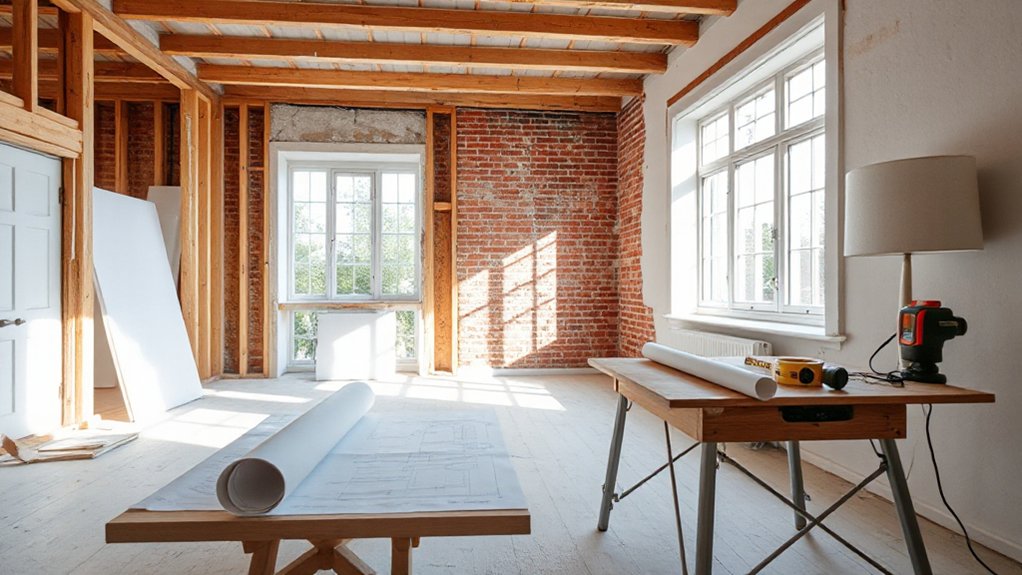
Determining the cost of knocking down internal walls in UK homes hinges on whether the wall is non-structural or load-bearing, the scope of structural work required, and any service rerouting or finishes you must restore. You’ll face planning and building regulation considerations, potential surveys, and quotes that vary widely by project specifics. Start with a clear assessment of wall type and expected reinforcement needs, then weigh the practical implications before you commit to a plan that could reshape your budget and layout.
Understanding What Drives Internal Wall Removal Costs

Costs for removing internal walls hinge on several core factors: the wall type (full-height structural vs. non-structural partitions), the presence of services (electrical, plumbing, HVAC), and the required finishes to restore the room’s integrity.
You’ll evaluate structural implications first; removing a load-bearing wall incurs engineering input, potential beam install, and temporary supports, all elevating cost.
Non-structural partitions reduce complexity but may still require re-plastering, re-plumbing, or re-wiring.
Service relocations drive budgeting, especially if mains, condensate lines, or data runs must be rerouted.
Finish quality matters: skim, plaster, paint, tiling, and flooring restoration influence total spend.
Consider interior aesthetics outcomes and how a design-led removal aligns with historical preservation plans, ensuring compatibility with period features while meeting modern function.
Efficient planning minimizes disruption and clarifies value.
Is the Wall Load-Bearing? Quick Checks for UK Homes
Determining whether a wall is load-bearing hinges on a few key indicators you can assess quickly. You’ll look for structural cues in the ceiling joists, roof ridge alignment, and continuity of studs above and below openings.
If the wall supports beams or joists that span across rooms or up to the roof, it’s likely load-bearing. Where possible, trace a wall perpendicular to floor joists or aligned with a beam, chimney stack, or major stairwell—these usually bear loads.
Consider also age and construction style, as older homes often rely on load-bearing masonry.
- Wall aesthetics and historical significance often correlate with load paths, guiding quick assessments
- Non-load paths typically run parallel to joists, while perpendicular walls hint at structural roles
- When in doubt, consult a professional before any removal decisions
Planning Permissions and Building Regulations You Need to Know
Planning permissions and building regulations vary by project type and location, so you should assess which approvals apply before starting any demolition or structural alteration.
In the UK, you typically need to consult your local planning authority and check if the work falls under permitted development or requires a full planning application.
Building Regulations determine structural safety, fire safety, ventilation, and sound insulation, often via part A (structure), part B (fire), and part F (ventilation).
Even internal walls can require a Building Regulations assessment if they influence load paths, damp, or fire compartments.
You’ll want to document alternatives for interior aesthetics and furniture arrangement early, ensuring spaces remain compliant.
Obtain professional sign‑offs where necessary to avoid later retrospective approvals, penalties, or remedial work.
Surveying Before You Break: Essential Assessments

Before you plan any wall removal, you must complete a structured survey to verify structural integrity and service layouts.
This assessment identifies load-bearing constraints, hidden utilities, and potential hazards, forming the basis for safe design and compliance.
You’ll use these findings to determine necessity, scope, and sequencing of the knock-down works.
Survey Before Break
A pre-break survey is essential to identify structural risks, utility constraints, and access limitations before altering internal walls. You’ll map load paths, confirm beam provisions, and flag hidden services that could complicate work or require specialist support.
This phase informs cost and schedule, preventing surprises once walls are opened. You’ll assess wall materials and interior aesthetics implications, ensuring any alterations align with future design intent.
Structural checks prioritise potential trenching, pocketing, or reinforcement needs to maintain stability. Access constraints—stairwidth, ceiling voids, and service ducting—determine safely delivering tools and debris removal.
Document findings for planning permission and contractor briefs, minimising rework.
- Structural risk appraisal and service locate
- Material compatibility and aesthetic intent
- Access, containment, and sequencing considerations
Essential Assessments Now
You’ve done the groundwork in the pre-break survey, and now you verify findings directly on site to confirm feasibility and cost. Essential assessments now demand a structured, evidence-based approach. You’ll conduct load-path analysis, services locating, and structural constraints review to identify hidden implications for wall removal.
Material conditions, fire safety compliance, and acoustic performance must be quantified to prevent overruns. Plan for temporary supports, commissioning of fabrications, and sequencing methods that minimize disruption.
Document wall aesthetics constraints and how they influence interior design outcomes, ensuring alignment with client expectations. You’ll compare as-built conditions against the proposed design, flag risks, and establish residual risk and contingency requirements.
Finally, integrate architectural drawings with survey data to produce a defensible, decision-ready feasibility pack for stakeholders.
Structural Work: When Joists and Supports Need Reinforcement

Structural work becomes necessary when joists or supports show signs of weakness, deformation, or insufficient load capacity, as these issues can undermine floor stability and safety. You’ll assess span, load paths, and deflection to determine reinforcement needs, then select strategies that minimize disruption and preserve structural integrity.
Concretes and timbers may require sistering, reinforcement beams, or replace-and-derive solutions, always aligning with building regulations and load calculations. You should also consider wall insulation and ventilation upgrades to maintain energy efficiency and air quality after modifications.
- Inspect joists for cracks, notches, and sagging with precise measurements.
- Plan reinforcement with approved fasteners, compatible timber or steel members, and proper connectors.
- Verify post-work deflection and vibration criteria meet design specs.
Moving Services: Electrical, Plumbing, and Ductwork Changes
You’ll need to map electrical routing and plumbing reconfiguration early, since wall removal often shifts circuits, outlets, and pipe runs.
Expect analyses of routing constraints, carry capacity, and potential repositions to minimize disruption and cost.
We’ll also quantify ductwork changes and their impact on airflow, noise, and termination points to guide efficient layouts.
Electrical Routing Considerations
How should you plan electrical routing when removing internal walls? You’ll map circuits early to minimize rework, preserve essential loads, and maintain circuit safety throughout the project. Assess existing layouts, identify critical feeds (heating, emergency lighting, outlets), and plan conduit paths that reduce bend counts and avoid hidden hazards.
Coordinate with structural work to prevent service clashes, and guarantee future accessibility for testing and maintenance.
- Document as-built routes, including pull tunnels and junctions, for future reference
- Use rated cables, protective conduit, and proper junction boxes with accessible covers
- Separate high-load circuits from low-voltage or data lines to reduce interference and maintain safety
Electrical routing decisions should prioritize safety, compliance, and long-term reliability.
Plumbing Reconfiguration Impacts
Plumbing reconfiguration can disrupt aligned services and spaces; moving water and waste lines often mandates coordinated adjustments to electrical and ductwork routes. You’ll need to map current layouts, identify load bearing considerations, and anticipate downstream effects on fixtures and cabinetry.
Changes to supply lines can affect ceiling heights, wall thickness, and floor transition points, influencing structural reinforcement and insulation strategies. When routes cross joists or transfer to alternative risers, guarantee continuity of venting and trap seals to prevent sewer gas ingress.
Pressure balancing and flow dynamics must align with new fixture placement to avoid pressure drops. Documented load bearing considerations should guide stud removal or reinforcement; missteps here propagate scaffolders’ and plumbers’ back-and-forth, delaying completion and elevating costs.
Coordination minimizes risk and preserves system integrity.
Hidden Budget Items: Damp, Insulation, and Vapour Barriers
Hidden budget items often catch buyers and builders by surprise: damp, insulation, and vapour barriers each affect long-term performance, energy use, and moisture management in altered layouts.
You assess hidden costs by evaluating how damp symmetry, insulation continuity, and vapour barriers prevent hidden moisture issues and thermal bridging. In practice, improper detailing can amplify moisture issues, drive energy penalties, and escalate remediation expenses after walls come down.
- Hidden costs of retrofitting damp mitigation and ventilation
- Moisture risks from gaps in insulation and vapour barrier continuity
- Long-term energy penalties if detailing ignores thermal performance
This approach demands a technical, analytical stance to quantify risk, allocate contingency, and preserve structural integrity, ensuring moisture management aligns with building physics. You’ll minimize costly rework and sustain performance across new layouts.
Finishing Touches: Plastering, Skimming, and Decorating
Plastering achieves a continuous plane, minimizing deviations that could compromise interior aesthetics. Skimming smooths irregularities, reducing finish inconsistencies that affect paint adhesion and decorative finishes.
You select compatible coatings, considering substrate porosity, humidity, and traffic. Drying times, airflow, and curing conditions influence final hardness and crack resistance.
Attention to joint detailing, corner fidelity, and paint system performance ensures long-term stability. When completed, the space exhibits cohesive decorative finishes and a refined, professional appearance aligned with design intent.
Cost Ranges by Wall Type: Partition vs. Load-Bearing

Partition walls are far cheaper to install and remove than load-bearing walls, because they carry no structural load and rely on lightweight framing or studs.
Cost ranges differ considerably: partition walls typically run per square meter lower, with fast installation and reduced debris. In contrast, load-bearing alterations demand structural assessment, possible beam inserts, and temporary supports.
You’ll see higher allowances for demolition, reinforcement, and potential rework of electrical or plumbing routes in load-bearing projects. Consider wall aesthetics and historical significance when choosing; partition walls offer flexibility for modern layouts without compromising preserved features.
Load-bearing work may require specialist surveys, offsetting costs but protecting long-term integrity.
- Budget guidance by wall type and scope
- Impact of history on material choices
- Aesthetics-driven design constraints vs structural needs
Adapting Your Layout: Additional Rooms and Reconfiguration
When adapting your layout, adding rooms or reconfiguring space hinges on evaluating load paths, access to services, and compliance with building regulations. Still, you can maximize efficiency by prioritizing structural impact, utility routing, and phased construction.
You assess current floor lamination, joist spans, and potential infill before committing to wall removals or relocations.
Plan for service corridors that minimize disruption to heating, water, and electrical risers, and create future-proof layouts with scalable zones.
Consider interior aesthetics and design flexibility, ensuring finished spaces align with overall architectural language.
Use phased demolition to limit inspection windows and budget fluctuations.
Document as-built conditions for later alterations, and validate ventilation and acoustics post-modification to sustain performance and occupant comfort.
Hiring the Right Trades: Electricians, Plumbers, and Builders
Hiring the right trades is the next critical step after planning your layout changes, because skilled electricians, plumbers, and builders determine not only the quality of execution but also long-term performance and compliance.
You assess credentials, scope, and interfaces between systems to minimize future disruption and cost.
- Verify licenses, insurance, and relevant trade memberships to ensure accountability and coverage.
- Review detailed plans, schedules, and phasing to align with interior design goals and homeowner tips.
- Obtain written warranties, change-order processes, and post-completion support to protect your investment.
This approach preserves safety, optimizes energy efficiency, and supports a cohesive aesthetic, aiding decision-making during interior design while reducing rework and voided warranties.
DIY vs. Professional: What You Can Safely Do

Determining what you can safely tackle yourself versus what requires a licensed professional hinges on risk, scope, and building codes. You’ll assess walls for load-bearing status, electrical and plumbing routes, and potential asbestos or hazardous materials in older properties.
DIY safety matters: non-load-bearing removals, plaster repair, and cosmetic alterations can be feasible with proper PPE, dust containment, and a solid plan. Yet any task affecting structure, damp barriers, or fire safety demands professional expertise to guarantee stability, compliance, and warranties.
If you lack certainties about joists, lintels, or meter routes, defer to specialists and obtain required permits. You’ll reduce risk by confirming insurance coverage and documenting work steps.
Prioritize safety, code compliance, and quality outcomes over speed or cost shortcuts.
Contingencies and Risk Management: Safeguarding the Budget
You set a baseline by identifying contingencies early, then tie those buffers to your project milestones and decision points.
You should quantify unknowns, allocate explicit contingency percentages, and align them with risk tolerance and contractual timelines.
You’ll implement risk mitigation strategies—scope clarity, change control, and regular budget reviews—to protect the overall cost envelope.
Contingency Planning Basics
What if project overruns threaten the budget? You assess contingency planning basics to protect cost integrity during wall removal projects. You identify risk drivers, establish thresholds, and implement structured buffers to absorb variability without derailing deliverables.
Your approach blends technical rigor with practical flexibility, emphasizing early detection, transparent triggers, and disciplined execution. You balance creative design ambitions with cost discipline, ensuring options remain within scope while preserving quality.
Historical preservation considerations are integrated where applicable, guiding decisions that safeguard legacy elements without compromising safety or function. You document assumptions, continuously monitor variance, and adjust reserves as milestones evolve.
This discipline reduces surprise costs and supports informed governance across stakeholders. Contingencies and risk management become proactive safeguards, not after-the-fact fixes.
- Define triggers and reserve levels
- Track actuals vs. plan with real-time dashboards
- Reassess risks at milestones and adapt budgets
Budgeting for Unknowns
When you’re budgeting for unknowns in wall-removal projects, contingencies aren’t padding — they’re a structured guardrail against variability. You’ll quantify risk by identifying plausible cost drivers, such as structural implications, utilities relocation, and potential ceiling or floor refinishing requirements.
Establish a contingency framework with defined tiers: base contingency for typical unknowns, a heavy contingency for high-uncertainty items, and a separate risk reserve for latent conditions uncovered during demolition. Link contingency levels to confidence intervals and historical data from similar UK jobs.
Track deviations against a formal change-control process, documenting scope shifts that trigger budget updates. Consider decorative features and aesthetic considerations early; design decisions influence execution complexity and cost.
Communicate transparently with stakeholders, ensuring expectations align with probable outcomes rather than worst-case outliers. Regular reviews keep the budget resilient and actionable.
Risk Mitigation Strategies
Effective risk mitigation hinges on structured contingencies and disciplined risk management that protect the budget from variability. You’ll implement a formal risk register, quantify uncertainties, and set trigger thresholds for scope changes and price swings in building materials.
Regular cost reviews help you align forecasts with actuals, minimizing surprises. You’ll separate contingency funds for unforeseen structural issues, utility rerouting, and compliance delays, ensuring homeowner concerns don’t derail progress.
Maintain transparent communication with contractors to lock in rates where possible and document claims promptly to avoid overruns. This approach reduces exposure to price volatility and schedule slippage, safeguarding overall project value and timeline.
- Contingency budgeting aligned with material price trends
- Early risk reporting and stakeholder escalation pathways
- Documentation discipline for claims and change orders
How to Get Accurate Quotes and Compare Proposals
To get accurate quotes and meaningful comparisons, start by defining the scope of your wall demolition project—specify walls, load-bearing status, openings, and any structural reinforcements or services to reroute.
Gather objective criteria: measurements, materials, finishes, and tolerance levels for post-demolition work.
Request itemized proposals that separate demolition, debris removal, wall reinstatement, and temporary supports.
Require contractors to present risk analyses, method statements, and compliance with building regulations, including party wall notices if needed.
Compare quotes on timing, milestones, and disposal costs, not just price.
Evaluate subcontractor experience with similar projects and check references.
Consider how proposals address wall aesthetics and interior design constraints, ensuring that suggested finishes align with your design intent and long-term maintenance.
Hold firm on scope to prevent scope creep.
Value-Adding Benefits: Natural Light, Acoustics, and Resale Impact
Open-plan renovations that remove internal walls can markedly boost value by enhancing natural light, improving acoustics, and influencing resale appeal. You’ll quantify benefits by measuring daylight factors, sound transmission class improvements, and market positioning, then correlate with buyer preferences rooted in historical architecture and cultural significance.
Natural light reduces artificial lighting needs and elevates perceived space. Acoustic optimization preserves privacy and reduces fatigue in open layouts. Resale impact hinges on lifestyle narratives aligned with local heritage, making homes feel contemporary yet respectful of context.
- Natural light optimization aligns with historical architecture without eroding cultural significance
- Acoustic performance enhances comfort, supporting modern open-plan living
- Resale positioning leverages heritage cues to attract buyers seeking authenticity and value
Frequently Asked Questions
How Long Does a Typical Internal Wall Removal Project Take?
Typically, a wall removal takes 1–2 days on-site, plus planning and inspection time; you’ll guarantee interior aesthetics meet standards, assess wall insulation implications, coordinate with utilities, and verify structural integrity before finishing and decorating proceeds.
Are There Hidden Costs Beyond Quoted Estimates?
Yes, yes, there are hidden expenses beyond quotes. You’ll likely encounter hidden expenses and required structural assessments, plus permit, debris, and reinforcement costs, so safeguard savings while scrutinizing specifications, schedules, and surprisingly subtle structural assessments before proceeding.
Can I Remove a Wall Without Planning Permission?
You can’t remove a wall without planning permission if it’s load-bearing or affects structural integrity; decorative alternatives exist. You must consult authorities due to historical building restrictions, since approvals often hinge on conservation classifications and permitted alterations procedures.
What Impacts Insurance During a Wall Removal?
You should expect insurance claims to be impacted by a wall removal, requiring a formal structural assessment to verify safety. You’ll need thorough documentation, risk mitigation, and clear communication with your insurer to avoid claim delays or refusals.
Which Warranties Cover Post-Work Structural Issues?
Warranty exclusions vary, but most cover post-work structural issues if you’ve had proper structural inspections. You’ll want documented clearance; otherwise, coverage may vanish. Confirm inspections meet spec; otherwise, your claim could be denied by warranty providers.
Conclusion
In short, your odds of a smooth project rise when you align cost realities with structural reality. Coincidentally, the moment you confirm whether a wall is load-bearing, you’ll also reveal whether planning and reinforcement are prerequisites or luxuries. Stay analytical: map risks, secure quotes, and plan for contingencies. The coincidence of proactive surveying and clear budgeting often yields the fastest path to a safe, compliant, and cost-effective transformation.