Commercial-to-residential conversions appeal to UK buyers when you prove viability, cost discipline, and design excellence. Start with planning clarity—confirm timelines, approvals, and constraints early, including heritage and zoning. Demonstrate tight budgeting with capex, contingency, and hidden costs, plus phased delivery. Design for height, light, and spatial flow, prioritizing daylight, acoustic zoning, and durable materials. Highlight energy efficiency, long-term running costs, and resale indicators like performance metrics. If you want more specifics, continue to explore these factors in depth.
How to Evaluate a Commercial-to-Residential Conversion Viability

Assess viability by aligning market demand with physical feasibility. You evaluate target densities, rental yields, and absorption rates to gauge demand signals, then map them to structure, envelope, and service constraints.
You quantify conversion costs, timeframes, and disruption risks, verifying that the core layout can accommodate residential uses without compromising circulation, daylight, or egress.
You assess vertical zoning, ceiling heights, column grids, and retrofit options for HVAC, plumbing, and insulation, ensuring operability at scale.
You weigh Historical preservation and Cultural significance against adaptive reuse benefits, documenting any constraints or incentives.
You test reliability of existing services, fire safety upgrades, and seismic or wind considerations, forecasting lifecycle maintenance and decommissioning costs.
You synthesize findings into a decision framework that informs feasibility, risk, and value.
Planning Permission: Timelines, Approvals, and Constraints
Planning permission governs your project timeline, from submission to approval, and directly affects design milestones and budget.
You’ll navigate the approvals process, anticipate potential constraints, and align regulatory compliance requirements with your performance and quality targets.
We’ll outline typical timelines, key decision points, and constraints to help you structure a clear, compliant path forward.
Planning Permission Timelines
How long does planning permission take, and what factors drive that timeline? You’ll navigate a defined sequence: validation, consultation, and determination. Most schemes go through an 8–12 week decision window in England, but timelines bend with complexity, pre-application engagement, and local authority workload.
Larger or mixed-use conversions trigger neighbour notifications, more rigorous design review, and possible statutory consultee input, extending the process. Site constraints, zoning, and listed status influence speed; straightforward changes amenable to permitted development may still require formal permission if uncertainty arises.
Architectural aesthetics guides how you frame proposals for compatibility with streetscape and context, while historical preservation prompts additional scrutiny where historic fabric exists. Your plan benefits from clear, ministerial-aligned submissions, precise documentation, and proactive risk budgeting for potential amendments.
Approvals Process Constraints
Are the constraints shaping the approvals process in planning permission more binding than the clock suggests? You evaluate timelines against robust checks, ensuring decisions align with project feasibility and design intent.
Approval stages unfold across pre-application consultations, local planning authority reviews, and potential scrutiny by statutory bodies, each with defined cadences you must respect.
Delays arise from information gaps, resubmissions, or evolving policy interpretations, yet you keep momentum by preempting issues through thorough, design-forward documentation.
You’ll consider historical considerations that influence precedent and precedent-based decisions, and you’ll monitor neighborhood dynamics influencing scrutiny at different scales.
With a systematic approach, you translate constraints into schedule buffers, risk flags, and targeted condition chaining, balancing ambition with compliance.
Your tight process minimizes surprises while preserving architectural quality and regulatory coherence.
Regulatory Compliance Requirements
Managing regulatory compliance for planning permission requires a clear understanding of timelines, approvals, and constraints that shape project feasibility from the outset. You’ll map statutory calendars, agency milestones, and potential cue points for submissions. Align design milestones with consent windows, and anticipate conditional requirements.
Planning permissions hinge on robust documentation: site surveys, design rights, and heritage considerations, with clear justification for deviations where needed.
You’ll assess zoning restrictions to confirm permitted uses and density, height, and frontage standards, ensuring the scheme remains within allowable parameters.
Historical preservation obligations may trigger specialist input, from conservation area appraisals to listed-building assessments, influencing materials and alterations.
Streamline decision-making by coordinating consultees early, forecasting contingencies, and documenting compliance trails to avoid delays and redesigns.
Budgeting for a Conversion: Capex, Contingency, and Hidden Costs
You’ll map your capex with a focused allocation guide, tying every line item to design intent and long‑term value.
Contingency budget essentials help you absorb uncertainties without derailing milestones or quality, clearly defining trigger points and review cycles.
Hidden costs awareness prompts proactive planning for permitting, utilities, and commissioning, so you maintain control of cost trajectories from concept to occupancy.
Capex Allocation Guide
Capex budgeting for a commercial-to-residential conversion must account for core construction costs, soft costs, and an explicit contingency plan to cover unforeseen scope or market shifts.
You structure capex around three pillars: direct build, site utilities, and enclosure systems, then layer in professional fees, planning approvals, and permit charges.
Allocation should align with design-forward goals and urban aesthetics, ensuring materials, finishes, and systems contribute to long-term value without overengineering.
Assess historical preservation requirements early, isolating costs for façade work, heritage-mandated reinstatement, and compliant adapting-use strategies.
Document risk-adjusted allowances for price volatility, supplier lead times, and sequence-dependent challenges.
Track budget against a phased delivery schedule, with monthly value reconciliation and change-order controls to minimize scope creep while preserving design intent and lifecycle performance.
Contingency Budget Essentials
Contingency budgeting is the explicit reserve that guards a commercial-to-residential conversion against unforeseen scope, market shifts, and sequence-dependent challenges. You calibrate this fund by mapping the project phases—design development, permitting, and fit-out—and applying a percentage based on risk exposure, complexity, and procurement lead times.
Track a transparent line item for contingency within the overall capex, then segment it into design risk, construction risk, and coordination risk to illuminate where buffers reside. Historical significance informs your baseline; past projects reveal where overruns clustered, guiding informed uplifts.
Zoning restrictions introduce external uncertainty; include statutory change risk and approval delays in your model. Maintain disciplined governance with quarterly reviews, promptly adjusting the contingency as scope clarifies and milestones migrate.
Document assumptions, triggers, and remedial actions to sustain financial control.
Hidden Costs Awareness
Hidden costs often emerge only after plans shift from concept to execution, so you’ll want a proactive framework that surfaces them early and tracks them against your baseline. You’ll assign a dedicated contingency layer to capex forecasts, integrating value engineering gates that preserve design intent without inflating spend.
Identify Hidden costs across disciplines—structural, MEP, compliance, and adaptive-use fees—then map them to Market trends to anticipate supplier volatility and lifecycle implications.
Build a transparent cost taxonomy with explicit escalation assumptions and trigger points for design reviews, change orders, and permitting delays.
Use scenario planning to quantify worst‑case exposures and communicate risk to stakeholders.
Maintain a living budget dashboard, refreshed with procurement data, site progress, and post‑occupancy feedback to detect anomalies before they escalate.
Designing for Height, Light, and Spatial Flow

When converting commercial space to residential, height, light, and spatial flow must be treated as core design drivers rather than afterthought constraints. You’ll optimize floor plate proportions to maximize usable area without compromising daylight distribution, ensuring interstitial zones support circulation and privacy.
Prioritize open-plan flexibility with defined datum lines to guide furniture placement, scale, and acoustic zoning. Consider vertical depth for light wells, skylights, and façade modulation that reduces glare while preserving architectural character.
Align ceiling heights with intended program—lofted studios or family layouts—and design progressions that avoid abrupt micro-typologies. Architectural aesthetics and historical preservation inform material fidelity, detailing, and line quality, creating coherence between old and new.
Maintain daylight equity across elevations and automate shading to sustain comfort and visual clarity.
Energy Efficiency and Long-Term Running Costs
How can you minimize operating costs while maximizing long-term energy performance in a commercial-to-residential conversion? You pursue a holistic energy strategy that starts with airtight envelope detailing and continuous insulation, reducing heat loss without compromising habitable space.
Specify high‑efficiency heating, cooling, and ventilation systems with smart controls that adapt to occupancy and weather patterns.
Prioritize heat recovery ventilation, balanced for noise and humidity management, and select low‑leak windows with solar gains balanced against overheating risk.
Build‑integrity planning includes thermal bridges reduction and mechanical room placement that minimizes distribution losses.
Forecast long term costs using energy‑use simulations, cost‑per‑square‑meter metrics, and utility‑tiered tariffs.
Emphasize life‑cycle performance, energy efficiency, and predictable bills to attract value‑conscious buyers.
Build Quality and Materials That Last
A robust build quality hinges on durable materials and proven detailing that withstand long-term occupancy, weather exposure, and shifting loads. You assess structure first: load-bearing durability, corrosion resistance, and timber treatment. Then enclosure performance, insulation continuity, and airtightness.
You prioritize robustness in doors, windows, and floor systems, selecting materials with proven lifecycle data and repairability. Historical preservation informs material choices and detailing where historic fabric exists, balancing authenticity with modern performance.
You demand consistent workmanship, tight joints, and minimal thermal bridges, ensuring long-term maintenance predictability. Aesthetic considerations guide material palettes, textures, and finishes that age gracefully without compromising structure.
You evaluate detailing for rain resistance and wind uplift, ensuring serviceability, reduced maintenance cycles, and durable, low-void interfaces across both commercial and residential interfaces.
How Conversions Boost Resale Value: Indicators to Watch
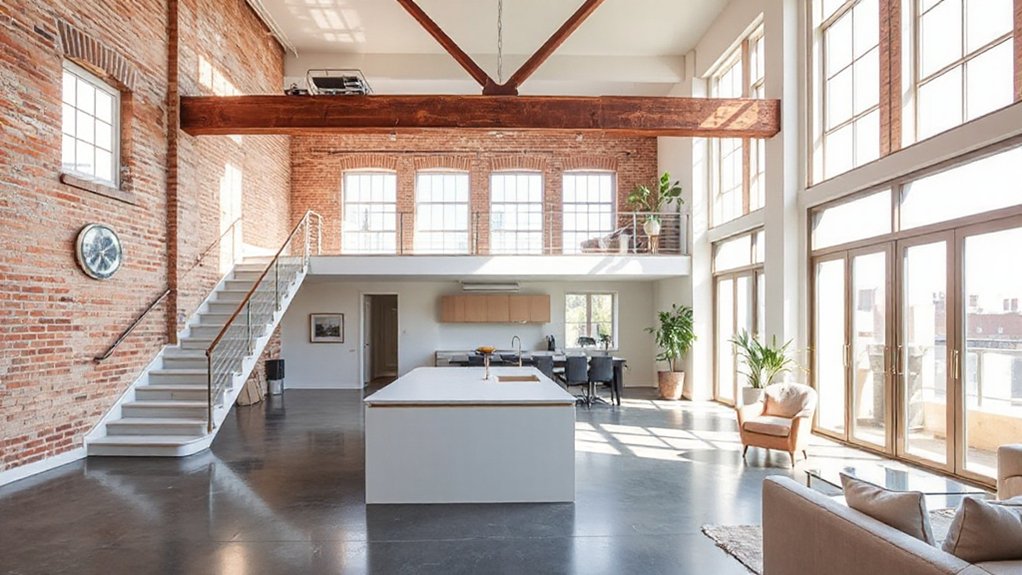
Converting a commercial asset to residential use directly influences resale dynamics by aligning space utilization with prevailing buyer priorities and zoning realities. You’ll see value emerge when layouts optimize flow, natural light, and ceiling momentums, all while meeting local compliance.
Key indicators include unit mix efficiency, adaptable core systems, and smart zoning resilience that minimize conversion risk for future owners. Industrial aesthetics contribute by preserving character without compromising habitability, appealing to design-forward buyers seeking authentic spaces with modern comforts.
Track energy performance, daylight autonomy, and acoustic performance as metrics that correlate with premium pricing. Urban revitalization impact matters, as projects tied to local amenity growth, transport access, and streetscape upgrades command stronger resale premia.
Precision in documentation and quality control amplifies buyer confidence and resale velocity.
Pitfalls to Avoid and Due-Diligence Checklists
Pitfalls to avoid in commercial-to-residential conversions can derail timelines and erode value if not anticipated, from zoning ambiguities to structural constraints that limit program flexibility. You should conduct early diligence on site-specific constraints, including load paths, sprinkler requirements, and fire-rating classifications, to prevent redesigns late in the cycle.
Develop a robust due-diligence checklist that covers planning permissions, listed-building implications, and access rights, then map risks to mitigations with clear owners and deadlines.
Assess Historical significance and its impact on permissible alterations, ensuring design-forward solutions respect heritage while delivering contemporary functionality.
Gauge Market demand across target segments to validate unit mix, layouts, and amenity spacing before committing budgets.
Finally, verify utility alignments, drainage strategies, and contingency buffers to sustain schedule integrity and value capture.
Frequently Asked Questions
What Leasehold Restrictions Commonly Affect Conversion Viability?
Leasehold restrictions often hinge on statutory controls and building-specific covenants. You’ll confront historical restrictions, lease term minimums, change-of-use provisions, and consent requirements. You should track leasehold reforms, ensuring negotiations address timing, penalties, and enforceable alteration rights.
How Do Local Taxes Impact Post-Conversion Affordability?
You’ll notice Tax incentives soften upfront costs, while valuation impacts tighten the budget’s margins, guiding you as you weigh post-conversion affordability against ongoing local taxes, with precise metrics, design-forward thinking, and careful financial modeling.
Which Lenders Offer Mortgages for Converted Units?
Lenders offering mortgages for converted units include mainstream banks and specialist lenders; you’ll find options with flexible underwriting, long-term finance, and cross-collateral features. Historical significance informs risk, and design flexibility supports adaptable layouts for future reconfigurations.
What Amenities Most Influence Buyer Demand Post-Conversion?
Interior design and Energy efficiency most influence demand post-conversion, you’ll notice buyers value cohesive layouts, abundant natural light, durable finishes, smart storage, and high-performance systems; you’ll also prioritize airtight envelopes, efficient heating, and low operating costs.
How to Assess Potential Noise and Vibration Issues?
You assess potential noise and vibration issues by inspecting structure, detailing adjacent activities, and applying Soundproofing techniques and Vibration mitigation strategies; you model paths, specify resilient channels, mass-loaded vinyl, floating floors, and wall decoupling for effective attenuation.
Conclusion
You’re closing the loop on a transformation that’s more than brick and beam—it’s a design proposition with bones. Think of viability as the heartbeat, planning as the nervous system, and build quality as the skin that lasts. Prioritize light, flow, and efficiency to keep running costs honest and resale value sharp. Avoid fluff, chase data, and document every hinge. When the concept matches the constraint, you’ll reveal spaces that look like they grew from the ground, not from a blueprint.