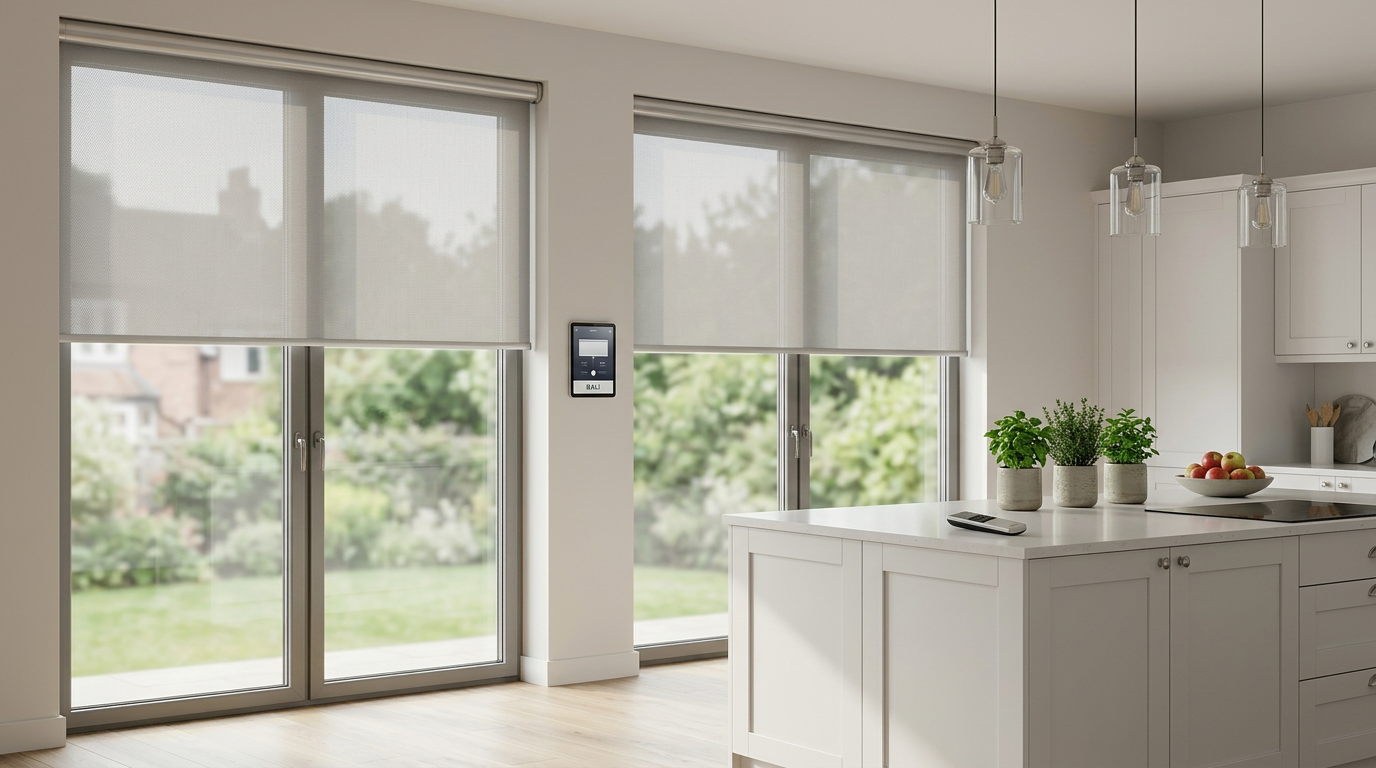
Are Bali Motorized Blinds Worth the Expense?
Looking specifically at Bali Motorized Blinds products, just before summer arrives. Motorized blinds are one of those smart home upgrades that sounds like a luxury until you actually have them — at which point many owners report they would not go back. Bali is one of the most widely available and most reviewed motorized blind brands in the market, sitting in what the company positions as a mid-range price point between budget options and premium alternatives like Lutron Serena or Hunter Douglas. Whether they represent good value depends heavily on your specific situation, priorities, and how you define “worth it.”
What Bali Motorized Blinds Cost
Bali motorized blinds typically cost approximately double the equivalent non-motorized version of the same blind. A standard motorized cellular shade from Bali runs from around $150–$400 per window depending on size, style, and whether you opt for battery-powered or hardwired operation. A full room with five or six windows could easily run $1,000–$2,000 before installation.
For comparison, premium motorized alternatives put Bali in context. Lutron Serena blinds run approximately 2–3 times the price of equivalent Bali products. Hunter Douglas motorized options are similarly positioned at the high end. Graber — the closest direct competitor and a brand from the same parent company as Bali — runs approximately double the price of Bali for broadly comparable products. Budget Z-Wave or Wi-Fi motorized options from lesser-known brands can undercut Bali significantly but with correspondingly variable quality and reliability.
Bali’s positioning is as a genuinely mid-market product: better quality and more consistent performance than the cheapest available, at a material discount from the premium tier.
What You Get
Bali motorized blinds are available in a wide range of styles — cellular (honeycomb) shades, roller shades, Roman shades, and horizontal blinds — in both light filtering and room darkening configurations. The motorized versions use either a battery-powered motor (the most common for DIY installation) or a hardwired motor for new construction or renovation projects where running power to the window location is feasible.
Battery-powered motors are the practical choice for most retrofit installations. The motor is self-contained within the shade housing, powered by a battery wand or a rechargeable lithium-ion pack. Battery life with daily use is typically several months to over a year depending on usage frequency. Most users report the batteries last considerably longer than expected with moderate use.
Smart home integration is a genuine strength of the Bali motorized range. The blinds support Z-Wave, and through compatible hubs integrate with SmartThings, Amazon Alexa, Google Assistant, Apple HomeKit (via compatible bridges), and home automation platforms including Home Assistant. This breadth of integration means that for anyone already using a smart home platform, Bali blinds slot in without requiring a dedicated proprietary ecosystem.
Scheduling and automation is where motorized blinds earn their keep. The ability to programme blinds to open at sunrise, close at sunset, or adjust according to temperature creates a genuinely useful level of automation — not just the novelty of remote operation.
The Real-World User Experience
The owner experience with Bali motorized blinds is broadly positive but not without qualifications.
What users consistently praise:
- The quality of the blind material itself — the cellular shade fabric and construction quality is regularly cited as noticeably better than budget alternatives
- The smoothness of operation — Bali’s motor mechanism operates more quietly and more consistently than cheaper alternatives
- Battery life — most users report batteries lasting longer than the pessimistic end of expectations
- Z-Wave reliability — the Bali Z-Wave integration is generally considered solid once configured correctly
- The lifestyle change of automated blinds — owners who have set up schedules almost universally report loving the experience, with several noting it as their single most appreciated home automation
What users flag as frustrations:
- The app and scheduling software is a known weak point. The Bali app has drawn consistent criticism for requiring time zones to be specified in GMT rather than local time for schedules, leading to blinds operating at unexpected hours. Some users have abandoned the native app entirely in favour of controlling through a third-party hub like Home Assistant or SmartThings where the scheduling is more reliable.
- Scheduled routines occasionally fail to trigger. Multiple users report that routines work for a period then stop firing reliably — a firmware or gateway issue rather than a mechanical failure, but frustrating nonetheless.
- Motor noise — battery-powered motors are quieter than older generations but are not silent. In a bedroom, the sound of motorised blinds opening on a sunrise schedule has woken some users. It is described as a low whirring sound rather than a loud mechanical noise, but worth considering for bedroom applications where silence is valued.
- Measurement precision — custom-ordered Bali blinds are sized to order, and the manufacturing tolerances have drawn occasional criticism for minor variations that can affect blackout performance at the edges. Getting the measurement right before ordering is essential, and Bali’s guidance on inside versus outside mount measurements should be followed carefully.
The Warranty and Customer Service Question
This is the most significant unresolved concern about Bali as a brand. The product carries what appears to be a strong warranty — a lifetime warranty on the blind components, with a five-year warranty on motorized parts. In practice, warranty experience has been inconsistent.
There are documented consumer complaints about Bali’s warranty claims process — lengthy hold times, claims that coverage excludes specific components (in one documented case, cords were excluded from warranty coverage despite the product’s warranty being marketed as comprehensive), and difficulty reaching resolution for defective or failed products.
The motorized motor warranty of five years is a reasonable term for a consumer product, but it does introduce a question about long-term viability: motorized blinds whose motors fail after five years are either repairable at cost or replaceable — and replacement at full price after five years is a real scenario that factors into the true total cost of ownership.
This warranty experience does not appear to be universal — many customers report straightforward resolutions when issues arise — but the frequency of complaints about claims processes is consistent enough to be a genuine consideration rather than an isolated outlier.
How Bali Compares to the Alternatives
vs. Lutron Serena: Lutron is the premium motorized blind brand and the one most consistently praised for reliability, quietness, and battery life. Owners who have used both consistently describe Serena as measurably better — quieter motors, more reliable app, longer battery life between charges, and better build quality. The premium is approximately 2–3x over equivalent Bali products, which is significant but potentially justifiable over a long ownership period for buyers who prioritise reliability above all else.
vs. Graber: Graber and Bali are both owned by Springs Window Fashions, which means the underlying products are closely related. Graber is positioned as the more premium of the two, at approximately twice the price. The consensus from users who have compared both suggests that the quality difference is real but modest — not clearly worth the premium for most buyers. Bali is generally considered the better value of the two.
vs. budget Z-Wave options: The cheapest motorized options from less established brands undercut Bali substantially. User experience with these products is highly variable — some perform reliably; others have connectivity problems, short battery life, or compatibility gaps with smart home platforms. For buyers who are prepared to manage the uncertainty and potential troubleshooting, they represent a cost saving. For buyers who want reliable, consistent operation with strong integration support, they carry meaningful risk.
The Scenarios Where Bali Motorized Blinds Are Worth It
High windows or awkward positions. A skylight, a window above a bed, or any window where manual adjustment requires physical effort or furniture-moving is the clearest use case for motorized blinds. The convenience value is obvious and immediate.
Smart home integration. For buyers already using SmartThings, Home Assistant, or Alexa routines, Bali’s Z-Wave integration is solid. Automated schedules that open blinds at sunrise and close them at sunset, or that adjust blinds when the thermostat detects the house getting too warm, deliver real comfort and energy efficiency benefits.
Multiple windows in a single room. Controlling six blinds in a living room simultaneously from a single command is a fundamentally different experience from adjusting each one manually. The lifestyle benefit scales with the number of windows being managed.
Households with accessibility needs. For anyone who finds manually operating blinds difficult — whether due to mobility limitations, reaching difficulties, or any other factor — motorized blinds provide access to window control that may simply not be practical otherwise.
The Scenarios Where They Probably Are Not Worth It
Single windows or low-accessibility positions. A standard window at normal height that is adjusted once or twice a day does not generate enough daily inconvenience to justify the motorized premium for most buyers.
Buyers who will not use smart home integration. A motorized blind operated only by a physical remote rather than automated schedules or voice control is convenient but not transformatively so. The value proposition is strongest when automation replaces the manual interaction entirely.
Buyers with tight budgets who would be better served by quality manual blinds. A quality Bali non-motorized cellular shade is considerably cheaper than the motorized version and delivers the same light control and insulation performance without the motor complexity. If budget is the constraint, a high-quality manual shade is a better investment than a budget motorized option.
The Honest Verdict
Bali motorized blinds occupy a sensible mid-market position. The product quality is genuinely better than budget alternatives. The smart home integration is real and works well when operated through a third-party hub rather than the native app. The lifestyle benefit for users who fully automate their schedules — particularly for high windows, multiple windows, or accessibility applications — is consistent and highly rated.
The reservations are real too. The native app is weak. Warranty claims experience is inconsistent. The motor warranty at five years introduces a long-term cost question. And for buyers whose windows are accessible, at normal height, and adjusted only occasionally, the premium over quality manual blinds may not be justified.
For the right buyer — someone integrating into an existing smart home, managing multiple windows, dealing with high or awkward locations, or simply valuing the daily convenience of automated light control — Bali motorized blinds are worth the expense. For buyers without those specific drivers, the honest answer is: probably not, but quality manual Bali blinds are still a very good product.