
Energy-efficient upgrades UK homeowners prioritise start with airtight envelopes and insulation to cut heat loss. After that, heat-pump electrification and smart controls follow, boosting comfort and reducing bills. Solar PV is considered next, aligning with tariffs and self-consumption, often paired with storage. Focus on room-by-room control and adaptive thermostats to tame peaks with minimal fuss. Schedule upgrades for colder months and plan financing and maintenance to sustain savings long term; more detail will help you optimize your approach.
Insulation and Airtightness: Foundations for Efficient Comfort
Insulation and airtightness are the foundations of efficient comfort, and you’ll feel the difference as soon as upgrades are in place. You assess building envelope performance with purpose, targeting reduced heat transfer and controlled air movement.
In practice, you quantify gains by minimizing air leakage and optimizing insulation thickness, density, and placement. Thermal imaging becomes a practical tool to identify cold spots, gaps, and thermal bridges, guiding precise sealing and layer improvements.
You’ll prioritize continuous coverage across walls, roofs, floors, and around penetrations, ensuring no junctions are overlooked. Air leakage measurements set benchmarks for blower-door testing before and after work, enabling verifiable improvement.
The result is a tighter, more predictable environment, lower energy demand, and improved comfort year-round.
Heating Electrification in the UK: What to Prioritize
Heating electrification in the UK hinges on choosing where to invest first for maximum impact: heat pumps, efficient heat distribution, and controls that minimize energy use. You should prioritize systems that maximize seasonal efficiency and align with local grid characteristics.
Heat pumps deliver low-carbon heat when sized to load and paired with smart thermostats. Focus on distribution efficiency: well-sealed radiators, low-water-speed circuits, and balanced zoning to reduce circulation losses.
Controls matter: demand-responsive settings, weather compensation, and occupancy-based modulation cut peak demand. Consider renewable resources integration to decarbonize supply and reduce marginal costs.
Plan for energy storage to smooth generation dips and store surplus heat for high-demand periods. Avoid oversizing equipment; guarantee compatibility with existing or planned subnets and metering for measurable performance gains.
Choosing a Heat Pump: Costs, Benefits, and Fit
Choosing a heat pump starts with matching technology to your load, space, and budget, then confirming the system will integrate with your existing or planned subnets and metering.
You’ll evaluate capacity, efficiency, and real-world COP under UK operating conditions, prioritising variable-speed heat pumps for modestly variable demand.
Costs include equipment, installation, and any needed renovations or controls; benefits accrue as you reduce running costs, emissions, and heat losses.
Fit hinges on space, ducting or radiators, and compatibility with your current ventilation and zoning strategy.
Consider solar integration to offset electricity use during peak production, and plan for future upgrades without full system overhauls.
Guarantee ventilation optimization is part of the design to maintain comfort, air quality, and system longevity.
Solar PV for UK Homes: When and How It Pays
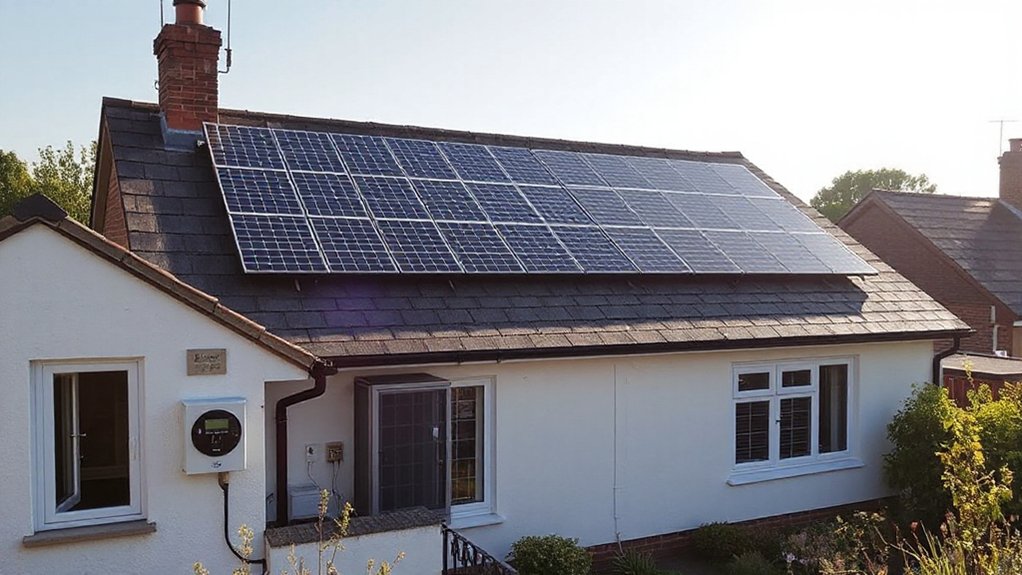
Solar PV can be a sound investment for UK homes when you size the system to your daily electricity needs, align it with tariffs and export rules, and phase the rollout to match where you use power.
You’ll benefit most by a tailored plan that matches consumption patterns with generation windows, minimizing export waste and maximizing self-consumption. A well-designed installation considers roof orientation, shading, and inverter capacity to guarantee stable production across seasons.
Choose a solar panel with proven reliability and a warranty that covers performance decline. Integrate energy storage strategically so stored energy offsets peak-rate usage, not just daytime surges.
Assess a clear cash flow, including subsidies, maintenance costs, and the potential for future tariff changes.
Smart Controls That Cut Bills With Minimal Fuss
Smart thermostats can trim bills by aligning heating and cooling with occupancy and outdoor conditions. You’ll leverage simple occupancy scheduling and Eco Mode automations to reduce runtime without sacrificing comfort.
Implementing these controls now sets the baseline for precise, hands-off energy management.
Smart Thermostat Savings
Smart thermostats deliver precise, room-by-room control with automatic scheduling and adaptive learning, making it easier to trim heating and cooling bills without daily fiddling. You’ll notice consistent comfort with minimal override, since the device adapts to occupancy patterns and weather forecasts.
This translates to measurable energy savings via reduced runtime and better temperature consistency, supported by real-time energy monitoring that highlights where power is used most.
The system also helps mitigate thermal bridging by maintaining stable surface temperatures across zones, lowering heat flux at walls and ducts.
For retrofit, confirm a common wire (C) is available and that the thermostat supports your heating system type. Pair with zoning if feasible to maximize gains without adding complexity.
Simple Occupancy Scheduling
Establish clear scheduling routines: set wake, work, and return windows that align with your daily rhythm, and let the controller tighten or relax temperatures within those windows. For varying routines, use adaptive learning to refine timings without manual tweaks.
Confirm you document override behavior and reset rules, so the system recovers quickly after deviations. Regularly review weekly patterns to catch drift, and anonymize data to protect privacy while maintaining efficiency.
Eco Mode Automations
The core approach is smart energy management: the system analyzes occupancy patterns, weather forecasts, and legacy equipment performance to decide when to condition spaces and when to pause. Implementations often rely on learning thermostats, zone controls, and connected actuators that respond without manual tweaks.
Benefits include reduced run times, fewer peak-period demands, and more predictable bills.
For reliability, guarantee compatibility with your existing HVAC setup, confirm firmware is current, and maintain clear override protocols. This keeps eco mode automation effective without compromising comfort or control.
Windows, Doors, and Fabric Upgrades That Make a Difference
Upgrading windows, doors, and fabric can dramatically cut heat loss when framed around insulated window frames, draught-free doors, and targeted fabric improvements.
You’ll see the impact most where seals, frames, and materials are optimized for reduced conduction and infiltration, with measurable gains in comfort and energy use.
We’ll assess practical choices, installation quality, and real-world performance to guide cost-effective, durable improvements.
Insulated Window Frames
Consider these key elements:
- Frame materials: timber, uPVC, or aluminium alternatives with thermal breaks.
- Thermal performance: U-values and condensation resistance guide selection.
- Installation details: precision alignment, gasket integrity, and secure fixings for airtightness.
When planning a window installation, prioritize frames that minimize thermal bridging and support long-term durability. Evaluate maintenance needs, compatibility with existing openings, and solar gains to balance comfort and energy use.
Durable, well-sealed frames deliver measurable heat-loss reductions and meaningful retrofit value.
Draught-Free Doors
Begin with precise weatherstripping—choose door seal improvements that suit your door material and hinge arrangement, ensuring continuous compression without binding. Check threshold gaps and install a compatible threshold draught seal if needed, maintaining clear floor clearance to avoid scuffing.
Use compression or flexible gaskets, not adhesive foams prone to compression over time. Align doors to the frame with correct daylight visibility, then test by feeling for drafts at varying temperatures.
Regular maintenance, lubricated hinges, and prompt seal replacement sustain performance year after year.
Fabric Upgrade Impacts
Fabric upgrades across windows and doors directly influence heat retention, comfort, and overall energy use by reducing heat transfer and improving system performance. You’ll see how fabric durability matters for long-term value and consistent insulation, while aesthetic appeal sustains home character. Consider these impacts:
- Enhanced seals and frame integration cut drafts, stabilising interior temperatures.
- Custom textiles and coatings improve UV resistance and fabric longevity under daily wear.
- Coordinated aesthetics maintain curb appeal without compromising performance.
With durable fabrics, you reduce maintenance, extend life, and lower replacement cycles. You’ll benefit from targeted performance tests and verified ratings to choose options that balance efficiency with style.
In practice, select fabric upgrades that align with window/door construction, ensuring reliable air tightness and sustained energy savings.
Efficient Domestic Hot Water: Strategies That Save
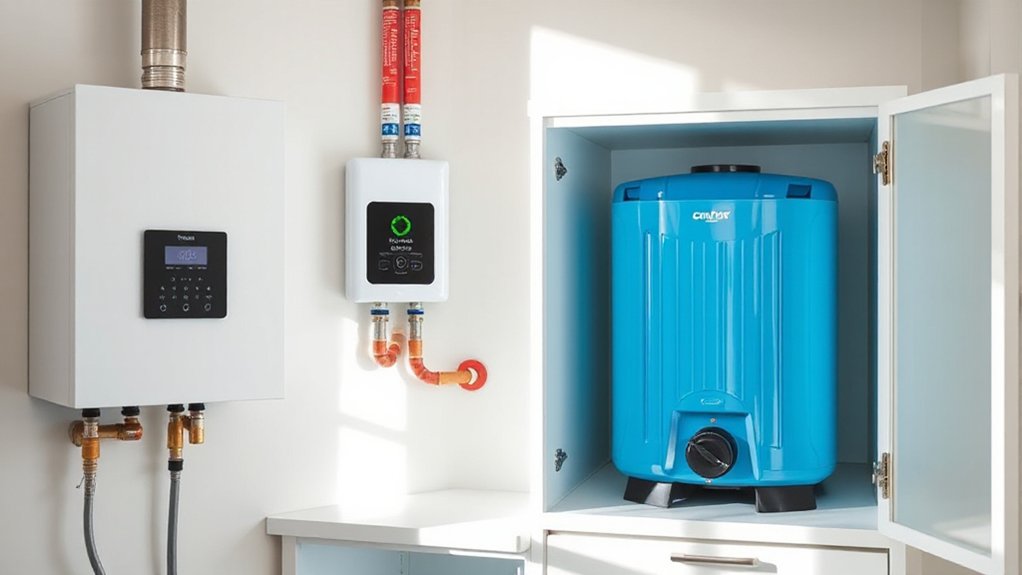
Efficient domestic hot water starts with selecting a low-heat-loss hot water system and optimizing usage patterns. You’ll reduce standby losses by choosing well-insulated storage or on-demand solutions, balancing recovery rate with demand profiles.
For water efficiency, install low-flow fixtures and aerated taps to cut daily hot-water draw without compromising comfort. When sizing, align capacity with peak usage and family habits, avoiding oversized storage that wastes energy.
Implement smart controls or timers to temper heating during off-peak hours and overnight, while ensuring hot water is readily available where needed. Regular maintenance of valves, insulation, and heat exchangers keeps systems efficient and prolongs life.
Prioritize compatibility between hot water systems and building insulation to sustain throughput and minimize heat loss.
Payback, Grants, and Funding: A Practical Guide
When you’re upgrading your home’s energy efficiency, understanding payback periods, available grants, and funding options helps you make informed decisions and budget confidently. You’ll evaluate costs against savings, while factoring in renewable integration and robust energy audits to validate returns.
Grants vary by scheme and region, so map eligibility early and document upgrades that boost performance. Funding can support both standalone improvements and holistic measures, reducing upfront strain and accelerating payback timelines.
Consider these practical steps:
- Identify grants tied to insulation, heat pumps, and solar for rapid, visible ROI.
- Align upgrades with energy audits to optimize efficiency and scoring.
- Assess long‑term savings from reduced demand and grid demands, sharpening total payback estimates.
Single Upgrades vs Holistic Retrofit Packages
Single upgrades offer targeted improvements, but holistic retrofit packages can optimize overall energy performance and cost-effectiveness. You’ll want to weigh upfront costs, long-term savings, and disruption to your home, since a package can address interactions between measures.
Start by evaluating your current envelope, heating system, and occupancy patterns to determine whether incremental fixes or an integrated plan best meet your goals.
Single Upgrades vs
Choosing between single upgrades and holistic retrofit packages hinges on cost-effectiveness, timing, and long-term energy savings. A package approach often delivers greater total performance by coordinating envelope improvements, systems, and controls rather than piecemeal fixes.
You’ll evaluate how each option impacts energy storage and renewable integration, ensuring compatibility with existing or planned generation and storage assets.
- You install targeted improvements now, then stagger additional upgrades as budget allows, maintaining momentum.
- You align upgrades to downstream system performance, minimizing disruption and optimizing controls for future renewables.
- You assess total lifetime energy costs, factoring in maintenance, incentives, and potential value uplift from cohesive design.
In practice, compare payback, project risk, and system synergy to choose the approach that best fits your home’s envelope, loads, and future energy goals.
Holistic Retrofit Packages
You’ll base decisions on a holistic energy model, considering climate, occupancy, and behavior, then sequence measures to minimize disruption and costs. Emphasize results over individual components, prioritizing whole-house performance.
You’ll leverage renewable resources where feasible, integrating heat pumps, solar gains, and demand-side management to maximise output from available assets. Start with energy audits to establish a baseline, identify synergies, and quantify payback.
Regularly review, adjust controls, and verify performance through post-install monitoring and commissioning.
DIY vs Professional Installation: What You Can and Should Do
Some upgrades you can handle yourself without compromising safety or performance, but others demand professional expertise. You’ll weigh costs, risk, and performance when deciding between DIY and pro installation. Start with energy audits to identify true priorities and assure you don’t misallocate effort. Beware DIY pitfalls that can undermine efficacy or safety.
- Visual-only fixes without testing results; energy savings fall short and mislead expectations.
- Faulty connections or improper insulation work that raise fire or moisture risk.
- Inadequate system integration, where controls or ventilation don’t cooperate with existing heating loads.
A methodical approach keeps you aligned with building codes and warranty requirements. Reserve complex tasks—ventilation retrofits, electrical reconfigurations, or heat pump installations—for certified technicians to guarantee performance, safety, and long-term savings.
Planning for Disruption: Minimising Downtime During Work
Effective planning minimizes disruption by outlining clear timelines, responsibilities, and contingency options for downtime.
You should align scheduling with contractor availability and use phased work to reduce idle periods and energy waste.
This approach keeps disruptions predictable and the project on track, while enabling quick decisions if issues arise.
Minimising Downtime Tactics
Minimising downtime during home upgrades hinges on deliberate planning and precise execution. You’ll structure work in tight sequences, align trades, and lock in supply windows to reduce idle time. Precision budgeting informs permit milestones and avoids last‑minute substitutions that stall progress. Incorporate renewable sources and energy storage considerations early, so integration doesn’t demand rework.
- Pre‑order critical components to guarantee just‑in‑time delivery and minimize on‑site waiting.
- Phase work with clear handoffs, aligning utilities, insulation, and finishing tasks to avoid rework.
- Use portable, modular systems for testing and contingencies, validating performance before full activation.
Scheduling For Disruption Reduction
Use a master schedule that links procurement, permits, and access constraints to realistic durations, then review daily to catch slippage early. Time management isn’t just a habit; it’s a discipline that underpins every decision, from scaffold setup to finish carpentry.
Implement disruption planning with contingency buffers that are calibrated to risk, weather, and supplier reliability. Communicate the schedule to all crew and stakeholders, publish updates, and lock milestones.
A disciplined cadence reduces downtime, protects budget, and accelerates overall completion.
Measuring Success: What UK Homes Look Like After Retrofit
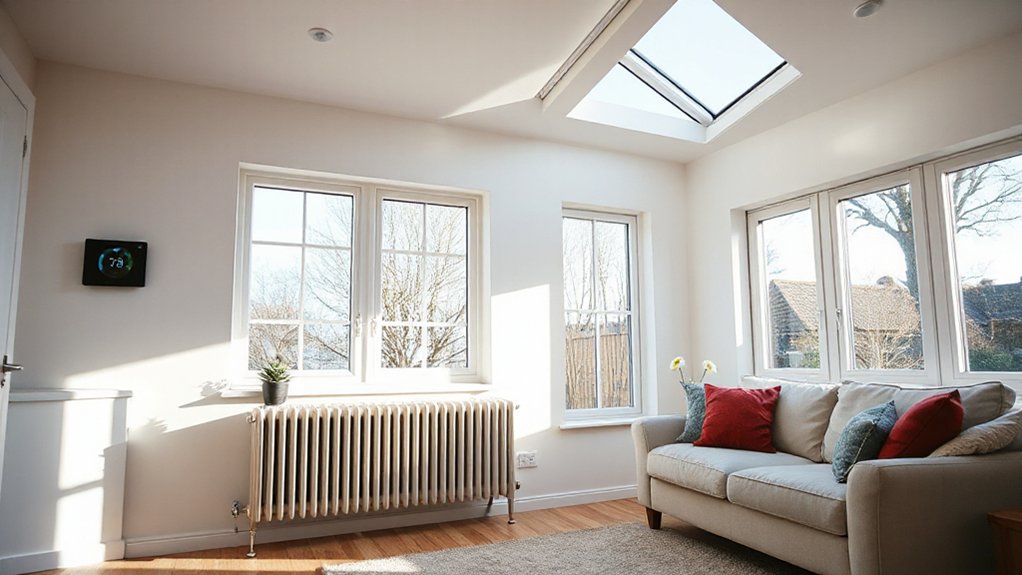
Post-retrofit homes reveal tangible changes in energy performance and occupant behavior; metrics now focus on both delivered savings and practical everyday impact. You measure success through quantifiable energy use, comfort consistency, and system responsiveness, not just installed equipment. Performance is interpreted via real-time data and post-occupancy evaluation.
- Reduced annual energy consumption, with peak demand smoothing by controls and storage.
- Comfort stability across seasons, evidenced by fewer temperature swings and faster recovery.
- System effectiveness, including renewable energy generation and energy storage utilization, plus demand-side collaboration.
Results translate into visible benefits: lower bills, better indoor air quality, and enhanced resilience. You’ll find that retrofit success hinges on integrated monitoring, ongoing maintenance, and the ability to adapt operations to occupancy patterns and weather variability.
Government Schemes You Can Actually Benefit From
You can navigate government schemes that actually benefit your energy upgrades, starting with a clear overview of what’s available and how it applies to your home.
We’ll cover how to claim benefits, eligibility checks, and the essential steps to maximise your financial support.
This practical guide gets you from recognition to action with concrete, implementable steps.
Government Schemes Overview
To navigate government schemes that can reduce upgrade costs, start with the core programs offering grants, tax incentives, and low-interest financing for energy-efficient improvements. This overview highlights mechanisms you can leverage directly for home upgrades, with emphasis on practical applicability and measurable outcomes.
- Grants and subsidies provide upfront الدعم for insulated upgrades, heat pumps, and renewable integration projects.
- Tax incentives reduce net cost through credits linked to energy-efficient system installations and performance targets.
- Low-interest financing packages streamline funding, aligning repayment with long-term energy savings and grid benefits.
These schemes often couple incentives with performance criteria, ensuring durability and efficiency.
Energy storage and renewable integration are central to maximizing mandates, grid resilience, and long-term cost reductions, while scheme compatibility guides your project scope and priority sequencing.
How to Claim Benefits
Begin by identifying the grants, tax incentives, and financing options that apply to your upgrade, then map each benefit to specific project components and eligibility criteria. You’ll follow official guidance to determine which programs you qualify for and guarantee you meet all documentation requirements.
Renewable incentives often attach to attic and wall insulation, heat pumps, and solar retrofit, while efficiency incentives target boiler upgrades, smart controls, and energy audits. Confirm application windows, required supplier qualifications, and minimum workmanship standards before starting work.
Track costs against grant caps, interest rates, and loan terms, and keep every receipt for audits. Coordinate with installers to verify eligibility during procurement, and avoid gaps between project milestones and funding disbursement.
Review post-inspection criteria and reporting obligations to secure payment.
Real-World Case Studies: UK Home Transformations
Real-world case studies illuminate how UK homeowners translate energy-efficiency concepts into tangible upgrades, from insulation and heat pumps to solar PV and smart controls. You’ll see how projects balance performance with cost, durability, and disruption, delivering measurable comfort gains and lower bills.
Practical lessons emerge on design choices, system integration, and commissioning, supported by data from monitored homes.
- Insulation-first retrofits that reduce heat loss and stabilize temperatures, with roof insulation and wall upgrades prioritized for rapid payback.
- Ventilation systems paired with heat recovery to maintain air quality without undermining efficiency.
- Solar PV and smart controls coordinated to maximize daytime generation, demand shifting, and occupant comfort.
These cases underscore the need for phased planning, robust insulation, and airtightness targets to achieve lasting gains.
Pitfalls and Scams to Avoid in Retrofit
Pitfalls and scams in retrofit can derail energy-efficiency goals if you don’t spot them early; awareness is your first defense. You’ll encounter questionable quotes, pressure installs, and low-ball offers that mask hidden costs or poor workmanship.
Verify product claims by cross-checking performance data with manufacturers and independent tests. Insist on written specifications, material types, and installation standards before signing any contract.
Demand transparent pricing with a clear payment schedule, and beware of upfront deposits that exceed typical norms.
Prioritize scam awareness by researching the supplier’s history, trade memberships, and customer reviews. For any contractor, perform thorough vetting: confirm current licenses, warranties, and liability cover; request references and site-specific case histories.
Stop, review, and compare bids to protect long-term efficiency and comfort.
Scheduling Upgrades for Cold Months

1) Pre-install survey: map access routes, verify insulation gaps, and confirm equipment compatibility with existing fuels and controls.
2) Off-peak scheduling: book trades during shoulder periods to reduce weather-related delays and crew idle time.
3) Priority sequencing: tackle envelope improvements first, then mechanicals, minimizing comfort loss and accelerating payback.
Consider renewable incentives to offset costs, and anticipate retrofit challenges like material lead times and regulatory approvals.
Plan buffers for weather delays, site protection, and testing phases to guarantee reliable performance once cold snaps hit.
Financing Retrofit: Budgeting Tips and Options
Financing retrofit projects comes down to smart budgeting and knowing your funding options before you start. You’ll map costs, prioritize high‑value measures, and align upgrades with available incentives.
Begin with Financial planning that covers material, labor, contingency, and permit fees, then set a clear ceiling for each stage.
Use budget management to stage work, choosing modular implementations that free up energy savings sooner and improve cash flow.
Explore a mix of options: government grants or loans, green mortgages, and supplier financing with favorable terms.
Compare total lifetime costs, not just upfront outlay, and incorporate potential energy‑saving returns into payback estimates.
Maintain documentation for applications and deadlines, and revisit the plan quarterly to adapt to price shifts or new subsidies.
This disciplined approach minimizes risk and maximizes value.
Post-Upgrade Maintenance to Sustain Savings
Post-upgrade maintenance is essential to sustain the energy savings you’ve earned. After installation, you’ll schedule routine checks to verify performance and seal integrity, ensuring HVAC and insulation remain at design efficiency.
Use durable, low-impact practices that align with sustainable materials and renewable sources to extend system life and minimize waste. Regularly inspect heat pumps, boilers, and insulation for degradation, and replace components only with compatible, environmentally responsible parts.
Maintain airtight building envelope and monitor energy metrics to catch drift early.
1) Conduct quarterly performance audits with standardized benchmarks
2) Replace worn seals, filters, and gaskets using recycled-content parts
3) Refit or upgrade components with high-efficiency, low-embodied-energy options
The Long-Term Value: Comfort, Resilience, and Carbon Savings

The long-term value of energy upgrades lies in sustained comfort, enhanced resilience, and meaningful carbon savings, which accrue as performance becomes embedded in daily habits. You’ll notice steadier indoor conditions, fewer temperature swings, and reduced seasonal energy spikes as systems operate at their best.
Over time, upgraded controls, continuous commissioning, and properly sized equipment translate to durable cost reductions and predictable bills.
Resilience comes from component interoperability and smart fault detection, keeping essentials powered during minor outages and demand shifts.
Carbon savings compound as renewables integrate more deeply; Renewable integration reduces reliance on fossil generators and stabilizes grid-load envelopes.
Embracing modular design supports Grid independence, enabling you to meet critical needs autonomously while maintaining service.
The core value rests in consistent, measurable performance rather than one-off improvements.
Frequently Asked Questions
How Long Does a Typical UK Retrofit Take Start to Finish?
A typical UK retrofit takes several weeks to months start-to-finish, depending on scope. You’ll face retrofit challenges like sequencing and permissions; renovation timelines vary. You should plan risk buffers, contractor coordination, and detailed inspections throughout the process.
Which Upgrades Deliver the Fastest Return on Investment?
Cutting to the chase: upgrades with fastest ROI are smart technology and renewable sources integration. You’ll save quickest when you install smart thermostats, control hubs, and solar-ready systems; these deliver practical, measurable returns efficiently, leveraging smart technology and Renewable sources.
Do Tenants Gain Benefits From Landlord-Funded Improvements?
Yes, you gain Tenant benefits from landlord-funded improvements, especially in comfort and lower bills, while landlord incentives often cover costs. You’ll notice efficiency gains, and your tenancy benefits from clearer performance metrics and documented energy savings.
How Should I Prioritize Upgrades for an Irregularly Heated Home?
Start with a thermostat heartbeat: prioritize heating efficiency and insulation strategies to stabilize temps. You should map irregular patterns, target envelope fixes first, then smart controls. You’ll cut waste, improve comfort, and optimize energy billing through continuous monitoring.
What Grants Cover Retrofits for Listed Buildings in Scotland and England?
You can access Historic grants for retrofits in Scotland and England, subject to Listed building regulations. These funds support energy improvements while preserving fabric; apply through local authorities or Historic Environment Scotland and Historic England, with project-specific compliance and documentation.
Conclusion
You’ll love all the comfort upgrades you can actually afford, right up until your bill lands like a plot twist. Insulation and airtightness finally steady drafts, heat pumps pretend to be magic, and smart controls whisper “save more” while calendars remind you of every cold night you underestimated. It’s not glamour, it’s engineering: pay once, save for years, and learn that resilience isn’t a trend, it’s a ledger. Irony aside, the long-term value is real.