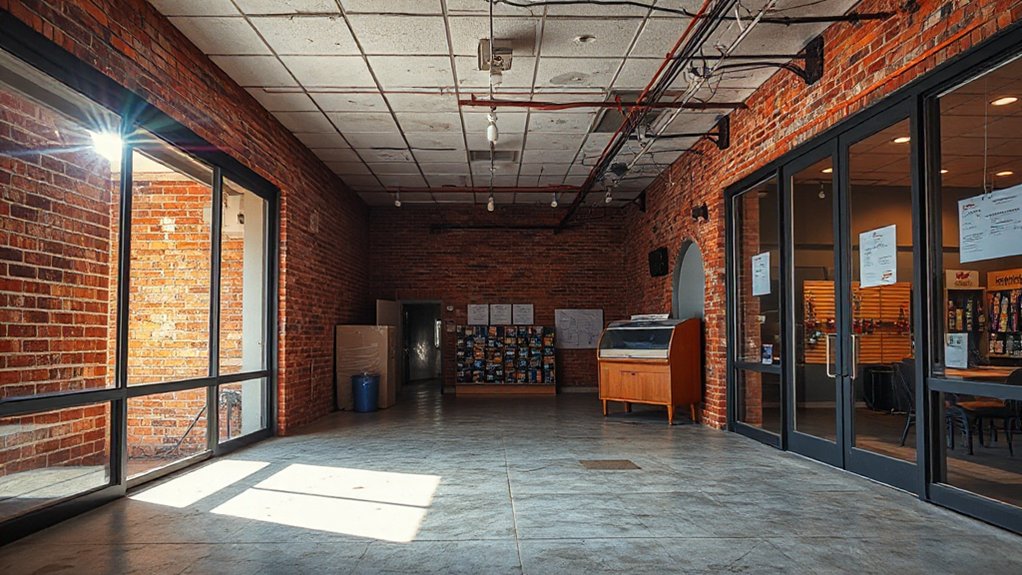
When converting a commercial space, validate the site and feasibility before designing. Plan circulation and parking to prevent bottlenecks, map vehicle and pedestrian flows, and separate drive aisles from walkways. Address acoustics and space quality early—choose finishes and layouts that support light, clarity, and comfort. Design for accessibility and code compliance from the start, so you’re not retrofitting later. Build in contingencies, budgets, and stakeholder alignment now; then you’ll avoid costly reworks and delays. More details await.
Feasibility First: Validate the Site Before Designing
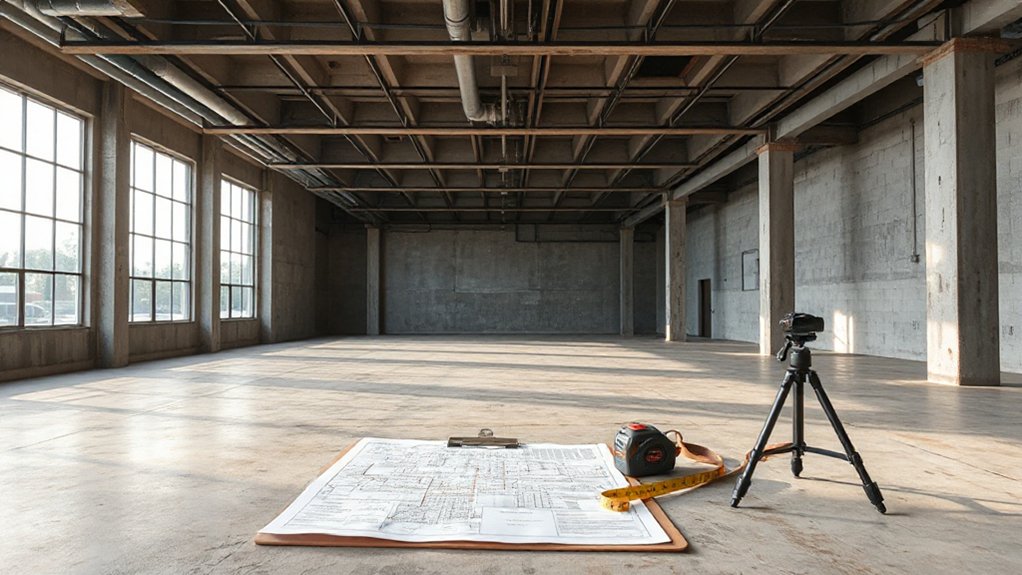
Before you design anything, verify the site’s feasibility. You’ll start with a thorough site analysis to identify constraints and opportunities, not assumptions. Check setbacks, floor area ratios, height limits, and environmental factors that could affect layout and budget. Clarify existing utilities, ingress and egress points, and potential renovations required to meet code. Assess zoning compliance early to determine permitted uses, density, and required approvals, avoiding costly redesigns later. Document parking requirements, fire safety impacts, and accessibility considerations that influence space planning. Confirm critical paths for construction and occupancy timelines, so risk remains manageable. Use findings to shape a practical, buildable concept rather than chasing idealized visions. When feasibility holds, you gain confidence to move forward with precise, compliant design decisions.
Parking and Circulation: Plan to Prevent Bottlenecks
Plan circulation to prevent bottlenecks by designing clear, intuitive flows for vehicles and pedestrians. You’ll map parking layouts that minimize crossing conflicts, separate drive aisles from pedestrian routes, and provide sightlines at every turn.
Prioritize circulation flow by staging entry, parking, and unloading zones to avoid queuing inside loading bays or on main routes. Use compact, well-marked spaces with clear signage and circulation arrows to guide users smoothly.
Implement designated drop-off/pickup areas near primary entrances and ensure crosswalks have zebra striping and tactile guidance where needed. Consider peak‑hour volume and vehicle types, then size aisles accordingly to prevent backups.
Integrate lighting, landscaping, and drainage without obstructing visibility. Regularly audit flow patterns and adjust parking layouts and circulation flow as occupancy evolves.
Acoustic and Spatial Quality: Create Comfortable, Usable Spaces
Acoustic and spatial quality directly affects how usable a space feels and performs. When you plan, prioritize acoustic design early, testing speech intelligibility, noise control, and reverberation within the layout. Choose finishes and partitions that balance sound transmission with privacy, avoiding hard surfaces that bounce noise.
Think through spatial arrangement to support flows, sightlines, and task zones; place high-activity areas away from quiet workspaces and meeting rooms. Use furniture and ceiling elements to shape sound paths, not just aesthetics.
Document guidelines for tolerances, testing methods, and remedies during fit-out, so performance isn’t left to chance. Align seating, equipment, and storage with circulation routes to minimize clashes.
Accessibility by Design: Meet Codes Without Compromise
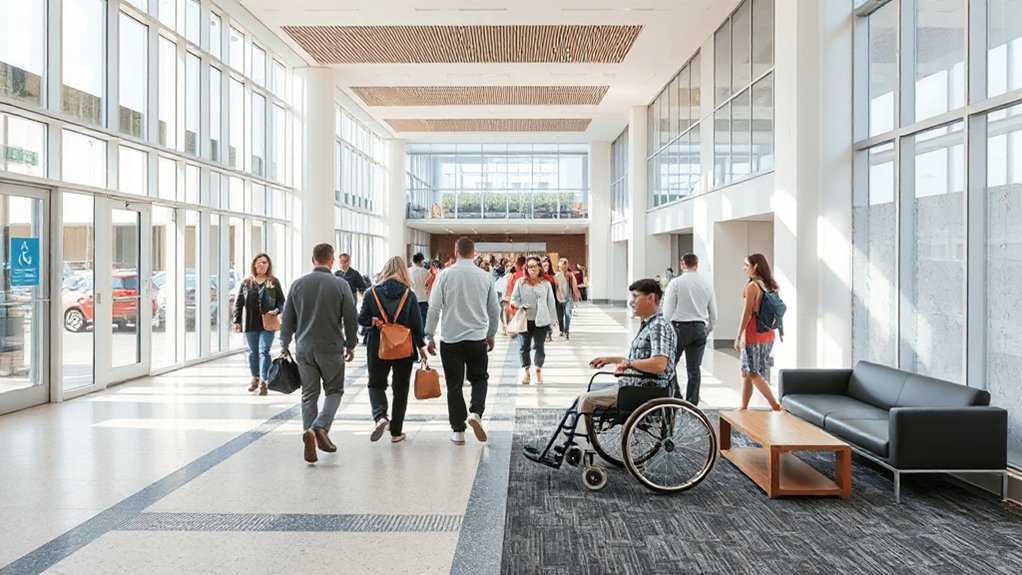
You should design for compliance from day one, identifying accessibility standards early to avoid costly changes later.
Map accessible pathways and egress routes now, so circulation is unobstructed and code-ready at each phase.
This approach keeps projects efficient, predictable, and aligned with safety and usability goals without compromising design intent.
Designing for Compliance Early
When you design a space, you should embed accessibility and code compliance from the start, not retrofit them later. Design for compliance begins with clear goals, not guesswork. You map applicable codes, standards, and client needs during early planning, then translate them into measurable criteria.
Prioritize accessible entrances, clear circulation, and adaptable layouts that accommodate future changes without costly redesigns. Incorporate universal design principles to broaden usability while maintaining aesthetic control.
Document decisions, reference code sections, and verify with brief reviews at each design milestone. Engage stakeholders early, including those who’ll operate the space, to surface practical constraints and exceptions.
Design compliance and early planning reduce risk, speed approval, and deliver a safer, more inclusive project from concept through occupancy.
Accessible Pathways and Egress
Prioritize minimal travel distance to exits, uninterrupted paths, and stairless options where feasible. Confirm doorways, hardware, and thresholds meet applicable accessibility standards, with push/pull operations that don’t require tight grasping or turning.
Maintain clear egress routes during renovations, avoiding temporary blockages or misleading signage. Provide adequate illumination, signage, and wayfinding so occupants can orient themselves quickly.
Regularly verify that accessible pathways are unobstructed and protected from construction debris. By embedding these practices, you reduce risk and support safe, compliant, inclusive occupancy.
Future-Tenant Flexibility: Design for Change
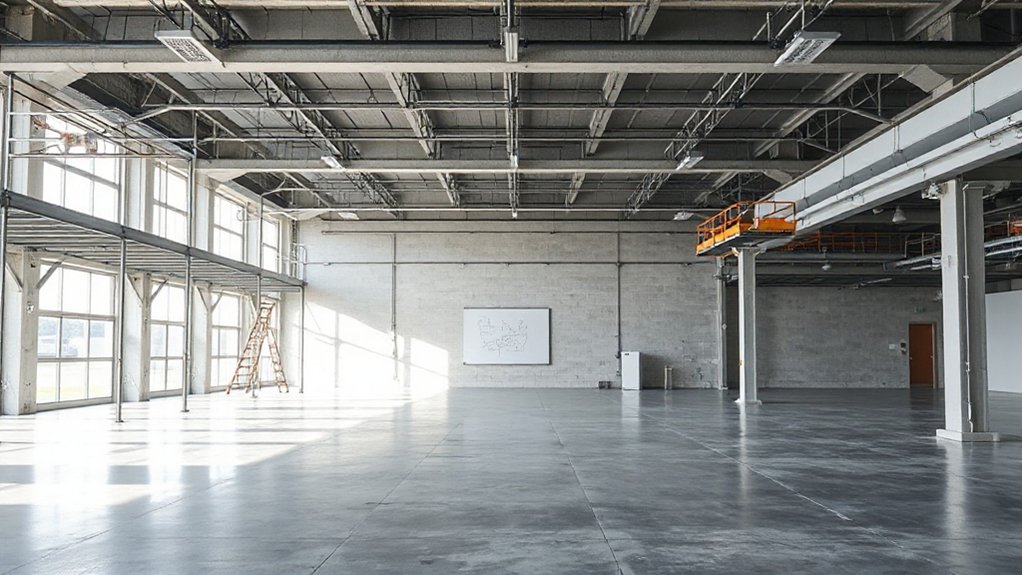
Flexible layouts and adaptable systems let future tenants reconfigure spaces without costly renovations. You should design for change from day one, prioritizing modular walls, raised floors, and scalable services that accommodate evolving needs.
Focus on robust connectivity, shared HVAC cores, and adaptable lighting to support adaptive reuse and flexible layouts over time. Plan zones that can swap function without major demolition, minimizing downtime and disruption.
Anticipate growth, downsizing, and mix-use scenarios with clear distribution concepts and stock-in-hand component libraries. Document decisions in a concise space plan so tenants see immediate value.
- Use modular partitions to reframe spaces quickly
- Reserve centralized service corridors for easy reconfiguration
- Specify adjustable fixtures and furniture
- Integrate scalable electrical and data wiring
- Create repeatable, standards-based design guidelines
Stakeholder Alignment: Get Buy-In From Day One
Starting day-one alignment is non-negotiable: secure stakeholder buy-in early so decisions reflect shared goals across finance, operations, and design.
Set clear, common objectives and keep goals visible to everyone involved, ensuring teams stay coordinated as plans evolve.
Practice transparent decision making by documenting choices, trade-offs, and who approves them to prevent misalignment down the line.
Stakeholder Buy-In Early
So, how do you secure buy-in from day one? You establish clear, tangible objectives and map them to stakeholder interests. You frame the change as a shared opportunity, not a mandate, and you demonstrate quick wins to prove value.
You prioritize transparent, ongoing Stakeholder communication and invite input early to prevent later resistance. You build Consensus building into every interaction, documenting decisions and follow-ups.
- Identify core concerns and align them with project milestones
- Define decision rights and escalation paths upfront
- Schedule brief, structured updates with measurable progress
- Share data, risks, and dependencies candidly
- Confirm commitments in writing and track accountability for owners
Align Goals Across Teams
How can you align goals across teams from day one to prevent drift and accelerate delivery? Start by defining a single, shared objective list that links each team’s metrics to the project’s outcome. Map responsibilities clearly, so everyone knows who owns what and when.
Establish regular, short check-ins to surface blockers and confirm progress against the shared goals. Use plain language, avoid jargon, and document decisions to prevent misinterpretation. Prioritize transparent team communication, ensuring cross-functional visibility into evolving priorities.
Create a lightweight governance cadence that enforces accountability without stalling momentum. Align incentives and recognition with the agreed goals, not individual silos.
Transparent Decision Making
- Define objectives, constraints, and success metrics publicly
- Surface risks and assumptions early
- Involve cross-functional stakeholders from kickoff
- Assign owners and publish decisions routinely
- Track progress with transparent updates
Permits and Codes: Budget for What You Must Pay
Permits and codes aren’t optional add-ons; they’re costs you must plan for upfront. As you convert a commercial space, you’ll face permit planning requirements that vary by jurisdiction and project scope.
Budget for application fees, plan review charges, inspections, and any special approvals needed for occupancy or fire safety. Don’t assume you’ll pass on costs to tenants or clients; many offices and retailers require up-front compliance credentials before use.
Build in time for potential resubmissions and delays, which affect both budget and schedule. Track code compliance early—reattribute design decisions to meet current codes, not after-the-fact fixes.
Keep records, estimate contingencies, and document changes. This disciplined approach minimizes surprises and keeps permits moving without derailing your project.
Contingencies and Schedule Buffers: Build in Realistic Safeguards
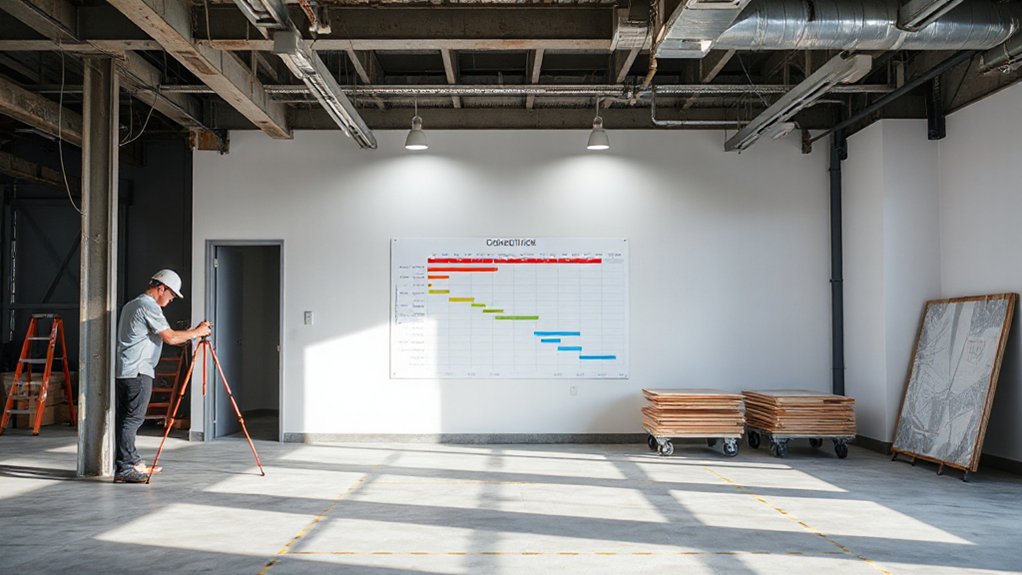
Contingencies and schedule buffers aren’t optional extras; they’re essential safeguards that keep your project on track. You’ll embed contingency planning and schedule management from day one to prevent knock-on delays. Build buffers for permits, inspections, and supply lead times so you can adapt without derailing milestones.
Allocate clear owners for each risk and rehearse mitigation steps before issues arise.
- Identify high-risk activities and assign containment plans
- Separate time buffers for design, procurement, and build phases
- Track milestones with early-warning indicators and dashboards
- Review and adjust contingencies after key decisions or permits
- Document lessons learned to refine future schedules
Practical Budget Checklist: Avoid Common Conversion Pitfalls
When converting a commercial space, a practical budget checklist helps you spot pitfalls before they derail the project. Start with a clear line item for each cost, from permits to finishes, and set conservative estimates for each entry.
Track budget allocation against actuals weekly, so overruns don’t snowball. Prioritize critical path items—structural work, electrical, HVAC—and avoid late-stage changes that inflate prices.
Build in a contingency percentage, calibrated to project risk, and document any assumptions behind estimates. Require transparent quotes from all contractors, and compare them not just on price but on scope and schedule commitments.
For contractor selection, verify licenses, insurance, past performance, and warranty terms. Keep a formal change-order process to manage scope drift and protect the budget.
Frequently Asked Questions
How Will Future Tenant Needs Influence Current Layout Decisions?
Future tenant needs steer your layout now; you should prioritize flexible zones and modular partitions. Plan for tenant flexibility and future scalability, so spaces adapt easily, minimizing disruption while you lock in long-term value and operational efficiency.
What Are Hidden Costs Not Covered by Permits or Codes?
Hidden costs include permit fees and ongoing Code compliance updates you’ll face after approval; budgets must cover inspections, plan revisions, and potential zoning amendments to avoid delays and guarantee lawful occupancy.
How Can Safety Concerns Affect Ceiling Heights and Egress Routes?
Safety concerns can restrict ceiling height and define clear Egress routes. You must maintain accessible ceiling heights for code compliance, and plan unobstructed Egress routes, ensuring barriers don’t block exits and that routes stay clearly illuminated and signed.
Which Regulatory Challenges Most Delay Commercial Conversions?
Knocking down walls to speed approvals slows you down most: zoning restrictions and building codes drive the process. You must align site plans with zoning, secure variances, and meet code changes before permits, avoiding costly, time-consuming delays.
How Can You Quantify Long-Term Maintenance in Early Budgeting?
You quantify long-term maintenance in early budgeting by estimating maintenance costs as recurring line items and including inflation, contingencies, and lifecycle replacements during budget planning; document assumptions and update annually to preserve accuracy and financial resilience.
Conclusion
Conclusion: You’ve got the blueprint—now make it stick. Prioritize feasibility, parking, acoustics, accessibility, and future flexibility from the start, and align stakeholders early. Budget realistically, secure permits, and bake in contingencies so surprises don’t derail the project. Think of the project as a living system that adapts to tenants and codes. The key: design with intention, and let disciplined planning drive dependable outcomes. Don’t just convert space—craft durable, functional environments.