
Commercial-to-residential value hinges on market-aligned density, efficient design, and rapid regulatory paths. You maximize value by optimizing unit mix, ceiling height, daylight, and massing to deliver desirable leasable area without sacrificing heritage language. Prioritize streamlined permitting, parallel reviews, and data-driven variances to accelerate delivery. Focus on cost-controlled finishes, durable systems, and scalable amenities that drive absorption and rent uplift. Pair site throughput with adaptive-use revenue and lifecycle planning for durable margins—future-ready strategies await beyond this point.
What You’ll Learn About C2R Conversions

C2R conversions transform existing structures into usable residential space by aligning market-ready design options with practical constraints. You’ll learn how to balance structural realities, code compliance, and future adaptability without sacrificing elegance.
Historical preservation matters because maintaining original details can elevate value and curb appeal, while modern systems meet efficiency and safety standards. You’ll assess envelope performance, floorplate versatility, and mechanical integration to minimize disruption and maximize leasable area.
Aesthetic appeal emerges from thoughtful material selection, authentic detailing, and cohesive spatial sequences that respect the building’s character. You’ll also understand how market signals inform unit mix, ceiling height, and natural light strategies, ensuring that every design decision supports prolonged demand.
Precision, clarity, and disciplined scope keep C2R projects financially viable and visually compelling.
Assessing Demand and Zoning: Where Value Starts
You’ll start by aligning demand signals with local zoning today to map value opportunities for C2R conversions.
Consider how market feasibility factors—like unit mix, density, and affordability thresholds—shape returns within specific zoning districts.
This framing sets the baseline for disciplined site selection and prudent risk assessment.
Demand Signals And Zoning
Zoning maps, overlay districts, and density incentives become your navigational tools, guiding where residential use is permissible and economically viable. You assess conversion viability through floorplate efficiency, ceiling height, and parking requirements against current ordinances, noting any variances or special permits needed.
Historical preservation can amplify value when treated as an asset rather than a limitation, releasing incentives and unique aesthetic appeal. You weigh timing, soft costs, and regulatory risk to determine project feasibility, ensuring the concept aligns with market appetite and statutory boundaries.
Market Feasibility Factors
Market feasibility hinges on translating demand signals into actionable zoning paths, so you can gauge where residential conversions are financially compelling. You assess demand by tracking historical trends, absorption rates, and nearby liquidity, then compare these signals against zoning constraints, incentives, and process timelines.
You’ll quantify allowable density, parking requirements, and unit mix to estimate cap rates and payback periods across districts. Consider market saturation and emergence of competing conversions to identify differentiation opportunities—quality, amenities, and design efficiency matter.
Fusing regulatory clarity with market data reduces risk, clarifies development cadence, and informs pricing strategy. In practice, you map demand cohorts to zoning outcomes, testing sensitivity to policy adjustments, infrastructure improvements, and macro cycles.
The goal is a precise, actionable pathway from demand intel to value‑adding approvals and feasible builds.
Design That Drives Rent and Quick Absorption
You optimize unit value through efficient space planning, ensuring every square foot supports flexible living configurations.
You also prioritize tenant-focused finishes that reduce turnover and elevate perceived quality, accelerating lease uptake.
This approach aligns design choices with rent targets and rapid absorption, balancing precision with aesthetic judgment.
Efficient Space Planning
Systematic zoning, modular partitions, and scalable services reduce demolition risk and upfront capital, lowering time-to-lease. You balance density with daylight, acoustics, and wayfinding to sustain product quality across units.
Historical preservation considerations inform façade and corridor treatment without compromising modern efficiency. Environmental impact is minimized through shared systems and high-performance materials, driving long-term operating cost reductions.
Precision planning yields predictable performance, enabling you to market adaptable units that satisfy tenants and investors alike.
Tenant-Focused Finishes
You select finishes that balance longevity and texture, ensuring consistency across common areas and private units. Tenant aesthetics, cohesion between lobby, corridors, and suites, and purposeful detailing reduce upkeep while signaling quality to occupants.
Focus on finishes durability, choosing materials that resist wear, stains, and moisture without compromising appeal. Benchmark performance, maintenance cycles, and replacement costs to optimize lifecycle economics.
Precision in color palettes, tactile surfaces, and lighting integration elevates perceived value while supporting occupancy targets. By aligning finish strategy with anticipated tenant mix and market segment, you optimize rent velocity, minimize vacancy, and sustain long-term asset performance.
Density, Foot Traffic, and Parcel Utilization for Optimal ROI
Density, foot traffic, and parcel utilization are the levers that determine ROI in commercial-to-residential conversions. You assess site depth, street presence, and doorstep cadence to forecast occupancy velocity and churn, aligning density with unit mix and product optics.
Foot traffic informs frictionless access, lobby flow, and resident clustering around amenities, boosting ancillary revenue and overall desirability.
Parcel utilization translates footprint into program efficiency—vertical stacking, setback optimization, and zoning synergies that maximize unit count without compromising public domain.
You weight historical preservation and Environmental impact when designing density patterns, balancing heritage value with modern density metrics and energy performance.
Practical constraints—parking, loading, and transit access—shape parcel efficiency, while market signals refine timing, cost of capital, and ROI certainty.
Conscious zoning, design discipline, and data-driven iteration drive sustainable value.
Quick-Value Regulatory Tweaks You Can Deploy Now
You can shave cycle times by exploiting Permit Timeline Shortcuts that align with project milestones and trigger consecutive approvals.
Explore Zoning Variance Pathways to open flexibility while preserving compliance, so you move from concept to permit with fewer back-and-forths.
Fire Code Streamlining can eliminate redundant checks without compromising safety, accelerating the path to occupancy while keeping stakeholders confident.
Permit Timeline Shortcuts
To accelerate project timelines, implement a targeted set of permit-timeline shortcuts that stakeholders can deploy immediately. You’ll streamline intake by predefining required document bundles, standardizing formats, and aligning submissions with digital review portals.
Map critical path milestones, assign dedicated project leads, and institute parallel reviews where legally permissible to compress wait windows without compromising compliance.
Prioritize early coordination meetings with zoning, fire, and code departments to surface conflicts before formal filings, and adopt a pre-application advisory approach to clarify expectations upfront.
Leverage conditional approvals or phased occupancy where allowed, enabling early build-out for non-structural elements while downstream reviews continue.
Throughout, you’ll balance artistic expression and cultural preservation, ensuring design intent remains intact while regulatory friction drops, market timelines tighten, and stakeholder confidence grows.
Zoning Variance Pathways
Begin with a crisp, data-driven case: demonstrate impact on feasibility, financials, and neighborhood fit, while preserving safety and accessibility. Engage early with planning staff and neighbors to document intent, scope, and mitigation measures.
Prioritize options that preserve massing intent and architectural language, preserving historical preservation considerations where relevant. Align requests with sustainability certifications goals, using variance-supported design changes to support energy models, daylighting, and water efficiency.
Monitor evolving policy precedents, ensuring proposed tweaks remain durable across potential revisions and market cycles.
Fire Code Streamlining
Begin with a targeted delta review: identify nonconforming elements, then apply approved equivalencies to minimize revisions without compromising risk mitigation. Prioritize life-safety outcomes, documenting deviations and rationale for authorities having jurisdiction.
Integrate historical preservation concerns early, ensuring fire-resistance and concealment strategies respect aesthetic considerations while preserving material integrity.
Choose performance-based approaches where prescriptive paths overreach, supported by robust calculations and testing.
Engage early with plan reviewers and fire marshals to establish a transparent approval cadence, reducing back-and-forth and accelerating market-ready conversion timelines.
Essential vs. Nice-to-Have Amenity Mix

Essential amenities anchor value in commercial-to-residential conversions, guiding tenant demand, lease-up speed, and long-term resale potential. You distinguish essential from nice-to-have by evaluating core livability: reliable connectivity, safety, buffer spaces, and adaptable layouts.
You’ll optimize amenity tiers to maximize return without inflating capex, prioritizing features that scale with occupancy and maintenance certainty. Historical preservation can inform concept decisions, ensuring authenticity without sacrificing modern utility, while aesthetic branding aligns unit finishes and common areas with market positioning.
From a market-sensing lens, you balance durability, energy utilization, and guest-ready presentation to attract broad tenant profiles. You track performance metrics—absorption, churn, and rent uplift—adjusting offerings as occupancy pressure shifts.
The result is a lean, defensible amenity mix that sustains value through cycles.
Energy Efficiency as a Value Multiplier in C2R
Energy efficiency isn’t just a line item—it’s a multiplier for value in C2R, shaping both capex decisions and post-conversion operating costs. You’ll assess retrofit ROI alongside incentives, balancing upfront costs with long-term savings and asset valuation.
This lens—efficiency incentives and measurable gains—drives pricing, lender confidence, and market demand.
Energy Retrofit ROI
3 key insights drive Energy Retrofit ROI in commercial-to-residential conversions: energy efficiency upgrades act as a value multiplier by lowering operating costs, stabilizing energy budgets, and enhancing asset desirability.
You calibrate retrofit scopes to minimize disruption, align with building code and tenant comfort, and maximize measurable savings. ROI emerges from reduced utility bills, lower maintenance, and extended equipment life, with payback timelines shaped by occupancy mix and rent discipline.
Strategic retrofits preserve historical preservation cues while upgrading envelope performance, mechanical systems, and controls, creating a balanced blend of efficiency and aesthetic appeal.
By forecasting post‑retrofit operating expenses and risk-adjusted cash flows, you illustrate resilience to energy price volatility.
Market awareness anchors decision‑making, guiding cost allocations toward high-impact, low‑disruption improvements that sustain asset value over time.
Efficiency Incentives Impact
Could incentives reveal true value? You’ll find that energy efficiency boosts project economics, especially when incentives offset capex and shorten payback.
In commercial-to-residential conversions, performance targets translate into tangible value: lower utility costs, higher tenant retention, and enhanced resale multipliers. You’ll navigate program specifics—eligibility, rating methods, and incentive levels—without losing architectural intent.
Focus on efficiency as a value multiplier rather than a separate upgrade; integrate it early with design decisions, structural reuse, and system choices that align with market expectations.
Historical preservation influences tradeoffs, so you’ll balance codes and comfort without compromising character.
Interiors benefit from prioritized, aesthetic interior decor that harmonizes efficiency upgrades with form. The result is a resilient, marketable asset that conducts cost savings into premium rents and closing metrics.
Unit Mix and Floorplate Optimization for Max Rent
To maximize rent in a converted office shell, you must optimize unit mix and floorplate geometry to align with market demand, operating costs, and leverageable amenity strategies. Your approach hinges on precise unit typologies, scalable layouts, and efficient core placement to sharpen net rents without overbuilding.
Historical trends inform preferred densities, unit sizes, and circulation efficiency, guiding sequencing of delivery stages.
Market analysis translates data into actionable ratios: bedroom counts, en suite provisions, and flexible common spaces that elevate perceived value.
Design decisions must optimize daylight, views, and acoustic privacy within a repeatable floorplate archetype, ensuring cost discipline and operational flexibility.
Align this with tenant demand signals, forecast occupancy, and rent resiliency to secure durable, premium returns.
Parking Strategy and Easy Access as Value Levers
Parking strategy directly influences perceived value and operating economics in a converted office shell, so you should design access and turnover with clarity, efficiency, and elasticity in mind. You assess lot layout, ingress/egress flow, and zoning to minimize conflict between residents, visitors, and service vehicles, while reserving accessible bays for disabled tenants.
Optimize curb appeal with intuitive signage, secure entry, and predictable stacking to reduce congestion at peak times. Integrate lighting, wayfinding, and passive surveillance to enhance safety without sacrificing aesthetics.
Leverage traffic-calming materials and landscaping to create a welcoming arrival sequence. Tie in community aesthetics with Artistic murals and activate downtime through Community events near the lobby or courtyard, boosting dwell time and local engagement while preserving turnover.
Precision design, market-aligned pricing, and operational clarity drive value.
Case Study: A Standout C2R Conversion and the Deal Levers

A standout C2R conversion hinges on aligning deal levers with concrete performance signals, not just design lift. You’ll see this in a case where site fundamentals meet market demand, translating into measurable rent roll, occupancy stability, and residual value.
The levers include unit mix optimization, targeted end-use tailoring, and capital efficiency, all calibrated to drive NOI uplift within a clear timeline. Historical preservation informs cost and risk budgeting, while aesthetic branding elevates tenant attraction and long‑term lease durability.
You track performance signals—unit absorption, time-to-lease, operating expense intensity, and cap rate pressure relief—to validate value creation. The standout project threads functional efficiency with experiential quality, delivering a repeatable blueprint for future C2R conversions that respects heritage and delivers a premium user experience.
Pitfalls to Avoid Early (Permits, Budget, Timing)
Early-stage pitfalls in permits, budget, and timing can derail a C2R conversion before momentum builds; securing permits promptly, forecasting a rigorous budget, and sequencing milestones are non-negotiable for predictable NOI uplift.
You’ll prioritize historical preservation considerations as part of due diligence, ensuring compliance without eroding unit yield.
Misaligned permit timelines can cascade into design changes, cost overruns, and delayed stabilization, so you map critical path milestones with contingency buffers.
Budget discipline demands granular line items, risk reserves, and realistic rent ramps to sustain debt service coverage.
Timeline discipline means phased approvals tied to achievable scopes, not ideals, while maintaining aesthetic branding coherence across lobby, corridors, and unit finishes.
Integrate early stakeholder reviews to validate feasibility, cost, and market fit, avoiding retrofits that undermine value.
Financing Paths and Submarket Timing for Upside
Financing paths for a C2R conversion hinge on aligning capital structure with submarket dynamics and timing windows, because the right mix of debt, equity, and incentives directly shapes hurdle rates and NOI uplift potential. You’ll optimize value by matching capital to submarket segments and historical trends, while anticipating cycles and policy shifts.
Market segmentation matters: different tiers, geographies, and demand profiles demand tailored financing.
- Align debt tenor with construction and stabilization timelines
- Leverage tax credits, grants, or incentives relevant to targeted submarkets
- Balance leverage against risk tolerance and NOI resilience
- Stagger equity tranches to capture upside across cycles
- Monitor historical trends to time entry, capex, and exit windows
Permitting Timelines, Risk, and Contingencies
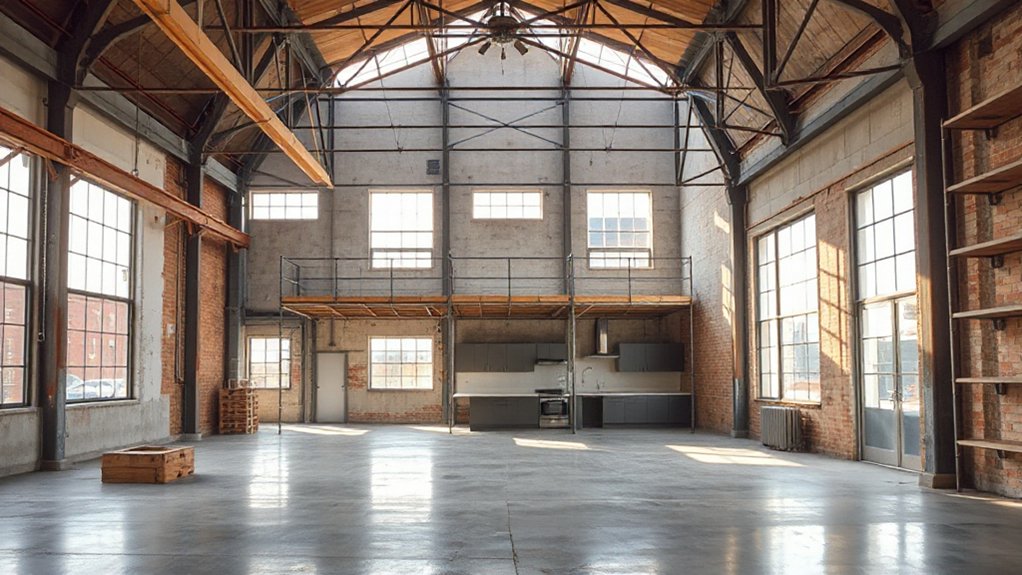
Permitting timelines for C2R conversions hinge on jurisdictional diligence, risk assessment, and contingency planning that align with project cadence and financial milestones. You assess municipal review cycles, required approvals, and potential backlogs, then map them to build-out phasing and capital scheduling.
Risk factors include scope ambiguity, code interpretation, and staffing fluctuations; you document contingencies like staged submissions, parallel reviews, or design refinements to reduce delays.
Historical context informs sensitivity to regulatory shocks and landmark rulings that reshaped approval paths, while cultural implications guide stakeholder engagement, signage, and aesthetic compatibility.
You benchmark comparable projects to anticipate variance, define escalation protocols, and secure reserves for permit appeals or re-submittals.
Feasibility Due Diligence: What to Check First
Feasibility due diligence starts by validating the plan against site realities, market signals, and code constraints you’ve already weighed in permitting timelines. You assess structural capacity, load pathways, egress adequacy, and utility shoulders, ensuring the concept remains practical within existing envelopes.
You also map cultural significance and historical preservation constraints that shape massing, materials, and preservation easements, avoiding costly redesigns later. The goal is a tight, actionable checklist that aligns economics with risk, while preserving civic value and regulatory alignment.
- Confirm zoning compatibility and potential variances with entitlement risk
- Verify structural retrofit feasibility and maximum allowable floor area
- Assess egress, life-safety, and accessibility conformance
- Catalogue historical preservation considerations and Cultural significance constraints
- Validate utility upgrades, energy targets, and construction sequencing early
Post-Conversion Revenue Enhancers (Ongoing Ops)
Post-conversion operations hinge on maximizing ongoing yield through adaptive-use strategies, data-driven occupancy management, and disciplined lifecycle planning. You optimize ancillary revenue by tiering amenities, leveraging flexible leases, and pricing windows aligned to demand cycles.
Continuous monitoring of occupancy, retention, and churn informs iterative tweaks to space configuration, services, and marketing channels. Historical preservation informs value signals that attract niche tenant profiles, while aesthetic branding reinforces premium positioning without sacrificing operational efficiency.
You deploy energy-efficiency upgrades, smart building controls, and predictive maintenance to sustain margin discipline and reliability. Cross-sell opportunities—concierge services, on-site amenities, and partnerships with local vendors—enhance per-unit contribution.
Data governance and scenario planning translate market shifts into actionable playbooks, ensuring you adapt rapidly while safeguarding asset cohesion and long-term capital return.
From Feasibility to Exit: A Practical Roadmap

Certainly, you map the conversion journey from early viability checks through to closing the deal, aligning site analysis, regulatory strategy, and capital structure with a clear value-creation thesis. You structure a tight roadmap that links feasibility, zoning pathways, cost baselines, and risk-adjusted returns, then translate findings into an exit-ready plan.
Throughout, you balance Historical preservation imperatives with pragmatic timing, ensuring marketable product and resilient economics. You’ll craft an aesthetic branding narrative that resonates with tenants and investors while preserving architectural integrity.
The exit strategy hinges on a defensible pro forma, pivot-ready financing, and a compelling narrative for buyers seeking stable, value-forward assets. This discipline speeds approvals and instills confidence in stakeholders, accelerating value realization.
- Feasibility-to-close timeline with milestones
- Regulatory strategy aligned to project thesis
- Capital structure and risk-adjusted returns
- Historical preservation and branding integration
- Exit-ready pro forma and buyer storytelling
Frequently Asked Questions
What Is the First Step to Validate C2R Profitability?
You evaluate profitability first by calculating after‑cost margins, using zoning regulations and market demand to forecast rent, absorption, and cap rates. You validate assumptions with sensitivity tests, then model scenarios to confirm feasible, risk‑adjusted returns.
How Do Parcel Size Limits Impact Value Briefly?
Like a finely tuned engine, parcel size limits compress value: you’ll feel tighter build envelopes and higher density pressure. You’ll navigate zoning restrictions and leverage development incentives to optimize usable area and market appeal.
Which Lease Types Maximize Post-Conversion Income Early?
You should favor triple-net and long-term occupancy leases to maximize early post-conversion income. You’ll align with zoning restrictions and market demand, ensuring rental escalations, stable credit tenants, and precise cash-flow modeling for resilient early returns.
What Hidden Costs Often Surprise C2R Projects?
What hidden costs catch you off guard in C2R? Zoning challenges and neighborhood trends shape budgets, schedules, and approvals, forcing contingency planning, adjusted pro formas, and signage, while you maintain technical precision, aesthetic sensibility, and market awareness.
How Long Is Typical Breakeven for a C2R Conversion?
You’ll typically reach breakeven in 3–7 years, depending on zoning regulations and market demand, with higher certainty when punitive taxes or delays aren’t involved, and when you align design elegance and cost controls to market expectations.
Conclusion
You’ll see the value in converts where demand meets regulatory clarity, yet the value fades when approvals lag. Juxtapose dense, high-foot-traffic parcels with lean, underutilized sites: one fuels rent growth, the other traps capital. You’ll optimize ROI by balancing design with density, and timing with risk. In practice, feasibility keeps you honest; post-conversion ops sustain margin. From feasibility to exit, precision and tempo matter—convert smart, capture value, and let market signals guide every decision.