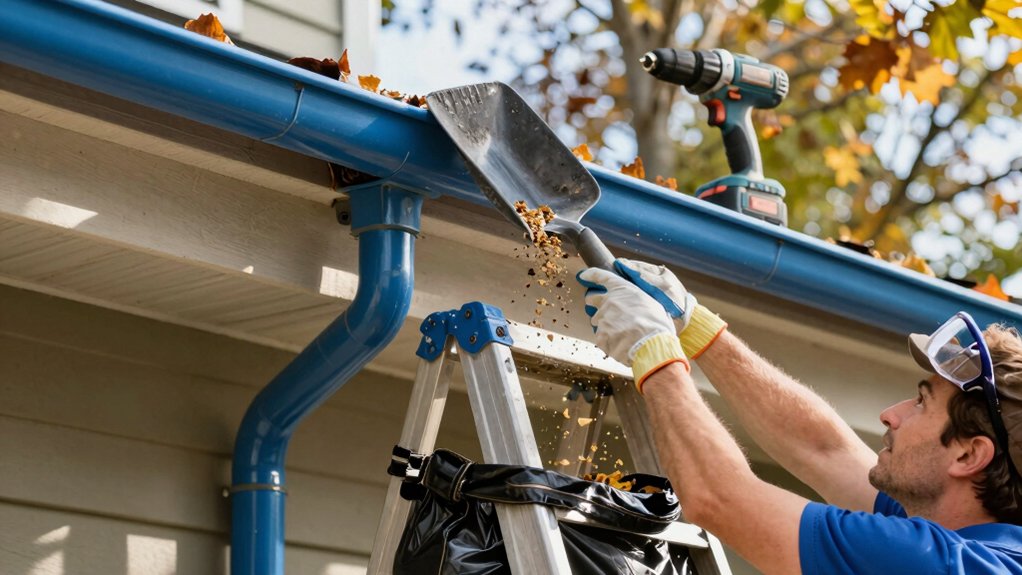
To clean your gutters safely and efficiently, start with a clear plan and the right gear. Wear gloves and non-slip shoes, check weather, and secure a sturdy ladder at the proper angle. Work from a stable position, remove debris from the edge inward, and avoid pushing waste into downspouts. Flush gutters with water, tighten or reseal fasteners, and address leaks. Afterward, inspect for sagging sections and ensure proper drainage—more steps ahead to boost your gutters’ longevity.
Why Clean Gutters Matter

Cleaning your gutters matters because clogged gutters can cause water damage to your home’s roof, siding, and foundation. When gutters function properly, you prevent leaks that can rot wood, erode soil, and stain exterior surfaces.
You also protect landscaping considerations by directing flow away from foundations and plant beds, reducing erosion and root intrusion. Gutter material choices influence durability, maintenance needs, and long-term costs; metal stays clear longer, while plastic resists corrosion but may warp under sun exposure.
Regular cleaning minimizes blockages from leaves, twigs, and debris that invite pests and mold. Maintaining clean gutters preserves overall drainage efficiency, protecting you from costly repairs later.
With deliberate attention to installation and upkeep, you sustain curb appeal, property value, and predictable moisture management.
Safety First: Gear, Setup, and Prep
With gutters cleaning on the horizon, you’ll start by equipping yourself properly and setting up a safe, stable workspace.
1) Wear protective gloves and non-slip footwear to guard against sharp debris and slippery surfaces.
2) Check weather conditions; postpone in wind, rain, or extreme heat to prevent accidents.
3) Secure a sturdy ladder on level ground, with a helper or stabilizer for balance.
4) Prepare a dedicated bucket, trash bag, and a trowel or scoop to minimize reaching and dropping debris.
Keep tools within arm’s reach, avoid overreaching, and keep your stance low and centered.
Clear the area of pets and bystanders.
Inspect your footing regularly, and never work alone if possible.
Stay focused, steady, and deliberate.
Inspect Gutters for Hazards and Wear
Start by inspecting for structural damage along gutters and supports. Note any sagging sections or bent hangers.
Check for loose or missing fasteners, and tighten or replace them to maintain alignment and security.
Addressing these hazards promptly helps prevent leaks, detachment, and water damage.
Inspect for Structural Damage
Gutters can degrade quietly, so you should inspect them for structural damage before cleaning. You’ll assess overall structural integrity and perform a quick material assessment to decide if repair or replacement is needed.
- Check sagging sections and warped corners that reveal load failures.
- Look for rust, cracks, or holes that compromise the gutter’s ability to channel water.
- Inspect seams and hangers for looseness or separation from the fascia.
- Evaluate the downspout connections for leaks or corrosion that could mask bigger issues.
This focused check reduces risk during cleaning and informs safe handling, ensuring you don’t overlook hidden weaknesses. After this, you’ll know whether maintenance stays simple or if professional repair is warranted.
Detect Loose Fasteners
Loose fasteners are a common weak point after you’ve scanned for structural damage. To detect issues, perform a targeted fastener inspection along the gutter line. Check brackets, hangers, screws, and nails for looseness, bending, or corrosion.
Use a screwdriver or drill to gently test each connection; if a fastener spins or moves, mark it for immediate tightening or replacement. Inspect mounting points at fascia boards for wood rot, rust, or failed anchors.
Look for gaps between the gutter and brackets, which signal looseness or sag. Address loose bracket detection promptly to prevent overflow, leaks, and gutter detachment.
Maintain a steady pace, document findings, and re-check after reassembly. Regular, systematic checks keep the system secure and functioning properly.
Set Up a Stable Ladder for Safe Access
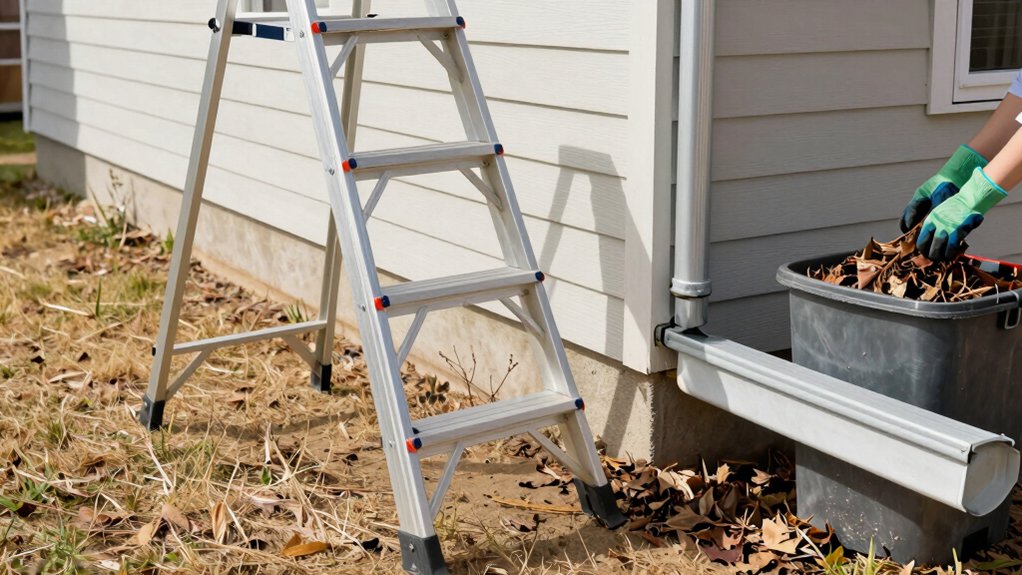
Set up a stable ladder with feet planted square and on firm ground. Check that the ladder extends at least three rungs above the roof edge.
Keep three points of contact in mind: secure footing, proper angle, and steady ascent with safe climbing practices.
Secure the ladder’s footing and top, and don’t rush—every step matters for safe access.
Stable Ladder Setup
To begin, make certain you have a stable ladder setup before climbing. A solid base, level ground, and secure contact with the wall prevent slips. Keep ladder height appropriate: extend at least three rungs above the gutter and maintain a three-to-one angle for stability. Position the ladder so you aren’t reaching; align it with the work area and avoid doors or traffic.
Ensure the feet are on firm, non-slippery surface and use locking feet or stabilizers if available. Maintain three points of contact as you ascend and descend. Don’t overreach or stand on the top rung.
Inspect for damage before use. Never climb with debris or mud on rungs; keep footwear clean.
- Check base stability and level ground
- Verify proper ladder angle (three-to-one rule)
- Align with the gutter work area
- Inspect for damage and clean rungs before use
Safe Climbing Practices
Safe climbing starts with a stable ladder setup you can trust. Before you ascend, inspect the ladder for cracks, bent rungs, or loose feet. Position it on firm, level ground and fully extend stabilizers if available. Maintain three points of contact as you rise and keep your body centered between rails.
Use a ladder that supports your weight plus tools, and never exceed its rating. Set a clear ascent path, free of debris, and avoid top-rung reach. Climb slowly, face the ladder, and maintain steady grip.
For ladder safety, secure the work area and avoid windy conditions. When selecting gear, prioritize tool selection that’s light, durable, and appropriate for gutters, reducing unnecessary shifts or overreach.
Securing Ladder Footing
Before you climb, make certain the ladder’s feet sit firmly on solid ground and aren’t sinking or shifting. Place it on level, rigid surfaces, and use leg levelers or stabilizers if available. Achieve ladder stability by inspecting footing security before each use and adjusting as needed.
Maintain three points of contact during setup and ascent, keeping your body centered between rails. Don’t overreach or lean away from the ladder; reposition if necessary.
- Check ground condition and remove debris under the feet.
- Tighten any adjustable feet for a snug, level stance.
- Use stabilizers or a spotter on soft ground.
- Verify locks and hinges are engaged before climbing.
Remove Debris Safely, Protecting Gutters
Gutters can clog quickly after fallen leaves, so remove debris safely by working from a stable ladder and keeping your footing firm. You’ll protect gutters by sorting debris from the edge inward, avoiding pushing waste into downspouts.
Use your cleaning tools to loosen stubborn material, then lift it straight out rather than scrubbing along the gutter profile. Wear gloves and dispose of waste in a container, not on the ground near vegetation.
Keep tools organized to prevent accidental contact with fascia boards or roof edges. Inspect the gutter face for dents or loose hangers as you work, noting sections that need reattachment.
Maintain a steady rhythm, pause if you feel unstable, and never overreach. This approach minimizes damage while efficiently removing gutter debris.
Flush and Verify Drainage for Proper Flow
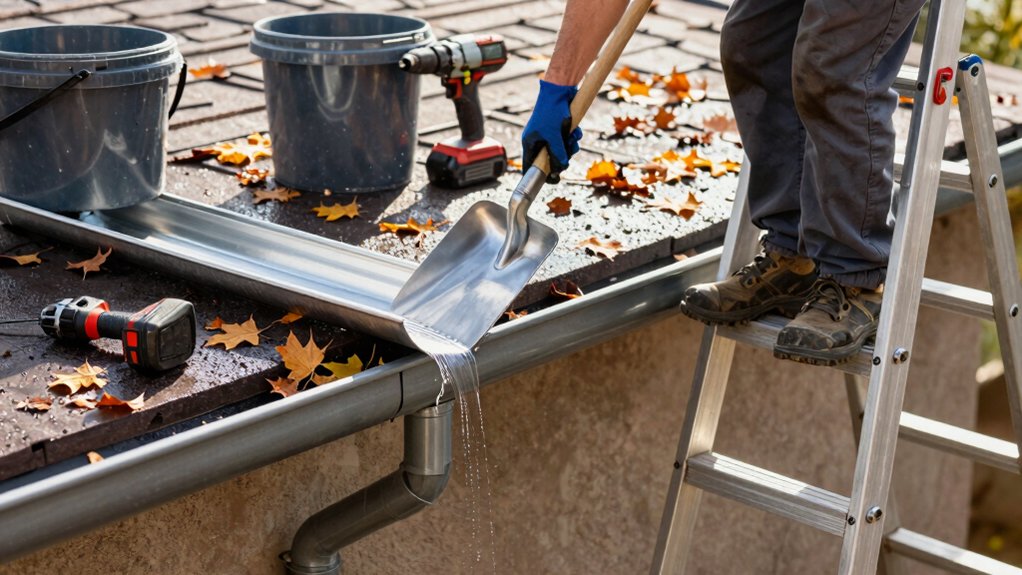
Once debris is clear, flush the gutters to confirm drainage and watch for any water pooling or slow flow. You’ll verify drainage by observing how quickly water moves through downspouts and exits. If you see pooling or hesitation, stop and inspect for blockages or misaligned sections.
Use a hose with a steady flow to test each run, noting any leaks or standing water. This drainage verification ensures proper water flow and reduces overflow risk during storms.
- Inspect joints and elbows for leaks
- Rerun water through each section to confirm continuous flow
- Check downspouts for full exit and unobstructed path
- Mark problem areas for prompt repair
Simple Maintenance to Extend Gutters’ Life
Maintaining your gutters doesn’t require special tools or repeated, exhaustive cleanings. Simple maintenance focuses on prevention and timely checks to extend life. Inspect for loose hangers, sagging sections, and degraded fascia at least twice a year, especially after storms. Tighten fasteners and reseal minor gaps to prevent leaks and water damage.
Install gutter guards or leaf screens to reduce debris buildup, then clean these barriers periodically to maintain airflow. If you notice frequent clogging, adjust downspouts to ensure proper drainage and prevent standing water. Clear leaf litter from roof lines to minimize transfer into the troughs.
Promptly address ice dam risks in winter by ensuring heat cables are properly installed or by improving insulation. Routine upkeep preserves capacity, reduces corrosion, and lowers maintenance costs over time.
Common Gutter Issues and Quick Fixes
Common gutter issues pop up quickly, but you can spot and fix them before they cause damage. You’ll identify problems, prioritize safe fixes, and prevent costlier repairs down the line. Stay precise and proactive as you work.
- Leaf buildup — remove debris and flush with water to restore flow.
- Gutter sagging — tighten hangers, re-secure supports, and reseal joints to restore pitch.
- Loose or damaged fasteners — replace corroded screws and secure sections evenly.
- Poor downspout drainage — clear elbows, test flow, and add a splash block or extension as needed.
Frequently Asked Questions
How Often Should Gutters Be Cleaned in Different Climates?
You should clean gutters more often in wet, leafy climates and less in dry, arid areas. Generally, twice a year suffices, but increase to quarterly in heavy snowfall. Gutter maintenance hinges on climate considerations for peak performance.
Can You Safely Clean Gutters From the Ground With Tools?
Yes, you can, but avoid ladders beyond foot-stable height; use a sturdy ladder, preferably with a stabilizer. Keep ladder safety in mind, and never lean. Work from the ground when removing gutter debris to minimize risk.
Is It Necessary to Wear Eye Protection While Cleaning Gutters?
Eye protection matters: about 60% of eye injuries from DIY projects involve projectiles. Yes, you should wear eye protection for gutter work. Gutter safety relies on sturdy eyewear, proper gloves, and stable footing to protect against debris.
What Are Signs Gutters Need Immediate Professional Repair?
You’ll know you need immediate professional repair when you notice gutter damage or water intrusion, including cracks, sagging sections, loose hangers, overflowing water, or mold growth around the fascia. Prompt assessment prevents further structural damage and costly repairs.
How Can I Prevent Future Gutter Clogs Effectively?
To prevent future gutter clogs, practice regular gutter maintenance and implement proactive clog prevention strategies, like installing micro-mesh guards, cleaning debris periodically, trimming overhanging branches, and ensuring downspouts drain properly to avoid standing water.
Conclusion
You’ve got the job done: gutters clear, water flows freely, and your home stays protected. Stay proactive—check after storms, trim nearby branches, and keep debris bins handy for quick cleanup. Regular maintenance is armor against damage and costly fixes. Think of your gutters as veins: clean, steady flow sustains the whole house. With consistent care, you’ll reduce risk, extend lifespan, and sleep easier knowing you’ve safeguarded your roof and foundation.