Biophilic architecture blends natural elements, materials, and daylight into built spaces to boost your well‑being, focus, and performance. You’ll see natural shapes, textures, and views that connect indoors to the outdoors, using wood, stone, plants, water features, and daylit interiors. It prioritizes human experience over purely environmental metrics, improving mood, reducing stress, and potentially lifting productivity. This approach is practical for healthcare, offices, and homes, with scalable strategies and a future-ready urban impact—stay with us to explore more.
What Is Biophilic Architecture
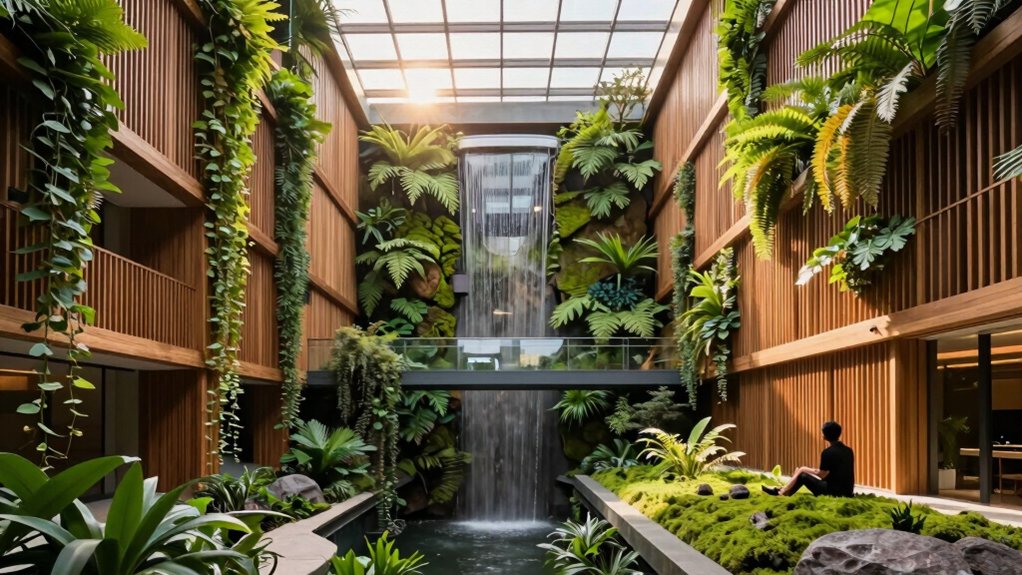
Biophilic architecture is about bringing nature into the built environment to boost how people feel and perform. You’ll fuse natural elements, materials, and light to foster a stronger connection with nature inside urban and indoor spaces.
The goal is clear: improve mental and physical well-being by replicating natural environments, so occupants experience calmer, more focused states. You’ll emphasize natural shapes, patterns, and views of nature to create environments that feel like part of the natural world.
Practical outcomes include green walls, water features, extensive plant life, and abundant natural lighting that elevate daily experiences. This approach also supports sustainable design, using natural materials and energy-efficient strategies to reduce ecological impact while enhancing occupant satisfaction.
In short, it’s a purposeful, trend-aligned pathway to healthier, greener workplaces and spaces.
Core Concepts Behind Biophilic Design
Core concepts behind biophilic design center on weaving natural systems into the built environment to boost well-being and efficiency. You’ll fuse natural elements like materials, light, water features, and plant life into layouts that feel immediate and alive, not staged.
The approach rests on humans’ innate connection to nature, so you design around sightlines, textures, and seasonal changes that invite repeated, restorative experiences.
Key principles emphasize natural shapes, patterns, and views of the outdoors, so spaces read as an extension of the landscape rather than a separate box.
The aim is sustainable architecture that reduces stress and enhances focus by embedding nature into everyday use.
Expect environments that support comfort, resilience, and a quieter, more productive work and living rhythm.
The Benefits: Health, Wellbeing, and Productivity
When built with nature in mind, the workplace becomes a proven conduit for healthier, more productive days: exposure to natural elements can lift mood and reduce stress, while natural light and greenery can boost productivity by up to 8%.
You’ll see stronger mental health as occupants enjoy improved mood and lower stress levels. Natural light, in particular, supports circadian balance, reducing fatigue and boosting focus.
Greenery isn’t decorative—it calms, lowers blood pressure, and enhances overall well-being, contributing to a 13% uptick in occupant happiness. By inviting nature, you’ll also support physical health through lower cortisol and pulse rate.
In healthcare-adjacent spaces, biophilic design accelerates recovery and can reduce medication needs, reinforcing productivity through steadier, healthier environments. natural light, mental health, productivity.
Main Principles of Biophilic Design
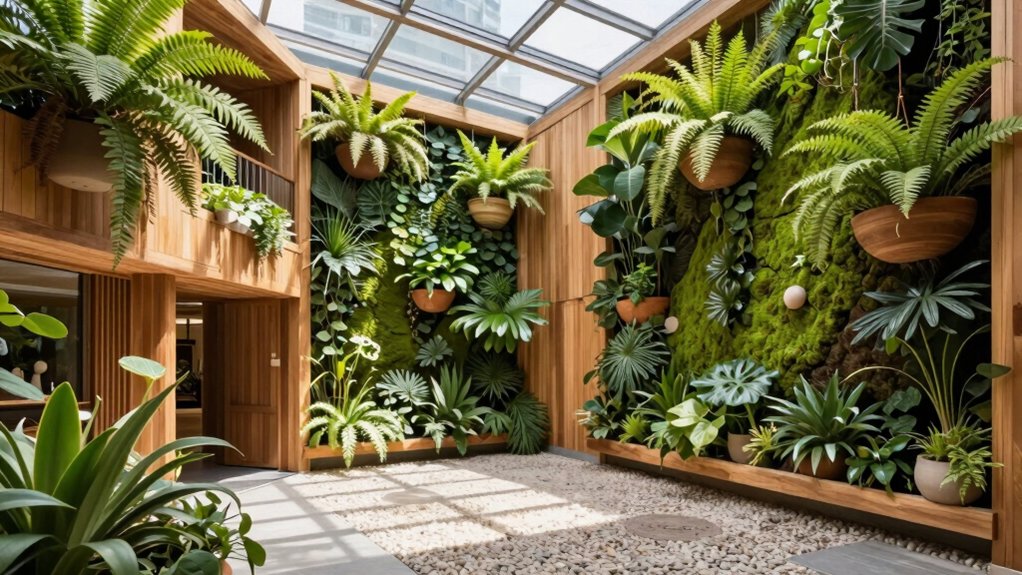
You can start by weaving nature into every decision: use natural elements like plants, water features, and materials such as wood and stone to build a tangible link to the outdoors.
You’ll design with natural shapes and forms—curves, arches, and irregular geometries—that mirror organic patterns found in the environment.
Integrate natural patterns and textures, like wood grain and leaf motifs, to boost sensory perception and aesthetic appeal.
Prioritize maximum natural light and thoughtful shadow to create depth, dimension, and a dynamic indoor environment.
Guarantee views of nature and visual connections to the landscape foster presence and immersion.
This approach stays client-focused and trend-aware, delivering practical, scalable principles you can apply across spaces to support wellbeing and productivity.
Real-World Examples of Biophilic Architecture
Real-world biophilic architecture brings the principles you’ve learned into tangible, impactful spaces. You can see how leading projects translate theory into experience.
The Eden Project creates biodiverse environments through massive biomes, letting visitors connect with natural ecosystems from first touch.
Jewel Changi Airport blends indoor forests, the Rain Vortex, and abundant greenery to heighten human-nature contact in a high-traffic setting.
In Milan, Bosco Verticale wraps a residential tower with 20,000 plants and 900 trees, delivering cleaner air and greater urban biodiversity.
The Vibes Office in Vietnam embeds gardens, green walls, and water features to cultivate daily biophilic stimuli within work routines.
And Apple Park’s circular plan, surrounded by 9,000 trees with a central wildlife habitat, anchors natural integration.
These examples illustrate practical, natural, client-focused design trends.
Differentiating Biophilic From Green Architecture
You’ll see that biophilic and green architecture share sustainability goals but pursue different outcomes: biophilic focuses on human experience and well-being, while green targets environmental performance.
This subtle distinction shapes design decisions, from materials and systems to how occupants perceive and connect with space.
Together, they’re complementary, yet clarifying aims helps you communicate value to clients and align your project strategy with what truly matters to occupants.
Biophilic Vs Green Aims
Biophilic and green architecture share sustainability goals, but they serve different ends: green design aims to cut environmental impact, while biophilic design centers on human well-being by weaving natural elements into spaces.
You’ll find green architecture prioritizes environmental sustainability through resource conservation, renewable energy, and water efficiency.
Biophilic aims, conversely, focus on emotional and mental health by embedding natural shapes, patterns, and views to foster a sense of nature.
Both approaches promote sustainability, yet green design concentrates on reducing ecological footprints, while biophilic design enhances psychological and physiological benefits.
Practically, you’ll apply green strategies for efficiency and resilience, then layer in natural elements to boost mood and focus.
The result: a built environment that supports both resource stewardship and human well-being, harmonizing sustainability with everyday experience.
sustainability, natural elements, human well-being
Human Experience Focus
Why does the human experience matter more in biophilic design than in green architecture? You feel it first: biophilic design centers on human connection and well-being, not just energy metrics. Unlike green architecture, which targets sustainability and environmental impact, biophilic spaces actively prioritize mental and physical health for occupants.
You’ll notice how natural elements, forms, and patterns create a sense of place and comfort, extending beyond efficiency. Studies show biophilic environments can boost productivity by 8% and lift mood while reducing stress, underscoring a clear focus on people.
This approach deepens the human-nature relationship within built spaces, delivering tangible well-being benefits. In practice, prioritize experiences that leverage natural textures, daylight, and organic layouts to deliver lasting value for clients.
Complementary Goals, Differences
Complementary goals unite biophilic and green architecture, yet they target different outcomes. You’ll prioritize human well-being by weaving natural forms, light, and views into spaces, while also optimizing energy use and materials for sustainability.
Biophilic design emphasizes emotional and psychological connections to nature, boosting mental health and sensory richness. In contrast, green architecture focuses on eco-friendly operations, resource efficiency, recycled materials, and low-impact construction.
Both paths pursue sustainability, but biophilic architecture aims to elevate occupant experience, whereas green architecture concentrates on ecological footprints and operational performance.
The two aren’t competing; they’re synergistic. When you integrate biophilic principles into green buildings, you preserve environmental integrity while enhancing occupant health.
For forward-thinking clients, this combination represents practical, trend-driven value that lasts. Sustainability remains the common thread.
Biophilic Design in Healthcare, Commercial, and Residential Spaces
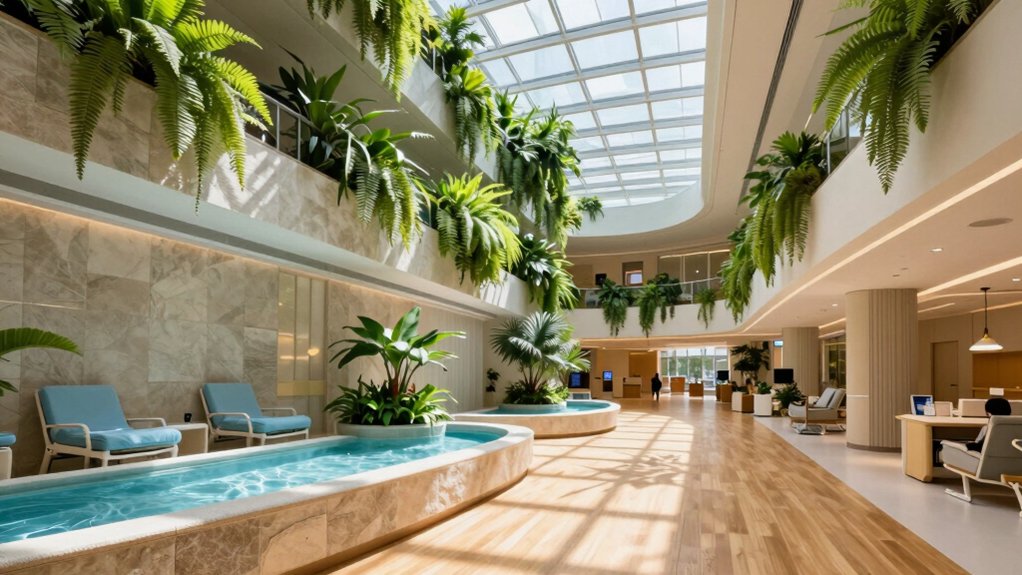
Biophilic design across healthcare, commercial, and residential spaces is about bringing nature into daily life to boost healing, productivity, and well-being. You’ll see this realized through natural materials, calming water features, and abundant daylight that align with circadian rhythms.
In healthcare, facilities like Khoo Teck Puat Hospital demonstrate faster recovery, reduced pain medication, and a gentler recovery environment when airflow, lighting, and sustainable materials are prioritized.
Residential projects such as Second Home Lisboa use extensive indoor plants and natural light to spark creativity and connection to nature.
In commercial settings, hotels like 1 Hotels Kauai emphasize nature views, eco-friendly interiors, and organic patterns to enhance guest relaxation and sustainability.
Across all sectors, a healing environment is achievable with thoughtful material choices and plant integration.
Strategies for Implementing Biophilic Elements
To implement biophilic elements effectively, start by maximizing natural light with skylights, large windows, and reflective surfaces to create a brighter, more connected indoors. You’ll reinforce this with natural materials—wood, bamboo, cork, and reclaimed stone—bringing tactile texture that echoes the outdoors.
Integrate water features, such as indoor fountains or small ponds, to calm occupants, dampen noise, and add subtle movement.
Design with natural shapes—curves, arches, and biomorphic forms—to mirror organic world patterns and promote a sense of ease.
Include plants, green walls, and views to exterior landscapes to strengthen visual and physical ties to nature, supporting well‑being.
The result is a practical, trend‑forward strategy that elevates spaces while delivering measurable comfort and productivity. natural materials natural light plants
The Future of Biophilic Architecture in Cities
How will biophilic architecture reshape our cities in the coming decade? You’ll see green spaces, natural light, and water features become standard tools to cool streets, improve air quality, and boost wellbeing.
In urban planning, biophilic principles drive green roofs, vertical gardens, and integrated ecosystems that support mental and physical health while expanding usable cityscapes.
Advances in sustainable materials and smart tech enable dynamic, adaptive environments inside buildings and in public spaces, making biophilic elements more resilient and cost-effective.
Cities worldwide are adopting these designs to enhance biodiversity, reduce pollution, and align with climate goals.
As adoption rises, expect higher property values and a draw for health-conscious residents, building more sustainable urban communities.
Conclusion
Biophilic design isn’t a luxury; it’s a competitive edge you can scale across projects. You’ll see spaces feel calmer, occupants perform better, and turnover costs drop as natural light, greenery, and tactile materials connect people to nature. Consider this: offices with Biophilic design report up to 15% higher productivity and 11% lower absenteeism. Start small with daylight planning and living walls, then layer textures and nature-inspired patterns to future-proof your portfolio and delight clients.