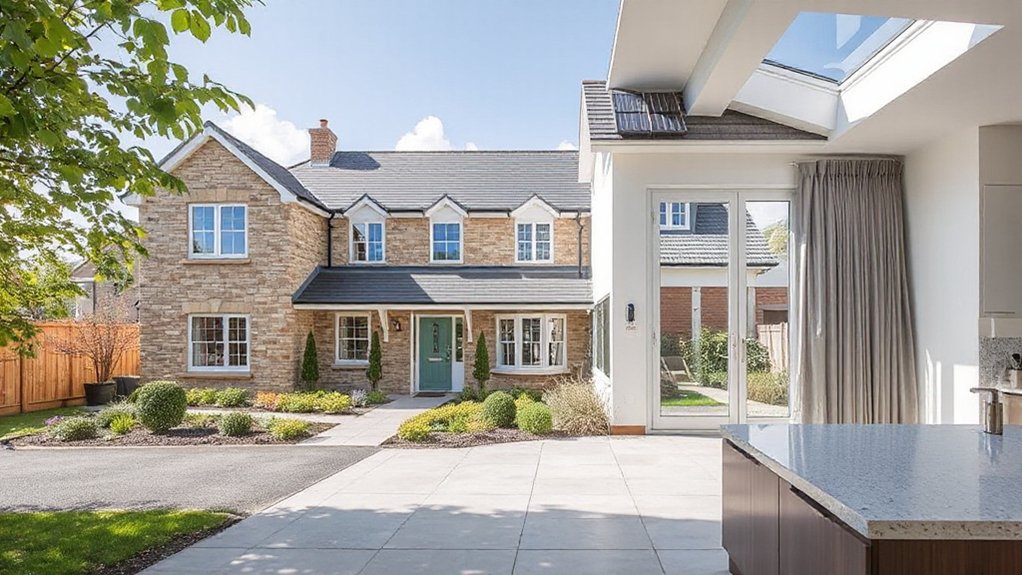
If you’re weighing value-driven home upgrades in the UK, focus on a measurable mix: efficient kitchens and durable bathrooms, solid insulation, and visible external improvements that boost curb appeal. Prioritize ROI by evaluating energy bills, maintenance costs, and regional demand, then plan around sensible budgets and planning permissions. The key is to balance practicality with market appeal, but you’ll want concrete figures and local trends before committing capital. There’s a lot to contemplate beyond surface upgrades.
How to Evaluate ROI-Ready Home Upgrades
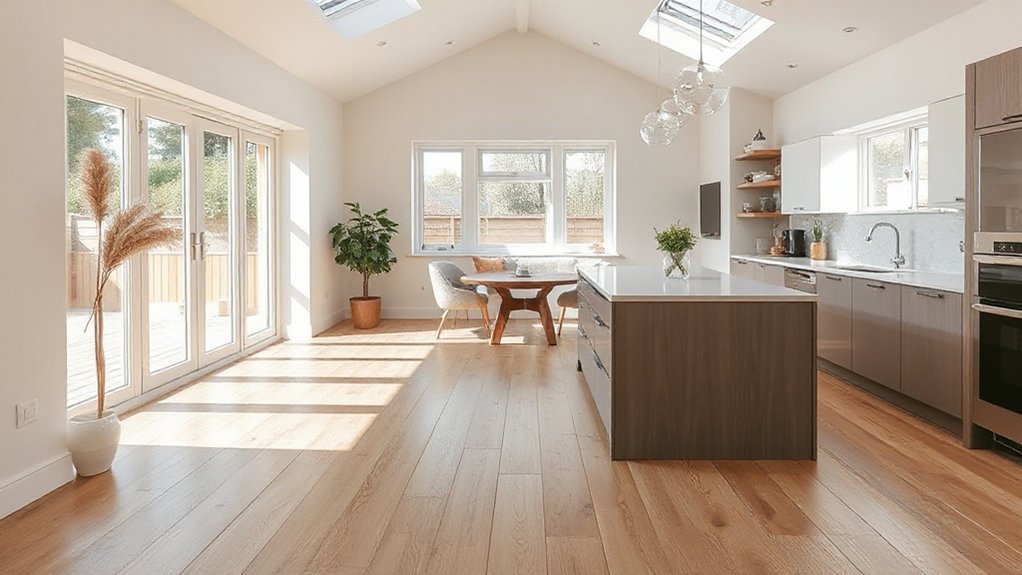
To evaluate ROI-ready home upgrades, start by defining clear financial criteria (cost, expected increase in resale value, and impact on sale speed) and then compare projects using standardized metrics like net present value, payback period, and return on investment.
You’ll quantify upfront expenditures, ongoing maintenance, and risk adjustments, then project after-tax gains and equity lift.
Use gardening trends to forecast demand-shift effects on curb appeal and price trajectory, while interior lighting analysis informs energy, ambience, and staging value.
Apply sensitivity tests for market volatility and discount rates, ensuring assumptions reflect UK resale cycles.
Rank options by highest NPV and shortest payback, filtered by alignment with target buyer segments.
The result is a defensible, evidence-based prioritization that guides capital allocation.
Kitchen Improvements That Boost Resale Value
Consider how kitchen layout upgrades can optimize flow and work zones for typical UK homes. Prioritizing efficient triangle work areas and easy access to storage is essential.
Upgrading appliances and improving efficiency reduces operating costs. It can also influence buyer perceptions of modernity and reliability.
Finely balanced countertops and surfaces should combine durability with low maintenance. This supports long-term resale value.
Kitchen Layout Upgrades
Upgrading a kitchen layout can meaningfully boost resale value by improving flow, accessibility, and appliance efficiency. You’ll prioritize a logical work triangle, guaranteeing prep, cooking, and cleanup zones are within reach without bottlenecks.
Consider a single-wall, L-shaped, or galley configuration based on available space, ceiling height, and natural light. Target clearances of at least 1.2 meters around islands or counters and ensure door openings aren’t obstructed by cabinetry.
Structural changes should be documented for equity evaluation, with emphasis on durable surfaces, precise alignment, and robust storage solutions. Vintage fixtures can preserve character where appropriate, while modern lines maintain valuation parity.
Note garden landscaping impacts surrounding perception; discreet exterior landscaping complements interior flow and perceived kitchen footprint, supporting value without intrusive renovations.
Appliances And Efficiency
Modern kitchens rely on efficient, reliable appliances to sustain daily workflows and long-term value. You’ll see resale benefits from appliance upgrades that combine performance with energy efficiency. Focus on high-efficiency models with A+++ to A energy ratings, or the UK’s modern equivalents, and guarantee effective installation to minimize heat loss and noise.
Prioritise refrigeration with correct sizing, variable-speed dishwashers, and induction cooking for precise control and faster heat delivery. Efficiency improvements hinge on consistent usage data, correct door seals, and proper venting.
Replace older boilers, washers, and dryers only when energy performance markedly exceeds current costs. Document energy savings for buyers, and choose components with robust warranties.
Select appliances that integrate with smart controls to support ongoing efficiency monitoring and value preservation.
Countertops And Surfaces
Marble countertops offer high-end aesthetics but require sealing and regular maintenance to prevent etching and staining. Balance that with your home’s expected traffic and maintenance capacity.
Consider edge profiles that resist chipping, like eased or special-radius edges, which also influence perceived craftsmanship.
Surface finishes impact cleaning ease and glare; choose matte or honed finishes to minimize fingerprints and high-contrast wear marks, unless you prefer the reflective effect of polished surfaces.
Guarantee consistent seam placement, proper substrate support, and future-proofing for integrated appliances to maximize resale value.
Bathroom Upgrades With High UK ROI
Upgrading your bathroom with high-ROI fixtures combines durability with low lifecycle costs, delivering measurable resale benefits.
Prioritize stylish yet practical options—like efficient taps, low-flow toilets, and solid-surface basins—that meet UK performance standards and minimize maintenance.
We’ll assess each choice by cost, expected energy savings, and impact on perceived quality to guide evidence-based decisions.
High ROI Fixtures
Choosing bathroom fixtures with proven UK ROI means prioritizing durability, efficiency, and cost-to-value return. You’ll target elements proven to preserve value while controlling ongoing costs.
Start with dual-flush toilets and low-flow taps, measuring water savings and maintenance intervals to quantify ROI. Replace showers with water-efficient systems featuring robust ceramic valves and metal trims to withstand daily use; document warranty terms and serviceability.
Opt for heated towel rails with tunable thermostats to balance comfort and energy use, linking performance to EPC improvements. Then consider basins and vanity units with solid-surface tops for longevity and ease of cleaning, minimizing long-term replacement costs.
In addition, assess ancillary benefits such as pest control and garden landscaping impacts on inspection outcomes, aligning upgrades with overall property appeal and risk reduction.
Stylish Yet Practical
If you want bathroom upgrades that balance style with solid ROI, focus on durable, design-forward elements that cut operating costs and maintain appeal. Prioritise water-efficient fixtures, high-quality tiling, and robust ventilation to reduce long-term maintenance and energy use.
Choose timeless finishes and modular storage to preserve appeal despite evolving trends, ensuring lower replacement costs and quicker resale confidence. Integrate low-profile lighting and mirrors to enhance perception of space without adding complexity.
Consider anti-slip, easy-clean surfaces to minimise service calls and accidents, boosting value through practicality. Plan around smart controls for heating, lighting, and ventilation to demonstrate operational savings.
Also evaluate ancillary factors like Garden lighting for curb appeal and Home security features in entry zones to reinforce perceived value.
Energy Efficiency Tweaks That Cut Bills and Raise Value
To cut energy bills and boost resale value, focus on proven efficiency tweaks that deliver measurable results. You’ll implement targeted, evidence-based upgrades that reduce consumption and lift market appeal.
Key moves include integrating solar panels and smart home automation to optimise generation and usage, while maintaining cost efficiency.
- Evaluate solar panels feasibility and ROI based on tilt, orientation, and local sun exposure.
- Install smart thermostats and home automation to modulate heating, cooling, and scheduling.
- Upgrade to high-efficiency boiler or heat pump with compatible controls for system-wide efficiency.
- Commission energy performance improvements, track consumption, and verify bill reductions with before-after data.
These steps provide measurable savings, data-driven justification for value, and align with UK buyer expectations.
Insulation and Draught-Proofing for a Warmer Home
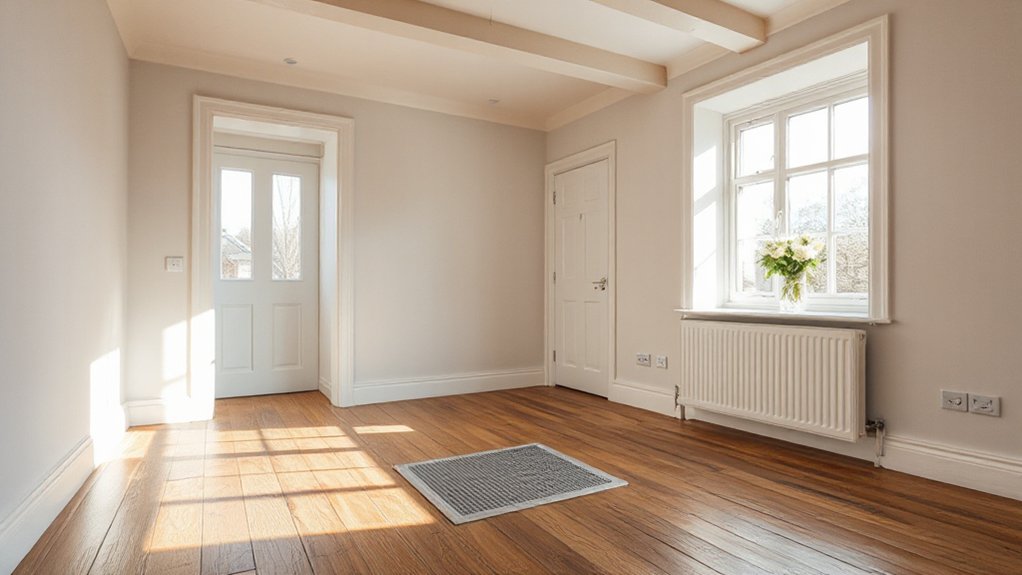
Insulation and draught-proofing are foundational steps for a warmer, more efficient home. You assess building envelope performance by measuring with standard methods: U-values for walls, roofs, floors, and windows, plus airtightness tests to gauge leaks.
Prioritise solid wall insulation or cavity options where applicable, targeting thermal bridges and corner gaps.
Draught-proofing should cover exterior doors, sash windows, loft hatches, and plumbing penetrations, using compliant seals and weatherstrips. Sealing should be continuous, not decorative.
Expect improved thermal comfort as surface temperatures stabilise and cold drafts diminish.
Energy savings accrue from reduced heat demand, enabling smaller boiler loads and longer run periods at the best efficiency.
Pair insulation upgrades with correct ventilation to maintain indoor air quality while sustaining measurable thermal comfort and cost-effective energy savings.
Durable, Modern Flooring That Buyers Want
Durable, modern flooring choices matter for resale and daily use, because they balance long-term performance with aesthetics that appeal to buyers. You should prioritise floors that resist wear, moisture, and staining while preserving a high-quality look over time.
Durability and modern materials translate to fewer repairs and faster, cleaner updates when you sell. Consider lifecycle cost, not just upfront price, and verify warranty terms.
- Choose durable flooring with strong wear layers and water resistance for high-traffic areas.
- Prefer modern materials that mimic natural looks yet offer improved durability and easy maintenance.
- Assure substrate compatibility and sound attenuation to meet UK expectations and building standards.
- Pair with precise installation standards to maximise longevity and resale appeal.
Smart Home Features Buyers Love in the UK
Smart home upgrades are now a standard consideration for UK buyers, with priorities clearly centered on seamless control, reliability, and energy efficiency.
You’ll see preference for integrated systems that unify lighting, climate, security, and heating, plus secure voice control and remote monitoring.
Evidence shows these features drive perceived value and faster resale, so evaluating compatibility with existing wiring and future-proofing is essential.
Smart Home Upgrades
You’ll gain measurable value when you implement these core elements:
1) Smart security: intrusion alerts, remote monitoring, and audit trails for peace of mind.
2) Automation lighting: adaptive schedules, occupancy sensing, and energy savings without sacrificing comfort.
3) Centralized control: a single dashboard to manage HVAC, lighting, and devices, reducing manual overhead.
4) Energy reporting: usage insights, cost trends, and retrofit ROI to justify upgrades.
Evidence-based benefits include lower energy bills, enhanced resale appeal, and faster completion of sale processes.
Prioritize interoperable devices, robust Wi‑Fi, and clear privacy settings to maximize buyer confidence.
UK Buyer Preferences
In the UK, buyers prioritize smart features that demonstrate real-world value and reliability, with a focus on interoperability, data privacy, and tangible cost savings. You’ll see preference for systems that operate across devices without vendor lock-in, ensuring future upgrades don’t force complete rewrites.
Proven energy efficiency, remote monitoring, and durable hardware matter most, with clear return on investment. Interoperability reduces friction in daily use and supports scalable performance as needs evolve.
Data privacy controls, transparency on data sharing, and robust security are non-negotiable for confidence in deployment. Garden lighting and interior decor integrations should enhance usability, not complicate control schemes.
Evidence-based choices favor modular, standards-driven ecosystems that maximize comfort, reduce utility bills, and preserve resale value.
Light and Space: Creating Brighter, More Livable Rooms
Natural light and open layouts greatly affect perceived room size and usability. By prioritizing window placement, glare control, and reflective surfaces, you can make spaces feel brighter without enlarging the footprint.
- Optimize window orientation and glazing: choose larger panes, low-E coatings, and balcony or roof-light strategies to maximize natural lighting while controlling heat gain.
- Align color schemes with light levels: use light, neutral tones near windows and darker accents away from direct sun to balance contrast and perceived space.
- Employ reflective materials: polished floors, glossy tiles, and specular paints boost ambient brightness without extra fixtures.
- Plan for glare management: consistent shading devices and task lighting reduce harsh reflections and support comfort.
Evidence supports daylighting as a low-cost, high-impact upgrade.
When and How Much to Extend: Side Returns and Rear Extensions
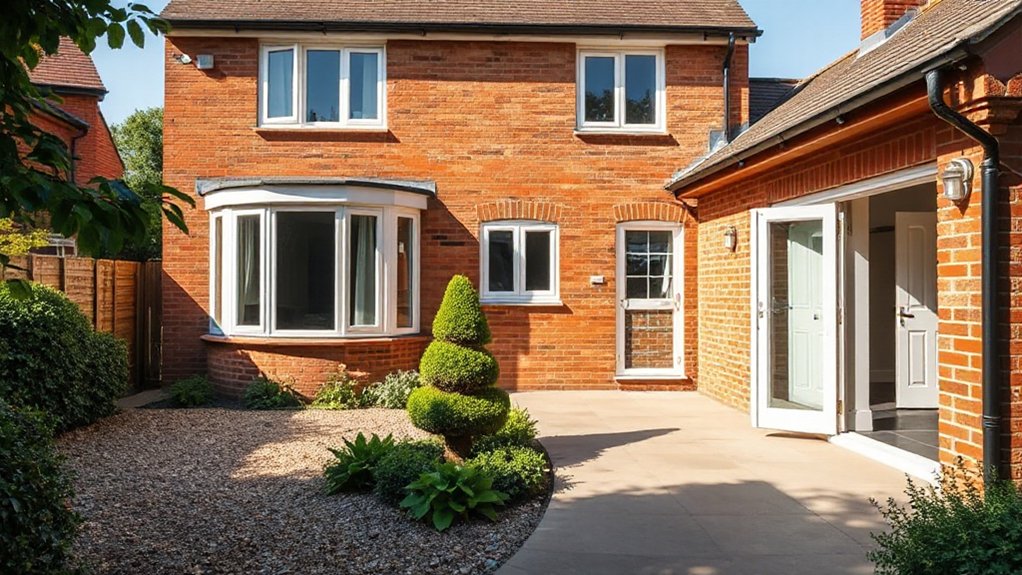
Extending your home changes both timing and budget, so you should map out when extensions are most feasible within planning and market cycles.
Consider how regional costs, materials, and labor impact total spend for side returns and rear extensions, not just the initial quote.
We’ll weigh timelines against expected value by examining project duration, potential disruption, and long-term energy or space gains.
Timing For Extensions
Decide on timing and scale by aligning planning permissions, budget, and site constraints before you commit to a side return or rear extension. You’ll optimize value by sequencing approvals and design decisions to minimize disruption and maximize usable space.
- Assess constraints: zoning, permitted development, and neighbor impacts to avoid delays.
- Align budget with scope: prioritize essential structural work, plumbing, and electrical upgrades.
- Schedule phasing: obtain permissions early, then stagger trades to reduce downtime.
- Plan interior lighting and landscaping design to support long-term usability and aesthetics.
This approach prioritizes practical outcomes, evidence-based sizing, and predictable timelines, ensuring your extension enhances daily function without excessive risk or cost.
Cost Impact Of Extensions
When planning side returns or rear extensions, you’ll want a clear view of costs to match the chosen scope and timing from your earlier planning. A precise cost analysis informs decision-making, balancing build quality with expected value uplift.
Side returns typically offer lower incrementality than rear extensions but still demand careful budgeting for foundations, insulation, and glazing. Use a structured renovation budgeting approach: itemise structural works, services, finishes, and contingency.
Consider regulatory costs, builder rates, and VAT treatment, and adjust for site constraints. Marginal value depends on depth, footprint, and integration with existing layouts.
Monitor timelines to avoid escalation, and document changes with clear cost tracking. Align extensions with property scale, ensuring financing aligns with anticipated resale uplift and risk tolerance.
Conservatories and Glass Extensions: Value Versus Cost

Conservatories and glass extensions offer added living space with natural light, but the value they deliver hinges on cost efficiency, build quality, and long-term usability rather than upfront aesthetics alone. You evaluate long-term cost per usable year, considering thermal performance, maintenance, and potential resale impact.
- Assess framing material and glazing type for heat loss and durability.
- Plan for compliant foundations, drainage, and integration with your existing structure.
- Budget for installation precision, weather sealing, and load considerations.
- Prioritize ongoing conservatory maintenance and glass extension safety through routine inspections and timely repairs.
Evidence-based decisions rely on thermal performance data, sensor-guided monitoring, and professional assessments. Avoid overinsulating beyond needs, and guarantee proper ventilation.
Add a Practical Utility Room or Downstairs WC
Adding a practical utility room or downstairs WC can optimize daily workflows and improve hygiene compliance, especially when you’ve sized a reconfigured ground floor to support other living spaces. You’ll gain dedicated laundry sorting, storage, and contingency space for peak household activity, reducing cross-contamination risks in kitchens and living zones.
Plan zones for wet and dry activities, with ventilation, splash protection, and moisture management to protect finishes. For a downstairs wc, guarantee compliant headroom, accessible routes, and compliant drainage, reducing non-essential movement upstairs during busy periods.
Specify durable, easy-clean surfaces and robust waste plumbing with backflow protection. Evidence supports higher resale value from functional utility spaces and improved occupant satisfaction.
Budget for sized-to-use-case equipment, energy-efficient appliances, and future-proof layout flexibility. utility room, downstairs wc.
Outdoor Spaces That Add Value: Decking, Paving, and Gardens
Outdoor spaces that add value through careful decking, paving, and garden design deliver functional outdoor living areas, improve thermal performance of adjacent interiors, and enhance curb appeal with durable, low-maintenance materials.
You can quantify value through material choice, layout efficiency, and ongoing maintenance costs, ensuring long-term return.
Focus on durable decking, permeable paving, and drought-tolerant planting to reduce upkeep.
Outdoor furniture and garden lighting should be integrated for usability and ambience, not afterthoughts.
- Choose weather-resistant decking and non-slip surfaces with proper drainage.
- Plan permeable paving and compacted bases to minimize water pooling and maintenance.
- Use compact, low-water garden beds with smart irrigation and lighting zones.
- Align furniture placement with pathways, sightlines, and energy-efficient LED garden lighting.
Reconfiguring Layouts: Open-Plan Versus Defined Rooms

Open-plan layouts and defined rooms each offer distinct advantages for flow, lighting, acoustics, and zoning. You assess space by intended use, traffic patterns, and furniture scale to decide between broad connectivity and defined privacy.
Open-plan designs maximize daylight penetration and visual breadth, but require careful zoning with furniture and screens to preserve function and reduce noise spillover.
Defined rooms enhance acoustical control, clarify Circulation, and support dedicated tasks, yet can constrict natural light and perceived space unless integrated with glass, offsets, or selective openings.
When reconfiguring, balance open zones with occasional separations to support interior decor goals while maintaining adaptable living.
Garden landscaping considerations and exterior connectivity can reinforce indoor-outdoor coherence, strengthening value without compromising structural integrity.
Precision planning yields measurable benefits in usability and resale appeal.
Curb Appeal That Entices Buyers at First Sight
You’ll start by prioritising curb appeal basics that set expectations before a viewing, like tidy borders, fresh paint, and a well-lit entry.
Quick exterior upgrades—new house numbers, a clean driveway, and improved porch lighting—deliver measurable impression gains without major disruption.
Curb Appeal Basics
Curb appeal hinges on a few high-impact, evidence-based elements that create an immediate, favorable impression for potential buyers. You’ll prioritize cohesive presentation, clean lines, and durable finishes that weather UK conditions.
Practical improvements should align with garden landscaping and interior decor signals visible from the curb, guiding buyer perception toward quality and care. Use sharp contrast, uniform edging, and legible house numbers to reinforce credibility.
- Establish a simple, low-maintenance planting palette for year-round structure.
- Guarantee fresh exterior surfaces and trim, with consistent colour schemes.
- Highlight entry focal points—doors, lighting, and prime-view landscaping.
- Tie exterior cues to interior decor themes for a seamless narrative.
Fast Exterior Upgrades
To boost first impressions quickly, implement targeted, low-effort exterior upgrades that reinforce the curb-appeal framework established earlier. Quick wins should be measurable and low cost, prioritizing visual clarity and durability.
Install garden lighting along pathways and around entry points to extend perceived porch presence after dusk and improve safety metrics. Choose energy-efficient fixtures with warm temperature ratings (2700–3000K) and shielded housings to reduce glare and light pollution.
Assess garage conversions for value impact: convert single or double garages into usable ancillary spaces only if the change preserves street façade balance and compliance with local planning guidance. Maintain clean, weather-resistant finishes, uniform fascia lines, and minimal clutter.
Document before/after photos to substantiate value gains during appraisal cycles.
First Impressions Matter
First impressions count because the initial view of a home sets buyers’ expectations and can shape perceived value before any interior details are considered. In this section, you’ll evaluate curb appeal with evidence-based steps to maximize impact at first sight.
- Prioritize entry presence: clean doors, trim, and lighting create an inviting focal point.
- Align landscaping with scale: trimmed lawns, defined borders, and seasonal color enhance perceived upkeep.
- Optimize exterior finishes: fresh paint or weatherproofing reduces visible wear and signals durability.
- Control clutter and visibility: minimalistic, well-arranged objects reduce distractions and highlight architectural strengths.
These actions measurably improve first impressions and curb appeal, supporting faster buyer engagement and higher perceived value.
Fresh Façades: Rendering, Cladding, and Roofline Updates
Fresh façades can dramatically improve a home’s durability, energy efficiency, and curb appeal, and selecting the right rendering, cladding, and roofline updates is essential for long‑term performance. You evaluate material properties, including breathability, UV resistance, and thermal performance, then align choices with local climate data.
Rendering options like silicone render and mineral plaster offer moisture management and finish durability, while cladding—whether fibre cement, timber, or metal—balances aesthetics with maintenance cycles.
Roofline updates control water ingress and rain shading, reducing fascia and soffit failures. Consider color schemes that reflect heat loads and urban context, and plan for garden landscaping to complement the facade without compromising drainage.
Document installation tolerances, warranty terms, and longevity projections to guarantee predictable value gains over time.
Plumbing and Electrical Upgrades That Future-Proof Homes
Modern homes require robust, future-ready plumbing and electrical systems that minimize disruption and maximize resilience. To future-proof your property, focus on core upgrades with proven impact.
- Plumbing upgrades: install modern piping, leak detection, and pressure-optimized mains to reduce water waste and flood risk.
- Electrical rewiring: update to a compliant consumer unit, parallel circuits, and RCD protection for newfound safety and load capacity.
- Smart controls: integrate submeters and programmable thermostats to enhance efficiency without invasive rewiring.
- Fault-tolerance: plan for future EV charging, heat pumps, and data networking with scalable layouts and conduit runs.
Evidence supports durable mains, moisture-aware fixes, and accessible servicing paths as value multipliers. Prioritise professional assessment, documented compliance, and phased implementation.
Universal Design: Kitchens and Baths With Broad Appeal
Universal design for kitchens and baths guarantees usability for people of all ages and abilities without compromising aesthetics or efficiency. You’ll prioritize accessible layouts, such as clear circulation paths, reachable storage, and pair-height counters, to reduce bending or reaching.
Implement lever taps, roll-under sinks, and pull-out shelves for practical, low-effort use. Choose non-slip flooring, good lighting, and contrasting finishes to enhance safety and navigation.
Consider barrier-free entry points and wide doorways to accommodate mobility aids, while maintaining an elegant, cohesive look. Materials should be durable, easy to clean, and moisture-resistant to sustain value.
This approach yields universal design with broad appeal, appealing to buyers seeking functional longevity. Evidence shows improved usability correlates with faster acceptance, higher satisfaction, and increased resale confidence.
Budgeting Wisely: Cost vs Value for UK Renovations
Budgeting for UK renovations hinges on understanding the cost–value relationship, so you can prioritize investments that yield durable gains in resale appeal and functional performance. This section focuses on budget planning and renovation budgeting to optimize return on investment with data-driven decisions.
- Assess baseline costs versus projected value to identify high-impact upgrades.
- Allocate contingencies for price volatility and design refinement without inflating scope.
- Prioritize improvements with proven resale lift, not novelty features.
- Track actual spend against targeted benchmarks to refine future projects.
Using evidence-based criteria, you balance quality, durability, and market appeal. You’ll make informed choices, avoid overcapitalization, and preserve financial flexibility for future renovations.
Regional Nuances: Value Drivers by UK Region
Regional nuances shape value drivers across the UK, building on the budgeting framework by highlighting how location-specific factors influence resale appeal and functional performance. You’ll compare regional demand, infrastructure access, and commute profiles to gauge resilience of value.
Regional nuances determine which upgrades yield higher marginal value in different areas, such as coastal versus interior markets, while aligning with local rental dynamics and buyer expectations. You’ll assess property taxes as a regional variable—recognising that council tax bands, buffers for improvements, and potential relief schemes affect net returns.
Ground your decisions in data: price growth trends, resale velocity, and regional planning signals. By segment, you’ll prioritise projects that strengthen appeal to local buyers without overcapitalising, maintaining precision in forecasting regional ROI.
Planning Permissions and Avoiding Costly Delays
Planning permissions can be a decisive bottleneck for UK home projects, so you should map requirements early and secure approvals before you commit substantial spend. You’ll reduce uncertainty by aligning design intent with statutory constraints, avoiding retrofits, and curtailing costly delays. Evidence-based planning minimizes revisions, clarifies timelines, and supports cost forecasting.
- Identify applicable planning routes (permitted development, full planning, or pre-application) to limit surprises.
- Engage early with local planning authorities and consultees to align expectations and speed decisions.
- Document design justifications, environmental impact, and heritage considerations to avoid redesigns.
- Build a contingency schedule and budget for consent timelines, mitigating potential stoppages.
Planning permissions and timely approvals protect value, minimize disruption, and keep projects on track.
Frequently Asked Questions
Which Upgrades Consistently Deliver the Strongest ROI Uk-Wide?
Luxury kitchens and smart technology consistently deliver the strongest ROI UK-wide. You’ll see higher value when you upgrade with precision, use energy-efficient appliances, and implement integrated systems that optimize performance, durability, and remote control, backed by evidence-based planning.
How Does Location Affect ROI on Renovations?
Location influences ROI because zoning and permits constrain what you can renovate and where. For example, a kitchen extension near a mixed-use zone boosts value, while unpermitted changes sink ROI. Confirm proper property zoning and renovation permits before starting.
Are There Renovations That Buyers Expect as Standard?
Yes, you should expect standard features like luxury kitchens and smart technology; buyers anticipate them as baseline, so you’ll align design with evidence-based trends, ensuring precision, practicality, and measurable value in renovations.
What Is the Typical Payback Period for Major Projects?
You’ll typically see major projects recoup 50–70% of costs over time; payback varies with scope, location, and market. Plan Renovation budgeting carefully, track ROI, and refine contractor selection to minimize overruns and maximize value.
How Should I Phase Upgrades to Maximise Value?
Phase upgrades strategically: coordinate timing with budgets and contractor milestones, maximizing value. You should sync budget planning and contractor selection, staggering high-impact tasks to minimize disruption, optimize cash flow, and preserve resale appeal while ensuring quality and evidence-based results.
Conclusion
Imagine stepping into a sunlit kitchen where glossy surfaces meet clever storage, or into a bathroom with rain-ready showers and fuss-free tiles. These upgrades aren’t just stylish; they’re measurable ROI—lower bills, faster sales, steadier demand. Prioritise insulation, smart controls, and durable materials, then refine with universal design for broad appeal. Budget with data, anticipate regional quirks, and avoid delays with clear permits. Ready to turn upgrades into tangible value, not just sentiment.