Invest in long-term value by prioritising insulation, efficient heating, and durable, compliant materials that pay back over time. Start with airtight, high-R insulation and smart controls to cut bills. Reconfigure spaces for flow and durability, using movable elements and timeless aesthetics. Update heating with condensing boilers or heat pumps and zone controls to reduce energy use. Improve curb appeal with a simple, well-made façade and landscaping. If you keep going, you’ll discover how to maximise ROI step by step.
Why UK Renovations Pay Off: ROI, Value, and Payback

Renovating a UK property isn’t just about aesthetics—it’s a strategic investment. You weigh ROI across build costs, commissioning timelines, and potential tax relief, then forecast value uplift before you lift a tool.
ROI hinges on durable improvements that attract steady buyers or tenants, not fleeting fads. When you enhance structural integrity, energy efficiency, and layout usefulness, you cut future maintenance and vacancy risk, boosting payback speed.
Historical preservation can release grant opportunities and preserve asset heritage, while interior aesthetics elevate perceived value without overcapitalising.
You should prioritise cost-effective, compliant finishes that appeal to mainstream buyers, ensuring compliance with planning and building regulations.
Aim for measurable gains: market-ready features, lower running costs, and a compelling, enduring property narrative that translates into higher resale or letting premiums.
Start With Insulation: the Fastest Value Boost for UK Homes
Could insulating your home deliver the quickest uplift in value? Yes—proper insulation reduces heat loss, lowers bills, and enhances comfort, making it a fast, tangible ROI. Focus on proven insulation techniques and sustainable materials to guarantee long-term performance and lower lifecycle costs.
Prioritise airtightness, high-performance batts or boards, and continuous layers to prevent thermal bridging. Use responsible materials that minimize embodied carbon without sacrificing effectiveness.
- Assess envelope airtightness and identify leaks
- Choose high R-value insulation with sustainable materials
- Seal gaps in floors, walls, and roof assemblies
- Verify installation quality with a blower door test and post-install checks
Energy-Efficient Heating and Controls for Lower Bills
Energy-efficient heating and smart controls directly cut running costs and boost comfort, so start with a precise plan. You’ll assess current boiler efficiency, insulation gaps, and heat loss zones, then select a system that matches your home’s fabric.
Opt for programmable or room-by-room thermostats to modulate demand and avoid over-heating. Consider a condensing boiler or heat pump, paired with smart zoning to minimize energy waste.
Integrate weather-compensation and Demand-Control Ventilation if appropriate to your climate. When feasible, connect renewable energy options like solar panels to offset usage and improve payback.
Guarantee controls are intuitive, future-proof, and compatible with potential upgrades. Document savings targets, maintenance schedules, and commissioning checks to sustain long-term value.
Reconfiguring Spaces for Modern Living and Flow
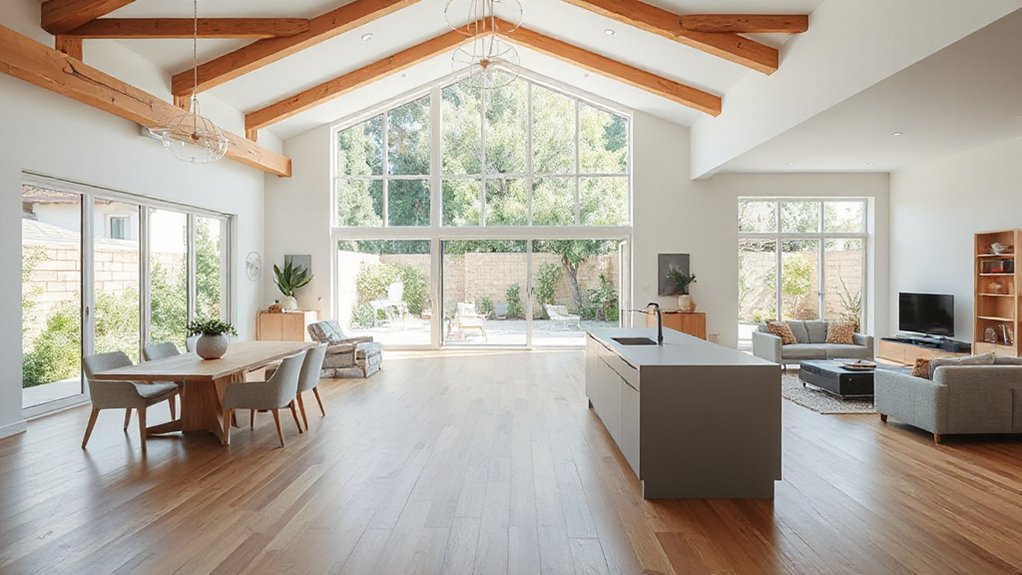
- Define primary and secondary zones based on activity levels and light.
- Prioritize visual connections while preserving acoustical privacy where needed.
- Integrate storage and service cores to minimize clutter and optimize flow.
- Use movable partitions, folding doors, or floats to alter space dynamics quickly.
These steps deliver efficient spaces, timeless aesthetics, and long-term value.
Kitchen Upgrades That Add Value Without Overspending
Upgrading a kitchen doesn’t have to break the bank; smart choices deliver durable value by prioritizing layout, finishes, and efficiency. You’ll optimize the kitchen layout to minimize travel distances, create separate work zones, and maintain clear traffic flow, which boosts daily usability without major remodeling.
Choose durable, low-maintenance finishes—compact laminate, quartz countertops, and recessed lighting—that age well and resist wear. Appliance selection matters: pick energy-efficient models, standard sizes, and modular options that forego niche styling in favor of timeless appeal.
Prioritize gloss-free, fingerprint-resistant surfaces for long-term cleanliness. Cabinet hardware should be simple and robust, reducing future replacement costs. Plan for smart storage with tall units and pull-out organizers, keeping counters clear.
Finally, factor up-front costs against lifetime running savings to justify investments.
Bathrooms That Appeal and Stay Within Budget
Prioritise budget-friendly bathroom updates that deliver lasting appeal, focusing on durable fixtures, efficient layouts, and timeless finishes.
Choose cost-conscious design moves—like neutral palettes, quality taps, and compact storage—that endure without costly overhauls.
This approach keeps aesthetics sharp while staying within budget.
Budget-Friendly Bathrooms
Want a bathroom that looks modern and feels fresh without breaking the bank? You can achieve a polished space by prioritising value over vanity, using smart updates that endure. Focus on efficient layouts, durable materials, and subtle luxuries that read expensive without the price tag.
Here are practical steps:
1) Select high-contrast fixtures to create a luxe look with minimal spend.
2) Mix spa inspired designs with affordable finishes to evoke calm and cohesion.
3) Retain existing plumbing where possible; refresh with new basins, taps, and mirrors.
4) Use tiles strategically, pairing economical options with large-format accents for a high-end effect.
This approach delivers luxury fixtures and spa inspired designs at a sensible cost, maximizing both appeal and long-term value.
Timeless Design Choices
Prioritize timeless aesthetics through restrained color palettes, neutral tones, and subtle texture variation to retain visual appeal over time.
Choose classic materials—ceramic or porcelain tiles, solid-surface counters, and enamel finishes—that endure daily use and require minimal maintenance.
Favor clean lines, concealed storage, and modular fixtures to simplify replacements without major reconfigurations.
Guarantee reliable waterproofing, adequate ventilation, and proper insulation to prevent premature wear.
Keep hardware cohesive: matching taps, handles, and fixtures with a single metal or matte finish for a unified look.
Plan for future accessibility by integrating adjustable shelving and easy-to-reach storage.
Consistent detailing sustains value and minimizes incremental renovation costs.
Windows and Doors for Daylight and Efficiency
Windows and doors are key levers for daylight, ventilation, and energy performance in UK homes. You’ll choose combinations that maximize natural light while minimizing heat loss, using proven window styles and durable door materials. Prioritise performance data, airtightness, and proportion with room function to achieve balanced comfort and aesthetics.
- Assess prevailing orientation and glare control to select appropriate window styles and glazing.
- Compare door materials for thermal breaks, weather seals, and long-term maintenance needs.
- Optimize fixed versus operable areas to enhance ventilation without compromising security.
- Match frame finishes and hardware to the property’s architectural language for cohesive, lasting value.
Smart Features That Cut Running Costs in Real Homes

Smart features can noticeably trim running costs by optimizing energy use in real homes. You’ll see practical wins from smart thermostats, occupancy-aware controls, and integrated monitoring that highlight where energy slips happen.
We’ll start with real‑world savings data and then map quick, low‑cost tweaks to measurable monthly reductions.
Smart Home Efficiency
Could smart home features genuinely trim running costs in real homes, or is it all hype? You’ll find value in quantified efficiency gains when systems talk to each other and you don’t waste energy chasing comfort. Focus on reliable performance, not flashy gadgets, and you’ll see steady savings over time.
Key approaches include targeted automation integration and transparent monitoring, which align usage with occupancy and weather. Smart security keeps access controlled without constant standby power, while appliance optimization minimizes peaks.
Below, practical steps to start small and scale:
- Map daily routines to automate lights, climate, and devices
- Integrate HVAC with occupancy sensing and weather data
- Use smart plugs for load-shifting and alerts
- Monitor real-time energy dashboards and adjust strategies
Low-Cost Energy Tweaks
Low-cost tweaks can compound real savings when you start small and scale up. You’ll map modest improvements to measurable outcomes, prioritising low-friction changes with clear payback.
Install draft-excluding measures like door seals and window film, then target lighting and appliances for efficiency upgrades. Opt for LEDs, smart plugs, and power strips to curb phantom loads without sacrificing comfort.
When exploring heating, focus on a programmable thermostat and radiator reflectors to reduce heat loss in zones you actually use.
Consider renewable energy options only where life-cycle costs justify them, such as small-scale solar for shedding peak utility rates.
Use sustainable materials for sealing, insulation, and basic retrofit fixes to maintain long-term performance without unnecessary replacement.
Track results to validate ongoing value.
Real-World Utility Savings
In real homes, smart features translate into measurable running-cost cuts by automating everyday decisions and streamlining energy use. You’ll see real-world utility savings when sensors, thermostats, and smart meters coordinate heating, cooling, and lighting with occupancy and weather data. This isn’t hype: it’s a practical path to lower bills and steadier comfort, backed by utility incentives and clear payback.
- Heat, cool, and light only when needed, via adaptive scheduling
- Optimize solar or other renewable resources with real-time generation data
- Monitor leaks and insulation drift to prevent wasted energy
- Leverage utility incentives for smart thermostats and efficient appliances
These choices align efficiency with aesthetics, delivering durable value in everyday living.
External Upgrades That Boost Curb Appeal and Value
Exterior upgrades that boost curb appeal and value start at the facade: investing in a well-proportioned front door, refreshed siding or cladding, and strategic planting can dramatically improve first impressions and marketability.
You should assess materials for durability and maintenance, ensuring weather resistance and energy efficiency align with UK conditions. A cohesive color palette and clean lines guide the eye toward balance and proportion, while hardware and lighting add perceived security and quality.
Complementary improvements extend to garden landscaping, where trimmed borders, seasonal color, and low-maintenance plantings frame the entry.
Driveway enhancements, including permeable surfaces and clear edging, optimize drainage and access without overpowering the facade.
These external upgrades collectively boost perceived value, attraction, and potential resale appeal.
Planning, Budgeting, and Sequencing for ROI
- Define scope and metrics
- Estimate costs with contingency ranges
- Sequence tasks to maximize cash flow
- Monitor performance and adjust promptly
Permits, Standards, and Long-Term Compliance in the UK
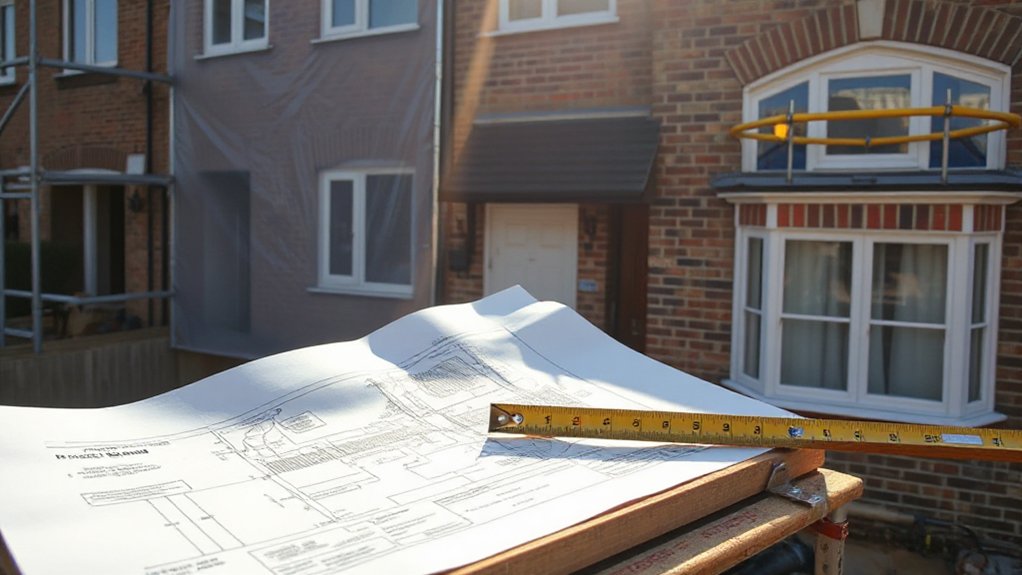
Are permits and standards really the backbone of durable UK renovations, ensuring safety, legality, and long-term value? You’ll approach this with precision: building permits establish legal authorization for construction work, while standards define minimum performance and safety benchmarks.
You’ll align designs with UK building regulations, fire safety codes, and planning constraints to avoid costly rework. Legal compliance isn’t optional; it safeguards occupancy, insurance, and resale appeal.
Before you start, verify whether works trigger permitted development rights or require formal approvals, and anticipate potential conditions from authorities. Documented compliance proves quality and reduces risk of enforcement actions, fines, or delays.
Implement a robust admin trail—permits, revisions, inspections—so your project sustains value long after completion. In short, rigorous permits and standards underpin durable, aesthetically considerate renovations.
Materials for Durability and Value in Renovations
Choosing durable, value-adding materials starts with aligning performance with long‑term needs identified in permits and standards. You’ll prioritise materials that resist wear, moisture, and temperature swings while minimising lifecycle costs. This approach enhances renovation longevity and environmental impact through sustainable materials.
Selection guides focus on performance, maintenance, and aesthetics, ensuring the finish remains appealing and workable over decades.
1) Evaluate material performance and warranty terms, linking to long‑term value
2) Prioritise moisture resistance, thermal efficiency, and low maintenance
3) Favor sustainable materials with quantified embodied carbon and end‑of‑life options
4) Consider compatibility with existing structures to reduce retrofit risk and cost
Your approach blends technical clarity with practical aesthetics, delivering durable surfaces and reliable performance that boost resale value and occupant satisfaction.
Sequencing a Value-Driven Renovation Timeline
Begin with historic preservation constraints, documenting fabric, heritage features, and any required approvals, then translate findings into actionable tasks.
Integrate landscape design early to ensure site grading, drainage, and access rights harmonize with interior layouts and long-term maintenance.
Schedule dependencies so structural, mechanical, and finish trades flow without clashes, minimizing rework.
Use short, objective milestones tied to cost per square meter and energy performance.
Conclude with a validation phase—costed, time-based, and aesthetically coherent—so value remains protected beyond project handover.
Frequently Asked Questions
How Do You Measure ROI for UK Renovation Projects Over Time?
To measure ROI over time, you track resale value, selling costs, and maintenance saved, adjusting for inflation. You factor sustainable materials and smart technology, amortize upfront costs, and compare net gains to total investment across project life cycles.
Which Renovations Add Value for Resale but Cost Less Than 5k?
Ironically, yes, affordable upgrades exist: you’ll gain resale appeal with practical, cost-friendly DIY improvements under £5k, like smart lighting, fresh paint, or efficient fixtures. You’ll maximize value through targeted, technically clear, aesthetically sensible, affordable upgrades.
Do Planning Permissions Impact ROI of Minor Upgrades?
Yes, planning permissions impact ROI for minor upgrades; securing building permits and complying with zoning regulations reduces risk, guarantees legality, and prevents costly delays, helping you preserve value while delivering predictable, aesthetically sensible improvements.
Which Trades Are Critical to Value-Focused Timelines?
You prioritise interior upgrades and energy efficiency, focusing on trades like electricians, carpenters, plumbers, and insulation specialists to keep timelines tight; coordinate early, verify specs, and maintain clear communication for seamless, value-driven project delivery.
How Soon Can Value-Adding Projects Pay Back?
You’ll see value return within the first year if you budget carefully and pick a reliable contractor. Symbolically, your plan is a seed: budget planning, contractor selection sow; timely execution, measured gains blossom, shortening payback while preserving aesthetics and technical clarity.
Conclusion
You’ll see the payoff when you plan and execute with purpose. Prioritize insulation, efficient heating, and adaptable layouts to boost value and trim ongoing costs. Choose durable materials, verify standards, and sequence work for minimal disruption and faster ROI. Budget with contingencies, and secure permits early to avoid delays. A well-timed renovation, done with clean lines and practical polish, is the blueprint for long-term value—no vinyl records needed, just steady, future-proof progress.