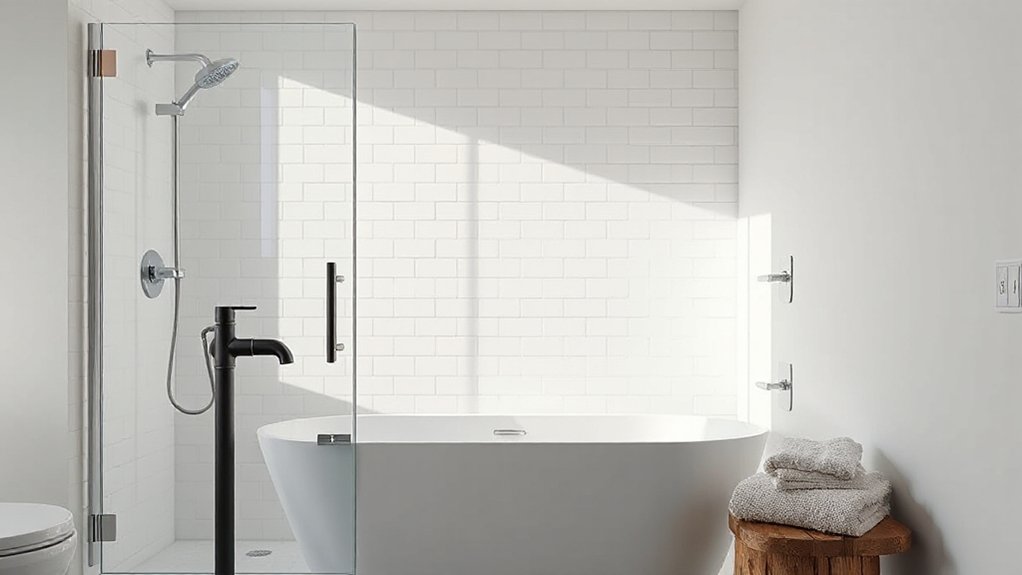
A Shower And Tub Combo blends soaking luxury with quick cleans in one sleek enclosure, so you’ll gain calm sightlines and smarter storage without crowding the room. Start with a tub-first layout for low-maintenance plumbing, or a shower-first setup for compact spaces; dual enclosures offer flexible use. Choose moisture-smart materials, a cohesive color story, and texture-rich accents. Add glass panels, niches, and layered lighting for that luxe edge. Want more tips that pull it all together? You’re about to discover them.
What a Shower-Tub Combo Can Do for Your Space

A shower-tub combo streamlines your bathroom’s layout, freeing up floor space and creating a calmer, more functional center of gravity. When you opt for this setup, you gain flexibility: a single enclosure serves quick rinses or full soaks, depending on your mood.
You’ll notice a cleaner sightline and easier cleaning, since fewer corners invite grime to linger. Regarding bathroom layout, the arrangement supports smarter storage, tighter circulation, and a cohesive design story.
Think through plumbing considerations early: guarantee proper valve placement, waterproofing, and venting to prevent moisture issues. The result is a modern, streamlined vibe that adapts to changing routines without sacrificing privacy.
This choice keeps your space efficient, stylish, and quietly confident for years to come.
How to Choose Your Layout: Tub-First, Shower-First, or Dual Enclosures
Think through how a tub-first layout sets your bloom-and-relax vibe with practical tub-area flow and built-in storage.
Versus how a shower-first plan speeds daily routines and boosts tile-edge drama.
Consider dual enclosures when you want flexible use and later-proof design that adapts to guests or growing needs.
Each choice shifts your space dynamics—let’s weigh Tub-First Pros, Shower-First Pros, and Dual Enclosures Benefits to spark the discussion.
Tub-First Layout Pros
Tub-First layouts streamline the eye line and simplify plumbing, making baths feel more open while keeping the tub as the focal point. You’ll appreciate how this arrangement guides movement, prioritizing a linger-worthy soak over quick passages.
With tub-centric layouts, you gain predictable plumbing CAD benefits and fewer awkward corner clears, so installation stays clean and efficient. In practice, you’ll notice cost savings on materials and faster tiling, because runs align to a single axis.
The tub remains your design anchor, allowing complementary fixtures like a compact showerhead selection that still reads luxe. For upkeep, plan straightforward bathtub maintenance routines that minimize grout exposure.
This approach suits broader bath widths, too, where proportionally balanced vanity and tile choices keep sightlines calm and cohesive.
Shower-First Layout Pros
Shower-first layouts streamline daily routines by putting the most-used element at your line of sight, making quick refreshes feel effortless. You gain immediacy: the shower dominates sightlines, doors open with minimal movement, and your morning cadence stays uninterrupted.
The layout supports compact footprints without sacrificing feel, because every inch is chosen for efficiency. Consistent waterproofing techniques protect adjacent walls and floors, lowering maintenance over time.
You’ll also notice a cleaner visual rhythm, since splash zones stay contained and simple fixtures reflect a modern, streamlined vibe. Eco-friendly fixtures complement this approach, reducing water use without compromising performance.
With thoughtful niche placement and a clear sightline, you create a calm, high-functioning bathroom that adapts to busy days while staying stylish.
Dual Enclosures Benefits
Dual enclosures blend the best of both worlds, letting you switch vibes as needed without committing to a single dominant zone. You gain flexible UX: a refreshed feel for guests, while preserving daily practicality.
With dual setups, you separate functions—one area optimized for soaking, the other for quick showers—without sacrificing water control or style. This layout reduces congestion in small baths and streamlines maintenance, since components stay dedicated and accessible.
When planning, consider bathtub installation placement that supports smooth traffic flow and balanced line-of-sight. Choose shower head types that complement both zones—versatile fixtures like rain and handheld combos work well, offering spa-like indulgence or brisk rinses.
Finely tuned finishes, glass, and grout passages seal the look, keeping it crisp, contemporary, and easy to clean.
Design Styles That Pair Well With a Tub-And-Shower Duo
You’ll set the tone by pairing coordinated color schemes with the tub-and-shower duo, so your space feels cohesive, not matchy-matchy.
Texture-based accents add depth—think tactile tiles, woven towels, and matte hardware that catch the eye without shouting.
Start with a unified palette and let subtle textures carry the room, guiding the eye from tub to shower in a seamless flow.
Coordinated Color Schemes
Coordinated color schemes for a tub-and-shower duo hinge on a deliberate balance of contrast and harmony. You’ll pair cool neutrals with warm accents to ground the space without overwhelming it, and you’ll lean into color coordination that supports flow from bath to walls to flooring.
Choose a dominant base—think soft greys, warm beiges, or creamy whites—and introduce a secondary hue for towels, hardware, and cabinetry that echoes the tile or vanity. Accents should reinforce aesthetic harmony, not jar the eye; consider matte finishes for fixtures and a satin sheen on tile to create subtle depth.
Keep accessibility in mind: contrast should aid readability and safety. This approach delivers a calm, cohesive bathroom that feels intentional and modern.
Texture-Based Accents
Texture-driven accents bring tactile depth to a tub-and-shower duo, enriching the coordinated palette with pattern, warmth, and a touch of nature. You’ll anchor the space with textured tiles to create a subtle, sculptural surface that catches light differently at varying angles.
Pair this with accent walls in muted textures to push dimension without shouting, keeping the room cohesive. Opt for materials that feel organic underfoot—slightly rough, softly matte, easy to clean—so durability matches design intent.
Introduce contrast through grout color that emphasizes texture rather than color, preserving calm. Layer small textures with larger textures, like a woven towel or raked plaster, to guide the eye.
The result is a refined, tactile bathroom that stays modern and timeless.
Glass Enclosures, Open Wet Rooms, and Curbless Transitions: Pros, Cons, and Costs
Glass enclosures, open wet rooms, and curbless shifts each offer a bold, contemporary vibe, but they come with distinct trade-offs in function, maintenance, and cost. You’ll weigh water containment, cleaning rigor, and slip risks against airy sightlines and easier resale.
Frameless glass delivers a sleek silhouette, yet needs careful hardware choices and corner seals to curb leaks.
Open concepts maximize natural light and space, but demand strategic zoning and consistent temperature control to avoid damp zones.
Curbless progressions feel seamless, though you’ll invest in proper slope, drainage, and non-slip floors.
Expect higher material, installation, and accessibility costs, offset by reduced visual bulk.
If you value minimalism and daylight, these options can elevate a shower-tub duo—just plan around practical moisture management.
Materials and Finishes That Stand Up to Moisture

When moisture isn’t an afterthought, the right materials and finishes prove durable, easy to clean, and visually cohesive with your shower-tub combo. You’ll want surfaces that resist mildew, stains, and warping, while keeping a fresh, modern look.
Eco friendly materials aren’t a vibe killer here; they’re a practical choice that ages well and supports responsible upkeep. Prioritize low porosity tiles, solid-surface panels, and solid acrylics that shrug off humidity without dulling.
Textured finishes add grip and depth, helping slip resistance and tactile quality without sacrificing clean lines. Choose seals, grouts, and caulks formulated for wet zones, with color-matched detailing to reduce maintenance.
Clever Storage: Niches, Recessed Shelves, and Built-Ins
After choosing moisture-smart materials, the next smart move is optimizing storage. You’ll gain surface harmony with niches, recessed shelves, and built-ins that tuck essential items where you actually use them.
Think vertical in tight baths: slim niches beside the tub, a recessed shelf behind the faucet wall, and a shallow ledge for daily-care routines.
Use water resistant finishes to keep lines clean and moisture at bay, then seal edges to prevent seepage.
Choose hardware that blends with fixtures for a seamless look, and label zones so every bottle has a home.
Prioritize smart storage that’s accessible yet discreet, avoiding clutter that skews the room’s proportions.
The result is calm, functional space with modern, spa-like appeal.
Lighting and Ventilation for All-in-One Bathrooms
Lighting and ventilation aren’t afterthoughts in an all-in-one bath—they’re the design backbone that shapes mood, function, and longevity. You map lighting to zones: soft ambience near the tub, bright task light at the vanity, and hidden LEDs for late-night soaks. Prioritize natural lighting where possible, using frosted glass or skylights to blur glare while preserving privacy.
Layered layers beat one-note fixtures, so mix ambient, task, and accent to control energy use and mood. Ventilation must be quiet, effective, and automatic, with exhaust fans aimed at rapidly exhausting humidity without drafty breezes. A timer or humidity sensor keeps moisture in check, protecting finishes and preventing mold.
Keep switches accessible, and consider smart controls for seamless comfort.
Budget-Friendly Upgrades That Feel Luxe
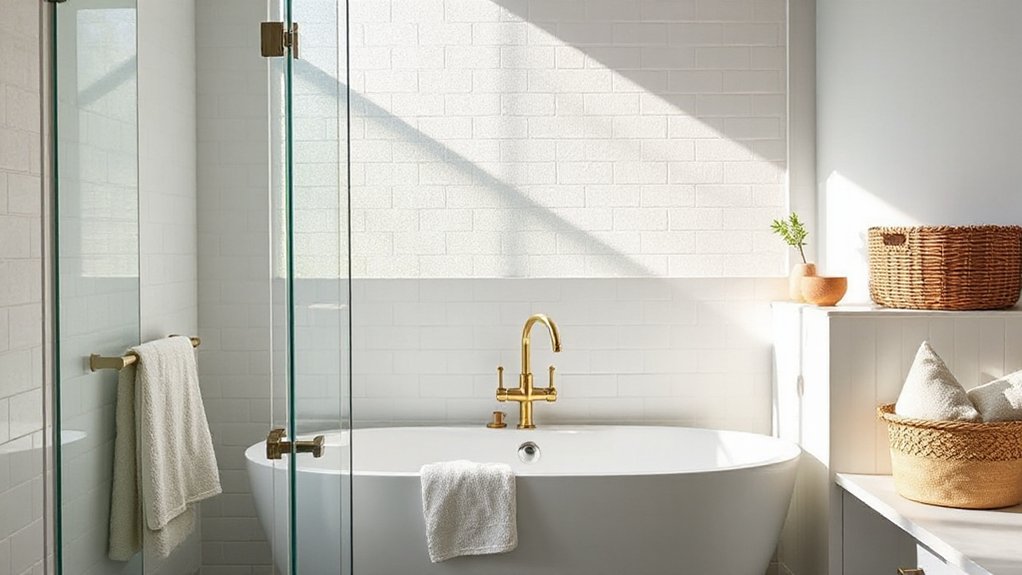
If you want a luxe bath without the big-ticket price, start with small, high-impact upgrades that elevate every inch. You’ll feel the difference with strategic accents: swap in Luxury fixtures that shimmer like boutique hotel details, from a rounded rain shower head to a matte-black faucet duo.
Replace tired hardware in seconds and let polished metal contrast brighten the tub surround. Embrace Smart technology for effortless control—digital shower valves, programmable temp, and remote lighting scenes create ambiance without breaking the bank.
Add a frameless glass panel to open sightlines, plus a mosaic tile accent that reads expensive without overspending. Choose low-maintenance textures and cohesive hardware to finish the look, delivering premium perception through thoughtful, budget-smart choices.
Maintenance Hacks to Keep Your Shower And Tub Combo Fresh Years Later
Maintenance is the name of the game: with a few proactive habits, your shower-tub combo stays gleaming, leaks stay in check, and resale value doesn’t slip.
You’ll tackle bathtub sealing and shower caulking with a disciplined routine. Start every month by inspecting grout lines and sealant edges for cracks or gaps, then reseal as needed to prevent moisture creep.
Wipe down surfaces after showers to reduce mildew buildup and use a squeegee on glass doors for streak-free clarity. Choose mold-resistant caulk for longevity and reapply every year or two in high-traffic spots.
Ventilation matters: run the fan or open a window during steamy moments.
Keep drains clear with a gentle enzyme cleaner quarterly. These small, consistent moves preserve finish, prevent stains, and sustain a fresh feel.
Frequently Asked Questions
How Do I Prevent Water Splash With a Tub-Shower Combo?
Install a curved or straight curtain liner, hinge your curtain materials to the edge, and use splash guards so you’re protected; you’ll minimize splashes while you shower, staying stylish, precise, and trend-aware throughout every rinse.
What’s the Best Door Option for Small Bathrooms?
Think of your tiny bathroom as a bright sail; glass doors maximize space, while shower curtains offer flexibility. You should pick glass doors for a clean, modern look, yet keep curtains handy for budget and easy swaps.
Can a Shower And Tub Combo Add Resale Value?
A tub-shower combo can boost resale value if you choose durable bathtub materials and modern finishes, while optimizing storage. You’ll also compare showerhead types for appeal, balancing water efficiency, style, and comfort to attract buyers.
Are There Ada-Friendly Tub-Shower Configurations?
Yes, you can; ADA-friendly tub-shower configurations exist with accessible design and safety features. You’ll enjoy step-free entries, grab bars, a lowered threshold, non-slip flooring, and adjustable showerheads, all while maintaining stylish, trend-aware aesthetics.
Which Finishes Resist Mold and Mildew Longest?
You’ll want porcelain tile for durability and resin-based paints for longevity, since these resist mold and mildew longest. You’ll notice tile durability holds up in humidity, while paint longevity stays vibrant with proper priming and ventilation.
Conclusion
You are the captain steering a ship of water, and your Shower And Tub Combo is the hull that holds the tide. The layout is your compass, guiding you through glass currents and curbless shores. With built-ins as sturdy rigging and light as sunlit spray, you sail stylishly, efficiently, and fearlessly. Keep maintenance in gentle weather, and the space will age like a well-loved map—clear, current, timeless. Your bath becomes a voyage you actually want to take every day.