Think of your floorboards as a weathered map: every knot and grain line tells a story, and a well-chosen oil can highlight those details without masking them. You’ll assess condition, clean, and lightly abrade so finish absorbs—not sits on top. With plant-based oils and compatible stains, you preserve flexibility and patina while avoiding film build. The approach stays gentle, eco-friendly, and durable, but the real test is in the first layer you apply—so you’ll want to see how the grain responds before proceeding further.
Why Natural Oils Suit Aging Floorboards
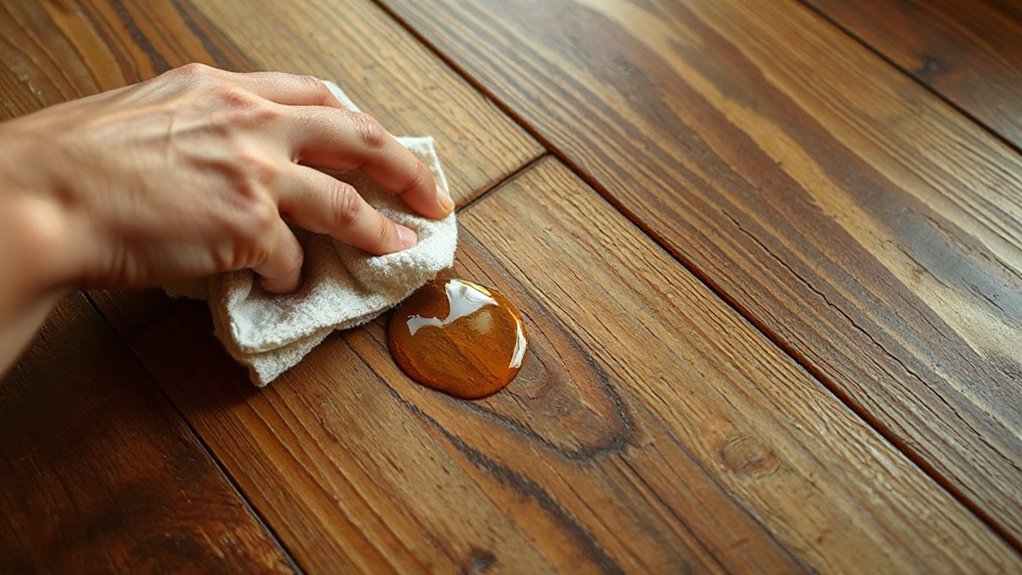
Natural oils are a practical choice for aging floorboards because they penetrate and nourish wood without forming a brittle film. You’ll see deeper moisture retention, reduced crack propagation, and a balanced sheen that preserves character.
Oils like tung, linseed, and demossed variants establish a flexible, breathable layer that accommodates wood movement without peeling. You’ll also minimize toxic residues, aligning with eco friendly finishes that prioritize sustainability.
By avoiding heavy films, you protect the surface’s natural patina, supporting Historical authenticity while improving hand feel and abrasion resistance for normal use.
Apply thin, even coats, allow thorough curing, and monitor for uniform depth. Regular, minimal maintenance sustains glow and integrity without compromising the board’s aged appearance.
How to Assess Original Planks Before Finishing
When you start finishing original planks, begin with a careful assessment of their current condition and characteristics. Inspect grain, moisture, and previous finishes to gauge adhesion potential and color stability.
Check for cupping, warping, or loose boards, and note any nail heads, fastener corrosion, or filler remnants that affect surface intimacy. Test moisture content in multiple spots to anticipate movement after finishing; aim for uniform readings within the wood’s species tolerance.
Evaluate historical accuracy of visible wear, patina, and plank width to guide staining choices without compromising character. Assess material durability by identifying soft spots, rot risk, and insect activity.
Document findings with photos and measurements, then prioritize stabilization and cleaning steps that preserve authenticity while ensuring a durable, even base for your oil finish.
Choosing Plant-Based Oils and Handcrafted Stains
You’ll compare plant-based oil options for penetrating finishes and durability, focusing on drying time, breathability, and UV resistance.
Consider handcrafted stain choices that emphasize grain depth, color consistency, and compatibility with oil finishes.
We’ll weigh application ease, maintenance needs, and long-term wear to guide your selection.
Plant-Based Oil Choices
What plant-based oil should you choose for reviving original floorboards, and how do handcrafted stains fit into the process? You’ll prioritize oils that penetrate, cure evenly, and resist wear. Linseed, tung, and citrus-derived blends are reliable, but note each behaves differently: linseed dries slowly and can amber; tung dries hard and offers durability; citrus solvents help clean tools but may alter film formation.
Opt for cold-pressed, food-grade or low- VOC formulations to minimize chemical concerns. Apply thin coats with a clean cloth, wipe excess promptly, and let it cure fully before any sanding or recoats.
For color, use compatible stains sparingly, testing on a hidden area first. Synthetic alternatives exist, yet choose them only if they meet performance and odor criteria.
Handcrafted Stain Options
Choosing a handcrafted stain is as much about color intent as wood compatibility as it’s about the oil base you’ll use. You’ll align pigment with resin-free, plant-based carriers to maximize grain clarity, durability, and a natural look.
Selecting stains that pair well with your oil—linseed, tung, or carnauba-enhanced finishes—lets you control sheen, penetration, and aging. For vintage charm, opt for warm amber or olive tones that tune depth without masking grain.
Environmental impact matters: prefer recipes with non-toxic solvents, low VOCs, and sustainable sourcing. Test on scrap boards to confirm depth before application.
Apply thin, even coats and wipe within minutes to minimize blotch. Recoat as needed to maintain a seamless, durable surface.
- Vintage charm alignment with oil-base choices
- Environmental impact considerations in formulation
- Practical testing and application steps
Step-by-Step: Clean, Prep, and Raise the Grain
To restore your original floorboards effectively, start by cleanly removing all surface dust, dirt, and finish residues so you can assess the wood’s condition.
You’ll then shave the surface lightly with a low-grit screen to reveal grain patterns without removing subtle character.
Focus on raising the grain: dampen evenly and let it dry, then lightly abrade any rough spots.
Vacuum thoroughly, wipe with a tack cloth, and note any repairs or nail pops needing attention.
Choose a compatible cleaning agent to remove old waxes, then neutralize the surface to prevent residue from interfering with next steps.
Historical accuracy matters, so document authentic finishes observed.
Apply modern techniques to prepare a uniform base, ensuring porosity is balanced for even absorbency and predictable results.
Oil and Stain Application to Preserve Character
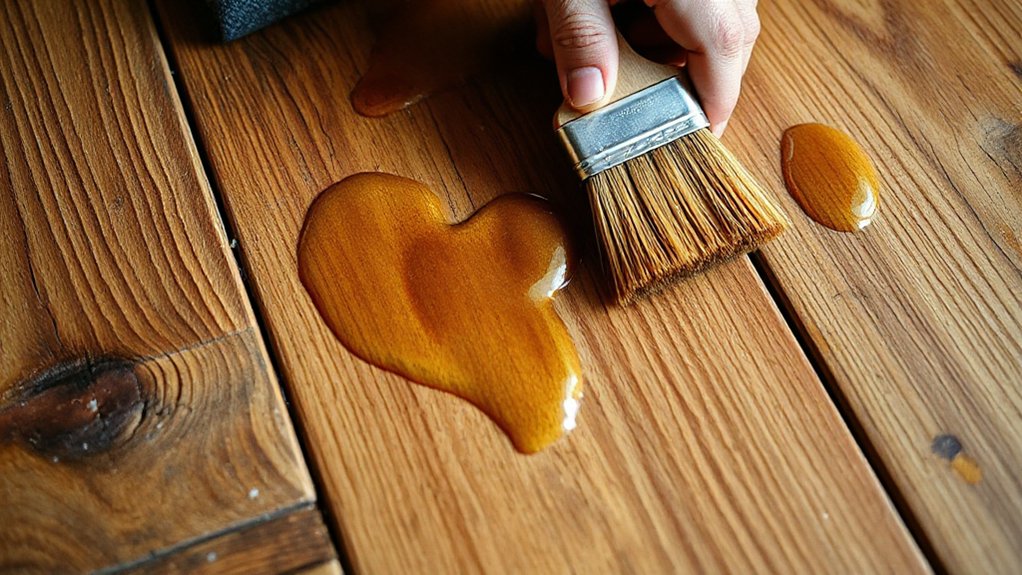
After preparing the surface, you’re ready to apply oil and stain to preserve the wood’s character. Begin with a compatible oil, then test a small area to confirm color and penetration.
Apply evenly, working with the grain to minimize lap marks, and wipe excess promptly to prevent sticky buildup.
Choose a stain that emphasizes grain while maintaining historical authenticity and layering depth without masking texture.
Allow appropriate drying times between coats, inspecting for uniform tone and penetration.
Finish with a light, inert sealant if you need added protection, ensuring eco friendly finishes remain intact and visible.
Apply only what’s necessary to sustain the board’s patina, avoiding overprocessing that could obscure character.
- Emphasize grain, not solid color
- Test color on a hidden area first
- Maintain eco friendly finishes and historical authenticity
Finishing, Curing, and Long-Term Maintenance
You select finishes that suit original boards and the room’s traffic, prioritizing compatibility with natural oils and stains already used. For furniture restoration value, choose modern finishes that seal without yellowing, then test on an unobtrusive area before broader application.
Maintain wood by dusting with a soft cloth, avoiding water immersion, and reapplying a light maintenance coat as sheen diminishes. Document every layer and cure interval to guide future work.
This approach preserves character, guarantees predictable results, and minimizes disruption to the floor’s authentic look over years.
Troubleshooting Without Masking History
- Verify substrate stability and moisture before refinishing.
- Sample color on inconspicuous spots to gauge Historical authenticity vs. modern tweaks.
- Calibrate oil and finish ratios to preserve patina while meeting Modern aesthetics.
Frequently Asked Questions
How Do Oils Affect Old Nail Holes and Repairs?
Oils can’t fix nail holes outright, but they condition nearby wood and help blends. They may darken surrounding grain, so you’ll want Nail hole sealing to fill gaps first, then wipe excess to avoid halos.
For repairs, use a matching stain or oil-soaked filler, letting color bleed gently into pores. You’ll achieve Repair blending by applying thin, even coats and sanding between passes to keep shifts seamless.
Avoid over-oiling repaired spots.
Can Natural Oils Darken or Yellow Original Wood?
Natural oils can darken wood slightly and may yellow with prolonged exposure to light. You’ll notice subtle shifts in wood grain as the finish ages, especially on pale or bleached tones.
To control this, test oils on a hidden area first, apply evenly, and avoid over-saturation.
For finish durability, maintain with light, breathable coats and monitor for uneven aging along grain.
Your goal is consistent color, minimal darkening, and durable wood grain protection.
Are Color Matches Possible With Plant-Based Stains?
Color matches with plant-based stains are possible if you’re precise. You’ll achieve better color consistency by selecting plant-based pigments that align with your target shade, testing several samples, and documenting each mix.
You’ll want to control base wood tone, grain, and application thickness, then adjust with reducer or booster until the hue sits right. With careful mixing and patience, you’ll reach a durable, harmonious result that respects the wood’s character.
How to Prevent Finish From Stressing Fragile Grain?
To prevent finish from stressing fragile grain, you should prioritize grain stability and finish flexibility. Acclimate boards, use low-build or flexible finishes, and apply thin, even coats.
Sand with a fine grit, then dewax and wipe before sealing. Maintain consistent humidity and temperature during drying, and avoid rapid changes.
Consider conditioning with a compatible oil before topcoating, and test on a scrap piece to confirm grain stability and finish flexibility under your specific environment.
What Maintenance Schedule Preserves Historic Patina Long-Term?
You should schedule light cleansing and reapplication every 1–3 years, depending on wear, to preserve historical authenticity.
Vacuum weekly, wipe with a damp cloth, and reseal high-traffic areas as needed.
Use naturally based finishes sparingly, focusing on avoiding color shifts. This maintenance minimizes Environmental impact while maintaining patina.
Inspect annually for cracks or moisture, repair promptly, and avoid aggressive abrasives.
Consistent care keeps the look authentic and durable without compromising historical value.
Conclusion
You’ll finish with floors that breathe their history, not cover it. When you use plant-based oils and handcrafted stains, you’re choosing compatibility and longevity—a practical combo. An interesting stat: properly finished, well-ventilated oil floors can outlast wax coatings by up to 2–3 times in durable, low-maintenance performance. Start by evaluating condition, prep thoroughly, and apply in thin, even coats to preserve grain depth. You’ll gain flexible, resilient boards that age gracefully while maintaining authentic character.