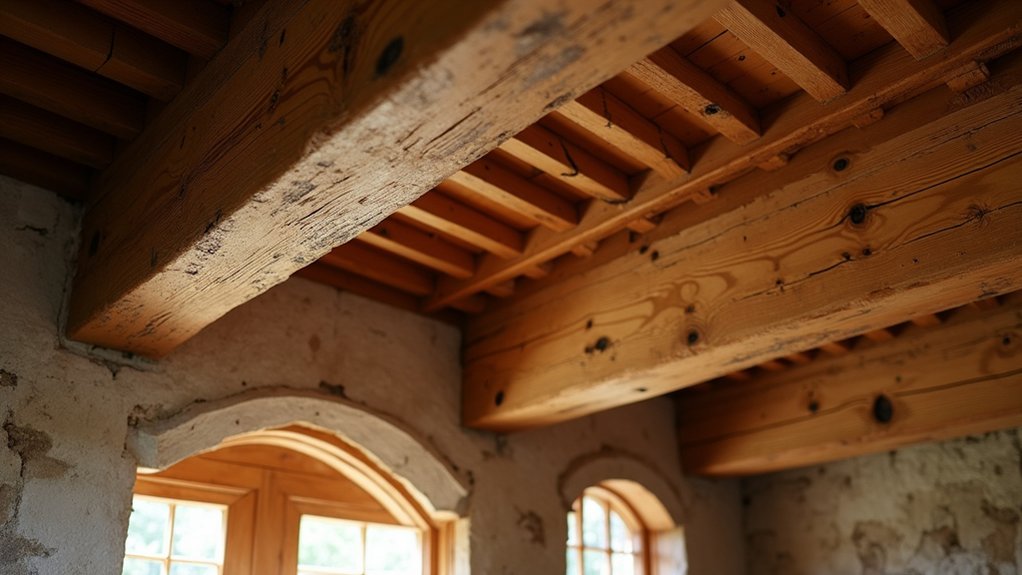
You might wonder if restoring original timber beams truly preserves character without compromising structure. You assess condition, age, and value with a precise eye, then stabilize and clear debris to prevent further decay. You apply cleaning techniques that respect grain, then select finishes that enhance texture while maintaining authenticity. Structural stabilization follows, ensuring longevity, while design pairings show how rustic beams can modernize spaces. If you want to keep timeless charm intact, you’ll want to contemplate common restorations and practical solutions next.
Why Restoring Timber Beams Elevates Rustic Interiors
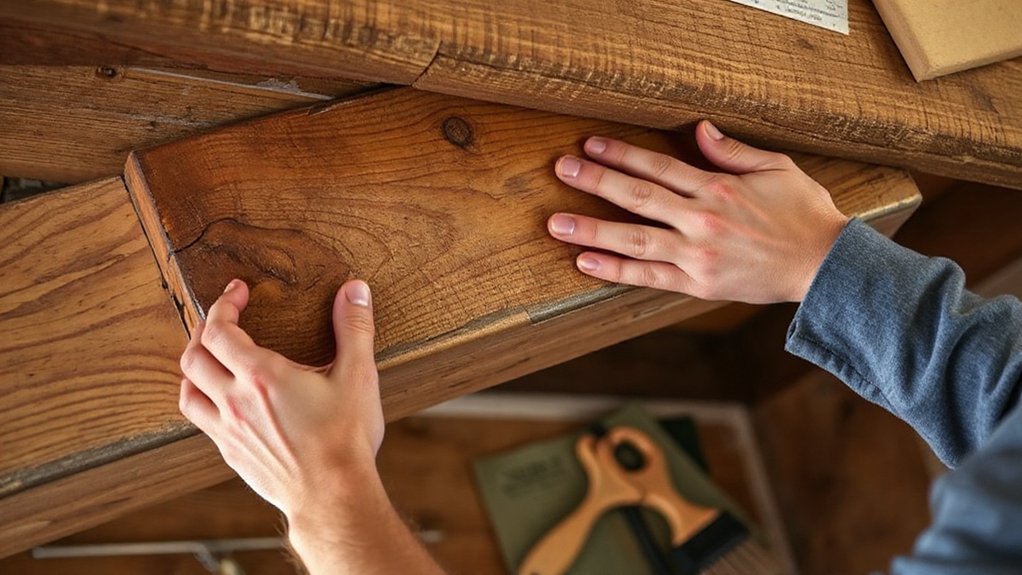
Restoring timber beams elevates rustic interiors by preserving the material’s character while ensuring structural reliability. You approach restoration as a disciplined process, balancing aesthetics with engineering integrity.
Wood preservation methods safeguard longevity without compromising texture or patina, maintaining the natural warmth that defines rustic spaces. By retaining authentic grain patterns and subtle blemishes, you strengthen historical authenticity while meeting modern load and safety standards.
You select materials and techniques compatible with the original construction, minimizing invasive alterations. Through careful cleaning, consolidation, and protective finishes, you prevent deterioration from moisture, insects, or decay, preserving tactile quality and visual depth.
This disciplined approach reinforces architectural storytelling, delivering a cohesive blend of heritage and functionality that enhances value, resilience, and timeless appeal.
Assess Beam Condition, Age, and Historical Value
You begin by evaluating beam age to determine decay risk and schedule appropriate interventions.
Next, you check structural integrity through non-destructive testing and targeted inspections, identifying any weaknesses or failure modes.
Finally, you evaluate historical value by documenting provenance, construction methods, and notable timber characteristics to inform restoration priorities.
Assess Beam Age
Determining the age of timber beams is essential for evaluating their condition, reliability, and historical value. You assess age by tracing provenance, species, growth rings, and joinery cues common to the period. Use documented timber harvesting records when available, and compare Xavier-era mill marks with regional practices to estimate cut dates.
Your evaluation considers spine wear, tool marks, and sapwood-to-heartwood ratio as indicators of harvest timing. You weigh restoration implications against the beam’s service history to determine whether preservation goals align with historical integrity.
Apply precise dating methods sparingly to avoid speculative conclusions. You’ll integrate findings into a restoration plan, noting the potential need for concealment or visible preservation.
Throughout, rely on timber harvesting context and appropriate woodworking tools for accurate assessment.
Check Structural Integrity
Having established the beam’s age and provenance, you now assess its structural integrity while weighing historical value. You inspect for visible cracks, checks, insect damage, and fungal signs, documenting patterns and progression.
You test load-bearing capacity with cautious, professional methods, noting joint connections, support settlements, and fastener corrosion. Core sampling or non-destructive testing reveals grain integrity and moisture profiles; you compare results against species data and known decay curves.
You evaluate timbers for stiffness, modulus, and tolerance against original specifications, identifying whether repairs or reinforcements are warranted. You consider historical techniques used in framing, ensuring any intervention respects authenticity.
Environmental impact guides material selection, prioritizing low-toxicity treatments and sustainable restoration. Your findings inform restoration strategy, balancing safety, durability, and preservation goals.
Evaluate Historical Value
Evaluating the beam’s historical value hinges on a precise synthesis of condition, age, and provenance. You’ll quantify condition through visible integrity, moisture indicators, and prior repairs, while appraising age by timber species, growth rings, and joinery style.
Cross-reference archival records with on-site provenance to establish authentic historical context, noting any later modifications that affect value or interpretation. Consider provenance reliability, sourcing, and prior restoration—these factors influence both appraisal and display relevance.
Documentation should document findings clearly, enabling informed decisions about retention, replacement, or consolidation. Restoration techniques must align with historical value goals, safeguarding original fabric while stabilizing weak areas.
You’ll prioritize minimally invasive methods, reversible interventions, and compatible materials that respect the beam’s era-specific character and lineage. Conclude with a concise justification for subsequent treatment paths and their impact on authenticity.
Stabilize Beams and Remove Debris
To stabilize the beams and clear debris, begin by evaluating the immediate risks and securing the work area with proper shoring and temporary supports.
Assess load paths, soil settlement, and adjacent members to determine required restraint.
Implement controlled stabilization using adjustable jacks, timber wedges, and bracing that don’t introduce new damage.
Prioritize rapid, noninvasive beam stabilization before any dust or vibration occurs.
Establish a debris removal plan that minimizes rebound and dust, using containment, vacuum collection, and personal protective equipment.
Perform selective pruning or trimming only as necessary to expose damaged zones, avoiding overcuts.
Coordinate with safety observers to verify stability after each adjustment.
Document conditions, methods, and outcomes for beam stabilization and debris removal, ensuring traceability and compliance with structural guidelines.
Cleaning Techniques That Honor Woodgrain
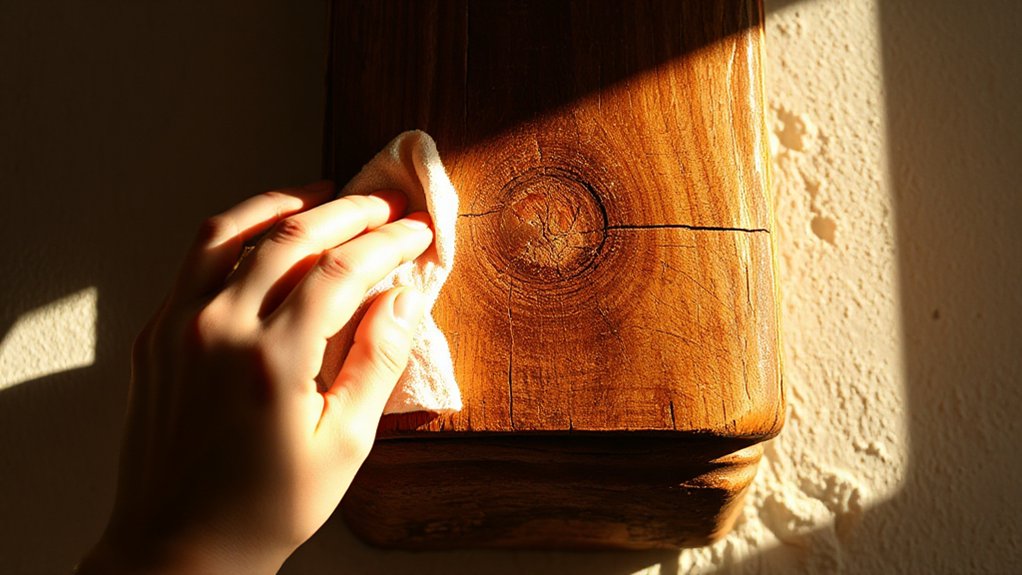
Cleaning wood without dulling its grain starts with selecting appropriate materials and techniques that respect the timber’s morphology. You should adopt low-residue cleaners and pH-neutral formulations to minimize swelling or surface abrasion.
Use a soft-bristle brush or microfiber cloth to lift dust along grain lines, avoiding circular scrubs that disrupt texture. When removing grime, apply cleaning methods in small, targeted areas; never soak the wood.
Dilute concentrates according to manufacturer guidance and test on an inconspicuous spot to verify color stability. Rinse with a damp, lint-free cloth and promptly dry to prevent moisture intrusion.
For stubborn deposits, employ gentle scrubbing with minimal pressure, followed by immediate drying. Document results for woodgrain preservation, and maintain routine, non-destructive cleaning to sustain authentic character.
Finishes to Enhance Authentic Timber Texture
Finishing plays a pivotal role in revealing and preserving the timber’s authentic texture after thorough cleaning. You select a finish that respects grain contrast, enhances depth, and remains stable under humidity fluctuations.
Begin with a rigorous color matching assessment to guarantee the chosen hue complements surrounding elements without masking natural variation. Finish selection should prioritize spectral clarity, minimal film build, and even application to avoid brush marks or lap lines.
Test patches on inconspicuous areas verify color neutrality and sheen consistency under ambient light. Consider penetrating oil or low-gloss lacquer for tactile warmth without excessive reflectivity.
Document coat sequence, cure times, and environmental controls to guarantee dimensional stability. Finally, align the finish with maintenance expectations, enabling easy restoration while preserving the beam’s authentic rustic character.
Structural Stabilization for Longevity
- Assess live loads, deflection limits, and historical adaptations to determine restraint strategies.
- Apply discreet, reversible reinforcements that respect timber grain and surface finish.
- Integrate weatherproofing techniques to minimize moisture cycles and fungal risk.
- Incorporate decorative accents that don’t compromise structural integrity yet enhance aesthetic value.
This approach maintains dimensional stability, reduces crack propagation, and supports long-term service life with a polished, professional result.
Design Pairings: Rustic Beams in Modern Living Spaces
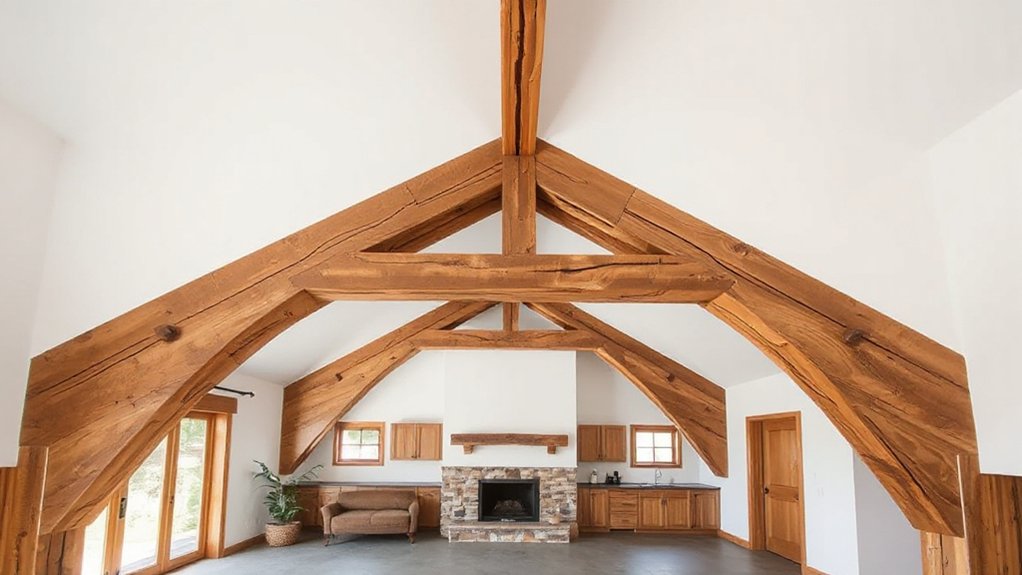
You’ll explore how contemporary rooms balance rustic timbers with clean, modern lines to achieve cohesive design.
Consider timber proportions and scale when pairing with mixed materials, from metal accents to glass and concrete elements.
This discussion starts with how these combinations influence the room’s texture, warmth, and perceived durability.
Contemporary Rooms, Timbers
When timber beams appear in contemporary living spaces, they set a natural, tactile counterpoint to streamlined architecture. You balance rustic warmth with modern restraint by selecting precise finishes, joint details, and clean lines that respect both eras.
The interplay of color palettes and lighting design defines your mood, materials, and rhythm. Carefully staged contrasts emphasize structure without overpowering light-filled rooms.
- Emphasize neutral or cool-toned palettes to let timbers read as architectural anchors
- Integrate layered lighting to sculpt form and highlight grain
- Use minimal steel or glass accents for a contemporary edge
- Preserve authentic texture with controlled abrasion and matte finishes
This approach yields a cohesive, refined interior that honors historic craft while keeping contemporary clarity and accuracy.
Mixed-Material Pairings
Select finishes that echo the beam’s patina while introducing contemporary sheen or matte depth, ensuring cohesion across surfaces. Color palettes should balance natural wood tones with restrained neutrals and curated accent hues, preserving legibility and rhythm.
Lighting effects matter: integrate task and ambient layers to emphasize grain, joinery, and structural lines, using strategically placed uplights or wall washers to sculpt shadows.
Maintain clean sightlines and deliberate junctions where materials meet; this prevents visual clutter.
Document material provenance and installation tolerances to sustain long-term performance and aesthetic integrity.
Proportions and Scale
- Calibrate beam width to room scale, avoiding oversize dominance or ephemeral delicacy.
- Align beam runs with key architectural axes to reinforce movement and clarity.
- Pair dark-stained beams with light walls for visual gravity and legibility.
- Use accent lighting to sculpt texture, enhancing timber grain without glare.
Maintenance Rituals to Keep Beams Timeless
Regular maintenance is essential to preserve timber beams’ strength, appearance, and longevity. You establish a routine that targets surface integrity, moisture control, and finish stability, using a documented schedule and precise methods.
Begin with inspection intervals, noting any cracks, splits, or fastener movement, then address concerns before they propagate. When cleaning, use soft brushes and a mild, pH-neutral solution to minimize friction and finish wear; avoid high-pressure applied moisture.
Refinish selectively, matching historical patina while protecting against future ingress, and reapply sealants following manufacturer specs. Document seasonal checks and re-treatments to support long-term performance.
Incorporate Seasonal decorating with care, ensuring seasonal loads don’t overload joints. Recognize Cultural symbolism in timber treatments and care, aligning practices with authentic, respectful restoration principles.
Common Restorations: Problems and Practical Solutions
Common restorations often confront issues that testing and planning can prevent. You approach fixes with data, not guesses, ensuring outcomes align with historic intent.
Common problems include moisture intrusion, insect damage, and hidden rot, each requiring targeted strategies and documentation. Practical solutions emphasize reversible methods, compatible materials, and tight tolerances to protect decorative carvings and timber harvesting integrity.
You’ll prioritize stabilization, controlled drying, and selective replacement where needed, preserving value while reducing future risk. Documentation accompanies every intervention, supporting ongoing maintenance.
Practical considerations also cover coatings, ventilation, and monitoring to prevent recurrence. You can achieve durable results by integrating assessment, conservator-approved techniques, and client goals.
- Assess moisture and structure
- Treat or replace damaged members
- Clean and consolidate surfaces
- Refinish with reversible finishes
Frequently Asked Questions
How Long Does a Typical Timber Beam Restoration Take?
A typical timber beam restoration takes weeks, not days, depending on size and condition. You’ll inspect for rot, insect damage, and historical authenticity.
Then apply preservation techniques to stabilize and revive the wood. Expect scaffold setup, careful cleaning, repair with compatible materials, and protective finishes.
You’ll document the process for records, ensuring historical authenticity remains intact. Timeframes vary with species, thickness, and access, but you’ll usually budget several weeks to deliver a durable, authentic result with professional oversight.
What Are Signs of Hidden Termite Damage?
Hidden termite damage signs include hollowed or tapping beams, blistered paint, and fine, powdery frass near joints. Look for cracked or sunken areas, musty odors, and discarded wings around vents.
If you spot these, stop work and inspect further. Use termite prevention protocols and wooden treatment to halt progression, then reinforce affected sections.
Regular monitoring after treatment is essential to maintain structural integrity and protect your timber installation from future infestations.
Can Beams Be Restored Without Replacing Timbers?
Beams can be repaired without replacing timbers, preserving structural integrity. You’ll stabilize, rejoin, and treat affected zones, then reinforce with selective sistering or steel plates where needed.
You’ll document conditions for historical authenticity, and apply preservation techniques that minimize intrusion.
You’ll assess loading, moisture, and termite risk, ensuring long-term durability.
You’ll communicate clearly, using bonding and coatings that resist future decay.
You’ll preserve history while maintaining practicality through careful, professional, data-driven decisions.
What Are Cost Ranges for Professional Restoration?
Professional restoration costs typically range from $1,000 to $5,000 per beam, depending on size, condition, and access. You’ll invest more for extensive structural work or when upgrading to micro-silica or epoxy impregnation.
You’ll want to take into account labor, finish, and avoidance of replacement. Wood preservation and treatments to maintain historic authenticity add value, influence pricing, and guarantee longevity.
You’ll achieve balanced results by choosing skilled conservators who prioritize authenticity and durable, compliant restoration practices.
Is Vintage Timber Safe for Indoor Air Quality?
“Turn the page”—vintage timber can be safe for indoor air if properly treated. You should use reputable vintage timber preservation methods, verify low-emission finishes, and guarantee thorough cleaning before installation.
You’ll protect indoor air safety by testing for moisture, pests, and contaminants, and by maintaining adequate ventilation.
If sourced responsibly and preserved with non-toxic products, you’ll minimize VOCs and keep your environment healthy while enjoying authentic character.
Conclusion
You witness the timber reclaim its memory, each grain recounting age and purpose. With precise assessment, you stabilize, clean, and finish, letting authenticity breathe without compromising strength. The beams, now restrained yet radiant, become architectural poems—historic heartbeat tempered for modern living. In this careful dance between rough-hewn charm and technical discipline, longevity follows, and your space gains quiet charisma. Respect the wood, document the process, and maintain ritual care to guarantee timeless timber endures, gracefully and assuredly.