Boost curb appeal with a cohesive front-yard layout, drought-tolerant plantings, and durable hardscaping. Choose climate-friendly turf and permeable surfaces for easy maintenance, then layer seasonal color with evergreen structure to keep year-round interest. Define clear zones—entry, lawn, seating—and maintain sightlines from street to house. Add thoughtful lighting to guide paths and highlight focal points. Keep borders tidy and materials consistent for a polished, welcoming look. Continue to enhance charm as you implement these practical upgrades.
What Curb Appeal Means in Suburbia: Foundations That Add Value
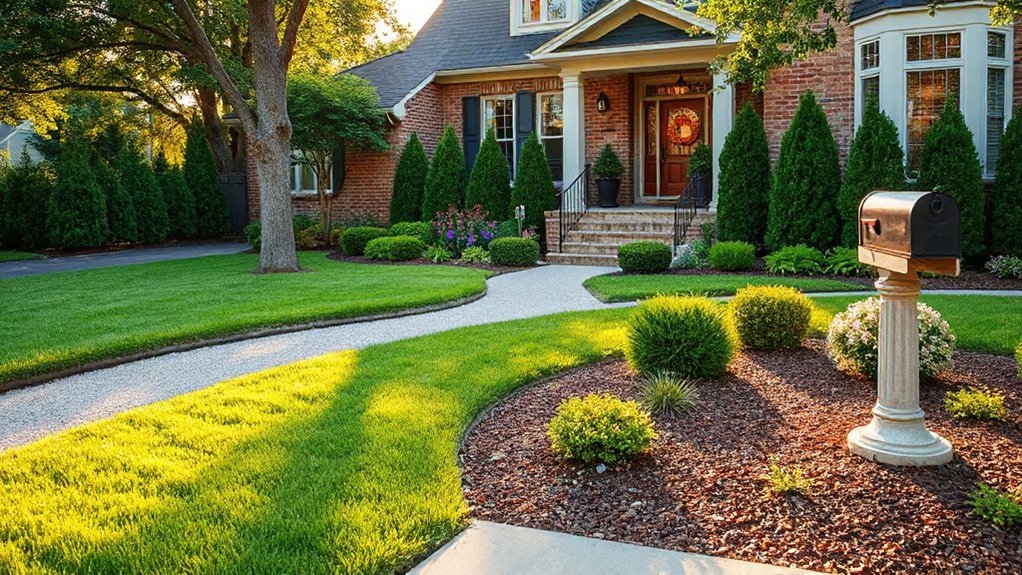
When you’re evaluating curb appeal in the suburbs, foundations aren’t just about protection — they set the first impression. Your approach should prioritize solidity, symmetry, and a clean transition to landscape elements.
Start by evaluating how your foundation lines frame the yard: a tidy parapet, proper grading, and visible clean, drought-tolerant plantings that soften edges without crowding. Integrate a well-placed suburban tree to anchor scale and create seasonal interest, ensuring root zones don’t threaten siding or sidewalks.
Choose driveway materials that complement the home’s style and lend a cohesive flow to the facade, such as permeable pavers or sealed concrete with subtle texture. Consistent edging, mulch, and lighting reinforce value, guiding visitors toward a balanced, durable curb presence.
Start With a Cohesive Front-Yard Layout
A cohesive front-yard layout starts with a clear zoning plan that translates the home’s architecture into outdoor space. You’ll align pathways, planting beds, and seating zones to reflect the home’s silhouette, then scale elements to fit the lot.
Prioritize balance between curb presence and restraint, so the eyes move naturally from street to entry. Ground rules keep materials consistent—brick, stone, or timber—so the scene feels curated, not piecemeal.
Introduce garden art and outdoor furniture as anchors that reinforce your style, not clutter. Measure sightlines from the sidewalk to doors to guarantee welcoming, unobstructed views.
- Establish zones: entry, main lawn, and a seating focal with garden art
- Use a single materials palette to unify borders and paths
- Place outdoor furniture to invite, not crowd, the curb
- Schedule yearly tweaks for color and texture refresh
Choose Low-Maintenance, Climate-Friendly Turf Options
Choosing turf that’s low-maintenance and climate-friendly lets your cohesive front yard stay polished with less effort. You’ll want options that thrive without constant care, so focus on selection, installation, and long-term maintenance that align with your climate.
Start with native grasses where suitable; they’re already adapted to local rainfall and soils, reducing irrigation and fertilization needs. Consider drought tolerant options that tolerate dry spells and heat, preserving green appeal with minimal water.
Ground cover blends can soften edges and cut mowing time, while establishing a well-planned mix ensures year-round visual interest.
Prioritize soil preparation, proper watering schedules, and smart mowing heights to extend turf life. Finally, choose varieties with disease resistance and clear maintenance guidelines to maintain a cohesive, curb-appealing look.
Plan Durable Hardscaping That Elevates Curb Presence
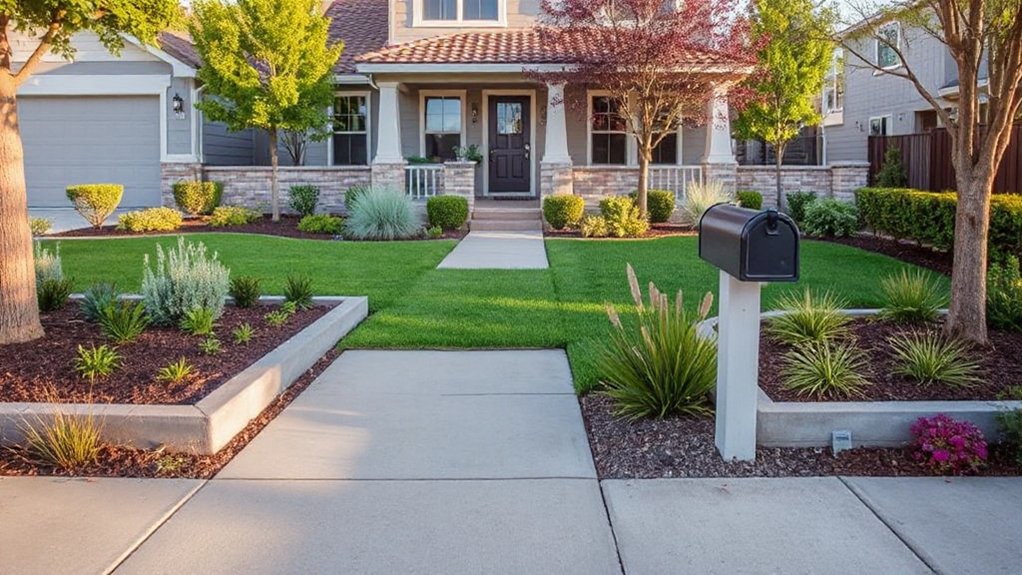
Durable hardscaping sets the stage for a lasting curb appeal, so plan with material performance and maintenance in mind. You’ll choose surfaces that tolerate heat, freeze-thaw, and heavy foot traffic without quick wear, then couple them with clean edges and intentional scale. Prioritize drainage and infiltration to prevent pooling near entryways, and select low-maintenance finishes for longevity.
Integrate garden sculptures and water features as focal accents that don’t overpower the footprint, ensuring proportions stay balanced with surrounding greenery. Use permeable pavers where feasible to blend durability with sustainability.
Align color and texture to your home’s facade for a cohesive look, and budget for professional installation where joints and base prep matter most.
- Durable materials and proper drainage
- Low-maintenance finishes and crisp detailing
- Garden sculptures as focal accents
- Water features that enhance, not overwhelm
Seasonal Color Schemes That Pop Year-Round
Seasonal color schemes should build on durable hardscaping by weaving in planting choices that stay vibrant year-round. You’ll choose a core palette anchored by evergreen foliage and variegated accents, then layer seasonal blooms for continual impact.
Since you’re aiming for year-long pop, schedule color shifts: early-spring bursts with tulips and crocuses, steady summer structure from lavender and salvia, autumn warmth from mums and ornamental grasses, and winter interest via deep-green evergreens and berries.
Keep contrast high by pairing cool and warm tones in bed lines and planters. Integrate garden ornaments to punctuate focal points without overwhelming color.
Support wildlife habitats with nectar-rich perennials and native shrubs, ensuring soil, water, and sun variables are respected.
Your kerb appeal remains polished, balanced, and inviting year-round.
Front-Yard Lighting That Guides the Eye and Deters Intruders
You guide the eye along the path with well-placed pathway lighting that also signals safety as dusk settles.
Use lighting to create subtle visual cues—tip lights along borders, step lights, and low-profile uplights—so the eye moves naturally toward the entry while deterred intruders.
This approach blends security through lighting with nightscape visuals, ensuring your front yard feels inviting yet vigilant.
Pathway Lighting Cues
Pathway lighting is the quiet backbone of curb appeal, guiding the eye to your front yard while adding a layer of security that feels natural rather than gimmicky. You’ll craft a cohesive look by choosing lighting that emphasizes the garden pathway and highlights texture, color, and form without glare.
Aim for even, low-profile illumination that reveals edges and focal plants without overpowering night landscapes.
- Use soft, warm LEDs along the garden pathway for consistent color and glow
- Place fixtures at strategic intervals to avoid bright hotspots and shadows
- Highlight key plants and architectural features with subtle uplights
- Keep cables and wires concealed for a clean, professional finish
Security Through Lighting
Even a modest front yard lighting plan can deter intruders while guiding guests to your entry with confidence. You’ll want a layered approach: a mix of low, ambient glow along walkways, a brighter focal wash on the door, and subtle accents that reduce shadowed corners.
Choose warm, color-accurate LED fixtures to render landscape textures clearly without glare. Position pathway lights to lead the eye toward architectural features, while step lighting keeps every progression safe.
Incorporate garden art as focal points—low sculptures or planters that reflect light softly and create visual interest without overpowering architecture. Add outdoor furniture with protected finishes near entry lighting to create inviting balance.
This combination strengthens curb appeal and communicates watchful care.
Nightscape Visual Guides
Strategic front-yard lighting guides the eye from the street to the entry while strengthening security. Nightscape visual guides rely on layered illumination, contrast, and focal points to direct attention without glare, so you connect curb to door with purpose.
Use subtle pathways of light to reveal landscape symbolism—tree silhouettes, specimen shrubs, and architectural accents—creating depth and mood while deterring intruders who mistake shadows for concealment.
Choose fixtures with warm color temperature, shielded lenses, and low power draw to maintain energy efficiency and timeless appeal.
- Establish a focal point entrance using a sculptural light or highlighted doorway
- Light progressions that reveal pathways and plant silhouettes
- Balance front-yard features with layered, measured brightness
- Use low-glare, shielded fixtures to maintain security and ambiance
Plant Palettes for Typical Suburban Soils and Sun

You’ll want to match your plant palettes to the common suburban soils and sun, optimizing for durability and visual impact.
Consider combinations that pair soil-tolerant perennials with sun-loving annuals in three practical layouts: drought-smart, shade-friendly, and all-day sun.
We’ll explore waterwise choices and how to mix reliable, low-maintenance plants for typical suburban conditions.
Suburban Soil Types
Are common suburban soils ready to support a vibrant plant palette, or do you need to tailor choices to your yard’s specific texture and drainage? Suburban soils vary, but most share moderate texture and seasonal moisture shifts. Your plan should start with a quick soil check: determine soil composition and adjust amendments to optimize structure, drainage, and root growth.
Focus on balancing nutrient levels so your selections establish quickly without excess leaching. Use dual-purpose palettes that tolerate clay, sand, or loam, plus varying pH. Choose plantings that root deeply and resist drought once established.
Below are quick cues to guide choices:
- Match soil texture to plant groupings for stable moisture
- Prioritize drought-tolerant species with strong root systems
- Integrate organic matter to boost nutrient levels
- Favor natives and adaptives for steady soil health
Sunlight Plant Combinations
Sunlight shapes the palette as decisively as soil does, so tailor plant combinations to the sun exposure your yard actually receives. In suburban settings, you’ll pair sun-loving perennials with reliable annuals to sustain color through seasons.
Choose a core of drought-tolerant, low-maintenance options for long-term curb appeal, then layer with accents that shift as light changes. For full sun, mix airy grasses with bold flowering companions; for partial shade, lean on textured foliage and bright understory blooms.
Keep height and bloom timing in mind to maintain a balanced garden aesthetic year-round. Favor cohesive color stories—neutrals with a single bold accent—or complementary tones for visual punch.
Sunlight plant combinations should feel deliberate, not cluttered, reinforcing a polished, welcoming frontage.
Waterwise Plant Palettes
When your yard sits on typical suburban soils and faces varying sun, a waterwise palette keeps curb appeal high without burdening maintenance. You’ll select plant palettes that tolerate drought, heat, and periodic rains, while preserving visual impact.
Focus on layered textures, seasonal color, and soil-friendly natives to reduce irrigation needs. Include features that support a rain garden and wildlife habitat, guiding water naturally and inviting pollinators.
- Native grasses and forbs for low water use and movement
- Drought-tolerant perennials with year-round texture
- A breathable mulch plan to retain moisture and suppress weeds
- Strategic grouping for microclimates and soil pockets
This approach aligns aesthetics with practicality, delivering lasting curb appeal and ecological value.
Micro-Details That Elevate Curb Appeal: Texture, Transitions, Focal Points
Texture, shifts, and focal points are the three levers you’ll pull to elevate curb appeal, and mastering them starts with a simple rule: varying material textures adds depth while guiding the eye.
You’ll create contrast by pairing rough aggregate with smooth pavers and matte plantings, then slow the walk with brick or timber transitions that cue you to new zones.
Use intentional color echoes across surfaces to unify a scene without shouting.
Introduce garden art as deliberate punctuation—sculptural elements that repeat in scale and material for rhythm.
Place outdoor furniture at key vista points to invite pause, while keeping sightlines clear.
Finish with subtle lighting to extend texture and focal cues into evening hours.
Zoning the Front Yard for Function: Entry, Seating, and Maintenance Zones
Start by outlining clear entry, seating, and maintenance zones in your front yard, so circulation feels natural and purposeful.
You’ll design paths and thresholds that guide visitors from curb to door while shaping inviting spaces for chairs, plants, and seasonal color.
Keep maintenance access seamless with gated storage and wide-angle sightlines to prevent clutter and keep the kerb appealing.
Front Yard Zoning
Zoning the front yard for function means clearly defining entry, seating, and maintenance areas so curb appeal aligns with everyday use. You’ll create a clear path to the door, a welcoming seating pocket, and a low-maintenance border that stays tidy year-round. Use materials and plants that echo house style for cohesion, while ensuring sightlines remain open from the street.
Introduce garden art sparingly to punctuate focal points without clutter. Plan for backyard privacy through layered planting near the property line, keeping the front feeling open and inviting. This zoning approach supports durable curb appeal and practical use, reducing maintenance and guiding visitors naturally to the entrance.
- Define a defined entry zone with a clear path
- Position seating as a small, intentional vignette
- Select low-maintenance plantings and durable materials
- Integrate garden art for focal interest
Garden art, backyard privacy
Functionful Outdoor Spaces
Use sightlines to guide visitors, ensuring welcoming view from the curb while keeping utilities tucked away. Garden art adds personality without clutter, providing focal points that don’t obstruct circulation.
Plan proportions so seating invites conversation yet remains unobtrusive to foot traffic. Integrate outdoor acoustics thoughtfully: subtle water or plant-driven sound can mask street noise without dominating the space.
Prioritize durable materials, clean edges, and intentional planting to sustain beauty year-round.
Maintenance and Access Zones
If you want reliable front-yard access without sacrificing curb appeal, designate clear Maintenance Zones that balance tidiness with practicality. You’ll separate entry, seating, and service paths, keeping maintenance areas unobtrusive yet accessible for lawn care and pruning.
Use durable materials for main walkways and define edge lines with low-growing border plants or garden art to add character without crowding steps.
Schedule lawn aeration in off-peak days to minimize disruption and maximize turf health.
Regularly check drainage to prevent pooling near doors.
Keep storage discreet, with compact tools tucked behind screens or within a dedicated shed.
- Define distinct entry, seating, and maintenance paths
- Use durable, low-profile materials and clean edges
- Integrate garden art as focal points, not clutter
- Plan lawn aeration and drainage for easy upkeep and aesthetics
Sustainable Irrigation and Water-Wise Practices
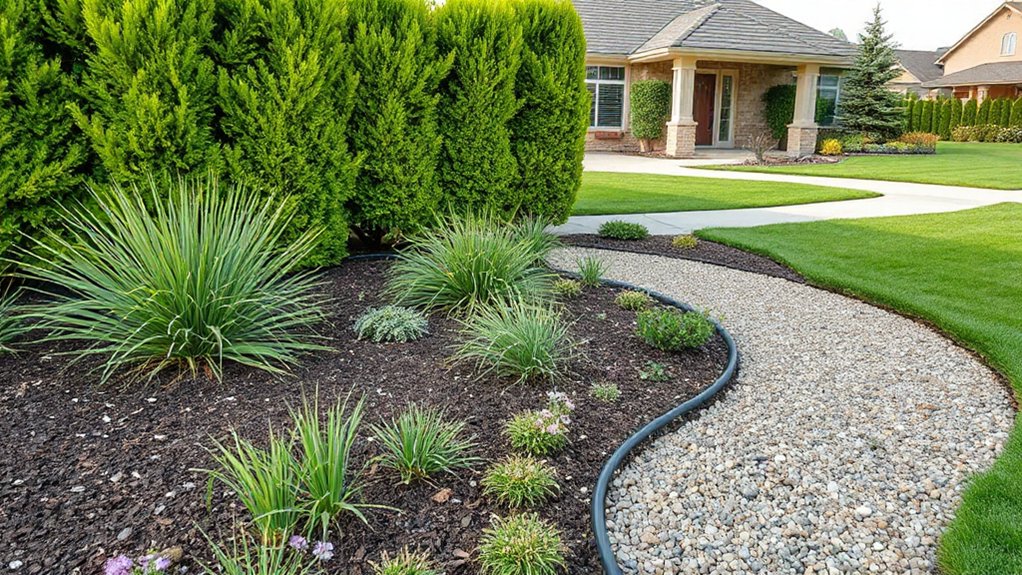
Ever wonder how you can keep your landscape lush while using less water? You can achieve this by pairing efficient irrigation with thoughtful plant choices.
Start with smart scheduling: water early morning or late evening to minimize evaporation, and adjust for rainfall and soil type.
Use drip lines for targeted delivery, reducing waste and disease risk.
Prioritize drought-tolerant species and native plants that thrive locally with less supplemental irrigation.
Implement rain harvesting to capture runoff from roofs, then reuse it on beds and planters.
Mulch generously to conserve moisture and suppress weeds.
Group plants with similar water needs to simplify maintenance.
Regularly check for leaks, and retrofit sprinklers to avoid overspray.
These steps deliver a lush, resilient landscape that respects water resources.
Easy-to-Maintain Borders and Edging Ideas
Creating borders and edging that stay neat with minimal effort starts with choosing the right material and a simple layout. You’ll favor low-maintenance options that withstand weather and foot traffic, then pair them with crisp lines and a consistent width for a polished look.
Keep the edging close to paths and beds to reduce spills and misalignment. Integrate garden furniture nearby to create inviting, cohesive spaces without clutter. Prune nearby trees to prevent encroachment and maintain clean lines.
Use color and texture contrasts to highlight plantings without demanding upkeep.
- Choose durable edging like steel, composite, or concrete for longevity
- Keep widths uniform and install with a shallow trench for a seamless finish
- Plan sightlines to showcase plantings and seating areas
- Maintain with occasional weed control and light pruning, focusing near borders
Seasonal Maintenance Routines That Stay Simple
Seasonal maintenance routines should be simple yet effective, building on the clean, low-maintenance borders you’ve already established. You keep the rhythm steady by aligning tasks with seasonal shifts, not overload.
In spring, prune lightly, edge beds, and refresh mulch to maintain crisp lines around garden sculpture and path edges.
In summer, inspect irrigation, wash outdoor furniture, and remove debris from planting zones to preserve visual clarity.
Fall tasks focus on leaf management, tool cleaning, and preparing perennials for dormancy, preserving structure for winter interest.
Winter routines center on protecting tender pieces, sealing planters, and storing delicate accents like garden sculpture safely.
Maintain a calm, cohesive look by limiting color changes and prioritizing durable, weather-ready materials in high-traffic zones. This keeps kerb appeal intact year-round.
Budget-Friendly Upgrades With Lasting Charm
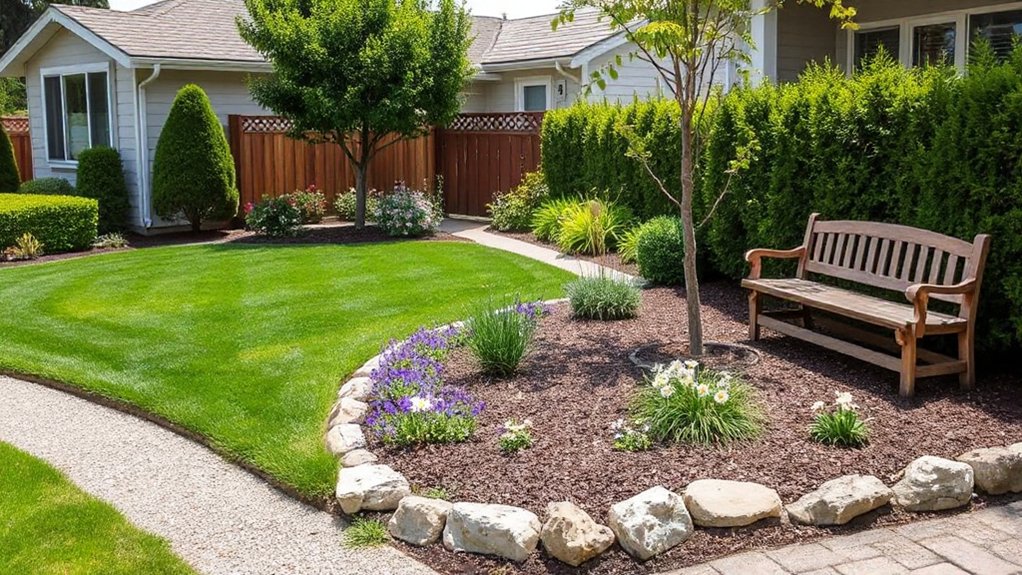
Budget-friendly upgrades can transform curb appeal without breaking the bank. You’ll focus on impact, not expense, by choosing durable elements and thoughtful placement. Start with simple, repeatable features that unify your landscape and minimal maintenance demands.
Garden art adds personality without clutter, while strategic planting guides the eye and lowers ongoing upkeep. For pest control, select native varieties and proper spacing to reduce issues and substitutes for costly treatments.
Aim for contrast and texture—evergreens for year-round structure, perennials for color, and clean lines to sharpen the overall look. Prioritize curb visibility and accessibility, ensuring maintenance is easy and inviting.
- Garden art that reflects your style and withstands weather
- Native plants arranged for year-long structure and color
- Strategic lighting to extend usability and curb presence
- Practical pest control through proper plant choices and spacing
Frequently Asked Questions
How Soon Will Curb Appeal Upgrades Reflect in Home Value?
You’ll start seeing value changes within 3–6 months after upgrades, especially with home staging and fresh exterior paint. You should prioritize cohesive curb appeal, modern finishes, and color harmony to maximize market perception and resale potential.
Which Plants Tolerate Local Soil Without Heavy Pruning?
Answer: Native plants tolerate your local soil well and require less pruning, so you’ll save time and effort. Symbolically, resilience grows beauty. Choose native plants and low maintenance greenery to sustain curb appeal with practicality and authority.
What Maintenance Schedule Keeps Gardens Vibrant Year-Round?
You maintain year-round vibrancy by a consistent schedule: seasonal pruning to shape and renew, regular watering, mulching, and pest control. Inspect weekly, fertilize seasonally, and adjust with rainfall; keep debris cleared for healthy, aesthetically pleasing gardens.
Are There Inexpensive, Durable Materials for Front-Yard Improvements?
Affordable mulch contrasts with weather resistant gravel, giving you durable, inexpensive front-yard options. You’ll layer mulch for softness and gravel for definition, improving resilience, curb appeal, and cohesion without breaking the bank.
How Can Lighting Deter Intruders Without Glare?
You’ll deter intruders by using solar lights with motion sensors that cast soft, targeted illumination. Avoid glare by directing beams low and outward, test settings regularly, and place lighting along paths and entryways for practical, aesthetic security.
Conclusion
Your curb appeal isn’t magic—it’s smart planning and steady care. By crafting a cohesive front-yard layout, selecting low-maintenance turf, and installing durable hardscape, you create lasting first impressions.Add seasonal color, water-wise practices, and simple borders to keep maintenance sane. A budget-friendly tune-up now can pay dividends later, elevating value and charm. Think of your landscape as a canvas that ages gracefully—every season, it proves you’ve invested wisely. Your home’s welcome mat just met its upgrade.