To brighten a dark UK home, deploy a precise, layered plan: combine ambient, task, and accent lighting with high-CRI LEDs for true color, while diffusing glare for softer general light. Use wall sconces to add vertical brightness and ceiling/wall washes for depth. Align color temperature by space, favoring 2700–3000K for warmth and 4000–4500K for work areas, plus tunable white where needed. Smart controls, dimming, and reflective surfaces finish the effect—and you’ll uncover additional strategies as you continue.
Brighten a Dark UK Home: Core Lighting Principles
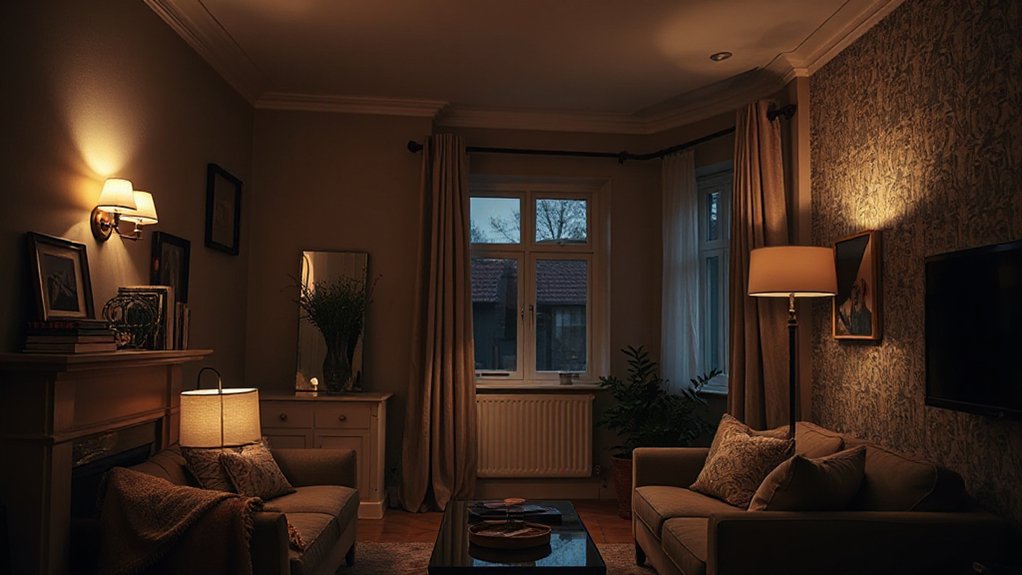
To brighten a dark UK home, start with a lighting plan that prioritizes layered illumination: ambient, task, and accent lighting. You’ll align lumens to room function, selecting high-CRI sources for true colour reproduction and consistent brightness.
Prioritise diffuse ambient light to reduce harsh shadows, then add targeted task lighting at desks, counters, and reading nooks. Accent accents should sculpt architecture and artwork without overpowering the scene.
Natural sunlight remains foundational; design around window orientation, using reflective surfaces and light shelves to multiply daylight. Consider dimmable controls and scene presets to adapt mood and activity.
Mood enhancement derives from balanced contrast and colour temperature consistency, maintaining 2700–3000K for warmth or shifting to 3500K where clarity matters. This approach optimises energy efficiency while delivering perceptible, market-ready visual quality.
Layered Lighting for Small Dim Rooms
Layered lighting in small, dim rooms hinges on blending ambient, task, and accent layers to maximize perceived brightness without overpowering the space.
You’ll deploy compact fixtures, wall washes, and reflective surfaces to amplify light distribution while preserving scale and comfort.
This approach leverages Layered Lighting Essentials, Small Room Brightening Tricks, and Ambiance Through Layers to create a precise, market-ready uplift.
Layered Lighting Essentials
In small, dim rooms, layered lighting combines ambient, task, and accent layers to maximize perceived brightness without increasing fixtures. You balance ambient diffusion with subtle uplights and ceiling coves to create a uniform base.
For task zones, select calibrated, glare-controlled lamps that target surfaces without spill.
Accent elements should cue contrast, using deliberate focal points to guide perception and depth. Consider dimmable LED sources to modulate mood and function, aligning color temperature with activity—cooler for work, warmer for relaxation.
Mirror reflections and light-wood surfaces amplify luminance, while window daylight integration anchors the scheme in natural daylight cycles.
Maintain a cohesive lumen plan across zones, avoiding overlighting, yet preserving visual clarity. This approach yields a precise, market-ready framework for enhancing small dim rooms.
Small Room Brightening Tricks
Small rooms benefit quickly from practical layering that concentrates brightness where you need it most. You’ll optimize footprint with compact, high-CRI fixtures placed at task zones, and use wall-washing to erase shadows without widening the space.
Prioritize a neutral base light set to 4000–4500K for color accuracy, then add focused accents that enhance depth. Color contrast between surfaces guides eye movement and prevents flatness, so pair light walls with darker furniture to amplify brightness perceptually.
Layered dimming, maintained by lighting automation, guarantees you’re never overlit in evenings or underlit during tasks. Choose slim recessed options and under-cabinet strips for crisp edge definition.
Track performance via luminance metrics, and adjust spacing as you refine the room’s brightness hierarchy.
Ambiance Through Layers
Ambience through layered lighting creates perceptible depth in dim spaces by combining task, ambient, and accent layers into a cohesive hierarchy.
You’ll optimize small rooms by aligning luminance levels and color temperatures, so every zone reads clearly without glare. Begin with discreet ceiling or wall wash for general brightness, then add task lighting at work surfaces to preserve contrast and reduce eye strain.
Introduce accents to sculpt architectural features, creating focal points without overpowering the scene. Dimmers, programmable controls, and zoned circuits enable fluid modulation, supporting Layered ambiance and mood enhancement as occupancy shifts.
Select fixtures with matte finishes to minimize glare, and choose LEDs tuned to 2700–3000K for warm, inviting atmospheres. This approach delivers scalable brightness, quantified improvement, and design-forward usability for compact UK interiors.
UK Color Temperature Guide: Warm vs Cool LEDs
Color temperature guides how LED lighting affects perception and task performance: warm (around 2700–3000K) creates inviting, cozy atmospheres while cool (about 4000–6500K) boosts focus and visibility.
In this UK guide, you’ll compare spectral quality, CRI, and brightness to tailor spaces.
Warm LEDs excel in living areas and warm-task zones, delivering flattering skin tones and softer contrasts without glare.
Cool LEDs improve clarity for work surfaces, kitchens, and utility areas, enhancing contrast and legibility of details.
Consider LED customization options: adjustable tunable white fixtures, and integrated controls that shift temperature by zone or time.
Align color temperature with activity, fixture design, and mood targets, ensuring consistent color rendering across rooms.
Specify precise lumen outputs and efficiency targets to optimize energy and performance.
Cozy, Energy-Efficient LEDs for UK Homes
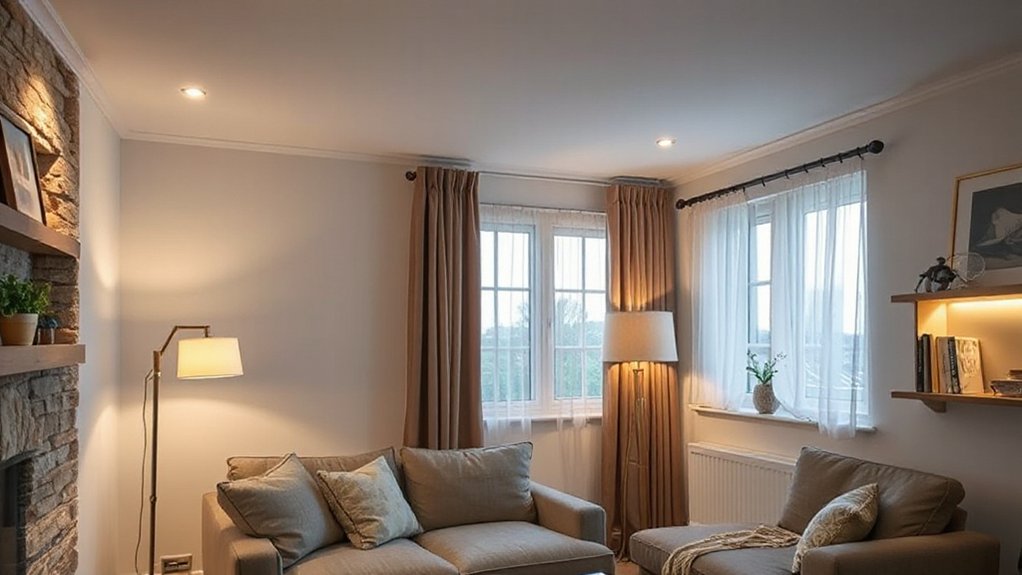
Prioritize dimmable LEDs and smart zoning to maintain consistent ambience across rooms while reducing peak demand. Focus on fixture placement that minimizes glare, leverages wall wash and task-free midpoints, and supports adaptive cooling to sustain LED longevity.
Use tight tolerance for color consistency, ensuring uniform chromaticity across batches and installations. Consider certified modules with reliable thermal management and robust drivers to withstand UK voltage fluctuations.
The result is precise, market-ready lighting that blends comfort with dependable performance.
Daily Task Lighting for Kitchen, Reading, and Desks
When you plan daily task lighting, target precise illumination for each zone: kitchen prep, reading nooks, and desk work.
Use adjustable, high-CRI fixtures with layered layers of ambient and task light to reduce glare and shadows.
This market-aware approach prioritizes energy efficiency, controllability, and long-term design compatibility across UK homes.
Kitchen Task Lighting
Under-cabinet and task-focused lighting should deliver bright, shadow-free illumination exactly where you work, so you can prep, cook, and read at eye level without glare.
In kitchen task lighting, choose linear LED strips or metal-halide equivalents with high CRI to reveal color accuracy on ingredients and finishes.
Aim for even distribution across countertops, avoiding hotspots near the sink or range.
Position fixtures for uniform spill light and minimal shadows, aligning with appliance placement to prevent reflective glare on stainless surfaces.
Integrate dimming controls for precision, and pair with recessed ceiling sources to maintain depth perception.
This approach supports kitchen decor goals while preserving energy efficiency and long-term maintenance.
Reading and Desk Illumination
A dedicated reading nook benefits from directional, glare-controlled fixtures that maintain even skin tones and text legibility. For desks, choose a lamp with flicker-free operation, tunable color temperature, and a stable base to reduce motion-induced shadows.
Opt for compact, energy-efficient desk lamps that pair well with monitors, reducing eye strain over long sessions. In design-forward setups, a premium desk lamp complements shelving and seating, while a discreet reading nook lamp anchors concentration.
Wall Lighting Ideas to Maximize Ambient Glow
Wall lighting serves as the backbone of ambient glow, distributing soft, even illumination across rooms without glare. You’ll maximize effect by selecting wall fixtures that blend form with function, leveraging geometry and finish to control luminance spread. Focus on balance between open-plan zones and alcoves, pairing fixtures to create layered shadows and depth.
- Accent fixtures frame artwork and architectural details, guiding the eye without overpowering the space.
- Wall sconces provide vertical wash, reducing harsh reflections while enhancing ceiling height.
- Uplights and downlights establish a gentle halo, stabilizing ambient levels during progressions.
- Dimmable options enable precise mood tuning for daily routines and entertaining.
Incorporate these elements with durable materials and warm white LEDs for a cohesive, market-ready glow. Accent fixtures, Wall sconces.
Smart Lighting for Seasonal Darkening
Seasonal darkening demands smarter control than simple on/off schemes, and smart lighting delivers that precision without compromising ambience. You harness color temperature to shift from cooler, focus-enhancing light in dim mornings to warmer tones for evening relaxation, aligning atmosphere with daylight cues.
Smart automation orchestrates scenes based on time, room occupancy, and exterior light levels, ensuring consistent luminance without manual tweaking. You can program gradual dim, flicker-free progressions, and adaptive profiles that respond to seasonal change, preserving visual comfort across spaces.
Power efficiency improves as sensors dim unused zones, while integration with voice or app controls keeps access seamless. This approach minimizes glare, stabilizes task lighting, and enhances mood, delivering a design-forward solution that’s both technically robust and market-ready for UK homes.
Reflective Surfaces and Layout Tweaks to Amp Light
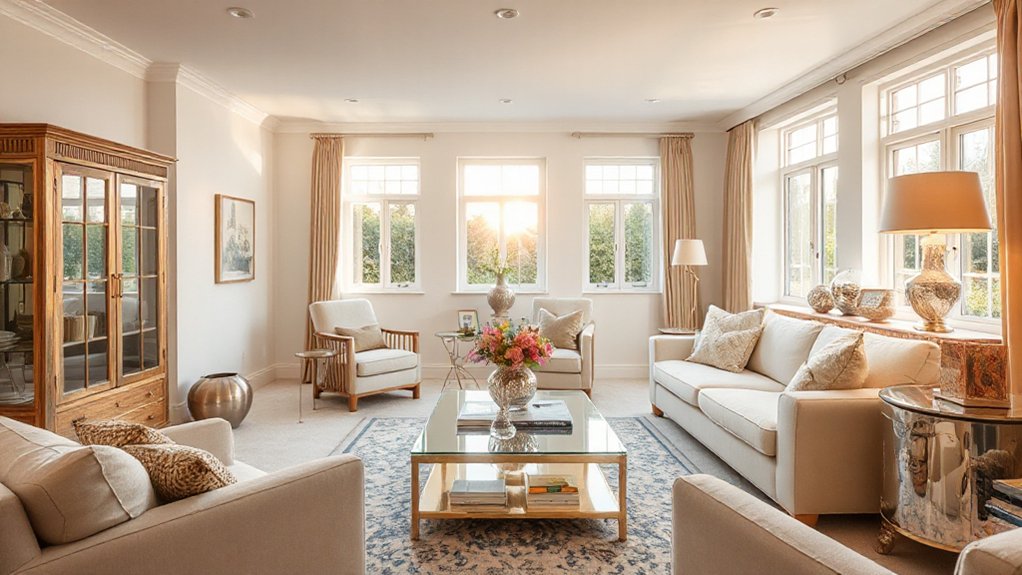
If you want to maximize daylight without adding fixtures, leverage reflective surfaces and strategic layout tweaks to amplify light distribution. You’ll use mirrored surfaces and glass fixtures to direct existing illumination deeper into rooms, reducing shadows and enhancing perceived brightness.
Precision placement matters: align mirrors with primary light sources and exploit wall angles to bounce glow toward seating areas and work zones.
- position mirrors opposite windows to double daylight reach
- choose frameless mirrored surfaces for seamless reflection
- employ glass fixtures to scatter light without visual bulk
- optimize rug and furniture layout to avoid obstructing light pathways
Budget to Designer: Lighting Plans for Every Pocket
Budget-minded or premium, lighting plans should be right-sized from the start. You map a scalable path from budget to designer by outlining core zones, lumens, and color temperatures that match room purpose and daylight profiles.
Begin with a lighting plan grid that prioritizes essential circuits, avoiding overfitting decorative layers. You evaluate budget tiers, selecting performance-for-cost fixtures that support future upgrades, rather than impulse purchases.
Historical lighting references inform authenticity, while modern controls and dimming maintain energy efficiency. When budgets permit, you pivot to refined options like vintage fixtures with compatible LED sources, ensuring color rendering and maintenance practicality.
Document tolerance bands for retrofits, anticipate hidden costs, and lock in warranty terms. Finally, align procurement with phased milestones to balance timing, quality, and scope.
Seasonal Maintenance: Refresh Tricks for Lightful Rooms
Seasonal Shine Hacks streamline how you refresh your lighting setup as the year shifts, keeping rooms bright without overhauling fixtures. You’ll recalibrate luminance and warmth to suit changing daylight patterns, maximizing perceived brightness with minimal energy.
This approach aligns refresh routines with design intent and market-ready trends, ensuring lightful rooms stay visually vibrant through every season.
Seasonal Shine Hacks
- Swap to high-CRI bulbs in key fixtures to preserve color fidelity while boosting perceived brightness.
- Layer light with slim, reflective surfaces and smart dimming to control intensity per activity.
- Introduce seasonal accents through light-colored textiles and mirrors to amplify ambient glow.
- Use neutral palettes and strategic accent lighting to reduce shadowing during festive periods.
These steps deliver crisp performance, precise impact, and contemporary appeal for UK homes.
Refreshing Room Lighting
Is your lighting composition optimized for changing seasons, or are you reworking stray shadows as daylight shifts? Rejuvenating room lighting demands precise recalibration of layers.
Start with color contrast: balance warm and cool tones to preserve depth without flattening textures. Reassess fixture placement to guarantee secondary illumination fills corners and reduces glare on glossy surfaces.
Update dimming strategies to match daylight variations, using tunable white sources where possible. Task-specific lighting should remain unobtrusive yet exact, so place accent fixtures to highlight architectural features and artworks without competing with main ambient.
Consider pre-programmed scenes for morning, midday, and evening, adjusting output incrementally rather than wholesale changes.
Finally, document configurations for seasonal transitions and maintain lamp life with timely replacements.
Frequently Asked Questions
How Can I Measure Room Brightness Accurately at Home?
To measure room brightness, you use a lux measurement with a light meter, ensuring the meter’s sensor faces the main focal plane. Record at desk height, average several spots, and compare to recommended lux levels for light intensity.
What’s the Best Dimming Strategy for UK Winters?
You’ll optimize with dimming technology that prioritizes energy efficiency, adjusting warmth and brightness to UK winter needs while maintaining task illumination. This approach delivers precise control, reduces consumption, and aligns with market-forward, design-focused lighting strategies.
Do LED Colors Affect Mood in Small Spaces?
Yes, LED colors affect mood in small spaces. Color psychology informs color choices, and you’ll notice mood enhancement when you tune brightness and hue. You optimize by calibrating warm whites and targeted colors for focused, calming, or energizing effects.
How Often Should I Upgrade Lighting Fixtures in UK Homes?
You should upgrade lighting fixtures every 5–10 years, depending on usage and LED quality. Plan regular Lighting maintenance checks, monitor fixture longevity, and budget for timely replacements to maintain energy efficiency, color rendering, and design-forward aesthetics across your spaces.
Can Sunlight Impact Artificial Lighting Performance Indoors?
Yes, sunlight can affect artificial lighting indoors by changing color temperature and brightness throughout the day. Natural light guides dimming strategies; light reflection off surfaces reduces artificial output needs, enabling precise, market-ready, design-forward luminaire choices you’ll appreciate.
Conclusion
You’ll finish with a space that feels brighter, more functional, and instantly welcoming. By applying layered lighting, proper color temperatures, and energy-smart LEDs, you optimize every nook—from kitchens to desks—while cutting costs. Embrace reflective surfaces and smart controls to adapt with the seasons, and keep maintenance simple to sustain radiance. It’s not just illumination; it’s a design system that sharpens mood, boosts productivity, and sells homes. In short, light well, live well.