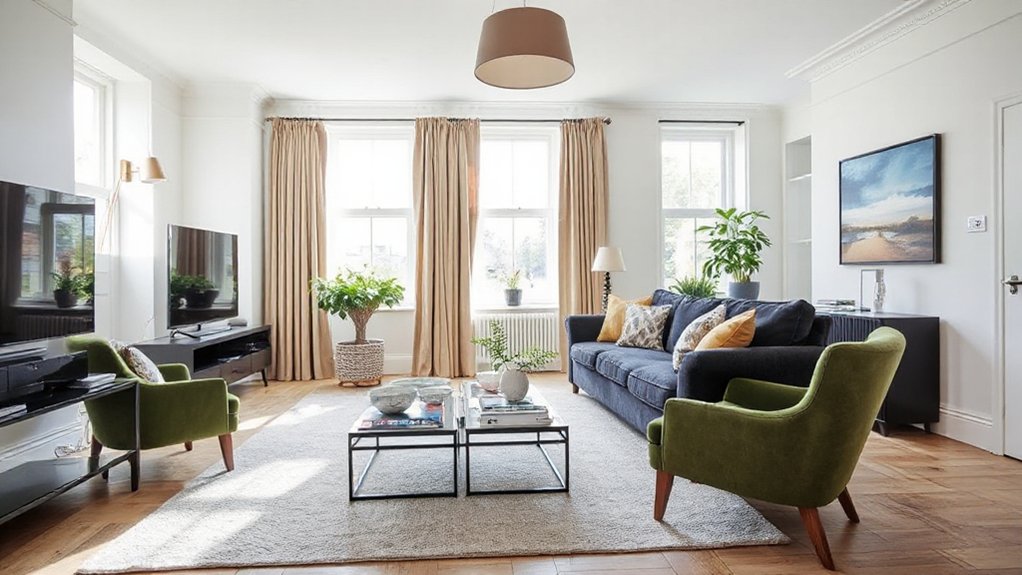
Looking to refresh a UK living room without major renos? Start with a cohesive palette of earthy neutrals and warm wood, then layer texture with throws, linen curtains, and vintage patterns for instant character. Optimize layout by freeing space with compact seating, aligned focal points, and tall, wall-mounted storage. Update lighting with soft whites and ambient LEDs, add tactile textiles like boucle, and choose durable, low-VOC materials. Small hardware and accessory swaps tie everything together—you’ll see a fresh feel quickly, with more tips ahead.
What a UK Living Room Refresh Delivers
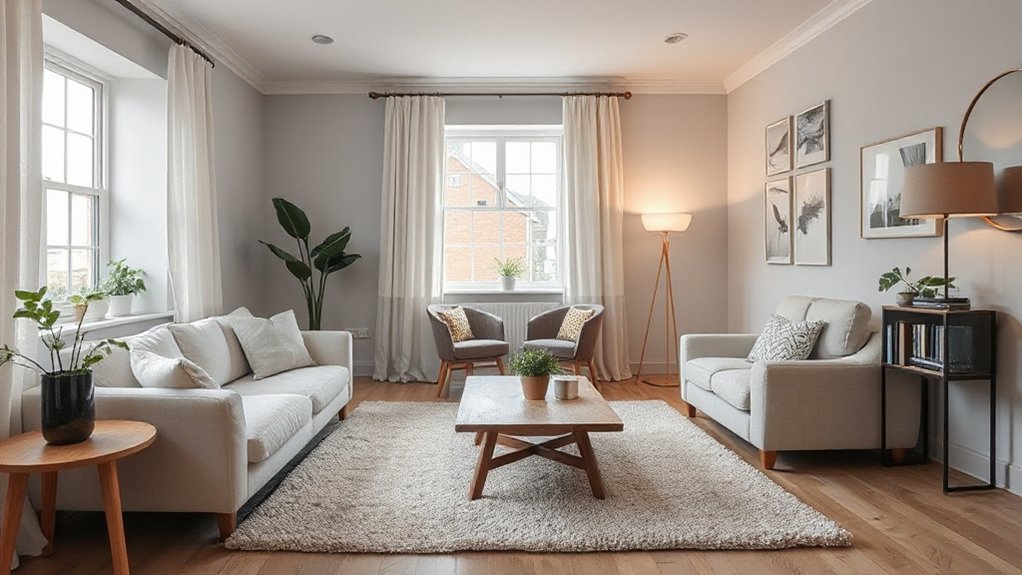
Historical influences inform a balanced mix of classic elements and modern convenience, ensuring recognisable charm without heaviness. Prioritise cohesive details—curtains, cushions, and throws—that tie colours and textures together, rather than chasing trends.
Furniture placement matters: place sofas and chairs to create inviting conversation zones and clear sightlines to focal points, like a fireplace or TV.
Simple swaps—lighting, rugs, hardware—deliver punch without costly changes, keeping renovation efforts efficient and affordable.
Quick, Non-Disruptive Layout Tweaks for Small Rooms
To maximize space in small rooms without major upheaval, start with a few quick, non-disruptive layout tweaks that boost flow and function. Begin by freeing floor space with compact seating; choose armless chairs or a slim sofa you can slide against a wall.
Create clear sightlines by aligning focal points along one axis and place coffee tables with wraparound clearance.
Use vertical storage to reduce clutter, such as tall shelves or wall-mounted units.
Mirror placement can visually widen the room without crowding it.
Introduce character with Artistic sculptures and Vintage accessories—position them at eye level to draw attention without dominating space.
Finally, swap side tables for nesting options to adapt as needed, preserving openness while enhancing utility.
Colour Palettes Echoing Classic British Interiors
British interiors have long favored restrained palettes built from earthy neutrals, rich woods, and subtle accents. To echo this heritage in your living room, choose a core scheme of warm neutrals—shell, latte, or taupe—with deeper accents like charcoal, olive, or navy.
Introduce texture through wool throws, linen curtains, and woven furnishings to reinforce depth without shouting color. Bring in Vintage patterns sparingly: a classic damask rug, a striped upholstery, or a lined wallpaper border can nod to British heritage without overwhelming.
Balance with lighter surfaces: matte plaster walls or pale wood, and keep ceilings bright to preserve airiness. Integrate metallic touches—brushed brass or antique gold—on hardware or lamps for a timeless edge.
Maintain cohesion by repeating colors across textiles, cushions, and art.
Lighting Upgrades to Boost Mood and Space
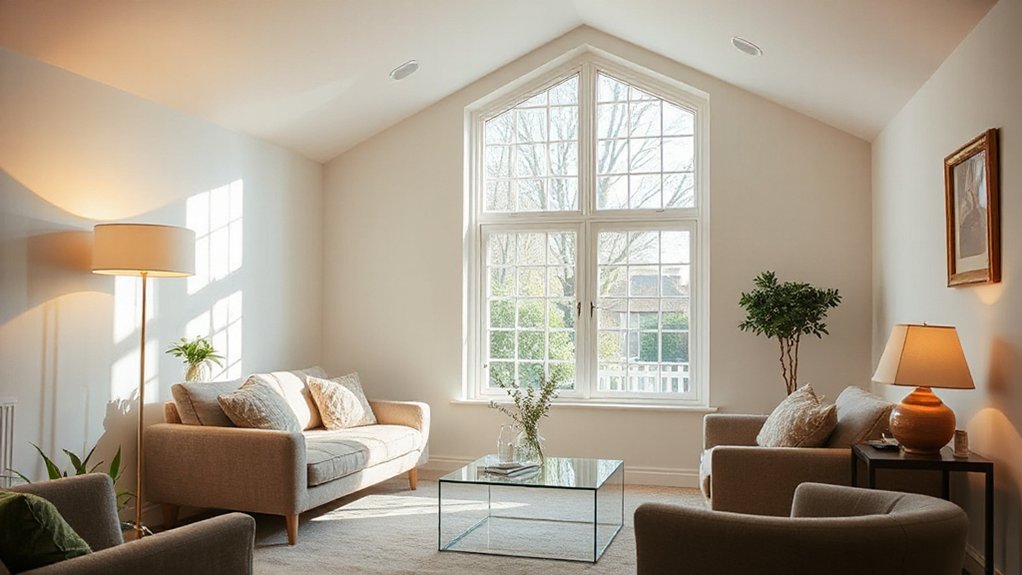
Lighting upgrades can instantly lift mood and make a room feel larger, brighter, and more inviting. You’ll want to balance ambient glow with focused task lighting to redefine space without clutter. Use dimmers to adjust mood from practical to cosy, and choose bulbs that render colours accurately.
- Install ceiling or wall-mounted soft white fixtures for even ambient light.
- Add floor or table lamps with adjustable heads to target seating areas.
- Introduce LED strip lighting behind media units or shelves for ambient accents.
- Select mood lighting options, like warm-toned bulbs, to create depth and warmth.
Ambient glow and mood lighting work together to visually expand the room while keeping it functional and welcoming.
Soft Furnishings That Add Texture Without Clutter
Texture without clutter starts with smart layering: opt for tactile fabrics, like boucle or brushed cotton, that add depth without bulk.
Pair soft, coordinated colours to keep the room cohesive while introducing soft layered comfort through throws and cushions.
Use accessible textures and practical contrasts to balance texture with function, so your space feels inviting without feeling busy.
Texture Without Clutter
Soft furnishings can add depth and warmth without cluttering a space. You can introduce texture without overcrowding by choosing strategic, tactile elements that sing without piling up. Focus on scale, restraint, and a cohesive mood that echoes your walls and floors.
- Opt for textured wallpaper in a subtle pattern to create a backdrop that doesn’t demand attention.
- Select tactile accessories—ceramic bowls, woven trays, and linen cushions—in a unified colorway.
- Add a single knitted throw or boucle cushion to ground seating with a soft, inviting feel.
- Choose lighting accents and a small rug that mimic the room’s texture palette for cohesion.
This approach delivers texture with intention, keeping clutter at bay while enriching depth and warmth.
Soft Layered Comfort
Layer in soft layers that feel inviting without crowding the room. You can add depth and warmth with a mix of cushions and throws that don’t overpower the furniture.
Focus on cushion layering: pair a larger, firmly filled cushion with lighter, plush ones to create structure and tactile interest. Keep color restrained to maintain calm; repeat a texture across pieces to knit the scheme together.
Practice fabric mixing by combining a short pile with a smooth weave and a subtle knit for varied surfaces under hands and arms.
Place cushions on the main seating and fold a lightweight throw over the arm, so it’s accessible yet tidy. This approach adds texture and comfort while preserving clear sightlines and airiness.
Colourful Fabric Pairings
Ever wondered how to inject vibrant texture without overwhelming a room? Colourful fabric pairings let you layer character without clutter. Focus on fabric combinations that balance scale, pattern, and hue, so textures read as cohesive rather than chaotic. Start with a neutral base and add accent fabrics that repeat a key color or motif. The goal is contrast, not chaos, so vary textures—linen, velvet, tweed—in complementary tones.
Use pattern pairing deliberately: pair a bold print with a subtle counterpart to avoid competition. Keep window treatments light, cushions decisive, and throws sparing yet purposeful. Test ideas in daylight for true tone. When in doubt, rotate textures seasonally to maintain freshness.
- Neutral base + bold cushions
- Subtle + bold pattern pairing
- Velvet accents with linen anchors
- Seasonal texture rotation
Clever Storage Solutions for Small UK Rooms
Maximize storage without sacrificing style by choosing clever, space-saving solutions tailored to small UK rooms. Start with vertical thinking: wall-mounted units, tall bookcases, and floating shelves free floor space while keeping essentials accessible.
Opt for multi-functional furniture—ottomans with hidden compartments, coffee tables that lift, or sofas with built-in storage. Choose shallow, wall-hung cupboards above seating to keep sightlines open.
Use door- or couch-mounted hooks for bags, remotes, and essentials, reducing clutter. Under-bed or ottoman drawers extend your capacity without crowding.
Baskets and labeled boxes keep small items organized, while matching finishes preserve a cohesive look. Prioritize collapsible or stackable pieces for flexibility during gatherings.
Implement a consistent color palette to enhance perceived space, enabling effective space maximization without compromising style.
Art and Personal Touches on a Budget
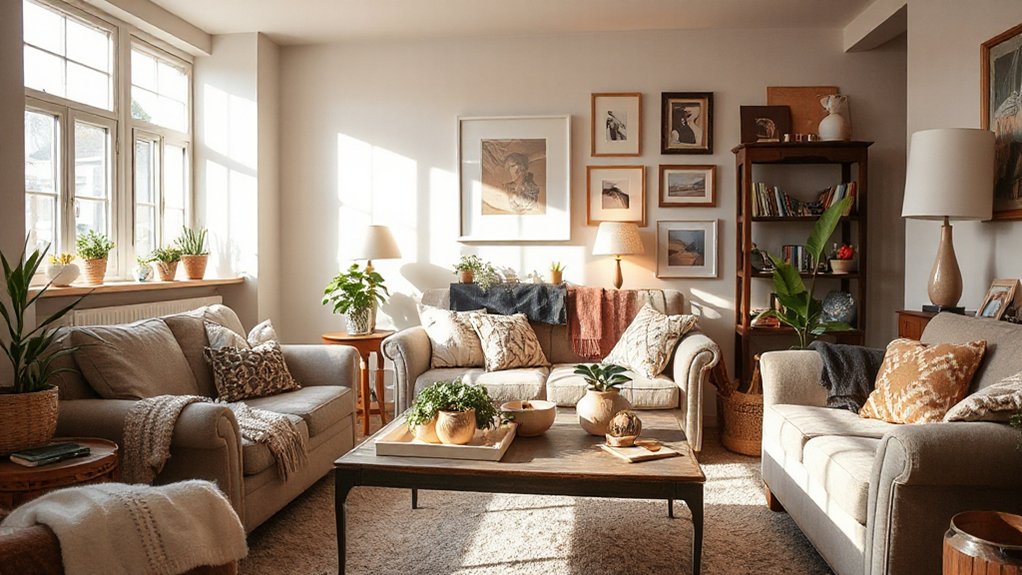
Art and personal touches don’t have to break the bank; with a few smart picks, you can create a room that feels distinctly you. You’ll amplify character by selecting pieces that reflect artistic expression and personal memorabilia, not just trends. Keep scale in check and avoid clutter, so each item earns its place.
- Curate a small gallery wall with a cohesive color scheme and varied frame shapes.
- Rotate a couple of meaningful objects—photos, letters, or travel finds—for ongoing freshness.
- Commission or DIY a statement print or textile to inject color without overspending.
- Treat yourself to a single high-quality focal piece that anchors the mood.
Floor and Rug Tricks to Make a Room Feel Bigger
A few smart rug choices can make a small living room feel instantly larger. You’ll want rugs that anchor seating and create flow, not clutter. Choose low-pulp textures and light tones to reflect ambient light, enhancing perceived space.
Consider flooring patterns that extend beyond the sofa line to smooth progressions between zones; the right pattern can visually lengthen or widen a room. Rug placement matters: position at least the front legs of key seating on the rug to unify the area, and leave the surrounding floor visible to keep the space airy.
Multi-area layouts benefit from single, cohesive rugs rather than multiple small ones. Aim for proportion: a rug that fits the seating group without crowding walls or doors.
Window Treatments for Light and Privacy
Start with light-focused window treatments that let you control daylight without sacrificing view or airiness. Choose privacy-enhancing curtains that still feel airy, or consider blinds that balance glare reduction with soft, natural light.
We’ll explore practical picks that boost both light and privacy while keeping the room cohesive.
Light-Focused Window Treatments
If you want to control light and privacy without sacrificing style, window treatments that focus on illumination are your best move. You’ll balance daylight, glare reduction, and ambience with purpose-built options, not generic drapes. Choose fabrics and setups that shift with the sun and your plans.
- Sheer fabric panels paired with blackout lining for flexible light control
- Layered drapery styles combining light diffusion with targeted privacy
- Light-filtering roller shades in neutral curtain fabrics for clean lines
- Adjustable vertical blinds for precise slant and daylight punch
Opt for neutral tones to maintain versatility, and favor lightweight drapery fabrics that breathe. Prioritise mechanisms that repeat softly: rails, cords, and motorized options. Your goal is a bright, comfortable room that adapts to moods and times.
Privacy-Enhancing Curtain Choices
Privacy isn’t optional in a living room you actually use. When you choose curtains, target both light control and privacy without sacrificing style. Start with privacy screens that block sightlines from the outside while keeping airflow intact.
Opt for layered treatments: a sheer for daytime light, plus a deeper curtain fabric for evening privacy.
Regarding curtain fabrics, go for tightly woven options like cotton twill, wool blends, or lined polyester blends that resist see-through. Choose a neutral or tonal color to maintain breadth of light when drawn.
Ensure hems and tracks are sturdy enough for frequent movement and easy cleaning.
Finally, match hardware to your room’s hardware palette for a cohesive look that’s practical and durable.
Kitchen–Living Transitions That Don’t Require Renovation
You can refresh the look between rooms without a full reno by focusing on simple, practical shifts that unite the kitchen and living area. You’ll create a seamless flow by aligning colors, textures, and sightlines, avoiding chaotic contrasts.
Prioritize cohesive surfaces, smart storage, and subtle lighting to blur boundaries without rebuilding.
- Choose a unifying color palette and carry it across cabinetry, shelves, and textiles.
- Integrate compact dining or service zones that double as work surfaces.
- Use matching hardware, plants, and fabric accents to tie spaces together.
- Incorporate garden furniture and outdoor decor cues indoors with weathered finishes and natural textures.
Durable Flooring and Paint Finishes for UK Homes
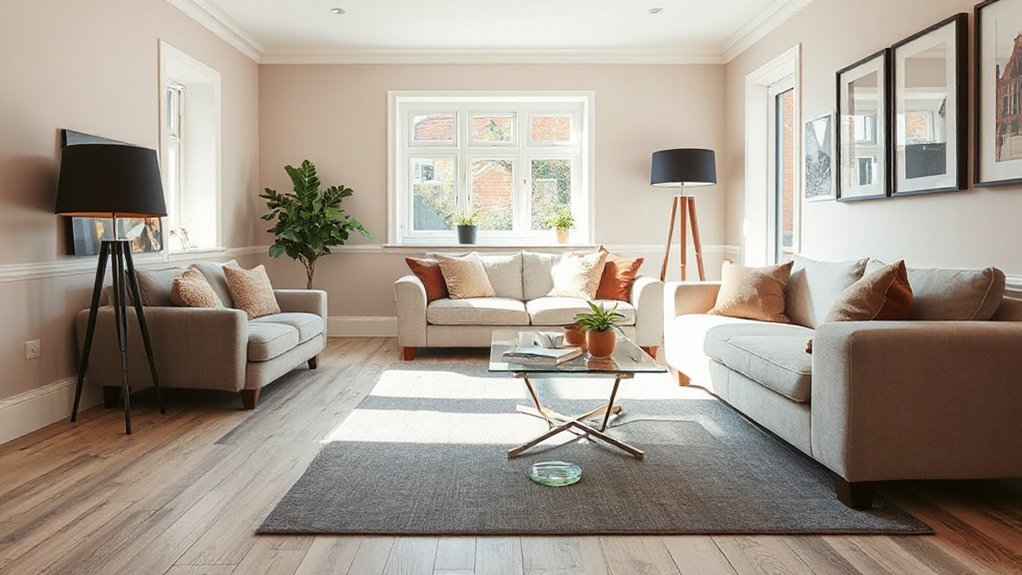
Durable flooring and paint finishes are the groundwork for a long-lasting UK living space. Start with a hardwearing floor: engineered wood, luxury vinyl, or tile with a protective coating, so wear and spills stay cleanable.
Choose matte or low-sheen paints in breathable emulsions to reduce odor and improve durability; flat finishes show dirt, so opt for washable eggshell or satin for walls and trim. Stick to neutral bases and reserve color for focal walls or accents.
Eco-friendly materials matter: low-VOC paints and sustainably sourced boards reduce indoor pollutants.
For longevity, prep surfaces properly, patch cracks, and use compatible primers.
Finally, introduce vintage accents and restrained textures to enrich character without sacrificing resilience. Your refreshed space stays stylish, practical, and easy to maintain.
Cohesive Accessories on a Budget
After upgrading your base with durable finishes, the next step is to pull everything together with cohesive accessories that don’t break the bank. You can create a unified look by choosing a small set of repeat motifs, colors, and textures.
Lean on vintage accents and statement art to anchor the room without overpowering it, and keep scale balanced with the rest of the furniture.
- Curate 2–3 vintage accents that share a common hue or material.
- Select one bold statement art piece framed to echo the room’s color story.
- Pick textiles that repeat a primary color to thread the palette together.
- Use affordable storage baskets or trays in matching tones to reduce visual clutter.
Weekend Refresh Plan: Step-by-Step
Rather than waiting for a big weekend project, use two focused days to implement a coherent refresh. Start with a 60-minute plan walk-through: list goals, identify one focal feature, and note any quick swaps.
Day one, tackle surface updates first: swap cushion covers, refresh throws, and swap lampshades to sharpen light. Add vintage charm with a single statement piece—think a retro mirror or heirloom-style picture frame—and keep botanical accents via potted greenery and a small herb rail.
Day two concentrates on layout and hidden storage: reconfigure seating for better flow, declutter surfaces, and install slim storage baskets. Finish with a quick clean, refresh scent, and polished touches like aligned mirrors.
You’ll preserve space, ease, and coherence while elevating the room’s style quickly.
Common Mistakes to Avoid When Refreshing a UK Living Room
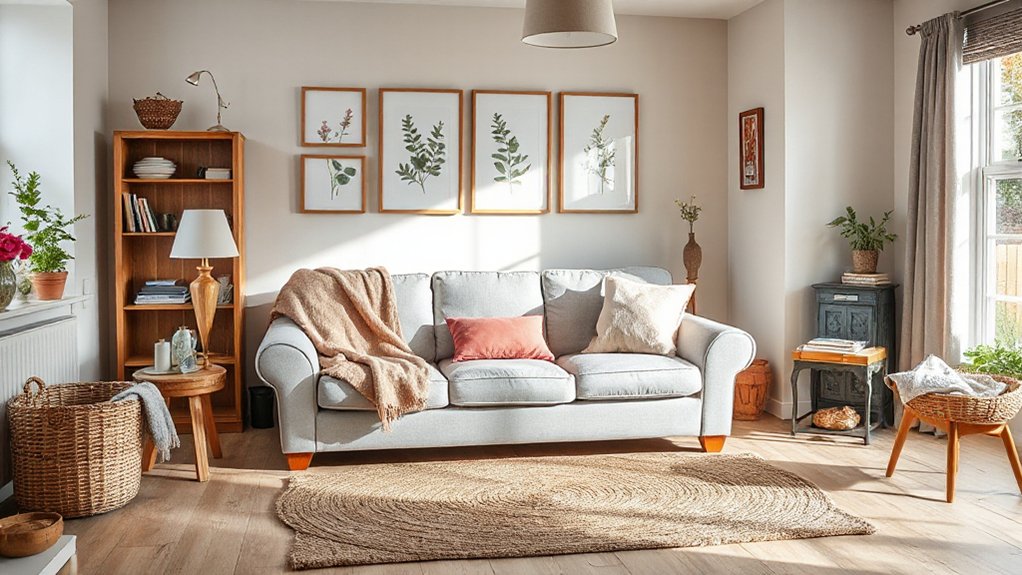
Common mistakes can derail a UK living room refresh, so start by spotting them before you start shopping or swapping. Avoid chasing trends, and misjudging scale or lighting.
Mixed eras without intent clutter space; decide if you’ll lean antique furniture or modern minimalism, then stay consistent. Don’t neglect buffers for traffic flow or plug placement, and skip over-saturated palettes that tire quickly.
Measure focal points, confirm lighting layers, and test fabrics in natural light.
1) Inconsistent style clashes: mix with purpose (antique furniture or modern minimalism, not both haphazardly)
2) Skipping lighting layers: balance ambient, task, and accent
3) Overloading with textures: curate textiles and finishes
4) Ignoring layout: ensure seating promotes conversation and ease of access
Frequently Asked Questions
How Long Does a UK Living Room Refresh Typically Take?
A UK living room refresh typically takes 1–3 days, depending on scope. You’ll optimize furniture arrangement and lighting enhancement, swap cushions, and add accents. You’ll complete this efficiently, with careful planning, quick upgrades, and minimal disruption to daily use.
What Budget Range Is Realistic for Minor Changes?
You can refresh on about £200–£1,000, depending on scope. In fact, 60% of UK rooms improve with small art and layout tweaks. Wall art and furniture arrangement, strategically placed, maximize impact without major reno or disruption.
Can I Refresh Without Repainting Walls Entirely?
Yes, you can refresh without repainting walls. Try wall decals and furniture swapping to transform the space; you’ll create focal points, brighten zones, and refresh textures without major upheaval. Keep decals tasteful, swap one key piece, measure first.
Which Colors Look Best in Small UK Living Rooms?
Bright, pale tones like dove or soft greys work best in small UK spaces for openness; go warm with creams. Color psychology guides mood, while furniture arrangement boosts flow and perceived size—avoid oversized pieces.
Do I Need a Professional for a Quick Refresh?
No, you don’t need a pro for a quick refresh. DIY projects can handle it, and you’ll control costs. Focus on interior accessories and simple upgrades to transform the space with practical, confident, can-do results.
Conclusion
Refresh your UK living room without a wrecking ball approach: pick a calm palette, swap soft furnishings, light the space well, and keep surfaces clutter-free. Tweak arrangement for flow, choose durable paints and flooring, and layer textures for warmth. Budget-friendly accessories tie the look together, while a weekend plan keeps you on track. Avoid overloading one wall or chasing every trend. And yes, even a Victorian teacup finds harmony in a modern room—anachronism loves good timing.