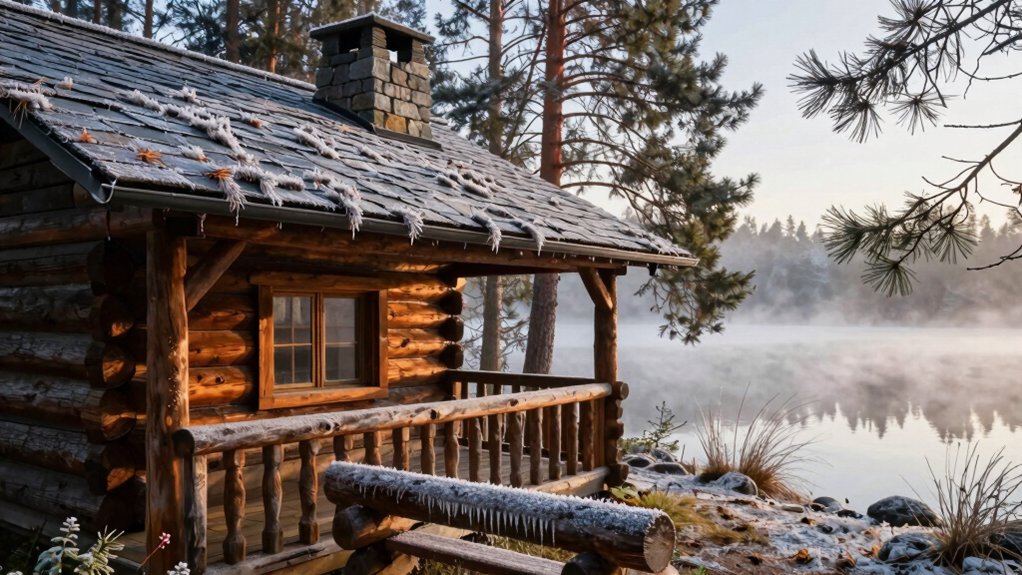
For hunting cabin ideas, focus on rugged durability and thoughtful layouts. Use weather-resistant materials, steep roofs, and overhangs to shed snow and protect walls. Inside, combine living, sleeping, and dining areas with versatile, movable furniture. Create gear drop zones at entryways with labeled storage, hooks, and benches. Prioritize airtight insulation, moisture control, and durable flooring. Add solar panels and smart thermostats for efficiency. Seasonal decor keeps the space lively; you’ll discover more tips as you explore.
Rustic Exterior Features for a Durable Hunting Cabin

To build a durable hunting cabin, prioritize rustic exterior features that stand up to harsh weather and heavy use. You choose materials with proven weather resistance, like timber with tight grain, treated bark, and galvanized hardware.
Install a steep roof pitch to shed snow, plus overhangs to protect walls and foundations. Exterior walls blend with surroundings, using natural stains and driftwood accents that reduce glare.
Add rugged doors and triple-sealed windows for air control and security. For concealment, integrate Wildlife camouflage in siding patterns and landscaping that breaks up outlines. Consider practical textures that resist moisture and wear.
Incorporate Hunting blind designs into the footprint, ensuring sheltered, low-profile options near chase routes while maintaining accessibility and maintenance ease. Prioritize durability, low maintenance, and functional stealth.
Efficient Layouts for Small Cabins
For small cabins, layout efficiency hinges on versatility and clear zones that serve multiple functions. You optimize space by combining living, sleeping, and dining areas with movable furniture and built‑ins that flex as needed.
Prioritize furniture arrangements that fold, slide, or stack, so you can reconfigure rooms quickly for hunting trips or guests. Use vertical storage and under‑bed drawers to keep essentials out of sight yet accessible.
Maintain open sightlines to reduce clutter and enhance safety, with multiuse surfaces for prep, gear, and maps. Lighting design matters: maximize natural light, layer task and ambient lighting, and place controls within easy reach to adapt for early wake hunts.
This approach preserves flow, comfort, and function without sacrificing roominess.
Smart Insulation and Weatherproofing Solutions
Could you keep a cabin warm and energy-efficient even when the thermometer plummets? Smart insulation and weatherproofing focus on minimizing heat loss and handling drafts with precision. Seal gaps around doors, windows, and attic access using weatherstripping and expandable foam.
Choose continuous insulation, reflective barriers, and properly sized vapor retarders to manage condensation. Prioritize airtight conduct with standardized testing and avoid over-venting.
For heating efficiency, integrate solar panel options where feasible and pair them with a reliable backup. Consider smart thermostat options that learn occupancy patterns, adjust schedules, and coordinate with zone controls.
Use radiant barriers in attics and well-sealed conduits for moisture control. Regular inspections prevent thermal bridging, maintaining comfort without waste.
Durable Flooring and Easy-Care Surfaces
Durable flooring and easy-care surfaces matter as soon as you step inside a hunting cabin, because you’ll want materials that withstand mud, wear, and seasonal changes without constant upkeep. You’ll prioritize simple cleaning, minimal maintenance, and long life under heavy foot traffic.
Choose resilient options like vinyl plank, porcelain tile, or sealed concrete that resist moisture and scratches while staying comfortable under boots. Look for low-porosity finishes and tight seams to deter staining, mold, and grime.
Eco friendly materials reduce chemical impact without compromising durability, while slip resistant surfaces improve safety on wet or icy days. Install correct underlayment and proper ventilation to prevent warping.
Prioritize straightforward installation, easy replacement, and measured performance for reliable, practical cabin longevity.
Cozy Cabin Interiors: Warm Wood Tones and Textiles
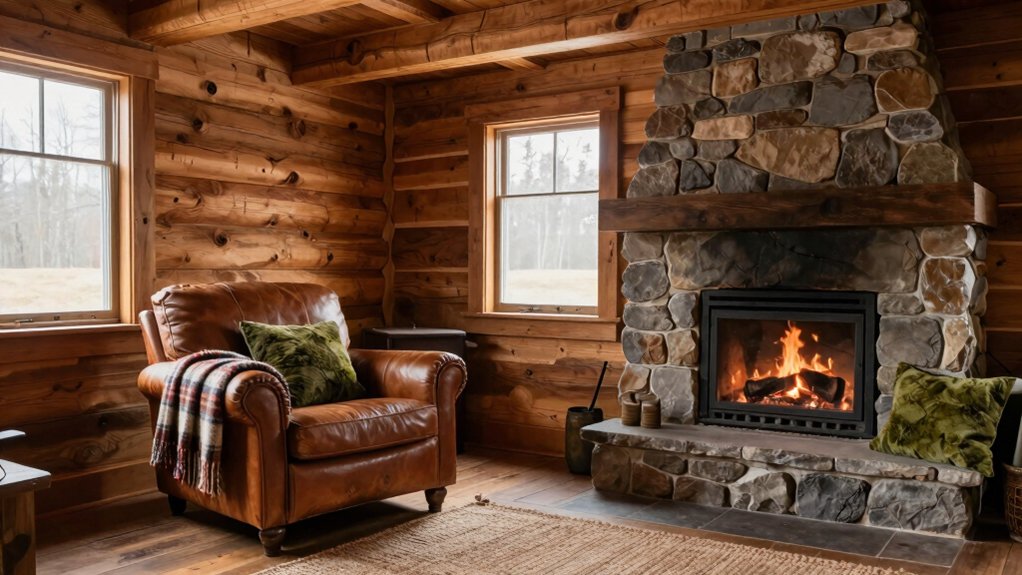
Step into a cozy cabin interior where warm wood tones and textiles create instant welcome, balancing rugged exterior with soft, inviting detail. You choose a restrained palette of maple, cedar, or walnut, letting natural grain define the room. Keep fireplaces as focal points, selecting fireplace designs that complement scale and fuel type while avoiding visual clutter.
Pair wood with textiles that add depth without overpowering the space. Your textile choices should emphasize durability and ease of care: wool blends, linen drapes, and cotton throws offer texture without fuss. Layer rugs to define zones without multiplying seams.
Maintain clean lines in seating and storage, so warmth remains the main attraction. Finished details—soft lighting, simple hardware, and sparse decor—yield a calm, functional retreat.
Storage Hacks to Maximize Space
To maximize space in a hunting cabin, start with smart, multi-use storage that fits your workflow and footprint. You’ll gain efficiency by planning vertical and under-seat options that don’t encroach on moving space.
Choose multi purpose furniture that blends seating, work surface, and hidden storage, so every piece serves at least two functions. Use hidden compartments in beds, benches, and tabletops to stow seasonal gear, maps, and small tools without clutter.
Install wall-mounted racks and pegboards to keep frequently used items accessible yet out of the way. Optimize cabinet depths and pull-out organizers to reach gear without rummaging.
Label bins clearly, and rotate contents seasonally to maintain quick access while preserving cabin flow and safety. Regularly reassess layout to sustain space gains.
Off-Grid Living: Power, Water, and Heating Basics
Off-grid living means you’ll power, water, and heat your cabin without relying on a utility grid. You’ll rely on solar panels to charge batteries, run essential lights, and power a small fridge during sunny days.
For heating, prioritize a wood stove with a dedicated ventilation path and proper clearance; supplement with insulation to minimize fuel use.
Water comes from a screened, gravity-fed supply or a rain barrel system; always include a robust water filtration setup to ensure safe drinking water.
Store energy in well-sized batteries and use a basic inverter for AC needs.
Maintain a reliable backup plan, like a small generator, for extended cloudy periods.
Regularly inspect seals, connections, and safety devices to prevent leaks or outages.
Hunting Gear Organization and Entryways
Think through your gear drop zones to keep coats, boots, and packs in reachable spots as you enter. Plan entryway flow so you don’t block the door with bags or hunting hoods, and place hooks and mats where you actually step.
Consider storage near doorways for quick access and organized zones that reduce clutter and speed up your next hunt.
Gear Drop Zones
Where should you drop your gear for quick access without clutter, and how can you keep entryways organized for hunting trips? You structure a dedicated drop zone near the door, clearly labeled and reachable from the hall.
Use a low, sturdy bench or shelf to hold daily items, with a shallow tray for small parts. Implement a color-coded bin system: cold weather, rain gear, blinds, and pack sets stay separate to prevent cross-contamination.
Mount hooks at two heights for coats and vests, plus a wall rail for totes. Maintain a consistent cadence: return items after use, wipe, and dry gear before storage.
This approach supports hunting gear storage and drop zone organization, promoting efficiency and readiness while minimizing clutter and fatigue.
Entryway Flow Ideas
To keep hunting gear flowing smoothly through the entry, design a clear path from door to drop zones with minimal friction. You’ll favor a direct route that guides each item to a dedicated station.
Place a slim mat by the door to trap mud without creating clutter, and keep a compact bench for seating while donning boots.
Use wall hooks at shoulder height for hats and packs, with a lower rail for vests and gloves.
Integrate decorative lighting to highlight the main corridor, ensuring good visibility without glare.
Seasonal decor can be updated in small, nonintrusive accents—seasonal photos or a wreath—so the space remains functional.
Maintain quick access to essential tools, and routinely purge unused gear for smooth flow.
Storage Near Doorways
A practical doorway storage system keeps hunting gear organized and accessible right where you enter. You’ll install a sturdy coat rack, a shallow bench with a built-in bin, and a wall-mounted peg strip for quick tools. Choose a rugged, water-resistant mat to trap mud at the threshold.
Use labeled baskets for licenses, gloves, and ammo accessories, and keep a small charging station for optics batteries. Add decorative efficiency with decorative door hardware that complements the cabin’s aesthetic without sacrificing function.
Mount hooks at varying heights to accommodate jackets, vests, and packs. For seasonal use, swap out lightweight items as needed and refresh seasonal door decor to signal readiness.
Maintain clear sightlines and minimal clutter for safe, rapid access.
Conclusion
You’ve explored sturdy exteriors, smart layouts, and weatherproofing that keep harsh days at bay, but the heart of a hunting cabin is how you live in it. Consider this theory: peak comfort, not just ruggedness, boosts steady, safer hunts by sharpening focus and reducing fatigue. If you design for warmth, storage, and flow, the space becomes a reliable partner, not a burden. So hybridize practicality with coziness, and your cabin yields consistently better every-season performance.