To convert a UK property into a compliant HMO, start by confirming if planning permission or a change of use is needed, then assess your space against minimum room sizes and occupancy rules. Secure an accurate HMO license, plus essential safety certificates (EICR, gas safety, fire risk assessment) and proper tenancy docs. Budget for acquisition, conversion, and ongoing costs—maintenance, utilities, and licenses. Plan financing with milestones to guard cash flow, and expect ongoing compliance checks. Want more specifics on each step?
What Qualifies as a UK HMO and When Licences Are Needed
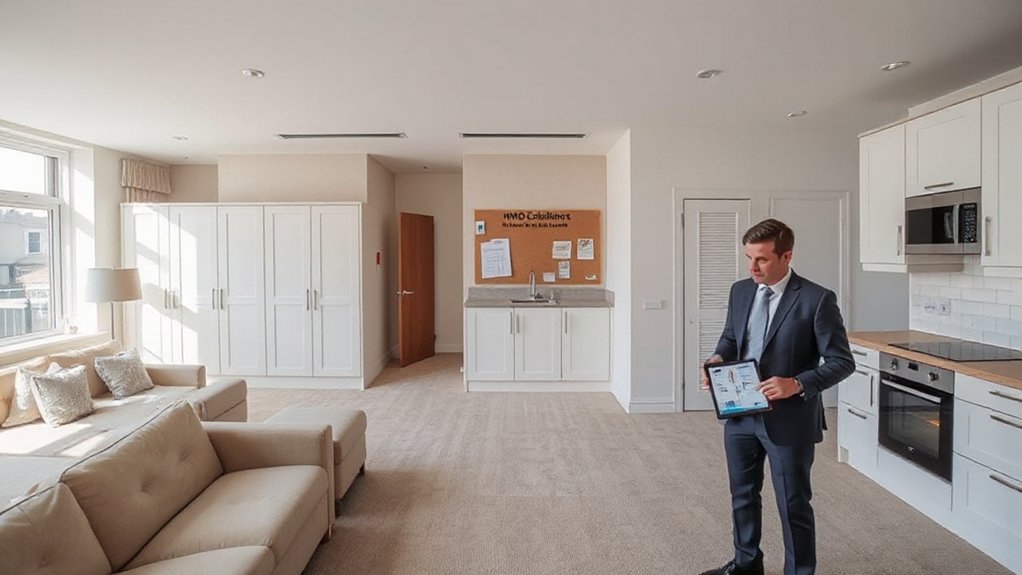
In the UK, a House in Multiple Occupation (HMO) is any property rented out by at least three unrelated people who share facilities like a kitchen or bathroom. You’ll determine if your property qualifies by occupant count, relationships, and shared amenities, not by intent.
HMO licensing applies if you meet local thresholds, which vary by council and property size, layout, and the number of occupiers. You’ll also consider property classification—whether it’s a standard dwelling, licensed HMO, or in a special category—since that impacts safety standards and management responsibilities.
You must verify if licensing is required before letting, and ensure your license covers the specific occupancy type you’re proposing. Compliance hinges on accurate classification, timely licensing, and meeting stipulated safety and management conditions.
Planning Permissions: What You Must Check Before Conversion
You must start by understanding Planning Permissions Basics and how they apply to HMOs, since rules vary by location and property type.
Check Local Authority Constraints early—confirm whether planning permission, permitted development rights, or conditionals apply, and note any nearby protections or high-density guidelines.
Finally, map out the Timeline And Fees so you can budget for applications, revisions, and potential appeals, and set milestones for securing consent before you convert.
Planning Permissions Basics
Before you can convert a UK property into an HMO, you must determine whether planning permission is required and, if so, which route applies. Planning permissions basics mean you assess if the change of use from a dwelling to an HMO needs full planning, permitted development, or a prior approval.
You’ll check local zoning regulations to see if the property sits in a zone that restricts or enables HMO use, and you’ll review any area-specific guidelines. Also verify historical restrictions that could limit alterations, occupancy, or external changes.
Gather evidence of current use, floor plans, and proposed changes to support your case. If permission isn’t needed, document your reasoning; if it is, prepare a robust application with concise justifications and timelines.
Local Authority Constraints
Before you convert, verify that the property qualifies for HMO use under local regulations, including any Article 4 directions or selective licensing schemes.
Check floor area, room sizes, and the number of bedrooms to assure compatibility with capacity limits and ensuite provisions.
Confirm parking requirements, waste management, and fire safety, as these often trigger additional approvals.
Engage early with the planning department to flag potential issues and request pre-application guidance.
Document community engagement activities, noting objections and mitigations, to demonstrate local collaboration.
Align your plans with local regulations on density and amenity space, and adjust designs accordingly to streamline consent.
Timeline And Fees
Planning permissions hinge on a clear timeline and upfront fee awareness, so map out submission windows, potential exemptions, and likely costs before you start work.
- Identify whether you need planning permission vs. permitted development
- Estimate application fees and any local planning authority supplements
- Schedule key dates for pre-application advice, consultations, and decision deadlines
- Assess impact on property valuation and potential rent adjustments (Rental income implications)
- Build in contingencies for appeals, changes of use, or additional conditions
Practical steps keep you on track: confirm documentation, anticipate surveyor fees, and align valuation timing with lender expectations.
You’ll want a realistic budget that reflects Property valuation realities and any required energy or safety certifications, so your project stays financially coherent from day one.
Safety Standards: The Essential HMO Compliance Checklist
Ensuring safety standards is non-negotiable when converting a UK property into a compliant HMO; every requirement hinges on protecting residents and avoiding costly non-compliance.
You’ll verify fire safety provisions, including smoke and heat detectors, clear escape routes, and a suitable fire door plan, plus annual checks and easy-to-interpret evacuation instructions.
Electrical safety is non-negotiable: obtain an EICR, install RCD protection where needed, and schedule routine inspections every five years.
Gas safety must include an annual CP10 inspection and gas certification for every appliance.
You’ll ensure adequate ventilation, lighting, and heating with compliant thermostats and energy-efficient systems.
Maintain clear occupancy records, safeguarding sound insulation and water supply integrity.
Consider interior design for safety flow, and plan marketing strategies that emphasize compliant, well-maintained spaces.
Assess Your Property: Minimum Room Sizes and Capacity

After covering safety standards, you’ll turn to the physical layout of your property to determine whether it can legally and comfortably house multiple tenants.
Assessing room sizes upfront helps you meet occupancy limits and avoid costly reconfigurations. Start with minimum room sizes for habitable rooms, living areas, and bedrooms, and measure clearance for beds, wardrobes, and study spaces.
Consider shared facilities—kitchens and bathrooms—ensuring they don’t bottleneck daily use. Verify ceiling heights, natural light, and ventilation, as these affect habitability.
Map room functions to avoid underutilised spaces or overcrowding. If a room falls short of minimums, you’ll need to reconfigure or repurpose.
Document each measurement and reference local guidance to support compliance with occupancy limits and room sizes.
- Room sizes and purpose
- Bedroom minimums
- Shared facilities flow
- Ceiling height and light
- Documentation for proof
How to Get Your HMO Licence: A Step-By-Step Guide
To start your HMO journey, you’ll first apply for the licence and follow the authority’s step-by-step process exactly as outlined.
Prepare the required documents now—proof of ownership, safety certificates, DBS checks, and property details—so your submission is complete and accurate.
Once submitted, you’ll navigate the licence inspection process, addressing any findings promptly to keep your application on track.
Apply For Licence
So, how do you actually apply for an HMO licence? You’ll prepare evidence, complete the local authority form, and submit supporting documents. Timely submission is crucial to avoid delays and penalties.
You’ll outline the property, occupancy, and expected rental income, aligning with your business plan for compliance. Fees vary by council and property size, so budget accordingly. Remember to declare any previous licenses and adapt to local conditions to strengthen your case.
Gather references, safety certificates, and confirmation of a valid tenancy mix. You’ll track the application status, respond to queries promptly, and adjust details if needed.
The process culminates in a licence decision, with conditions you must meet to retain compliance.
- Prepare and submit the form with accurate property details
- Attach safety certificates and occupancy plans
- Outline rental income and business plan alignment
- Budget for council fees and potential variations
- Monitor status and respond to authority queries promptly
Document Required List
You’ll need a precise set of documents to support your HMO licence application and prove you meet safety and occupancy standards. Prepare a current gas and electrical test certificate, a valid energy performance certificate, and a fire risk assessment.
Include floor plans showing room sizes, bedspaces, and shared facilities, plus a detailed inventory and schedule of condition.
Gather tenancy agreements or rental agreements for all occupants, confirming their terms and payment arrangements.
Provide proof of property ownership or a current landlord licence, plus public liability insurance where applicable.
Include a gas safety record, boiler servicing logs, and portable appliance testing results.
Finally, supply council tax or property taxes records and confirm any rent collection or service charge arrangements related to licensed use.
Licence Inspection Process
The licence inspection is your critical roadmap to compliant operation, and it starts well before the assessor arrives. You’ll pre-empt issues by validating room sizes, occupancy limits, fire safety provisions, and amenity standards. Expect robust checks on tenancy records, risk assessments, and maintenance logs, with emphasis on clear visible evidence.
Stay prepared to demonstrate how you handle tenant disputes and property maintenance, showing timely responses and documented actions. Your focus should be on proactive compliance, not last‑minute fixes.
- Confirm fire doors, detectors, and escape routes
- Review tenancy agreements and occupancy caps
- Compile maintenance history and safety certificates
- Demonstrate landlord responsiveness to tenant disputes
- Prepare a clear plan for ongoing property maintenance
Costs and Budgets: Acquisition, Conversion, and Ongoing Fees
Purchasing and converting a UK property into a compliant HMO involves three core cost areas: acquisition, conversion, and ongoing fees. You’ll itemize each stage to avoid surprises later.
Acquisition costs cover the purchase price, stamp duty where applicable, and due diligence such as surveys and fees for searches; factor potential renovation timelines into cash flow.
Conversion costs depend on the required standard, partitioning, fire safety measures, soundproofing, and any planning or building control charges, plus contingency for unforeseen works.
Ongoing fees include management, utilities, cleaning, maintenance, and regulatory costs. You must budget for property taxes and insurance premiums as fixed annual obligations, and schedule periodic renewals of safety certificates.
Track cash flow monthly, update forecasts with any regulatory changes, and keep a reserve for major repairs. Prioritize cost control without compromising compliance.
Financing Your HMO: Practical Tips to Stay on Track

Securing the right financing is as essential as the property itself, and it pays to align your funding strategy with your project timeline and risk tolerance. You’ll want a mix of debt and equity that matches conversion milestones, with clear covenants and contingency buffers.
Shop multiple lenders, compare rates, fees, and appraisal timelines, and document cash-flow projections to prove viability. Prioritize financing that preserves flexibility for rent adjustments, licensing costs, and potential refinements.
Consider tax-efficient structures and software-enabled tracking to optimize cash management. Stay mindful of property taxation implications and how they affect net yields.
Maintain a decision log to prevent scope creep and protect profit margins.
- Align funding with milestones and risk tolerance
- Compare lenders, rates, fees, and timelines
- Build robust cash-flow projections
- Use tax-efficient structures and tracking
- Document decisions to avoid scope creep
Top Conversion Pitfalls and How to Avoid Them
Hitting the pause button on the conversion plan can cost you time, money, and license eligibility, so anticipate common missteps and plan concrete guardrails. The top pitfall is underestimating compliance timelines; you’ll save by mapping planning permissions, building regs, and fire safety checks upfront.
Don’t skip a robust due diligence phase—verify ceiling heights, access routes, and fire doors before you convert. Another trap is mismanaging property valuation dynamics: reassess after renovations to avoid overcapitalizing or undervaluing your asset.
Tenant screening is essential but must be fair and documented to satisfy licensing standards. Finally, lock in utility metering early and align room sizes with minimums.
Document decisions, keep menus and checklists current, and review progress weekly to stay on track and within budget.
Getting Set Up: Day-to-Day HMO Management After Build
Getting set up for day-to-day HMO management after build means establishing processes that keep occupancy steady, comply with licensing conditions, and protect cash flow. You’ll implement clear workflows for tenant onboarding, rent collection, and maintenance requests, so operations stay predictable and compliant.
- Rental agreements and deposits aligned with regulations
- Tenant screening to minimize risk and ensure reliability
- Routine inspections and preventative maintenance scheduling
- Centralized rent collection and expense tracking
- Documentation, logging, and compliance audits for easy reference
Frequently Asked Questions
How Long Does HMO Licensing Approval Typically Take?
Typically, HMO licensing approval takes 4–8 weeks after submission, depending on council workload. You should prepare tenant screening and robust rental agreements now, maintaining contact with the authority. If delays occur, document applications and follow up promptly.
Can You Convert an Irregularly Shaped Room Into Compliant Space?
Turning potential flaws into a workable plan, you can usually, with care, convert an irregular room into compliant space. Focus on room layout, guarantee Building regulations compliance, and verify pragmatic width, egress, and fire safety requirements.
What Ongoing Maintenance Costs Are Often Overlooked?
You’ll often overlook ongoing maintenance costs like Landscaping expenses and Pest control costs, which quietly impact cash flow. You’ll budget proactively, schedule routine inspections, and set aside reserves to address vegetation, pests, and property wear before issues escalate.
Do Shared Bathrooms Require Separate Ventilation Systems?
Yes, you should have separate bathroom exhaust systems for shared bathrooms, ensuring adequate airflow. Use dedicated shared bathroom ventilation with properly sized extract fans and ducting; maintain ventilation effectiveness and compliance, documenting airflow rates and system performance.
Are Mortgage Lenders Stricter for HMO Properties?
Yes, mortgage lenders are stricter for HMO properties. You’ll face tighter mortgage restrictions and lending criteria, including higher deposits, shorter loan-to-value ratios, and stricter income coverage requirements to mitigate increased rental risk.
Conclusion
Converting a UK property into a compliant HMO is doable, but it demands thorough planning, strict adherence to rules, and solid budgeting. Start with a clear scope, verify licensing requirements, and satisfy safety standards before you convert. Track room sizes, utilities, and waste systems to avoid costly rework. Secure financing early, then manage ongoing costs with a tight account. Stay disciplined, because “measure twice, cut once” saves time, money, and peace of mind.