Blending modern and traditional styles in UK homes means intentionally weaving timeless materials—timber, brick, sash windows—with contemporary finishes, lighting, and furniture to feel rooted yet fresh. Build a cohesive palette: a warm base, a secondary, and a punctual accent, and test swatches in natural light. Use adaptive reuse and regional motifs to honor culture without nostalgia fatigue, then layer textures, smart lighting, and practical storage. If you keep exploring, you’ll uncover practical steps to master this balance.
What Blending Modern and Traditional Styles Really Means in UK Homes
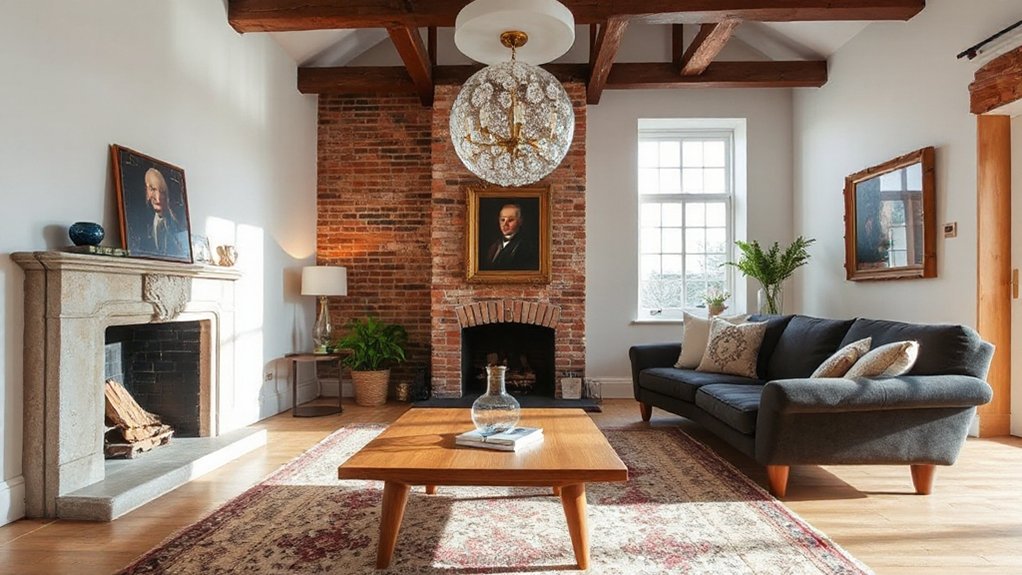
Blending modern and traditional styles in UK homes means more than mixing looks; it’s a deliberate, practical approach to balance history with today’s needs. You’re shaping spaces where history informs function, and function respects heritage.
You’ll recognize that historical authenticity isn’t about slavish replication; it’s about selective, respectful references—timber, brick, plaster, or sash windows—used to anchor contemporary living. Cultural influences permeate choices, guiding patterns, textures, and craft techniques that reflect regional character without nostalgia fatigue.
You’ll prioritize durability, craft, and comfort, pairing modern systems with period detailing to enhance daily life. This isn’t about decorating shelves; it’s about constructing a coherent narrative you live in.
The result feels seamless, purposeful, and energized by both past and present.
Create a Cohesive Palette for Both Eras
You’ll anchor both eras with a cohesive color palette that balances warmth and modern clarity. Start by selecting a primary neutral and layering era-appropriate accents to echo traditional textures with contemporary finishes.
Keep the emphasis on intentional contrast and harmony, so each room reads as a deliberate blend rather than a mismatch.
Cohesive Color Palettes
To create a cohesive color palette that bridges modern and traditional UK homes, start with a unifying backbone—neutral walls in warm whites or soft greys—that lets architectural details shine.
You’ll prioritize color harmony by pairing warm neutrals with cooler accent tones to maintain balance.
Build your Palette selection around three anchor hues: a versatile base, a restrained secondary, and a punctual accent.
Choose materials that reflect eras—wood, stone, and metal—so tones read cohesively across spaces.
Test swatches in natural light at different times to ensure consistency.
Use matte finishes for walls and satin or low-sheen for trim to modulate glare.
Document your choices, noting why each works, and keep a small, portable sample board for quick comparisons.
This disciplined approach yields timeless, adaptable cohesion.
Era-Appropriate Accents
Pair era-appropriate accents carefully with your cohesive palette so both periods feel intentional, not pasted together. You’ll balance modern silhouettes with traditional details by selecting accents that echo historical motifs while staying contemporary in scale and finish.
Begin with tactile textures: a brass lamp, woven sisal rug, or linen drapes that nod to archival rooms without heaviness.
Introduce period-accurate motifs in measured doses—touches like damask pattern cushions, a charcoal-framed mirror, or a carved wooden panel—then temper them with clean lines and neutral backdrops.
Mix metals strategically to unify eras: brushed nickel with antique brass accents.
Use typography-inspired prints sparingly, ensuring repetition across rooms for cohesion.
Keep proportions deliberate: one bold statement piece per space, complemented by subtle, era-appropriate accents that read as a single, confident collection.
How to Test and Sample Paint, Fabrics, and Finishes at Home
Testing and sampling paints, fabrics, and finishes at home is a practical, decisive step that helps you see how materials perform under real light and daily use. You’ll apply color swatches on walls at varying times of day to gauge mood shifts, and note undertones that shift with ambient hues.
For Color testing, compare multiple shades side by side on large panels, not small chips, to reveal true hue, sheen, and depth.
When you do fabric sampling, carry swatches into rooms with different fabrics and nearby furniture to observe how texture and color interact with air, heat, and natural light.
Keep a simple log: room, light time, material, impression, and durability notes for informed, confident choices.
Architectural Details That Bridge Past and Present
Prioritize historical preservation where it strengthens identity without trapping you in nostalgia. Introduce cultural symbolism through motifs that resonate locally—crest, emblems, or regional textures—so a room feels rooted yet current.
Use adaptive reuse or clean-lined reinterpretations of traditional details to create cohesion between eras. Balance contrast: matte brick with polished concrete, carved molding with streamlined hardware, weathered timber beside glass.
Document decisions with photos and notes, ensuring future renovations honor intent while keeping your home livable, efficient, and timeless.
Mastering Scale and Proportion in Every Room
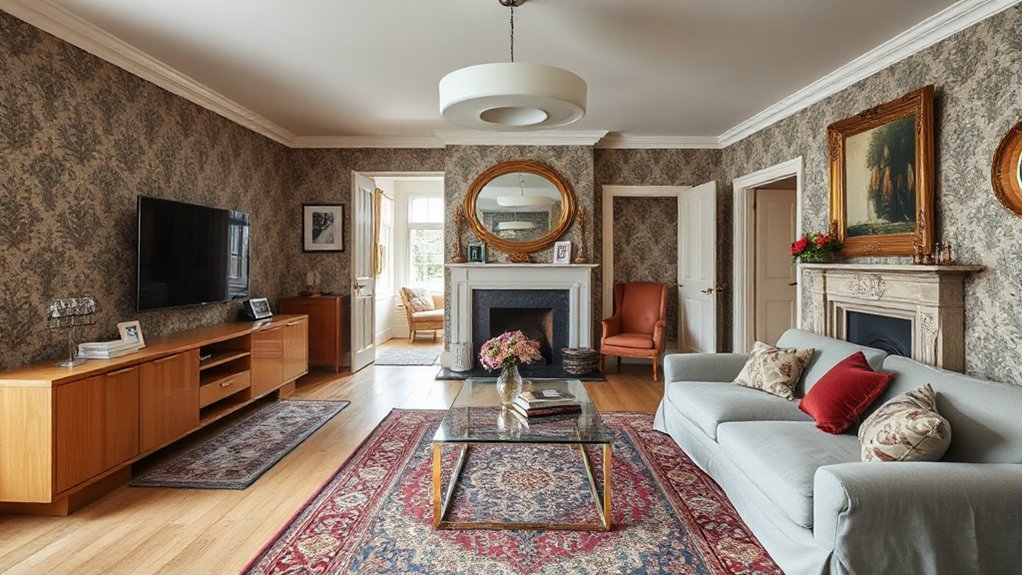
Mastering scale and proportion starts with a clear sense of how each room’s dimensions relate to you and the things you’ll put in it. You assess ceiling height, window placement, door swing, and circulation paths, then map how furniture and artwork will occupy space without crowding.
Aim for scale harmony by matching item sizes to room proportions—large pieces in generous rooms, delicate accents in intimate nooks. Proportion balance emerges from repeating motifs, aligning furniture sightlines, and designing focal points that anchor the eye without overpowering others.
Consider rug scale, lighting, and negative space to guide movement and comfort. You’ll create rooms that feel cohesive yet distinct, where modern and traditional elements converse naturally, and every item earns its rightful place.
Furniture Strategies: Modern Lines With Classic Silhouettes
You’ll blend modern lines with classic silhouettes by choosing pieces that speak in clean, streamlined shapes while nodding to timeless form. It’s less about matching and more about dialogue: contrast soft fabrics with angular frames, or pair a slim, lacquered table with carved legs for subtle tension.
Prioritize scale to keep rooms calm; compact, low-profile silhouettes feel contemporary, while carved edges whisper tradition. Finish choices matter: matte neutrals read modern, but a hint of antique brass or beeswax patina adds warmth and Vintage charm.
Integrate storage that doubles as art, so every piece earns a second life. Aim for Modern elegance by curating a cohesive rhythm across rooms.
- Select silhouettes that balance sleek profiles with refined detailing
- Mix finishes sparingly to highlight contrast
- Use statement pieces to anchor, then layer textures
- Prioritize proportion and flow for timeless cohesion
Lighting Ideas That Bridge Time Periods
Start with layered lighting that lets you map timelines—soft vintage glow for traditional nooks and clean, modern warmth for contemporary spaces.
Consider lights that cross eras: brass silhouettes with dimmable LEDs, or glass shades that nod to the past while delivering crisp, energy-efficient illumination.
Use light styles across eras to highlight architectural details and create a cohesive flow from room to room.
Layered Lighting Timelines
1) Map zones: align ambient, task, and accent layers to maintain Timeline consistency across spaces.
2) Choose controls: use smart dimmers and scenes to switch moods without disconnecting eras.
3) Fuse fixtures: pair classic silhouettes with discreet LEDs for balanced warmth and efficiency.
4) Test cadence: adjust timing and brightness to guarantee each layer supports the others, avoiding clashes.
With this approach, you’ll craft a practical, visionary scheme that feels cohesive and intentional, not contrived.
Layered lighting becomes a quiet signature, guiding attention and enhancing textures while honoring the room’s historical character.
Vintage Glow, Modern Warmth
Could you borrow a glow from history without echoing its every note? You can, by layering light that nods to vintage charm while embracing modern elegance.
Start with a warm, dimmable ambient base using LED fixtures with soft, amber tones to mimic candlelight. Pair antique brass or aged bronze details with minimalist profiles to keep a clean, contemporary silhouette.
Introduce task lighting that highlights architectural features—oak beams, plaster textures, or brickwork—yet uses smart controls for efficiency.
Add statement pieces, like a vintage-inspired chandelier, but suspend them at modern heights and with glare reduction. Use fabric shades to soften glare, and keep colors light and cohesive.
Thoughtful contrasts create a practical, inspired glow that bridges eras.
Light Styles Across Eras
- Start with a unifying finish across decades
- Mix statement pieces sparingly with understated fixtures
- Align color temperature to room mood
- Use dimming to modulate era shifts
Flooring and Rugs: Pairing Contemporary Floors With Heritage Charm
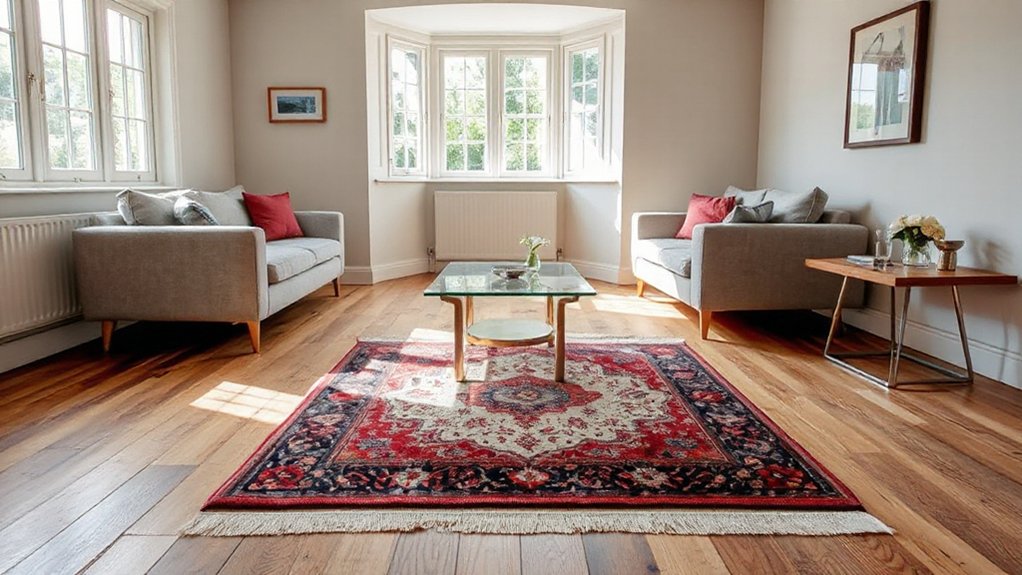
Blending modern floors with heritage charm starts with selecting surfaces that honor history while delivering current practicality. You pair contemporary floors with characterful rugs to anchor rooms, choosing materials and tones that echo local heritage yet perform for daily living.
Opt for wide-plank oak or polished concrete as clean canvases, then layer with vintage textiles and heirloom-inspired textiles to soften edges. Consider underfoot comfort and acoustics, using felted underlays or cork where appropriate.
A mid-tone wood or cool concrete can balance dark timber trims and ornate plasterwork, keeping the space cohesive. Rugs become focal points, not clutter. Select patterns that nod to regional craft without overpowering architectural details.
For texture and warmth, mix vintage textiles with modern flooring, ensuring tactile contrast elevates rather than competes.
Soft Furnishings That Unite Patterns and Colors
Soft furnishings are the bridge between patterns and colors, tying modern and traditional elements into one cohesive room. You’ll use Textile layering to create depth, balancing bold prints with solid anchors. Start with a neutral base and weave in color through cushions, throws, and curtains, ensuring Pattern mixing remains harmonious, not chaotic.
Focus on scale variety and fiber texture to add tactile interest without crowding the eye. Here are practical steps you can follow:
- Layer textures with velvet, linen, and wool to enrich the palette.
- Pair large motifs with subtle repeats to avoid visual overload.
- Introduce a unifying accent color across fabrics and accessories.
- Test swaps by live-styling a single chair or sofa to refine balance.
Accent Pieces That Stay Tasteful, Not Overpowering
Accent pieces should enhance, not shout. You choose tasteful accents that whisper rather than roar, supporting both modern clean lines and traditional warmth.
Focus on scale, proportion, and restraint: a single, well-placed sculpture, a refined vase, or a heirloom photo in a slim frame can anchor a room without dominating it.
Favor materials with quiet texture—brushed metal, warm wood, soft stone—that age gracefully.
Practice subtle ornamentation: a patterned rug in muted tones, a tapestry frame, or a ceiling-smoothed molding detail can add personality without clutter.
Limit palette shifts to two or three complementary hues, letting contrast arise from texture, light, and placement.
Smart Storage That Looks as Good as It Works
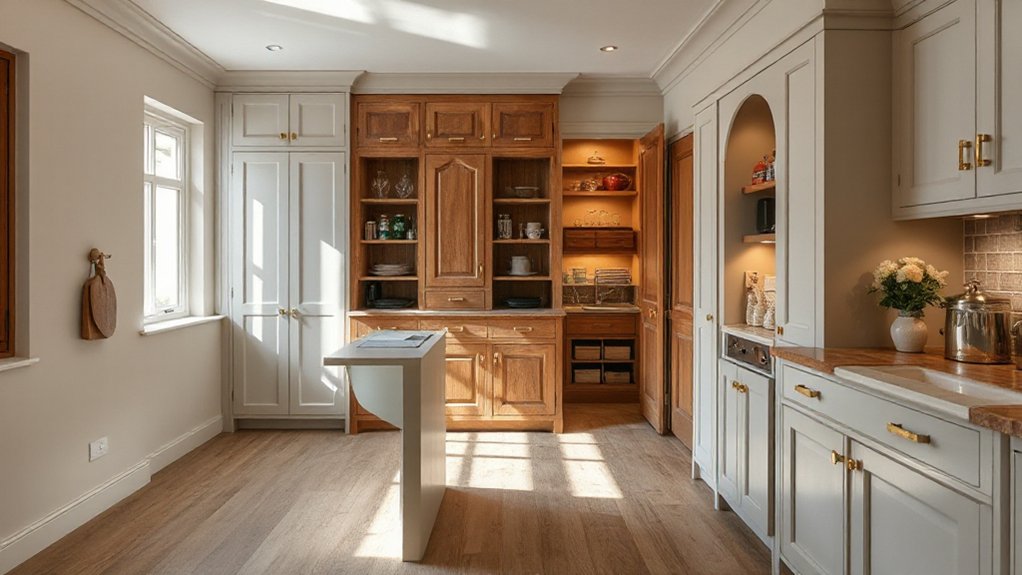
Smart storage should vanish into the room while showing off its ingenuity. You’ll get pieces that hide clutter without shouting for attention, so your spaces stay calm and cohesive. Think hidden compartments and multi functional furniture that earns its keep daily.
Here’s how to prioritize form and function:
- Choose furniture with built-in drawers and flip-top lids for seamless storage.
- Opt for slim, modular units that can be reconfigured to fit changing needs.
- Integrate concealed organizers inside wardrobes and benches to maximize space.
- Select finishes that align with existing materials, so storage feels intentional, not invasive.
With this approach, you gain practical solutions that elevate style, sustain tradition, and keep rooms clutter-free.
Kitchen and Dining: Contemporary Function With Traditional Warmth
In the kitchen and dining room, you can fuse contemporary function with traditional warmth by pairing streamlined, high-performance finishes with familiar textures and timeless silhouettes, so everyday meals feel effortless yet grounded in heritage.
You’ll design zones that flow: quiet prep corners, social cooking islands, and dining alcoves that invite linger.
Choose cabinetry with clean lines in warm timber or matte lacquer, offset by brass or aged metal hardware for Vintage charm.
Countertops should be durable yet tactile, pairing stone or concrete with gently rounded edges for safety and comfort.
Lighting should combine Modern elegance with ambience—think layered LEDs over a traditional lantern silhouette.
Select textiles and ceramics that echo heritage while staying practical, ensuring a durable, welcoming kitchen and dining experience.
Bathrooms That Feel Timeless Yet Fresh
A timeless bathroom doesn’t rely on a single era; it blends clean, contemporary lines with enduring textures to feel fresh year after year. You’ll capture that balance by prioritizing quality materials, thoughtful lighting, and restrained hardware.
- Choose a neutral palette and add character with vintage charm via accents like a brass faucet or oiled-oak vanity.
- Embrace modern minimalism in fittings: wall-hung tub, hidden storage, and seamless tiling for a calm canvas.
- Layer textures—soft towels, woven baskets, stone or concrete surfaces—to keep depth without clutter.
- Use mirrors and strategic lighting to enlarge the space and reflect warmth, creating a timeless, airy vibe.
Welcoming Entryways With Hybrid Style
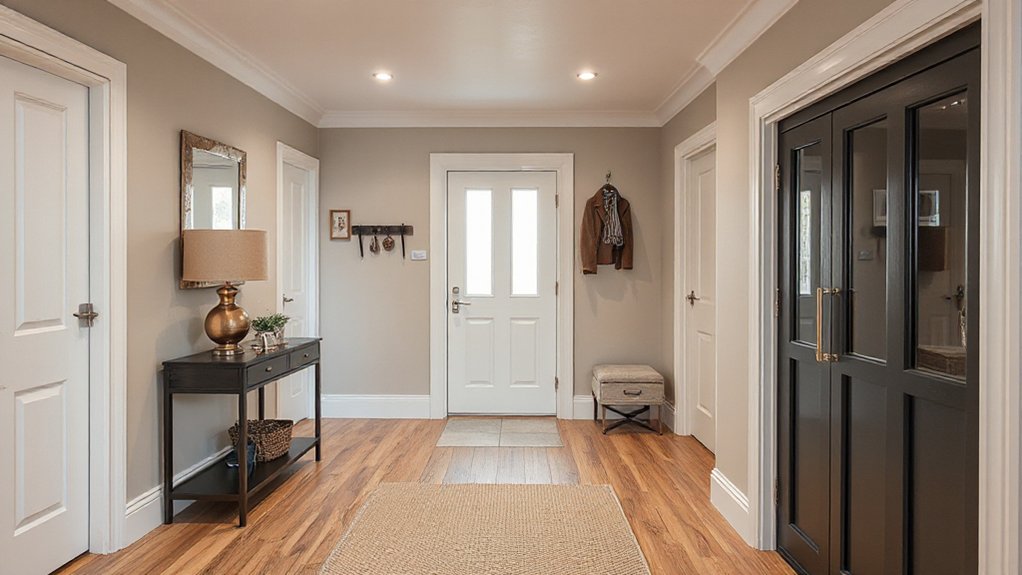
Welcoming entryways set the tone for hybrid style by combining warm, traditional hospitality with crisp, modern efficiency. You create a first impression that’s both inviting and purposeful, so start with a clear path, ample lighting, and concealed storage.
Choose a console table with a compact drawer and a mirror that widens the space without feeling sterile. Integrate traditional textures—woven baskets, timber accents, soft textiles—paired with sleek hardware and matte-finish surfaces.
Add a practical seating nook for quick routines and a charging station tucked beside a charging outlet. Use color thoughtfully: muted neutrals grounded by a bold front door or rug.
Welcoming entranceways become anchors that guide daily flows, balance form and function, and set expectations for the rest of your home. Hybrid style thrives when details align.
Outdoor Spaces That Blur the Indoor/Outdoor Line
You design spaces that fuse inside and outside through seamless shifts, so furniture, flooring, and planting read as one continuum.
Mix materials—think brick and timber, stone and textiles—so edges blur without losing texture or warmth.
Create a garden room ambience that feels rooted yet expansive, inviting year-round use and easy flow between zones.
Seamless Indoor-Outdoor Flow
When the outdoor space feels like an extension of the living area, you create a natural flow that makes every UK home feel larger and more inviting. Seamless indoor-outdoor flow hinges on three practical tweaks and one bold statement.
- Align thresholds and flooring so interior and exterior surfaces read as one terrazzo of space.
- Plant for year-round interest, guiding movement with a cohesive garden landscaping and viewlines toward the exterior facade.
- Use modular, weather-ready furniture that shifts between rooms without clutter.
- Create sheltered transitions—sliding doors, awnings, or pergola roofs—so you can enjoy the space in all seasons.
Mixed Material Transitions
Textures that bridge indoors and outdoors start with deliberate material choices. When you design mixed material interfaces, you blend surfaces to cue the eye, then feet, from living room to patio with intention.
Choose durable, tactile pairings—flagstone and timber decking, concrete slabs with brick reveals, or terrazzo inset paths—to create a cohesive rhythm across zones.
Connections thrive on shared color palettes, grain direction, and scale, so let stone textures echo in cabinetry trims or outdoor seating bases.
Consider seamless thresholds, low-profile joints, and hidden drainage that keep the line continuous.
Introduce subtle differences through finish and patina rather than stark contrasts.
The result: a practical, visionary space where mixed materials unify, guiding movement while preserving both modern and traditional vocabularies.
Garden Room Ambience Bridging
Could you blur the line between indoors and outdoors by shaping a garden room that feels like an extension of the living space? You can achieve this by aligning architecture with surrounding garden rhythms, using large glass walls, and selecting furnishings that echo indoors.
Focus on garden tranquility and plant arrangements that calm the eye and invite lingering. Balance heat retention with ventilation, so the space breathes in every season.
- Choose scale-matching furniture that mirrors indoor living areas.
- Install operable glazing to connect seamlessly between zones.
- Curate plant arrangements that create green walls without crowding.
- Layer textures—rugs, soft seating, and lighting—to unify space.
This approach crafts a practical, visionary bridge, turning a garden room into an authentic living extension.
Budget-Friendly Techniques to Blend Styles
Blending modern and traditional styles on a budget is all about smart substitutions and deliberate contrasts that don’t scream “retro,” but feel intentional. You’ll lean on accessible upgrades that transform rooms without a full overhaul.
Start with vintage charm accents—an oak sideboard repurposed as a statement piece, or brass hardware on modern cabinetry—providing warmth without heaviness. Use budget hacks like updated lighting, paint refreshes, and textile layering to fuse eras.
Choose a cohesive color base and let texture do the talking: linen, wool, and natural jute bring depth while keeping rooms breathable. Mix scale thoughtfully: a sleek sofa with a carved chair, or a streamlined coffee table paired with a carved mirror.
Finish with curated, lightly worn accessories to sustain timeless appeal.
Common Pitfalls to Avoid When Mixing Eras
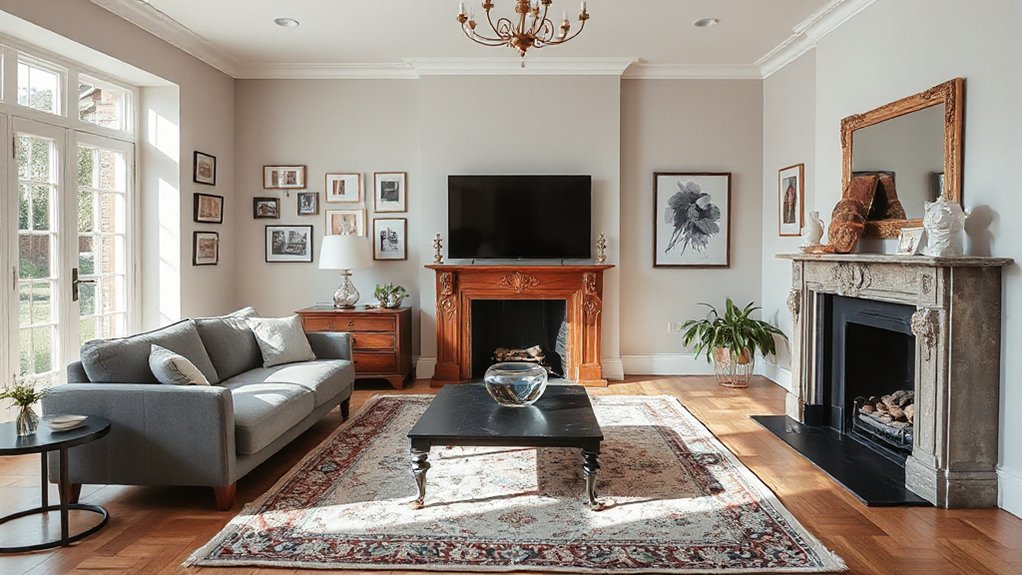
Mixing eras can elevate a UK home, but missteps stand out just as quickly as a bold statement piece. You’ll avoid common pitfalls by planning with purpose, not impulse, and honoring both history and taste.
- Prioritize Historical preservation—don’t overwhelm with novelty; let authentic elements guide your balance.
- Respect Cultural symbolism—choose motifs that resonate locally, avoiding generic references.
- Don’t overfinish—limit finishes and textures to a cohesive handful so contrast reads clearly.
- Gatekeep scale—match furniture and architectural details to room proportions, not trends.
A Practical, Room-by-Room Implementation Plan
Begin with a room-by-room audit that anchors your plan in purpose: identify the architectural cues you want to preserve, the modern comforts you refuse to compromise on, and the budget you’ll allocate for each space.
Next, map the flow from public to private zones, aligning vintage charm with intentional modern minimalism.
In the living room, choose a focal piece that signals tradition, then balance it with streamlined furniture and neutral surfaces.
In the kitchen, favor robust, timeless materials paired with quiet appliances and smart storage.
Bedrooms prioritize calm palettes and tactile textiles, while bathrooms blend classic fixtures with sleek, water-efficient tech.
Document priorities, set milestones, and review quarterly to stay aligned with context, budget, and evolving needs.
Frequently Asked Questions
How Do You Define Modern-Traditional in UK Homes?
Modern-traditional in UK homes blends Historical influences with Cultural fusion, defining it as cohesive contrasts that still feel unified. You mix period details with contemporary lines, prioritize textures, and craft practical, visionary spaces that celebrate heritage while embracing today’s needs.
Can I Mix Eras Without Losing Home Value?
Yes, you can mix eras without losing home value. Think of Historical contrasts as a compass; design harmony keeps style aligned. You’ll blend thoughtfully, like a curator, shaping practical, visionary spaces that feel timeless, and value stays steady.
What Are Quick, Affordable Blending Techniques?
Yes—start with cohesive color schemes and thoughtful furniture placement, then mix eras affordably. Prioritize classic silhouettes in upholstery, add modern accents, and reuse textures. Use lighting for contrast, keep lines clean, and layer rugs for warmth and unity.
How to Balance Period Details With Modern Practicality?
Balance period details with modern practicality by pairing Vintage accessories with Contemporary furniture, mixing textures, layering light, and prioritizing function; plan storage, use durable finishes, and iterate thoughtfully to create timeless spaces that feel both lived-in and forward-looking.
Which Rooms Are Best for Initial Blending Experiments?
Start with your living room or entryway, where you test blends. Use vintage accessories sparingly and aim for color coordination, so textures speak without clashing. You’ll refine palettes, observe flow, and confidently evolve each space.
Conclusion
Blending modern and traditional styles in UK homes is about clarity, not confusion. You’ll find harmony by anchoring rooms with a shared palette, then layering textures, trims, and furniture that nod to both eras. Test ideas in small swatches, scale carefully, and let architectural details guide you. Start with a practical plan, then dream bigger as you polish every corner. Stay curious, adaptable, and respectful of the house’s voice—you’ll create timeless spaces that feel distinctly yours, and that’s the real magic. No stone unturned.