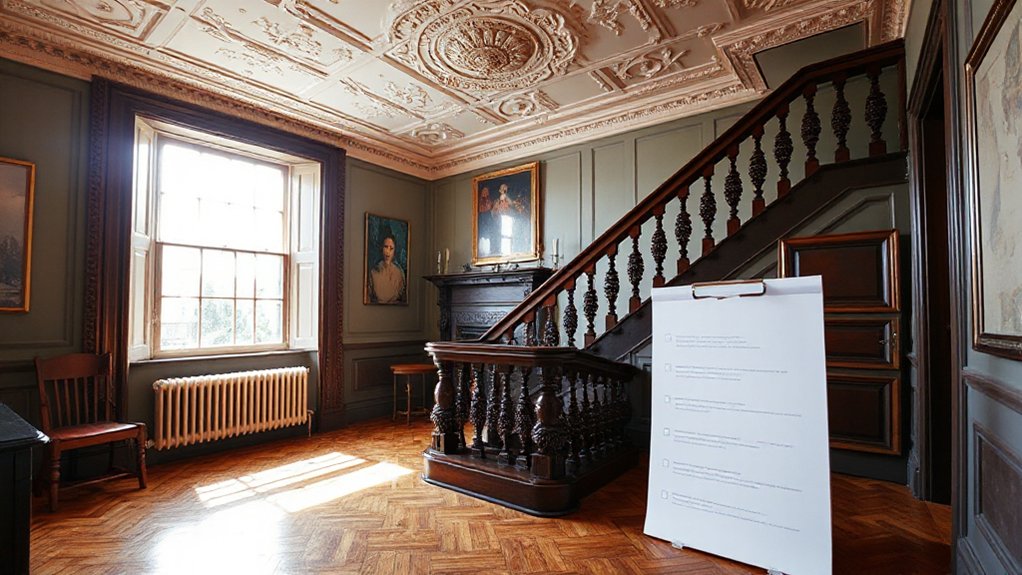
A Glasgow Victorian viewing checklist guides you through architectural features, heritage restoration, and authentic detailing, focusing on material honesty, patina, and conservation strategies that preserve character. It covers structural integrity, masonry, and moisture indicators to catch damp early. You’ll assess heating, plumbing, and energy efficiency, while outlining maintenance planning and retrofit costs. Layout quirks, circulation, and future renovations are mapped against preservation constraints. If you keep exploring, you’ll uncover practical steps to maximize value and compliance over time.
What Makes Glasgow Victorian Homes Unique

Glasgow’s Victorian homes stand out for their architectural realism and craftsmanship, where brickwork, stone detailing, and ornate fenestration meet functional design. You’ll notice how massing, vertical rhythm, and street presence convey a deliberate urban grammar, reflecting both industrial growth and civic ambition.
Victorian craftsmanship informs not only visible surfaces but the underlying joinery, mortar selection, and piecework that endure. Architectural details—quoins, lintels, cornices, and carved stringcourses—are integrated with practical layouts, improving daylight, airflow, and room proportion.
You’ll sense material honesty in soot-darkened brick, lime mortar patina, and contrasting stone. The result is a cohesive aesthetic that rewards careful maintenance, precise restoration, and an eye for period-appropriate improvements, ensuring you experience authentic heritage without compromising modern living requirements.
Structural Integrity Checklist for Brick and Stone Victoria Houses
Structural integrity in brick and stone Victorian houses centers on a precise assessment of load-bearing elements, masonry continuity, and moisture control. You’ll verify foundation stability by inspecting settlement indicators, intervening cracks, and frost-heave patterns, noting any misalignment between floors and doors.
Examine wall material for uniform mortar joints, stone dressing integrity, and presence of coursing gaps that could signal core weakness. Plan a careful spall and delamination check at copings, sills, and lintels, ensuring load transfer remains uninterrupted.
Look for consistent lintel bearing over openings and neat, continuous bed joints, which reflect structural redundancy. Document any irregularities with measurements and photos.
Maintain a disciplined focus on how foundation stability and wall material interact to support overall stability, resisting seasonal loads and architectural shifts.
Damp, Mould, and Drainage: Spotting Hidden Decay
You’ll start by eyeing hidden moisture signs and subtle staining that aren’t part of the décor. Look for drainage failure clues—uneven walls, persistent damp patches, and musty odours that hint at unseen leaks.
This initial scan sets the framework for deeper inspection of damp, mould, and drainage integrity.
Hidden Moisture Signs
Hidden moisture can quietly undermine Victorian homes, so start by knowing what to look for: damp patches, peeling paint, and musty odors are often the first signs of hidden decay. You’ll assess walls, ceilings, and basements for abrupt damp halos, blistered plaster, and warped trim, noting surface texture and color shifts with clinical care.
Water intrusion may present as chronic staining near windows, downspouts, or chimneys, suggesting hidden leaks behind finishes. Verify moisture meters readings and compare with humidity levels in adjoining rooms to map extent.
Track ventilation efficiency, noting condensation on glass and cold surfaces, which signal ongoing moisture transfer. Document seasonal variability and past repairs, distinguishing transient damp from persistent moisture risks.
Your goal is to quantify risk before structural decisions. Hidden moisture demands precise, noninvasive inspection.
Drainage Failure Clues
Drainage failures betray themselves through damp, mould, and drainage symptoms that quietly undermine Victorian walls. You’ll notice staining, efflorescence, and salt deposits where moisture travels, often behind decorative plaster.
Track patterns: persistent damp patches after rain, especially on external corners and near alignment with guttering. Stormwater issues emerge as pooled runoffs or surface channels that saturate foundations.
Subsidence flags uneven floor levels and cracked plaster. Look for damp-induced mould colonies that cling to timber framing or sashes, signaling chronic moisture ingress.
Inspect gutters and flashings for misalignment, leaks, or overflowing downspouts, which exacerbate brickwork decay. Gutter blockages force water onto masonry, accelerating spalling and mortar loss.
Document findings with timestamps, photos, and measurements to guide professional assessment and timely remediation.
Heating, Plumbing, and Energy Efficiency in Victorian Glasgow Homes
Inspect hot-water cylinders for expansion vessels and insulation, aiming for minimal heat loss. Consider energy efficiency features like solar panels and smart thermostats, evaluating installation dates, warranties, and potential retrofit costs within your budget.
Examine energy bills for demand spikes, and request recent boiler service records. Conclude with a practical plan: prioritize upgrades in logical order to balance comfort, reliability, and ongoing running expenses.
Original Features Worth Preserving and Restoration Tips
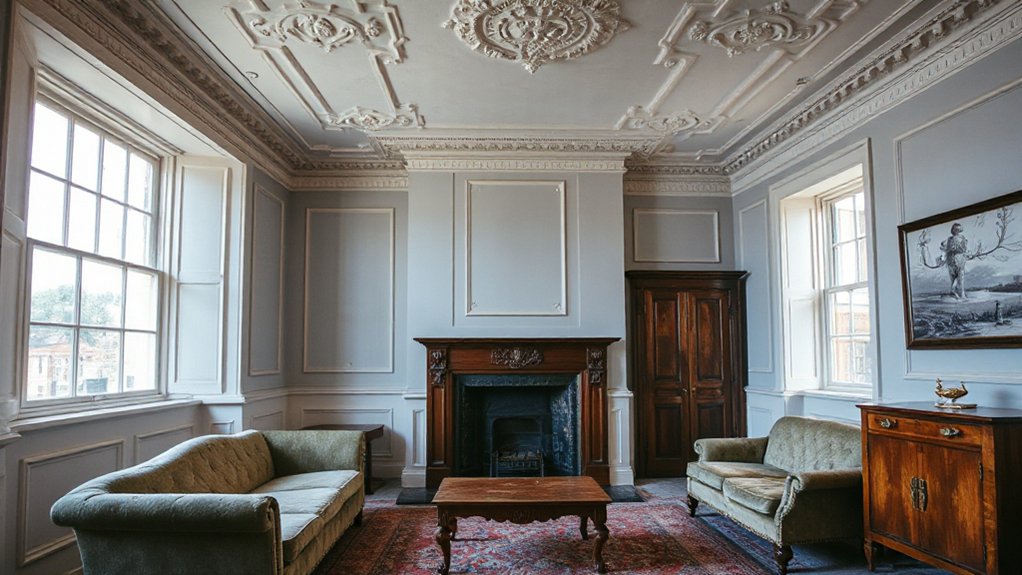
You’ll prioritize preserving original finishes, recognizing which surfaces and textures define a room’s character and value.
A practical restoration plan should map authentic detailing, set clear priorities, and balance preservation with safe modernization.
Consider authentic detailing restoration tips as a framework to guide decisions, ensuring meticulous, technically sound work that enhances both aesthetics and longevity.
Preserving Original Finishes
In practice, you document each finish, then prioritize preservation techniques over replacement, preserving patina and telling the building’s story. When restoration is necessary, you implement conservative treatments, compatible consolidants, and reversible repairs that respect period techniques.
You consult craftspersons versed in lime plaster, shellac, and oil-based finishes to minimize substrate damage. Throughout, you verify color, sheen, and texture against period references, updating records for future buyers.
This method balances authenticity, durability, and market integrity through disciplined preservation techniques. Original finishes matter.
Restoration Priorities Guide
When determining restoration priorities, start by cataloging original features with clear criteria: significance to period, current condition, availability of authentic materials, and potential impact on value. You’ll then separate items into must-preserve, repairable, and elective upgrades, guided by historical significance and architectural aesthetics.
Prioritization hinges on structural integrity, moisture resilience, and cohesion with the Victorian shell, not novelty.
- Structural timbers and plasterwork with intact sash windows
- Ornamented plaster ceilings and cornices showing restoration feasibility
- Original fireplaces, surrounds, and tilework with minimal replacement needs
- Staircases, balustrades, and handrails illustrating craftsmanship
- Decorative ironwork or flooring requiring compatible materials
This guide keeps focus on enduring value, ensuring authentic expression while minimizing disruption to character-rich elements.
Authentic Detailing Restoration Tips
Authentic detailing in Victorian homes demands a methodical approach: identify original features with clear criteria, then apply restoration techniques that honor materiality and age. You assess plasterwork, timber, and metal fixtures for authenticity, documenting patina, tool marks, and joinery.
Prioritize features with proven provenance, and plan interventions that preserve mineral glaze, lath, and sash weights. When restoring, choose craftsmanship techniques that respect period methods, using compatible materials, subtle fills, and restrained repainting.
Avoid over-sanding or modern substitutes that erase authentic detailing. Preserve decorative plaster cornices, mouldings, and fretwork by repairing rather than replacing, matching profiles precisely.
Throughout, consult historic paint layers to guide color and finish choices, ensuring a coherent patina. Your goal: maintain integrity, legibility, and character while enhancing longevity of original features.
Insurance and Maintenance Costs for Glasgow Victorian Homes
- Insurance considerations
- Maintenance budgeting
- Structural and system aging
- Seasonal and emergency planning
- Budget reconciliation and monitoring
Layout Quirks and Navigation in Victorian Glasgow Homes
Victorian Glasgow homes often present navigation quirks that influence how you move through space, so start by mapping circulation routes while considering how aging layouts affect daily use. You’ll notice asymmetric staircases, half-landing landings, and internal doors that constrain sightlines, all shaping flow.
Assess corridor widths and door dimensions against modern furniture and accessibility needs, documenting clearances and pinch points. Pay attention to vestibules or under-stair storage that reroute movement or trap heat.
In kitchens and service rooms, note service corridors that force backtracking or awkward adjacency to dining spaces. Record how stair proximity to rooms affects noise and privacy, and identify rooms with dual-entry routes that create circulation ambiguities.
These layout quirks inform how you plan furniture placement, lighting, and future renovations, highlighting navigation challenges to address early.
Questions to Ask at the Viewing and What Comes Next
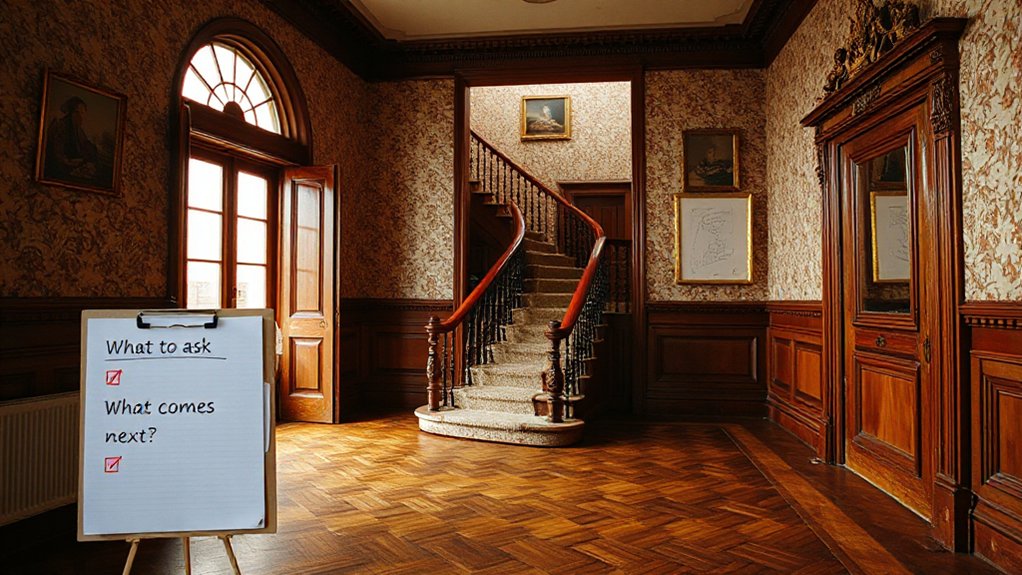
As you tour, prioritize concrete questions that reveal condition, costs, and future feasibility, then map next steps based on responses and your goals. You’ll probe structural integrity, services, and any Victorian architecture quirks that affect maintenance, while clarifying historic preservation constraints and potential grants.
Seek clear cost estimates for immediate fixes and long-term upkeep, and verify any covenants or restoration obligations. Confirm permitted renovations, assessment of solar or insulation options, and potential yield if you plan to reconfigure spaces.
- Structural stability, damp, and timber health
- Electrical, plumbing, and heating condition with compliance notes
- Historic preservation requirements and permitted modifications
- Hidden costs, maintenance cadence, and supplier timelines
- Timeline, financing contingencies, and next-step actions for bids
Frequently Asked Questions
How Long Has the Victorian-Era Heating System Been in Use?
Victorian heating has likely been in use for decades, but verify age with the boiler plate and installation date. Inspect Renovation cracks and joins, noting where old systems interface with modern controls for safety and efficiency improvements.
Are Lime Plaster Walls Prone to Cracking During Renovation?
“Practice makes perfect.” Lime plaster walls can crack during renovation; their Cracking risk rises with movement, moisture, and mismanaged substrates. You must monitor humidity, substrate compatibility, and expansion joints to preserve aesthetic integrity and structural soundness.
What Grant or Incentive Schemes Apply to Glasgow Victorian Homes?
You can access heritage grants and renovation incentives in Glasgow Victorian homes, though eligibility hinges on listing status and restoration scope, with meticulous documentation. You’ll apply through local authorities and HLF-style funds, ensuring compliance, conservation aims, and precise project budgeting.
Is There Space to Expand the Footprint Without Compromising Charm?
You can expand the footprint thoughtfully; interior preservation remains paramount while planning structural modifications. You’ll analyze load paths, preserve cornices, and integrate skylights or rear extensions to maintain Victorian charm with modern, functional space.
How Does Local Council Planning Affect Separate Original Fireplaces?
Local council planning can limit alterations to separate original fireplaces, enforcing fire safety regulations and heritage preservation guidelines. About 60% of listed rooms retain original hearths; you’ll need approvals, specialist surveys, and meticulous documentation before any modifications.
Conclusion
Glasgow’s Victorian homes reward careful buyers with timeless detail and sturdy, brick-and-stone craft, yet demand due diligence. You’ll weigh damp risks, heating efficiency, and drainage alongside original features that shape value. A pointed statistic—Victorian terraces often incur 10–15% higher restoration costs per year than modern equivalents—signals why budgeting matters. Stay observant, document findings, and negotiate scope for repairs. With a methodical viewing, you’ll secure both aesthetic splendor and solid long‑term merit in this storied cityscape.