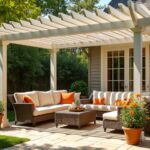
Start by defining your outdoor room: set goals, assess space, and budget. Map zones for living, dining, and circulation, then plan smooth traffic with clear sightlines and focal points. Add versatile seating, layered lighting, and weatherproof hardscapes that endure. Craft planting in vertical layers to boost microclimates and year‑round interest. Choose low‑maintenance, drought‑tolerant selections and smart irrigation. With scalable, budget-conscious choices, you’ll maximize comfort and function—and you’ll uncover how to implement these strategies step by step.
Define Your Outdoor Room: Goals, Space, and Budget
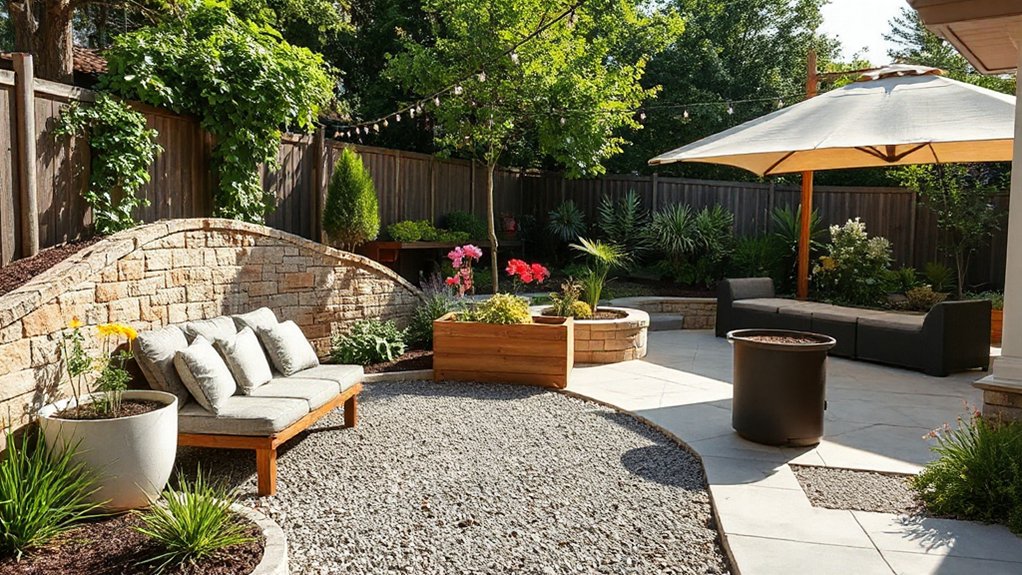
To define your outdoor room, start by clarifying your goals, evaluating the available space, and setting a realistic budget. You’ll translate objectives into measurable metrics, enabling precise scope control and vendor alignment.
Establish zones for living, dining, and circulation, then map access points and storage needs to minimize conflicts.
Budget smartly by prioritizing durable, low-maintenance components and reserving funds for core systems, such as irrigation and lighting.
Your Garden decor choices should support function and flow, not just aesthetics, while plant selection informs scale, seasonal interest, and maintenance commitments.
Document decisions in a simple plan, including timelines and responsible parties.
This disciplined approach yields a coherent outdoor room that integrates with architecture, maximizes usability, and remains adaptable to evolving needs.
Assess Your Space: Size, Shape, Sun, and Microclimates
Evaluating your space begins with a precise inventory of size, shape, sun exposure, and microclimates. You’ll map boundaries, improve flow, and anticipate constraints that affect layout decisions.
Assess size by measuring usable area, setback requirements, and slope, then translate these metrics into scalable zones for seating, paths, and planting.
Analyze shape to identify corners, sightlines, and potential bottlenecks that influence circulation and focal points.
Sun exposure analysis reveals which areas receive full sun, partial shade, or shade throughout the day, informing plant choices and seating placements.
Consider microclimate considerations, such as wind corridors, heat retention, and moisture patterns, to predict performance and maintenance needs.
This foundation guides module selection, ensuring durable, adaptable outdoor spaces aligned with your goals.
Define Your Outdoor Living Zones
After evaluating size, shape, sun, and microclimates, you can segment the space into clearly defined outdoor living zones. Define each zone by its primary function, desired atmosphere, and tolerance for noise, wind, and glare. Establish boundaries with plants, paving, or low screens to create logical progressions while preserving sightlines.
Position gathering areas near utilities and shade structures to optimize comfort, accessibility, and maintenance. Consider circulation paths that minimize cross-traffic and avoid bottlenecks, ensuring intuitive navigation between zones.
Incorporate durable materials and weather-resistant finishes aligned with your climate. Integrate garden pests management strategies discreetly to protect plant health without disrupting aesthetics.
Include a piece of outdoor art within focal zones to anchor composition and reinforce the intended mood. Maintain flexibility for seasonal changes and evolving preferences.
Plan Smooth Traffic: Circulation and Focal Points
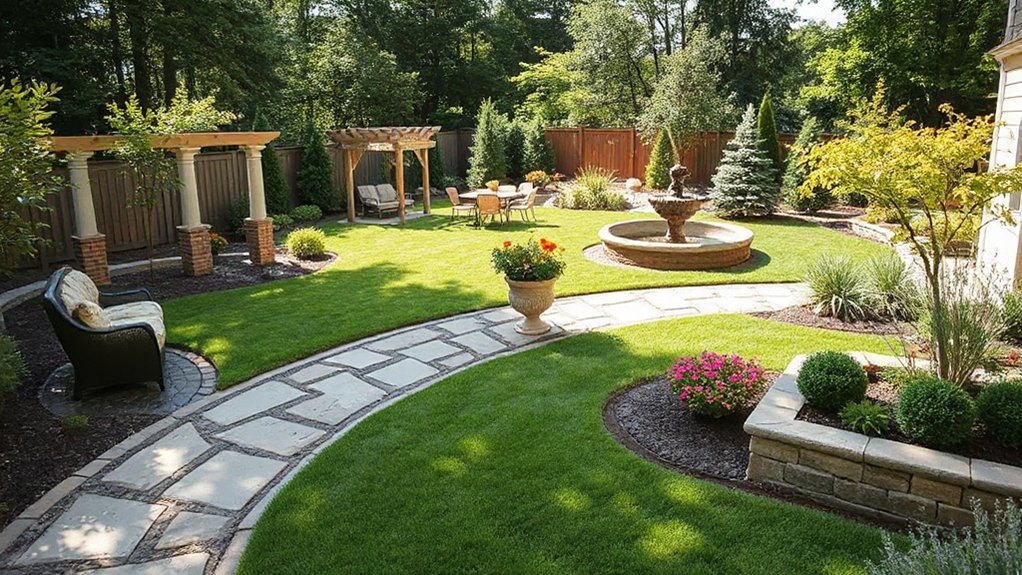
Strategically design circulation to guarantee smooth, intuitive movement between zones while preserving sightlines and focal points. You control flow management by defining primary paths, secondary shortcuts, and clear passageways that minimize conflict between activities. Establish visual focal points—aligned entryways, specimen trees, or water features—that anchor routes and guide natural navigation.
Tie circulation to function: connect kitchens, dining, lounging, and work areas with intentional distances and sightlines. Use material changes, edging, and level shifts to cue direction without clutter. Integrate lighting and soft contrasts to maintain safety after dark, reinforcing a cohesive experience.
Balance openness with enclosure to reduce fatigue and encourage lingering, purposeful use of space.
- Precision in paths creates confidence and anticipation
- Clear focal anchors invite exploration and familiarity
- Subtle lighting guides without overpowering features
- Material shifts signal passages and priorities
Create Seating That Adapts: Flexible Arrangements for Entertaining
Flexible seating arrangements empower adaptable entertaining zones that respond to varying group sizes and activities. You choose modular furniture to create scalable layouts that reconfigure with ease, whether hosting a casual brunch or a formal reception.
Begin with a core seating cluster anchored by a weather-resistant sofa or bench, then add modular pieces—armchairs, ottomans, and low tables—that tuck away when space is needed. Prioritize versatility: rotate seats to encourage conversation or align seating in a semicircle for presentations.
Select outdoor textiles that resist fading and staining, pairing colors and textures to signal zones without visual clutter. Integrate built-in storage or hidden wheels to facilitate rapid reassembly.
Finally, document layout options for quick redeployments across event types.
Dining Nooks That Do More Than Eat
Could a dining nook do more than serve meals—and become a multifunctional anchor for your garden layout? You design with purpose, pairing form and function to extend your outdoor living. A well‑placed nook creates a natural gathering point, routing traffic flow and shaping sightlines while maximizing microclimates.
Rustic charm and artistic accents blend into a cohesive centerpiece, supporting seasonal use and visual cohesion. Choose durable, easy‑to‑maintain materials that weather gracefully and invite lingering meals, work sessions, and casual conversation.
Then layer lighting, storage, and adaptable seating to transform the space as needs shift, keeping the layout efficient and inviting.
- Inviting atmosphere that emotionally anchors gatherings
- Flexible furniture for meals, work, and play
- Subtle rustic charm with enduring materials
- Artistic accents that elevate mood and cohesion
Private Corners With Plant Screens for Seclusion
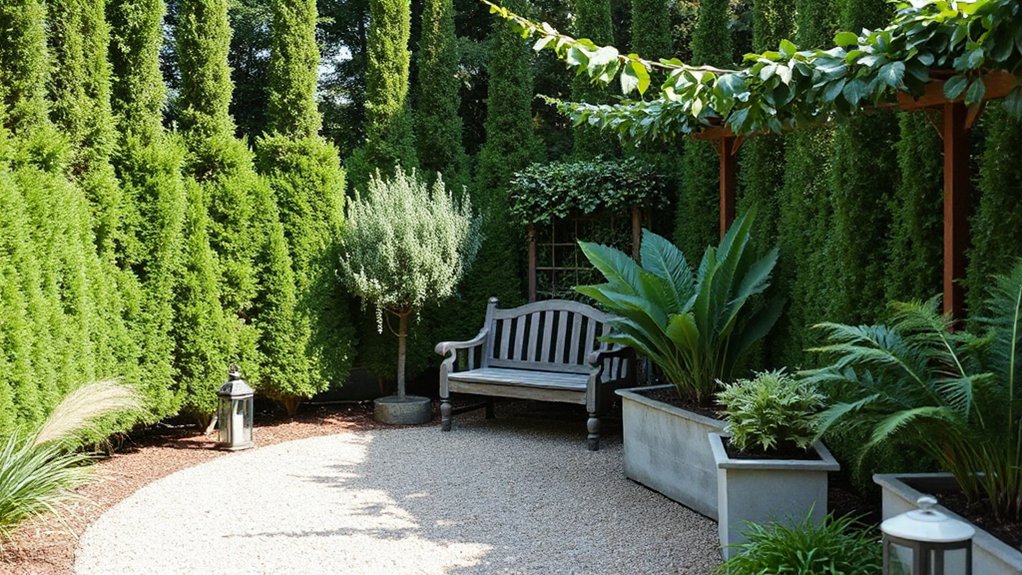
A private corner can become a retreat within your garden when plant screens are used to create seclusion without sacrificing light or airflow. You design with purpose, selecting privacy screens that balance density and openness to maintain visual privacy while inviting breezes and sun.
Plant barriers should be staggered rather than single-row, creating layered depth that deflects sightlines from common paths. Use evergreen textures for year-round cover and seasonal blooms for changing appeal, aligning screen height with adjacent seating to ensure comfort without enclosure.
Ground cover and mulch reduce maintenance and define microzones, while climbers on trellises add vertical interest. Plan for access, scale, and maintenance windows; the outcome is a secluded, breathable corner that enhances outdoor living without dominating the surrounding space.
Pathways That Direct Foot Traffic and Visual Focus
Pathways should guide both movement and sight, aligning foot traffic with focal points while preserving openness. You design routes that direct arrivals toward key features, using material contrast, width shifts, and sight lines to stage discovery. Your path choices balance function with aesthetics, ensuring safe navigation while highlighting flower beds and garden sculptures.
Edge treatments, subtle curves, and graded elevations control pace, inviting linger without congestion. Consistent alignment with sight anchors reduces clutter and reinforces hierarchy, so visitors perceive deliberate space rather than random strolls.
Palette coherence between path and planting strengthens focus, supporting a cohesive outdoor rhythm. Precision in layout yields clarity, accessibility, and visual payoff for every segment of your yard.
- Directs movement with purpose while revealing scenery
- Creates anticipatory pauses near flower beds
- Frames garden sculptures for focal moments
- Maintains openness to accommodate multiple routes
Plan Sun and Shade for Plants and Seating
Leveraging the foreground routes you’ve established, optimize sun and shade to support both plant importance and comfortable seating. In this stage, you align exposure with purpose, balancing heat tolerance and accessibility.
Begin with shade planning to protect sun-sensitive specimens while enabling extended play and dining areas during peak hours. Position seating and pathways to leverage dappled light under deciduous canopies, shifting to full sun for seasonal crops or flowering specimens when appropriate.
Use plant placement to create microclimates: tall specimens on the north side reduce heat load, low groundcovers fill gaps without obstructing sightlines, and staggered layers maintain airflow. Document sun duration across seasons, refining placement so maintenance tasks remain straightforward and inviting spaces stay usable year-round.
Planting Planner: Color, Texture, and Seasonal Interest
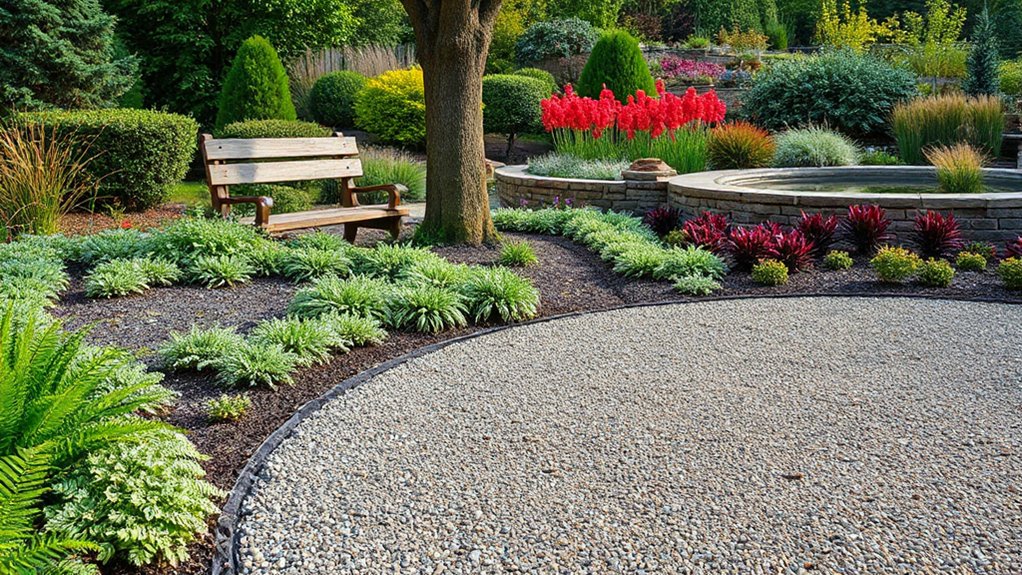
A cohesive planting plan starts with a Color Coordination Guide that aligns bloom times, hues, and foliage to your design goals. You’ll use Texture Through Contrast to create visual interest and tactile variation that guides movement through the space.
Color Coordination Guide
Color is the core driver of mood and cohesion in a garden, so this guide helps you plan a planting palette that balances hue, texture, and seasonal interest. You’ll align color harmony with structural form, selecting foregrounds, midtones, and accents that reinforce your design goals.
Consider shade selection early to guarantee durable performance across light conditions, then map bloom times to sustain interest year-round. Use a restrained palette to avoid visual noise while preserving drama through contrasts in foliage and flower shapes.
The result is a precise framework for reliable color outcomes, not guesswork.
- Define a cohesive color harmony that complements architecture and surroundings
- Prioritize shade selection to maximize longevity and comfort
- Schedule seasonal progressions to maintain rhythm
- Pair foliage texture with limited blossoms for year-round interest
Texture Through Contrast
Texture is the key driver of depth and interest in planting layouts, and you’ll create contrast by pairing bold foliage with delicate blossoms and varied plant forms.
In this section, you’ll leverage textural contrast to define spatial rhythm and guide gaze across the composition. Prioritize a structured mix of coarse and fine textures, ensuring foliage density supports accent colors without overwhelming features.
Pair upright, rigid codes with soft, drooping habit, then layer with mid-height companions to sculpt silhouette progression throughout the season.
Emphasize tactile variety by integrating leaves with different surface qualities—glossy, matte, waved, or serrated—for perceptual richness.
Maintain disciplined repetition of textural motifs to reinforce cohesion, while reserving deliberate surprises for focal points and *gradations* across planting zones.
Seasonal Interest Plan
- Balanced color choreography that shifts with the season
- Textural depth through leaf, flower, and silhouette variation
- Continuous bloom windows via carefully timed species
- Diverse plant palette supporting resilience and habitat value
Height and Layering for Vertical Interest
To create vertical interest, arrange plants by height in distinct layers that guide eye movement and maximize space. You’ll establish a clear hierarchy: groundcovers for base, mid-height shrubs or perennials, and structuring climbers or small trees for upper reach.
This layered approach enhances microclimates, increases light interception, and improves air flow without expanding footprint. In practice, plan for staggered bloom windows to sustain year-round visual appeal and avoid gaps.
Consider vertical planting across borders and focal walls, integrating trellis design where you want vertical momentum or seasonal foliage changes. Use sturdy, well-drained soil and consistent irrigation to support rapid establishment.
Align planting with sightlines from seating areas, ensuring each layer contributes texture, color, and structure while remaining low-maintenance and resilient.
Materials That Endure: Hardscapes and Weatherproofing
In this phase, you’ll prioritize weatherproof materials and durable hardscapes to form a resilient garden backbone.
We’ll outline Weatherproof Materials Guide essentials and Durable Hardscape Essentials to help you choose options that perform across seasons.
Your strategy should balance longevity, maintenance, and visual harmony with surrounding plantings.
Weatherproof Materials Guide
What makes certain hardscape materials stand up to climate and time, and how can you choose those that balance performance with cost? You consider weather resistance, maintenance needs, and lifecycle costs to select materials that endure. Focus on coatings, porosity, and thermal expansion to minimize cracking and fading, while aligning with your climate.
Weatherproof furniture and durable fabrics should pair with resilient substrates for sustained outdoor use, not just ornament. Favor low-maintenance options that resist moisture, UV, and freeze-thaw cycles, and verify warranties for long-term assurance. Balance upfront price with expected service life and replacement cadence.
- Confidence in long-term performance fuels decision certainty
- Surface texture and color reduce heat load and glare
- Minimal maintenance preserves outdoor appeal
- Integrated hardware minimizes corrosion and failure
Durable Hardscape Essentials
Durable hardscape choices hinge on materials engineered for exposure, performance, and lifecycle cost. You’ll prioritize weatherproofing, load tolerance, and long-term maintenance when selecting substrates, joints, and finishes. Plan for drainage, freeze–thaw cycles, and UV exposure, then verify warranties and proven track records.
Choose concrete or pavers with high density, low porosity, and slip resistance, paired with sealants that resist cracking and colour fade. Integration matters: align paths, patios, and steps with drainage patterns and site sun exposure to minimize deterioration.
Consider garden decor as focal accents, not afterthoughts, and ensure compatible textures to avoid wear hotspots. Involve plant selection early to avoid root-induced displacement.
This strategic approach sustains usability, aesthetic coherence, and value over decades.
Low-Maintenance Layouts for Busy Weekends
To minimize upkeep on weekends, prioritize plant selections and layouts that require minimal pruning, watering, and soil amendments. You’ll design beds with drought-tolerant staples and scalable curves that reduce edge maintenance, while ensuring year-round interest.
Choose species that tolerate lower irrigation frequencies and resist common pests, enabling reliable weekend care. Integrate wildflower meadows for seasonal color without frequent mowing, and use vertical gardens to maximize space with minimal soil disruption.
Structure your layout around low-input routines, rotating focal points to minimize access paths and broadcast fertilization. Employ mulch and smart irrigation controllers to further curb labor.
This approach yields a polished, strategic landscape you can enjoy after short, predictable maintenance sessions.
- Seasonal color with minimal effort
- Efficient irrigation, reduced watering
- Vertical gardens for space efficiency
- Low-cut, high-impact focal points
Storage Solutions That Stay Ready and Organized
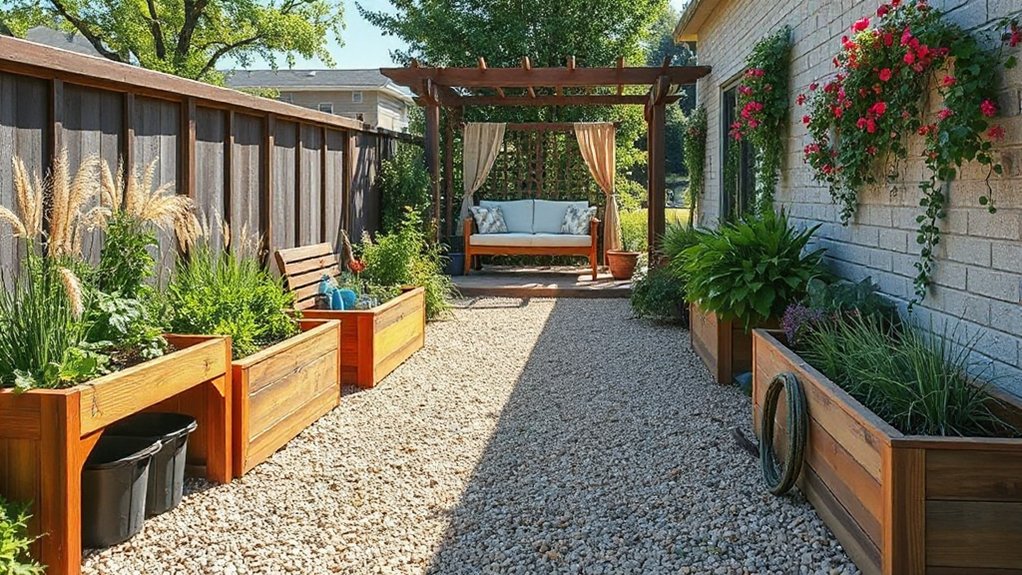
You’ll explore built-in storage solutions that maximize space without clutter, and you’ll prioritize seamless access to tools as you work.
Weather-resistant organizers keep materials secure outdoors, so you don’t waste time weathering or replacing gear.
Multi-functional workstations unify prep, potting, and cleanup, streamlining your garden’s flow and reinforcing a ready-to-use layout.
Built-In Storage Solutions
With built-in storage, you can maximize garden efficiency by integrating cabinets, benches, and shelving directly into the layout. You’ll streamline workflow, reduce clutter, and keep tools, cushions, and supplies neatly tucked away without disrupting sightlines or access to outdoor decor and plant selection.
- Seamless benches with concealed bins that hide seasonal gear while inviting social moments
- Wall-mounted shelves positioned for irrigation, pruning shears, and labels for quick retrieval
- Modular cabinetry designed for weather protection and long-term durability
- Integrated planters that double as storage, separating soil, pots, and moisture meters
Technique meets design: plan heights for reach, color-match hardware for cohesion, and align storage zones with work zones to enhance efficiency.
Weather-Resistant Organizers
Weather-resilient organizers are engineered to endure the elements while keeping tools, cushions, and supplies orderly at a glance. You’ll find a disciplined approach to selection, prioritizing corrosion resistance, UV stability, and drainage to prevent mildew.
Choose weather resistant organizers with gasketed lids and tight-fit seals to minimize moisture ingress, then align units with your workflow to reduce search time.
For outdoor storage, designate zones by item type—fasteners, cushions, plant care, and hoses—so inventory is instantly accessible.
Material choices matter: powder-coated metal, high-density poly, and textured composites balance strength with light handling.
Integrate ventilation where appropriate to prevent odor buildup.
Finally, guarantee secure anchoring against wind loads and seasonal changes for lasting reliability and tidy presentation.
Multi-Functional Workstations
- Seamless organization that invites action
- Durable surfaces for standing work
- Quick-access storage aligned with your projects
- Clear, angle-friendly sightlines for art and sculptures
Lighting for Mood and Safety: Layers and Placement
Lighting shapes mood and guides safety in a garden by layering sources and placing them strategically. You design with three layers: ambient for general glow, task for work areas, and accent to highlight features.
Use low-voltage fixtures for precision and energy efficiency, paired with shielded downlights to reduce glare. Position path lighting to create a continuous line of sight, preventing trips on steps or uneven ground.
Integrate wall-washed accents to sculpt architecture without overpowering greens. Focus on Safety illumination around entrances, seating, and change; guarantee fixtures are rated for outdoors and wired to a dedicated circuit with GFCI protection.
Avoid overlighting; aim for balanced contrast that reveals texture while preserving night sky. Implement controls—dimmers, occupancy sensors, and timers—to maintain layered lighting without waste.
Water Features: Subtle Sound, Big Impact
Water features quietly shape a garden’s rhythm, delivering subtle sound that enhances ambience without dominating the landscape. You’ll select forms that balance scale, flow, and maintenance, ensuring the water sound remains soothing rather than intrusive.
Strategic placement aligns with sightlines and microclimates, optimizing acoustics and energy use while preserving plant health. Materials should contrast textures, supporting a tranquil ambiance through soft reflections and controlled movement.
Automated controls enable steady feedback, so the feature complements tasks from gardening to socializing. Consider seasonal variability to maintain interest year-round, and design around accessibility for cleaning and filtration.
Prioritize quiet pumps, efficient piping, and reliable filtration to sustain performance with minimal disruption.
- Precise zoning that harmonizes water sound with adjacent seating
- Low-maintenance filtration for uninterrupted enjoyment
- Reflective surfaces that amplify moisture serenity
- Timed circulation that respects wildlife and plant cycles
Budget-Smart Layout: Big Impact on a Small Budget
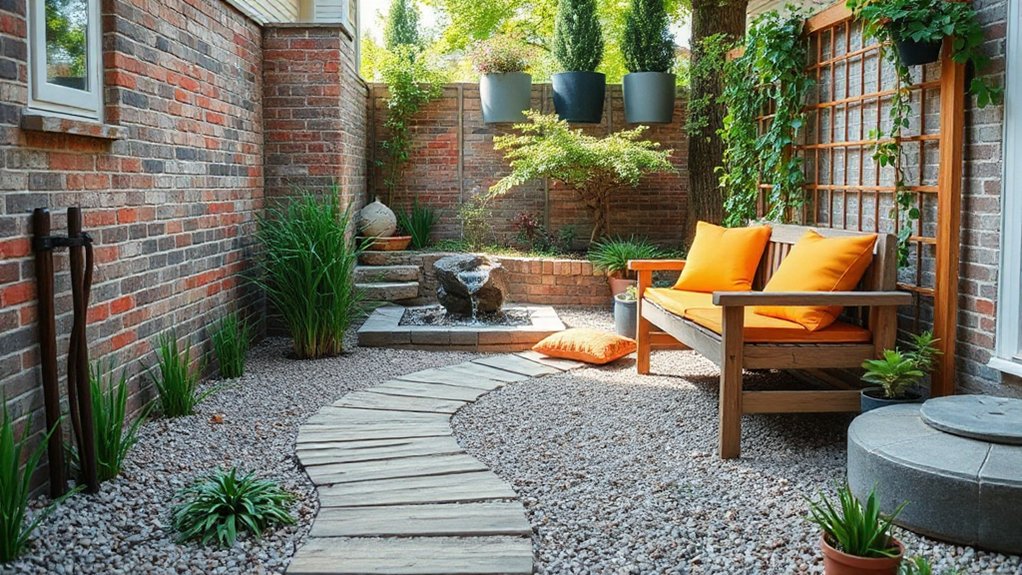
If you’re working with a limited budget, prioritizing layout decisions that deliver high impact with minimal cost can maximize both usability and aesthetics. A budget-smart approach focuses on focal points, circulation, and scalable confidence in materials.
Start with durable, low-cost foundations: patios, paths, and seating zones defined by clear lines and contrast. Use mulch and ground covers to reduce maintenance while guiding movement.
Garden art and outdoor decor should anchor views without clutter, selecting a few statement pieces that replay across sightlines. Layer texture through plant selection, seasonal color, and vertical elements like trellises or sturdy planters.
Emphasize zoning that enhances function—dining, lounging, and play—while keeping maintenance practical. Document costs, compare alternatives, and phase changes to sustain budget discipline over time.
Design Checklists and Next Steps
You’ve built a budget-smart layout, so now you’ll tighten the process with a practical design checklist and clear next steps. You’ll verify spatial flow, identify focal points, and confirm access to key zones.
Assess lighting, irrigation, and seating; align with existing plants, garden art, and subtle outdoor technology for seamless integration. Prioritize durability, weather resistance, and maintenance cycles, then draft a phased timeline to avoid disruption.
Document material specs, finishes, and safety considerations, and assign owners for each task. Measure success with defined metrics: usability, comfort, and visual balance. Track progress, adjust constraints, and prepare a final walkthrough to lock in decisions.
- Clear priorities and ownership
- Measurable milestones and timelines
- Integrated garden art and outdoor technology
- Final walkthrough and validation
Frequently Asked Questions
How Do I Start Planning an Outdoor Room on a Tight Budget?
Start by prioritizing function and budget: map your space, define zones, and source affordable basics. Install a rain garden to handle runoff and create a butterfly habitat, using native plants, mulch, and modular elements for flexibility and cost efficiency.
Which Plants Thrive in My Microclimate and Sun Exposure?
In your microclimate, peppers and herbs thrive with 80% sun exposure. You’ll maximize growth via companion planting and precise soil preparation, boosting resilience by 25%. You assess microclimate, select companions, then tune soil preparation for ideal, symmetric yields.
What Seating Layouts Maximize Flexibility for Guests?
You maximize flexibility by using modular furniture and multi purpose seating arranged in zones, letting guests reconfigure quickly. Opt for lightweight pieces, hidden storage, and clear circulation paths to support adaptable layouts and smooth shifts.
How Can I Create Privacy Without Blocking Views?
You can create privacy without blocking views by using hedge screening and trellis design strategically; position tall screens where views are strongest, prune for density, and install trellises with permeable textures to maintain light, airflow, and sightlines.
What Maintenance Routines Keep the Garden Looking Polished?
Maintenance keeps your garden polished: prune, mulch, and weed regularly; water features and garden art highlight structure; schedule seasonal checks, tighten fittings, and clean debris. You’ll preserve health, color, and balance with a strategic, technical routine.
Conclusion
A garden layout isn’t just pretty—it’s a tested theory: spaces that align with human scale and flow yield more use, fewer conflicts, and greater satisfaction. By defining goals, mapping zones, and layering lighting, you create “outdoor rooms” that adapt to sun, wind, and events. When circulation reinforces focal points and flexible seating supports varied gatherings, people linger, feel safe, and perform better. Start with a clear plan, then iterate—precision today, engagement tomorrow.