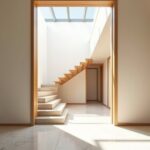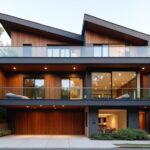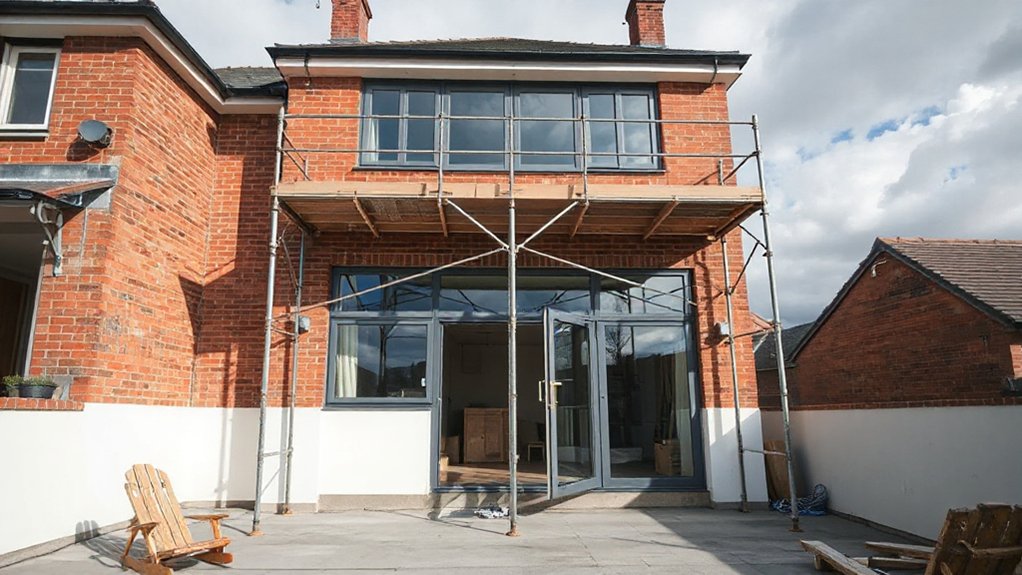
Double storey extensions can skyrocket your budget, yet a precise breakdown helps you control every pound. You’ll face costs for foundations, framing, external finishes, and internal systems, all influenced by site conditions and design complexity. With typical foundation ranges at £120–£300 per m² and added costs for planning, trades, and contingencies, the math matters. Stay with me as we map how to compare quotes, anticipate hidden expenses, and optimize value before you commit.
Is a Double Storey Extension Right for Your Home?
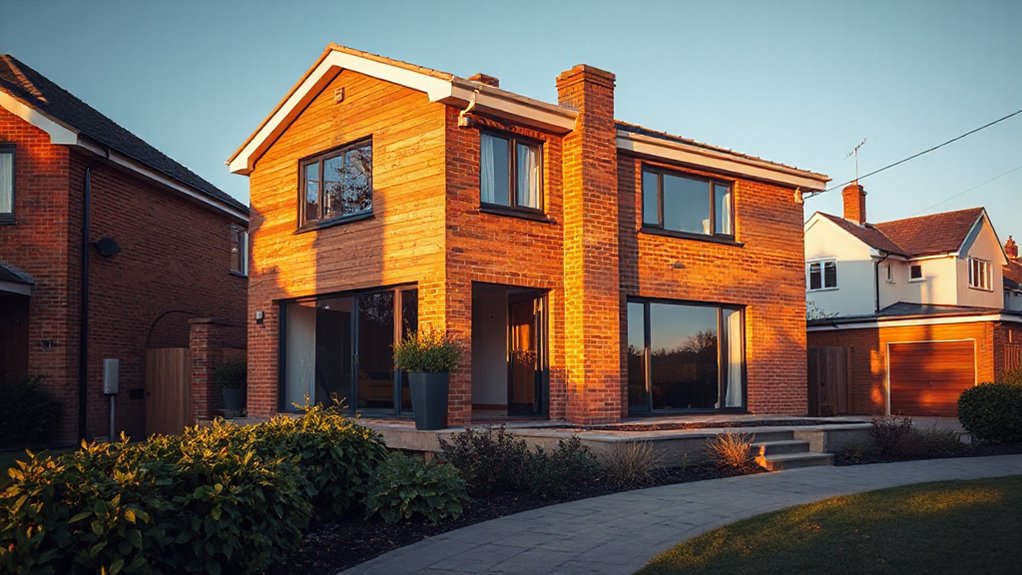
A double storey extension can be a sound solution when you need additional living space without expanding your building footprint. You’ll evaluate alignment with available site area, planning constraints, and structural capacity, then quantify gains in floor-area ratio and usable volume.
Consider the alignment with existing levels to minimize stair footprint and maximize natural light, achieving a measurable uplift in living square meters per cost unit. If your goal includes garden design integration, model sightlines, access, and outdoor passages to guarantee seamless flow, not isolated rooms.
Assess interior decor potential by mapping room functions, circulation, and finish standards to maintain coherence with the home’s current style. Decide if the incremental footprint, massing, and cost per square meter meet your quality targets and long-term use.
What a Double Storey Extension Includes and Its Typical Costs
A double storey extension typically comprises a structural frame, load-bearing walls, two upper floor levels, and a roof with insulation and waterproofing, plus finishes consistent with the existing home. You’ll see quantified components, cost ranges, and performance benchmarks that inform budgeting and value.
Typical shell costs cover framing, substructure, and roofing, while fit-out accounts for glazing, plaster, carpentry, and finishes aligned to interior decor. Materials choices affect thermal performance, sound attenuation, and long-term maintenance, with garden landscaping considerations shaping outdoor integration.
You’ll compare labor hours, unit rates, and contingency buffers to forecast total expenditure. Use these figures to align structural integrity with interior comfort and exterior cohesion, ensuring a coherent result across spaces and elevations.
- Structural frame, walls, floors, roof with insulation
- Exterior and interior finishes aligned to decor style
- Glazing, doors, carpentry, and fixtures
- Garden landscaping integration and drainage considerations
Planning, Permits, and How They Hit Your Budget
Planning timelines vary by jurisdiction and project scope, so you should expect a range of weeks to months for approvals and appraisals.
Permit costs are driven by project value, location, and scope, with VAT and processing fees adding roughly 5–15% to the base.
Understanding these drivers early helps you forecast a budget delta and schedule adjustments for your double-storey extension.
Planning Timeline Impacts
Securing planning approvals and permits can considerably shape your budget upfront; delays typically compress construction windows and raise carrying costs. You face a timeline where approval phases average 6–12 weeks, with a 15–25% schedule variance if amendments occur.
With each week of lag, expect 0.5–1.5% adds to overall project cost, driven by financing and extended site overhead. Design trends influence submission complexity, while material sustainability can alter required documentation and testing intervals.
Tighten your schedule by aligning site surveys, design reviews, and zoning checks within a consolidated 2–3 week sprint. Early coordination minimizes reworks and accelerates critical-path items.
Your planning timeline consequently becomes a measurable driver of total expenditure and completion certainty.
- Time-to-approval ranges and variance impacts on cash flow
- Design trends affecting submission complexity and review cycles
- Documentation requirements for material sustainability
- Scheduling buffers versus cost penalties on the critical path
Permit Cost Drivers
Permit costs tie directly to planning scope and approval cadence. You quantify how permit regulations drive fees: application fees, plan review charges, and boundary adjustments scale with project size and complexity.
For a double storey extension, expect base permit costs to rise with footprint, build height, and construction type. Incremental costs arise from changes in use, material substitutions, and added structural elements, each triggering supplemental reviews.
Approval processes durations influence cost of ownership via holding charges, scheduling shifts, and labor for inspections. Fees often occur at initial submission, during modifications, and at final signoff; anticipate contingency buffers of 5–15% for unexpected reviews.
Documented timelines and defined scope reduce variance, enabling tighter budgeting and accurate cash flow planning.
Site Conditions That Change Your Extension Costs
Site access constraints and soil/ground conditions directly affect your extension’s feasibility, timeline, and cost per square metre.
If access is tight or hoarding is required, expect higher crane, workforce, and debris disposal charges, plus potential delays.
Accurate site assessments now prevent budget overruns by quantifying bearing capacity, soil type, drainage, and excavation risks upfront.
Site Access Constraints
- Access width and turning radii determine crane usage and delivery sequencing
- On-site storage limits extend delivery windows and labour time
- Utility proximity requires protective measures and coordination
- Narrow access increases potential construction delays and costs due to mobilization
Soil and Ground Conditions
Soil stability governs load-bearing capacity, lateral resistance, and settlement potential, so you’ll specify deeper or wider foundations, pile checks, or reinforced bases to meet safety margins.
Ground testing informs stratification, moisture, and organic content, guiding cut-and-fill volumes and drainage planning.
If you encounter hard cohesive soils, expect higher excavation energy and wear on equipment; sandy, spodic, or collapsible soils raise instability risks and haulage costs.
Groundwater presence also alters dewatering needs, impacting pump usage and temporary shoring.
Accurate soil stability data reduces contingencies, while extensive ground testing improves bid precision and reduces post-build adjustments.
Foundations and Structural Considerations: What They Cost
Foundations and structural considerations set the baseline for a double-storey extension, as the cost hinges on load-bearing requirements, soil conditions, and chosen construction method.
- Foundation types: shallow footings vs. deep piled solutions, with cost ranges typically £120–£300 per m² installed depending on geology and depth.
- Structural engineering: detailing for transfers, slab thickness, and beam calculations, enabling safe loads and serviceability.
- Ground improvement: compaction, settlement mitigation, or reinforced soil strategies that influence price and schedule.
- Substructure integration: waterproofing, damp-proof courses, and drainage alignment to existing foundations to prevent future distress.
You’ll quantify loads, select materials, and coordinate with structural engineers to constrain risk and optimize total expenditure.
Double Storey Framing and Roof Options: Price Ranges
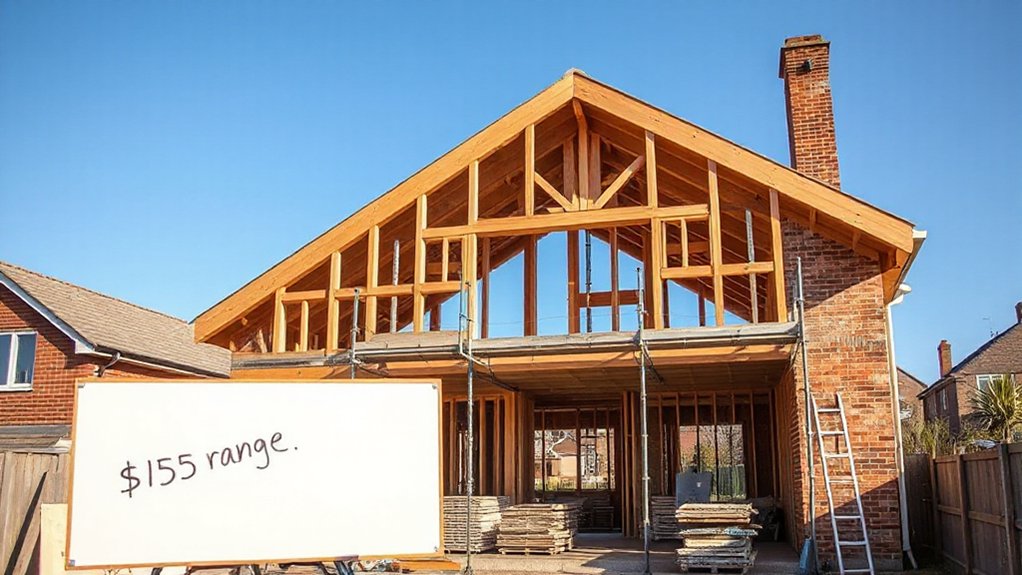
You’ll evaluate framing material options, noting unit costs per square metre and installation times for timber, steel, and engineered wood systems.
Roof system comparisons will compare truss vs. rafter designs, insulation, and waterproofing implications, with quantified price bands and typical lead times.
Consider cost range factors like span, load, finish, and regional labor rates to map how choices shift overall project budgets.
Framing Material Options
- Timber framing delivers lower upfront costs but higher maintenance, with material durability typically 25–40 years under proper treatment.
- Steel framing offers higher strength-to-weight ratio and fire resistance, at a mid-to-high price, with consistent performance and minimal warping.
- Engineered wood (LVL/I-joist) balances stiffness and cost, improving dimensional stability and reducing waste, yet costs sit between timber and steel.
- Hybrid approaches combine materials to optimise aesthetic appeal and load sharing, often maximizing long-term durability while controlling initial outlay.
Material durability and aesthetic appeal guide choice; precise calculations target load, spans, and warranty terms.
Roof System Comparisons
How do roof system choices impact total project cost for a double-storey extension? You’ll compare framing spans, roof pitch, and loading, translating specs into cost bands.
Steel trusses offer faster install and lower labour risk but higher material throughput, while timber rafters deliver lower upfront costs with longer on-site time for fitting.
Pitched versus flat roofs drive waterproofing and insulation strategies, affecting thermal performance and future energy bills.
Roof insulation thickness and material type determine R-values, balancing upfront spend against long-term savings.
Gutter materials influence maintenance needs and lifecycle costs; aluminum gutters incur moderate initial costs with durable performance, whereas galvanised steel may show corrosion risk in coastal sites.
Align insulation and gutter choices with climate data and local build-up requirements to optimize total cost accuracy.
Cost Range Factors
With double-storey framing and roof options, price bands hinge on structural choice, span, pitch, and loads. You’ll see ranges driven by framing type (timber vs steel), joist spacing, and wall plate continuity, with higher spans adding reinforcement factors.
Roof configurations shift costs via truss vs rafter systems, insulation depth, and ceiling rafter tails, plus pitch affecting fastener and sheathing quantities. Material price volatility and labor productivity further refine totals, while compliance costs adjust for seismic or wind zones.
Budgeting tips emphasize scenario modelling, contingency buffers, and itemized subcontracts. Contractor selection should target firms delivering detailed bill of quantities, staged payment plans, and proven performance under similar extensions.
Expect precise unit-rate data, with clear tolerances for framing, roofing, and ancillary trades.
Internal Layout: Walls, Doors, and Space Planning Costs
Internal layout costs cover the allocation and construction of walls, doors, and space planning elements that define room flow and usability. You quantify wall lengths, stud spacing, door types, and frame finishes to establish structural divisions and circulation.
Expect linear measurements for partitioning, with standard materials priced per square meter and per linear meter for framing, plaster, and finishes. Door openings drive clearance calculations, swing direction, and hardware costs, while drywall and plaster finish costs hinge on height, coating, and fire-rating requirements.
Space planning yields cost adjustments from alternative layouts, zone separation, and accessibility needs. Factor interior lighting placement, switch geometry, and ambient layers into overall costs.
Emphasize space optimization by minimizing unnecessary partitions, maximizing usable area, and aligning layouts with projected furniture footprints and traffic patterns.
Insulation, Dry Lining, and Finishing Materials
- Insulation materials: thermal targets, U-values, and thickness choices
- Dry lining techniques: board type, fastener density, and joints
- Air sealing and moisture control considerations
- Finishing material performance metrics and costs
Windows, Doors & Natural Light: Cost Factors
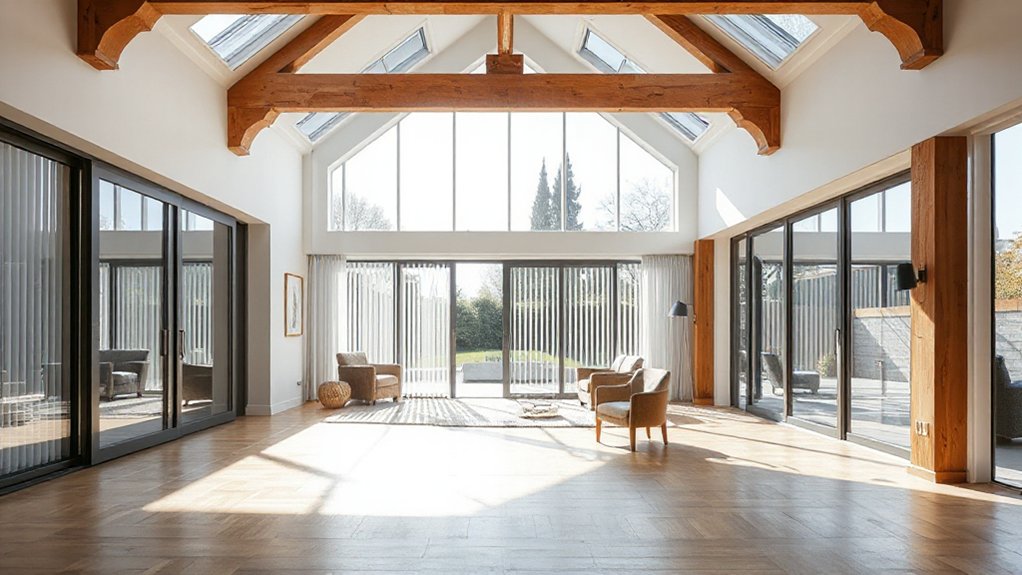
Choosing windows and doors for a double-storey extension directly drives installed cost and long-term operating performance; consequently, dimensioned glazing area, frame material, opening type, and compliance with building regulations determine both upfront spend and ongoing energy bills.
You’ll quantify targets by thermal performance, daylight factor, and air tightness, then compare options with measured U-values and SHGC.
Window styles influence fabric costs: fixed panels reduce hardware, while ventilated units add actuators and controls.
Natural lighting maximization must balance glare and overheating risk, using glazing distribution and lintel heights to meet code.
Material choices—aluminium, uPVC, timber—alter heat loss, maintenance, and replacement cycles.
Door provisions affect weather sealing and security, while operable fenestration contributes to passive solar gains and occupant comfort.
MEP Essentials: Mechanical, Electrical, and Plumbing Costs
You’ll start with an Electrical Load Assessment to quantify peak demand and align service size with the extension’s fixtures and equipment.
Then you’ll specify Plumbing Fixture Sizing to meet code, usage patterns, and fixture unit calculations, ensuring correct flow rates and waste routing.
Together, these MEP cost drivers translate into discrete line items for panels, wiring, outlets, and fixtures, enabling accurate budgeting and risk assessment.
Electrical Load Assessments
- Load calculations baseline and verification
- Service size, panel, and conductor implications
- Demand factors and code alignment
- Documentation and future-proofing considerations
Plumbing Fixture Sizing
You’ll specify fixture counts per room, then compute continuous flow rates and simultaneous use factors. For hot water, target a peak draw of 2.5 GPM per bathroom group and 1.5 GPM per kitchen sink, adjusting for fixture efficiency.
Fixture sizing requires matching pipe diameters to expected loads: 3/4 in for most baths, 1/2 in for lavatories, and 1 in or larger for shared showers in multifamily scenarios.
You’ll verify venting adequacy and trap sizes to prevent siphonage.
Document results as Fixture sizing tables, including fixture units, implied runoff, and reserve capacity.
Confirm compliance with local codes and provide a margin for future fixtures or additions.
Plumbing fixtures.
Plumbing & Wet Rooms: What to Expect and Budget
Planning plumbing and wet room work for a double-storey extension hinges on airtight layouts, compliant drainage, and precise scope. You’ll specify fixture counts, pipe routes, and drainage gradients to minimize future maintenance and guarantee council approval.
Expect costs for rough-in, waterproofing, and final trim, with estimated ranges per square metre by room type. Include smart home integration for outlets, sensors, and remote shutoffs, plus acoustic insulation to meet noise criteria in wet zones.
Water supply redundancy and pressure testing add 5–10% contingency. Material choices—PVC vs. copper, tundish protection, and trap seals—drive variances of ±15%. Plan for moisture barriers, floor waste positions, and fall calculations to prevent ponding.
- Fixture inventory with unit costs and installation hours
- Drainage layout and fall calculations
- Wet room membranes, waterproofing, and sealants
- Smart home integration and acoustic insulation considerations
Heating, Cooling & Ventilation: System Choices and Costs
Designing HVAC for a double-storey extension builds on the tight plumbing layout and drainage considerations you’ve outlined, focusing on system selection, efficiency, and control strategies that fit tight envelopes and variable loads.
You’ll evaluate HVAC systems by load calculation, accounting for room-to-room variability and external shading. Choose high-efficiency modulating equipment and consider heat recovery options to minimize energy losses.
Ducted solutions should optimize trunk-and-branch runs, with sealed joints and low-pressure drops to sustain performance.
For cooling, prefer inverter-driven air conditioning with zoning to match occupancy patterns and thermal mass effects.
For ventilation, apply balanced systems with energy recovery wheels or plates.
Document payback periods, incremental costs, and ongoing energy efficiency credits to justify the design.
Exterior Works: Cladding, Render, and Finishes
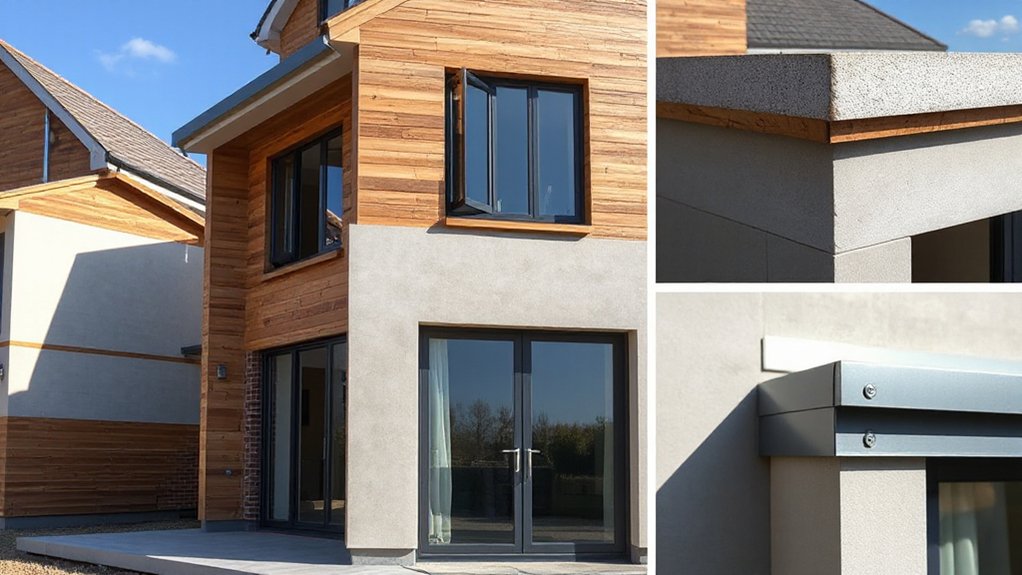
Choosing cladding, render, and finish materials requires a precise balance of thermal performance, weather resistance, and lifecycle costs. You evaluate U-values, heat flux, and thermal bridging, targeting under 0.25 W/m2K for extensions, to minimize cooling loads.
Exterior aesthetics and material durability drive selection, with cost per square metre and maintenance intervals critical for lifecycle budgeting.
You compare weather resistance ratings, UV stability, and freeze–thaw performance, preferring materials with proven long-term stability.
Durability data informs warranty length, impact resistance, and maintenance frequency, reducing total cost of ownership.
You quantify embodied energy and recycling options to meet sustainability goals, while ensuring compatibility with existing substrates and air barriers.
Finish choices influence moisture management, weather sealing, and paint adhesion, affecting long-term performance and appearance.
- Thermal performance metrics and U-values guide material choice
- Durability, warranty, and maintenance cycles drive lifecycle cost
- Aesthetics and durability balance exterior appearance with longevity
- Sustainability, embodied energy, and recyclability inform selection
Project Management, Trades, and Overheads
Effective project management, skilled trades, and overhead control translate into predictable schedules, cost certainty, and quality outcomes for a double storey extension.
You implement a structured schedule with critical-path analysis, detailed sequencing, and milestone gates, reducing variability by quantifying task durations and resource loads.
Labor productivity is tracked via unit rates, with weekly variance reports to catch deviations early.
Supply chains are secured through prequalified suppliers, with formal lead-time caps and contingency buffers.
Overheads are allocated by activity-based costing, linking administration, site support, and temporary works to specific tasks.
You monitor progress using earned value metrics, triggering corrective actions before schedule slippage worsens.
Be vigilant for project delays, adjust sequencing, and verify material sourcing to prevent procurement bottlenecks and cost escalations.
Budgeting for Contingencies and Hidden Costs
- Identify scope gaps that trigger extra materials or trades, and assign probability-adjusted cost ranges.
- Map site conditions (weather, access, drainage) to contingency percentages aligned with project phase.
- Separate contingency planning from profit margins to avoid double counting.
- Track changes daily, updating forecasts to preserve realism and control.
You’ll apply a transparent methodology: base-case estimates, then add a quantified buffer for hidden costs, including permit delays, design revisions, and escalation.
Maintain documented assumptions, review thresholds, and minimum reporting intervals.
This disciplined process reduces surprises, improves cash flow forecasting, and informs decision-making when trade-offs are required.
ROI-Driven Value Adds for a Double Storey Extension
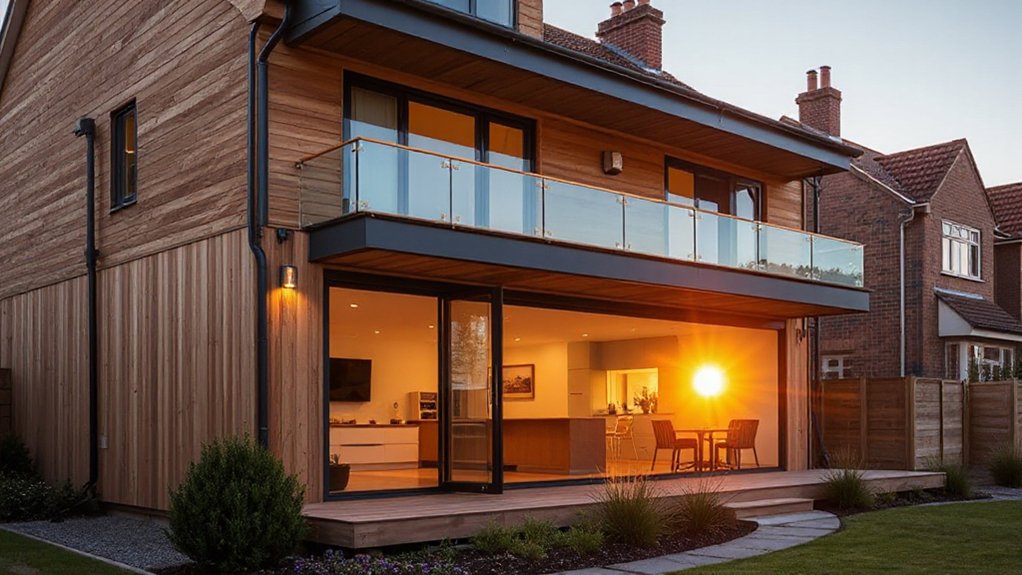
ROI-driven value adds in a double storey extension translate measurable improvements into dollar-for-dollar gains by targeting scope expansions that boost resale value, increase usable living space, and optimize energy efficiency. You quantify impact by cost per square meter, projected sale uplift, and annual energy savings, then normalize to a simple payback horizon.
Key levers include maximizing floor area through efficient room layouts, improving thermal performance with insulation and glazing, and reducing maintenance costs via durable materials.
Interior decor choices influence perceived value through cohesive finish levels and durable aesthetics, while landscaping design enhances curb appeal and parcel attractiveness, boosting marketability.
Track metrics weekly during construction, comparing predicted versus actual gains, and adjust scope only when value deltas exceed predefined thresholds. Maintain rigorous documentation to justify ROI-driven decisions.
How to Compare Quotes and Choose the Right Contractor
When comparing quotes for a double storey extension, start by standardizing the scope: make certain each contractor items the same work, materials, finishes, and contingencies so price differences reflect true performance rather than misaligned assumptions.
- Compare unit rates for similar tasks and confirm inclusion of design aesthetics considerations and material durability assessments.
- Request a detailed bill of quantities with quantities, brands, and performance specs.
- Verify project timeline, payment schedule, and milestone penalties to manage cash flow and risk.
- Check warranties, aftercare, and defect liability periods aligned with material durability and long-term maintenance.
Aim to quantify risk-adjusted cost per square metre, assess subcontractor capabilities, and choose a contractor with transparent metrics and a proven track record.
Frequently Asked Questions
How Long Does a Double Storey Extension Typically Take From Start to Finish?
Typically, you’ll complete a double storey extension in 4–6 months, factoring in foundation planning and design approval; site access and weather impact schedule. You’ll need permits, structural checks, and trades coordination before commencing construction.
What Unexpected Costs Commonly Arise During Construction?
Unexpected costs commonly arise as foundation challenges and permitting delays. You should budget contingencies for soil instability, quote revisions, and temporary works, monitor subcontractor changes, and secure timely approvals to minimize downtime, schedule slippage, and cost overruns.
Which Materials Offer Best Long-Term Value Versus Upfront Cost?
Sustainable materials offer the best long-term value; you should weigh life-cycle costs. Budget friendly options include engineered timber, recycled steel, and high-density fiberboard, which balance upfront price with durability, maintenance, and energy efficiency, yielding favorable 20–40 year payback estimates.
How Does Insulation Affect Running Costs and Comfort?
Insulation slashes running costs and boosts comfort: you’ll see lower energy bills and steadier indoor temperatures. Energy efficiency rises with thickness and material quality, improving thermal performance by quantifiable margins, like 20–40% depending on system and climate.
What Questions Should I Ask Contractors Before Signing a Contract?
Ask contractors these questions: what’s your project timeline, payment milestones, and warranty terms; clarify permit requirements, design considerations, and budget planning contingencies; request detailed cost breakdowns, change-order procedures, and energy performance targets to mitigate overruns.
Conclusion
A double storey extension isn’t tiny math—it’s a precision engine. Budget shockwaves come from foundations (£120–£300/m²) and structural quirks, but smart choices trim them fast. Start with site data, lock finishes early, and layer trades efficiently to prevent overruns. Ask for detailed quotes, validate scaffolding, damp-proofing, and insulation specs, then compare apples-to-apples. Plan for a contingency of 10–15%. Do the sums, because a vetted plan turns cost chaos into a turbo-charged, value-rich home upgrade.