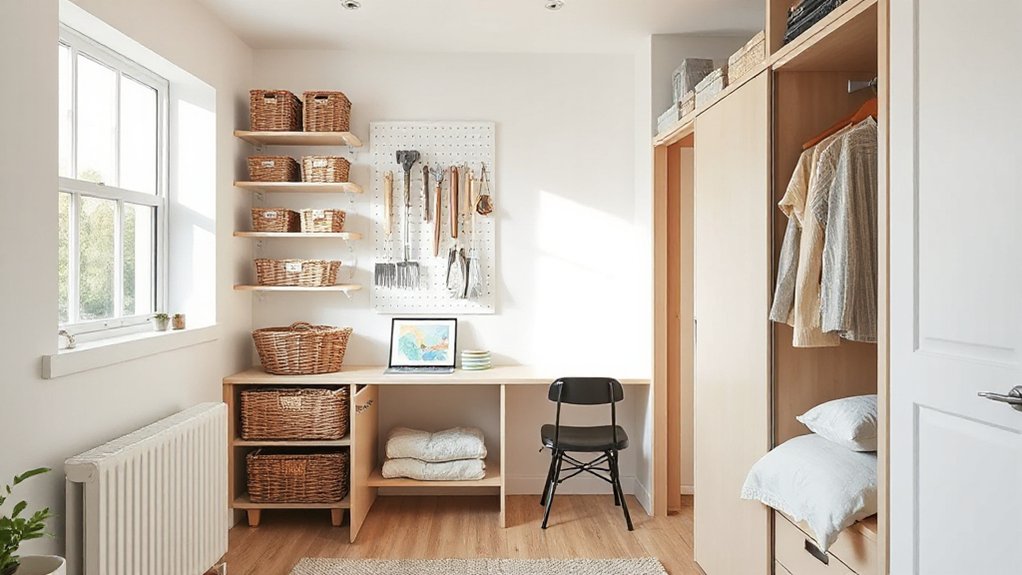
In small UK homes, you maximise space with built-in, multi‑purpose storage and precise measurements. Start with a detailed floor plan, mark pathways, and measure in millimetres to convert to usable centimetres. Prioritise under-stair and alcove storage, bed frames with built‑in drawers, and modular wardrobes with adjustable rails. Use vertical hacks, corner solutions, and lift‑top furniture to reclaim floor area. Finish with moisture‑resistant materials and light, reflective finishes to feel larger—more details await to help you optimise every nook.
Why Tiny UK Homes Demand Smart Storage
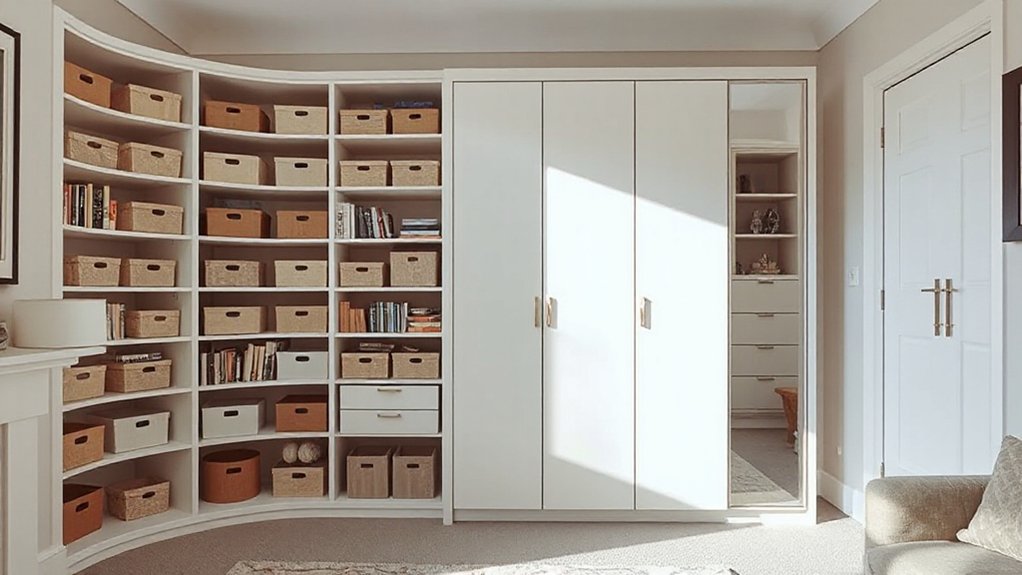
Tiny UK homes demand smart storage because every square foot counts in compact living. You’re balancing daily needs with limited footprint, so you design around efficiency first.
In urban living, you face higher land costs and denser development, which pushes storage closer to the core of your layout. You’ll benefit from built-in solutions that reduce clutter without sacrificing function, such as wall-integrated units, multi-purpose furniture, and vertical racks.
Prioritise flexible configurations that adapt to seasonal shifts and occupant changes, avoiding deep, unused cavities.
Smart storage supports safety, enabling clearer walking paths and reduced trip hazards.
How to Measure Your Space for Practical Storage
Measuring your space accurately is the foundation for practical storage in a tiny UK home. Begin with a crisp floor plan: record wall lengths, doorway clearances, and fixed obstructions. Use a metal tape to capture exact dimensions in millimetres, then translate to centimetres for ease of planning.
Note ceiling height, cornices, skirting, and alcoves—these affect usable volume and potential storage zones. Mark each area on a drawn grid, labeling potential pathways and access points to maintain clear circulation.
Assess proportional relationships between storage needs and available space, prioritizing high-utility zones first. Consider modular solutions that adapt to evolving requirements, enhancing space utilization without compromising function.
Finally, document your measurements alongside intended storage concepts to support precise, organized storage organization decisions.
Under-Stair Shelves: Hidden Heroes for Compact Homes
Under-stair spaces offer hidden storage that you can tailor with custom shelving to fit irregular nooks and awkward profiles. You’ll implement practical, multi-functional designs that maximize vertical and footprint efficiency without sacrificing access or aesthetics.
This approach aligns with hidden storage, custom shelving solutions, and the space-savvy benefits of multi-functional stairs.
Hidden Under-Stair Storage
Have you ever considered how much hidden storage an under-stair space can offer? Hidden under-stair storage leverages otherwise wasted vertical and floor area with minimal intrusion. You’ll typically encounter hidden compartments, accessible via discreet panels, pull-outs, or lift-up lids, designed to preserve streamlines.
Under stair drawers provide structured, accessible zones for seasonal items, cleaning supplies, or memorabilia, while maintaining a tidy corridor. The key is precise fit, clean alignment, and robust supports to handle daily use without sagging.
Construction focuses on moisture resistance, fixed shelving spacing, and integrated hardware that hides within the framing. You benefit from a stealthy, efficient solution that blends with your existing interior, avoiding bulk or visual clutter while maximizing available depth and height.
Custom Shelving Solutions
When space is at a premium, custom under-stair shelving transforms awkward nooks into precise, accessible storage horizons. You’ll design around structural constraints, leveraging vertical height and floor space for maximum efficiency.
Custom shelving delivers targeted compartments, avoiding wasted gaps and overhangs, while maintaining clear access paths. Choose materials that balance strength with finish, ensuring durability under daily use and seasonal loads.
Modular systems enable scalable configurations, letting you reconfigure as needs shift without major disruption. Integrate pull-out bins, adjustable shelves, and labeled zones to improve visibility and retrieval speed.
Precision joinery reduces flex and squeaks, preserving a quiet, clean aesthetic. Align finishes with adjacent cabinetry for a seamless flow, and document installation for future maintenance or expansion.
Multi-Functional Stairs Space
Ever wonder how to maximize every square inch of a compact home? Multi-functional stairs space turns under-stairs into efficient storage hubs without compromising access. Design guides emphasise modular shelving that fits the rise profile, offering vertical continuity and simply adjustable depths for varying items.
You’ll implement hidden compartments, pull-out drawers, and labeled bins to maintain order while keeping pathways clear. Integrate staircase decor that blends with your scheme—neutral finishes, tactile textures, and concealed hardware for a seamless look.
Include Step lighting to illuminate shelves and reduce lamp clutter, using warm LEDs aligned with each tier for safety and ambience. Prioritise load-bearing considerations, guarantee ventilation, and preserve emergency access.
Finalise with a clear map of zones to simplify daily retrieval and maintain tidy, practical spaces.
Bed Frames With Built-In Drawers for Clutter-Free Mornings
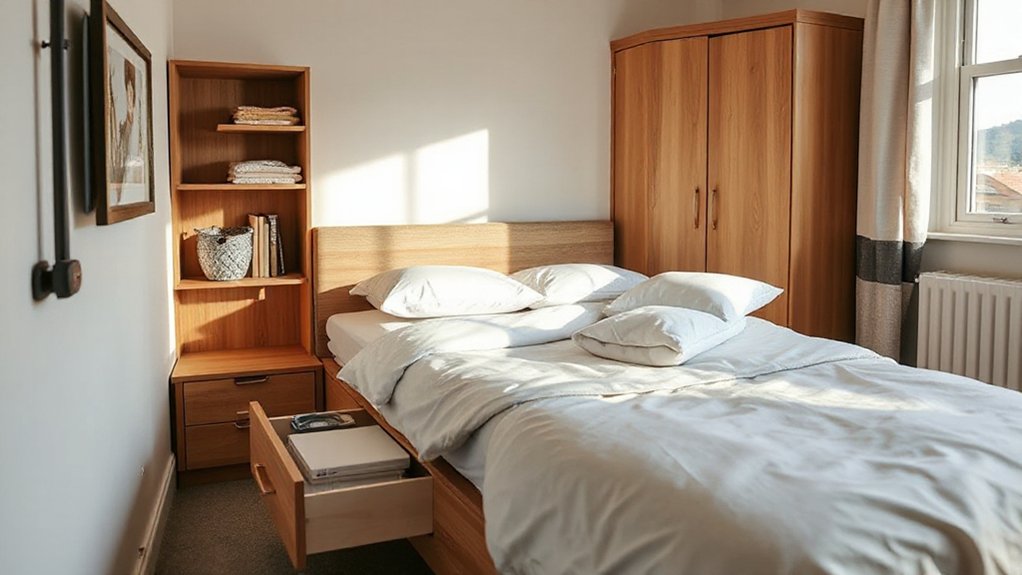
With built-in drawers, you maximize storage efficiency without adding extra furniture footprint.
You can streamline your morning routine by keeping essentials—pajamas, socks, chargers—organized and within arm’s reach.
This setup supports a practical, clutter-free start to the day while maintaining a clean, polished bedroom look.
Built-In Storage Efficiency
Maximize your bedroom’s footprint with bed frames that include built-in drawers, a practical solution for clutter-free mornings. Built-in storage efficiency hinges on accessible pull-out compartments, sturdy drawer slides, and precise bed-to-furniture integration.
Choose frames with reinforced corners to support weight from stacked storage containers and seasonal items without sag. Enhance space by aligning drawer depths with typical clothing or bedding dimensions, reducing wasted cavity.
Labeling zones inside drawers enhances retrieval speed and maintains order over time. Integrate under-bed airflow to preserve mattress hygiene while keeping contents dust-free.
Select finishes and hardware that resist daily use and cleaning cycles, ensuring longevity in compact rooms. For ideal space optimization, pair these frames with modular organizers that adapt to changing storage needs.
Morning Routine Organization
Morning routines can run smoothly when your bed frame includes built-in drawers, keeping essentials within arm’s reach and reducing morning rummaging. You’ll organize by zone, assigning drawers to daily items (toothpaste, medications, accessories) and seasonal backups (gloves, sunglasses) to under-bed bins.
Prioritize accessibility: place everyday items in the top drawers and reserve deeper spaces for bulk goods or rarely used outfits. Use clear, labeled containers and dividers to maintain visibility and reduce search time.
Implement a quick nightly reset: lay out outfits, pack bags, and close drawers completely to prevent morning delays. Sync drawers with a compact mirror and charging station to streamline grooming.
These practices support consistent Morning routines and provide practical organization tips that scale with your space.
Loft and Alcove Nooks: Best-Fit Storage for Awkward Spaces
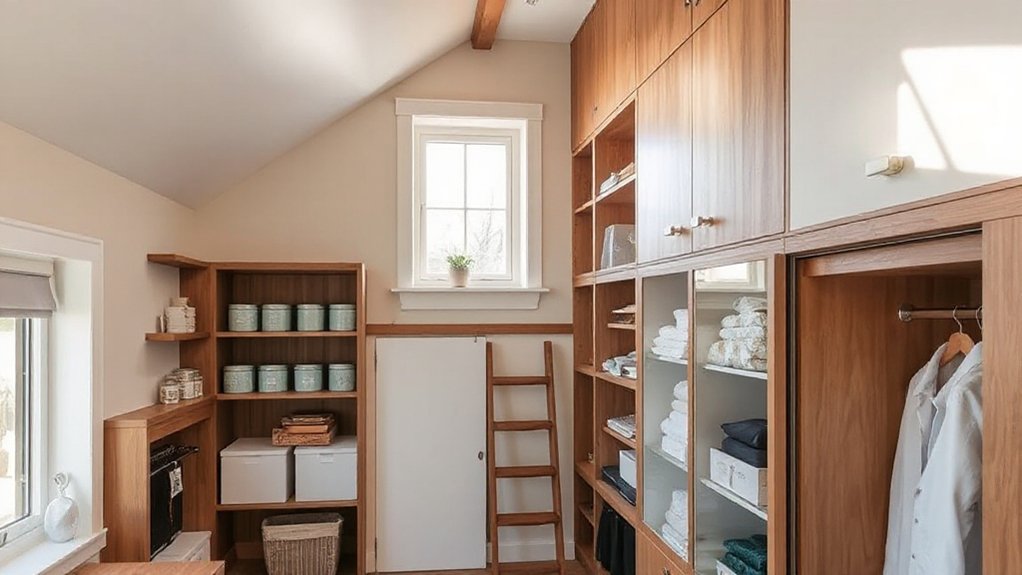
Loft and alcove nooks offer underutilized real estate that, when organized correctly, can dramatically boost storage without expanding your footprint. You optimise these awkward zones with precision, choosing configurations that respect structural constraints and airflow.
Start by mapping each nook’s dimensions, then select modular, shallow cabinetry that doesn’t crowd high or slanted ceilings. Use adjustable shelves, pull-out dividers, and door-mounted pockets to maximize reach without excess depth.
For aesthetics and durability, blend vintage decor elements with modern hardware, ensuring finishes resist dust ingress in tight gaps. Prioritize sustainable materials, such as solid wood veneers and recycled metal fittings, to reduce footprint without sacrificing strength.
Finally, install integrated lighting and labeling to streamline access, maintaining a clean, functional appearance that respects existing room proportions.
UK-Friendly Wardrobe Inserts: Modular Systems That Adapt
UK-friendly wardrobe inserts hinge on modular configs, adaptable rail systems, and space-saving inserts. You’ll assess how modular wardrobe configs reconfigure with changing storage needs.
How adaptable rail systems support external adjustments, and how space-saving inserts maximize efficiency in compact UK wardrobes.
This discussion sets the groundwork for practical, scalable solutions that fit real-world sizes and loads.
Modular Wardrobe Configs
Configurable closets highlight adjustable rod positions, shelf depths, and drawer heights, so you can optimise for seasonal outfits, bulkier pieces, or compact footwear zones.
In small UK homes, precision fits reduce wasted space; choose between tall, mid, and low modules to mirror room dimensions and reach.
Tool-free assembly keeps disruption minimal, while rigid frame construction ensures stability under load.
Consider back panels with integrated ventilation to deter moisture buildup.
When selecting components, prioritise uniform rail spacings and compatible hardware to simplify future reconfigurations and maintenance.
Adaptable Rail Systems
You’ll benefit from reduced shelf shimmy, improved item accessibility, and consistent load distribution across the rail. Key benefits include modular hang points, scalable lengths, and straightforward retrofit compatibility with existing frames.
With rail versatility, you can tailor rod spacing to prevent crowding, accommodate longer garments, or create compact sections for accessories. This is storage innovation in practice: components lock securely, yet release cleanly for reorganization.
Prioritise corrosion-resistant finishes, minimal profile designs, and standardized mounting patterns to guarantee durable, tool-free adaptability across varied UK wardrobes.
Space-Saving Inserts
Use adjustable rails, stackable boxes, and sliding shelves to create dedicated zones for tops, bottoms, and accessories, minimizing unused dead space. These inserts support rapid reconfiguration as seasons change or wardrobe contents shift, keeping your system functional with minimal effort.
Integrate lighting thoughtfully; compact, discreet LED strips or puck lighting improve visibility in deep compartments, reducing visual clutter and enabling precise selection.
Pair your inserts with coherent Colour schemes to enhance perception of space and order. Choose materials and finishes that resist wear, maintain clean lines, and sustain a polished, minimal aesthetic.
Multi-Functional Furniture: Seating That Stores and Shines
When you choose multi-functional furniture for seating, you gain immediate storage gains without sacrificing style. You’ll deploy pieces with built‑in compartments, lift‑top benches, and ottomans that conceal essentials, blending practicality with design integrity.
Prioritise mechanisms that perform quietly and withstand daily use, ensuring seamless access without clutter disruption. Materials should be durable, easy to clean, and resistant to UV fading for long‑term aesthetics.
Consider modular options that reconfigure for guests or workspaces, preserving floor space while expanding capacity. Vintage decor touches can complement minimal lines, creating a timeless feel without compromising function.
For exterior needs, select cushions with removable covers and weather‑resistant finishes, enabling outdoor storage integration when the layout permits. This approach maintains a tidy, cohesive look across living and entertaining areas.
Vertical Storage Hacks: Towers, Rails, and Wall Units
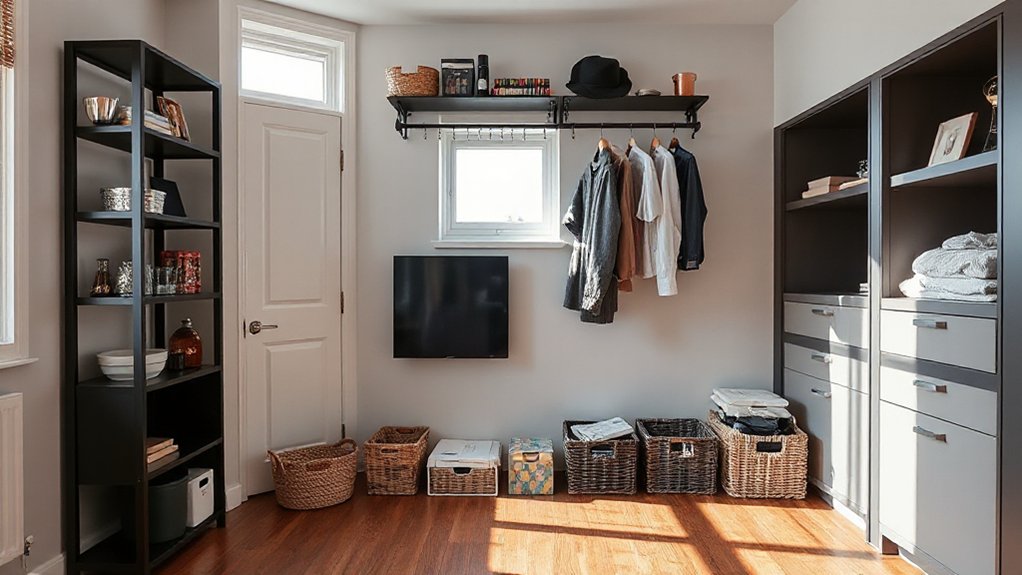
Vertical storage solutions leverage vertical real estate to maximize capacity without expanding footprint. You can harness towers, rails, and wall units to create modular, highly accessible systems that reduce clutter in tight UK homes.
1) Towers with adjustable shelves, integrated drawers, and soft-close mechanisms optimize every centimetre.
2) Rails enable hanging, sliding, and lightweight rod extensions for seasonal garments and accessories.
3) Wall units pair cabinetry with open display, keeping frequently used items within arm’s reach.
4) Storage baskets and closet organisers tame loose items, preserving airflow and visual order.
When selecting, prioritize modularity, weight capacity, and compatibility with existing panels.
Labels, clear bins, and uniform finishes aid quick retrieval.
Installments should align with traffic zones to prevent bottlenecks and maintain a streamlined aesthetic.
Kitchen Storage That Frees Counter Space
Hidden vertical storage and pull-out counter organisers can dramatically free your prep space by reclaiming countertop real estate without sacrificing accessibility. You’ll learn how to integrate slim, concealed solutions that keep essentials within reach while maintaining a clean workflow.
This discussion will compare installation considerations and performance benefits to help you choose the most practical options.
Hidden Vertical Storage
- Install tall, slim pull-out bins mounted to a vertical track.
- Use slim shelving with adjustable dividers for spices and oils.
- Incorporate concealed compartments behind panels for utensils.
- Add magnetic rails for metal tools and lids.
Pull-Out Counter Organisers
Their sliding rails glide smoothly, with soft-close features that reduce noise and wear. Materials range from stainless steel to durable plastics, with adjustable dividers to tailor compartments to your needs.
When configured correctly, these systems transform unused under-counter gaps into efficient, user-friendly storage zones, enhancing workflow and cleanliness. Consider weight capacity, rack spacing, and compatibility with existing cabinetry.
For space saving hacks, opt for multi-tier trays and hinged fronts to maximize visibility. Regular maintenance prevents sticking, ensuring long-term performance and reliable access to essential items.
Bathroom Storage That Stays Stylish and Tidy
A well-organized bathroom blends style with function, and smart storage is the key to keeping surfaces clean and fixtures accessible. You’ll implement efficient systems that prevent clutter while preserving aesthetics. Use deliberate zoning to separate daily-use items from rare-need products, reducing visual noise.
- Install recessed or wall-mounted cabinets to hide toiletries while maintaining easy access.
- Integrate vanity organisation with drawer dividers and labeled bins for small items.
- Opt for open, minimal shelving paired with closed baskets to balance display and containment.
- Choose moisture-resistant materials and soft-close mechanisms to sustain longevity and quiet operation.
This approach supports bathroom accessories and vanity organisation, delivering tidy surfaces and a polished, practical workspace.
Laundry Zones for Tight Spaces That Stay Organized
When space is tight, designate compact laundry zones that streamline tasks without clutter getting in the way. You design a dedicated area that combines sorting, washing, and drying in a single footprint.
Use labeled bins to separate fabrics and colours, preventing cross-contamination and speeding up cycles.
Install a slim wall-hung cabinet for detergents, additives, and tools, keeping surfaces clear.
Opt for a compact, front-loading machine and stackable or compact dryer to conserve floor space.
Include laundry baskets near the workflow to capture cadence—sorting, loading, and staging.
Drying racks should be wall-mounted or foldaway, reducing permanent clutter while offering air circulation for delicate items.
Establish a routine: daily load, midweek refresh, weekly maintenance to sustain organization.
Entryways That Welcome and Organise in One Go
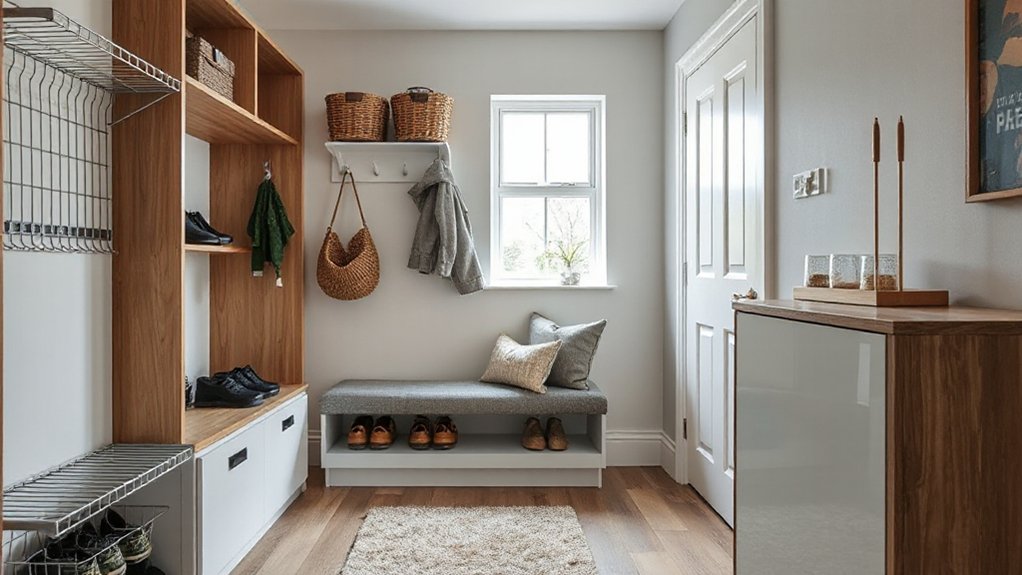
You greet guests and yourself with a space that’s welcoming, organised, and easy to navigate. This entryway acts as a practical hub, combining storage solutions that save steps and keep essentials at hand.
We’ll explore straightforward, space-saving strategies that balance aesthetics with function to set the tone for the rest of your home.
Welcoming Entrances, Organised
A welcoming entrance blends aesthetics with function, so a well-organized entryway sets the tone for the entire home. You optimise flow and visibility with purposeful placement, reducing clutter and improving daily routines.
Welcoming decor and practical storage converge to create a confident first impression and lasting order.
- Install a compact console with integrated storage for keys and mail.
- Use a labelled wall hook rail for coats, bags, and umbrellas within easy reach.
- Choose a mirror with a slim frame to enhance light and perceived space.
- Implement adjustable shoe and tote bins to keep floors clear and accessible.
Consider warm, even entryway lighting to highlight focal decor and improve navigation, while materials skew toward durable finishes for heavy use.
Practical, Space-Saving Hubs
A compact bench doubles as a lid for hidden storage, while wall-mounted hooks keep daily items within easy reach. Integrate smart lighting to adjust brightness by time of day, enhancing visibility without wasting energy.
Seating and storage zones are positioned to align with typical traffic flow, reducing bottlenecks at doorways. Prioritize energy efficiency through LED fixtures and sensors, ensuring lights activate only when needed.
The result is a focused, adaptable zone that supports quick entry and organized living.
Hallway Alcoves: Smart Enclosures and Slim Storage
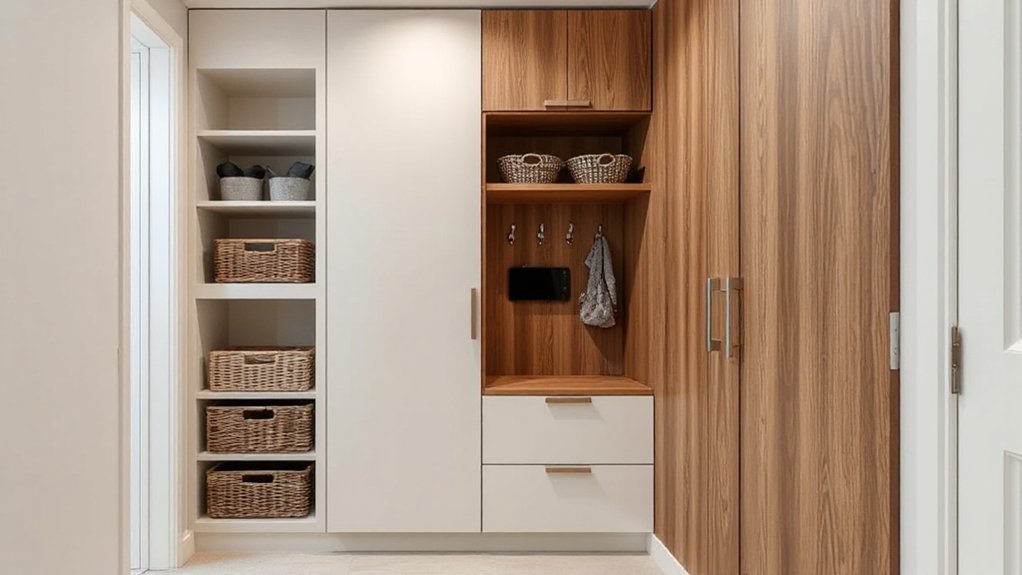
Hallway alcoves offer discreet opportunities for smart enclosures and slim storage that don’t disrupt circulation or aesthetics. You can maximise utility by selecting compact, ventilated units that blend with wall finishes, keeping floor space clear and easy to navigate.
Implementing smart enclosures in alcoves supports quick access to outerwear, shoes, and daily essentials without clutter. Use vertical solutions to exploit height, pairing hooks with shallow cabinetry for a cohesive look.
- Install tall, slim cabinets with adjustable shelves.
- Add a recessed shelf above seating for mail and keys.
- Integrate a pull-out bench with hidden storage.
- Mount wall hooks and a narrow mirror to reflect light.
Smart enclosures and slim storage deliver organised entryways with minimal footprint.
Hidden Storage in Sofas, Beds, and Coffee Tables
Sofa compartments provide discrete housing for cushions, throws, and remote controls, preserving seating aesthetics while maximizing floor area.
Bed drawers extend beneath the mattress to hold bedding, seasonal clothing, or off-season textiles, reducing need for external chests.
Coffee tables with integrated shelving or lift-top mechanisms convert surface real estate into storage zones without compromising use.
Materials and hardware should balance weight, durability, and quiet operation to maintain a tidy, engaging room atmosphere.
Prioritize mechanisms with soft-close features and clear labeling for consistent, user-friendly access.
Convert Unused Corners Into Useful Cubbies
Unused corners often mask valuable storage potential, so converting them into compact cubbies can dramatically improve organization without sacrificing floor space. You’ll create accessible, modular pockets that blend with existing decor while keeping pathways clear. Corner cubbies optimise vertical real estate and adapt to varied items, from cables to seasonal accessories. Implement tight tolerances and sturdy materials to prevent wobble and wear.
Plan dimensions to match typical household items, avoiding overhangs that impede door movement. Maintain tidy fronts with uniform finishes for a cohesive look. When you install, prioritize ventilation if storing textiles or damp items. Consider hidden backs for slim, dust-free storage.
Corner cubbies, unused corners, deliver continuous storage lines without intruding on central living areas.
1) Measure clearance before choosing sizes
2) Use durable, light-fast materials
3) Align with wall studs for stability
4) Label and rotate contents regularly
Rented-Friendly Storage Solutions That Don’t Require Drilling
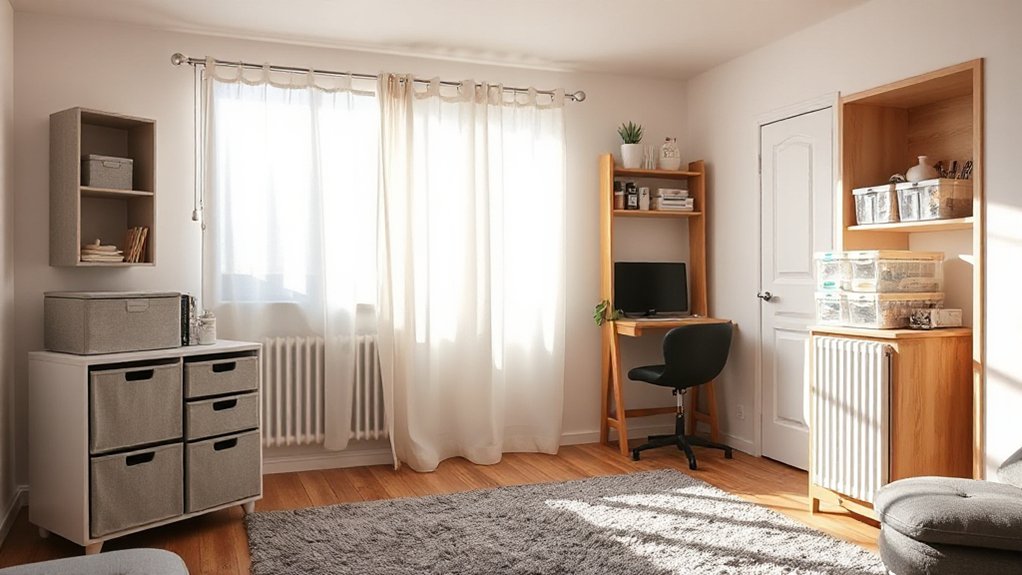
When you’re renting, you need storage that’s secure, versatile, and won’t require drilling holes or altering walls. Rented-friendly solutions prioritise non-invasive installation, adjustable fixtures, and clear weight ratings to prevent wall damage.
Start with freestanding units you can reposition, such as modular shelves and column storage, that optimise corners and doorways without screws. Opt for tension-mounted organizers and adhesive-friendly options for lightweight items, guaranteeing safe, damage-free fitting.
Choose stackable bins with lids to consolidate items and simplify access. For eco friendly materials, select rattan, bamboo, or recycled plastics that resist moisture and wear.
Incorporate vintage storage pieces, like retro metal lockers or enamelware chests, for durable, stylish competence. Guarantee items are easily removable, leaving no residue or marks, preserving your security deposit and future flexibility.
Aesthetic Storage: Finishes and Textures That Feel Larger
Aesthetic storage can visually expand a space by leveraging finishes and textures that reflect light and create depth. You’ll use measured finishes and controlled texture contrasts to enhance perceived size while staying practical.
Subtle gloss on surfaces minimizes shadow lines, while matte elements absorb glare for balanced perception. Consider seamless panels, light-coloured veneers, and reflective laminates to maximise daylight bounce without clutter.
Apply texture strategically to add interest without crowding the eye, pairing smooth fronts with restrained ribbing or soft fabric panels in seating alcoves.
1) Aesthetic finishes that reflect light across cabinet surfaces
2) Texture contrasts between smooth doors and tactile accents
3) Light, cool-toned palettes to amplify airiness
4) Consistent grain direction and hidden hardware for visual flow
Use sparingly, maintain proportion, and prioritise cohesion.
Budget-Friendly Hacks for Quick Wins
Here are cost-saving, high-impact moves you can implement in days rather than weeks: prioritize modular components and readily available finishes to trim lead times and price tags without sacrificing function. You’ll deploy compact, modular systems that slot into existing footprints, minimizing demolition.
Choose standard sizes, pre-finished panels, and hinge-on accessories to accelerate installation and adaptability. Opt for adjustable shelves, magnetic or peg-friendly organizers, and clear, labeled bins to simplify retrieval and inventory.
Implement dual-purpose furniture and wall-mounted units to keep floors clear, enhancing perceived space without costly renovations. Budget hacks rely on consumer-grade materials engineered for durability, with precise tolerances for easy alignment.
Plan quick wins around reorganization, tagging, and routine maintenance, ensuring sustained efficiency. Quick wins translate to measurable space gains with low disruption.
Seasonal Decluttering Plan to Maintain Space
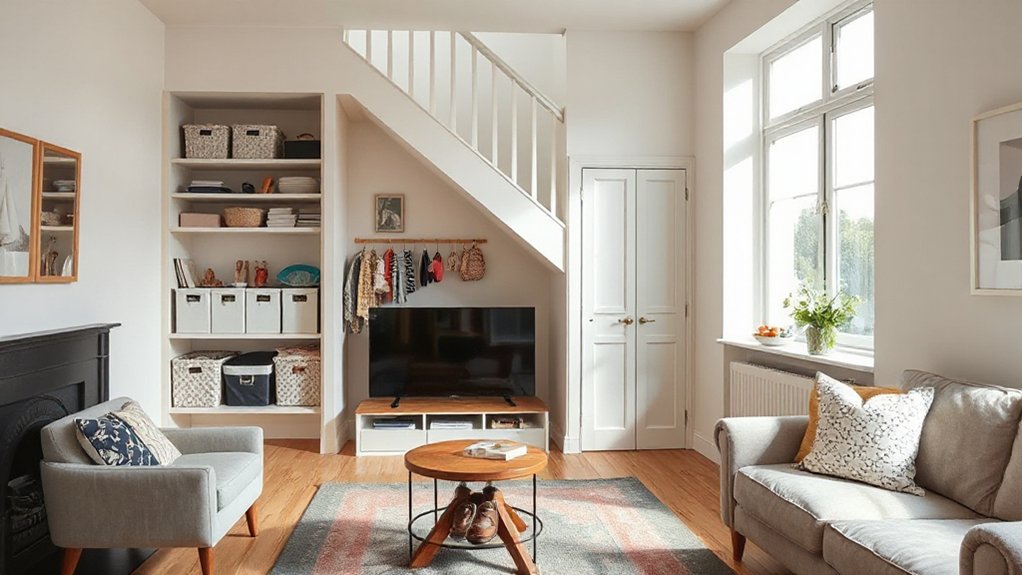
Seasonal decluttering builds on modular, ready-to-assemble solutions by establishing a repeatable maintenance cadence that preserves space gains. You implement a concise, scheduled review to prevent drift, focusing on core categories and seasonal items.
- Seasonal organisation checks: verify category labels, rotate fabrics, and reallocate off-season pieces.
- Clutter maintenance routines: remove duplicates, repair or retire damaged items, and exercise quick-replace decisions.
- Space re-optimisation steps: reassess shelf heights, adjust organizers, and document capacity changes.
- documentation and cadence: log outcomes, set reminders, and align with family routines to maintain momentum.
This approach reduces accumulation, supports predictable storage, and keeps small UK homes organised year-round without sacrificing accessibility.
Where to Buy: UK-Friendly Storage Solutions and Suppliers
Finding reliable UK-friendly storage solutions and suppliers is essential for maintaining accessible, space-efficient setups. Start by identifying offerings that balance modular design with local availability. You’ll want retailers that publish clear specs, load ratings, and compatibility with common UK dimensions.
Prioritise suppliers offering delivery to restricted stairwells and urban flats, plus straightforward returns. Seek a range of storage accessories that adapt to corners, alcoves, and under-stair spaces, and verify packaging minimizes waste.
Compare prices across modular systems, shelving units, and compact units to avoid overbuying. Consider furniture styling that doubles as storage, such as bench seating with hidden bins or coffee tables with lift-top lids.
Favor retailers with robust warranties and clear assembly guidance to reduce long-term maintenance. End-user support and readily available spare parts matter for sustained practicality.
Frequently Asked Questions
How Can I Maximize Small Spaces Without Structural Changes?
Yes—opt for Creative vertical storage and Multi functional furniture; you’ll maximize space without structural changes by stacking, concealing, and pairing compartments, shelves, and seating. Use modular units, wall-mounted options, and hidden drawers to declutter efficiently.
What Are the Best DIY Storage Upgrades on a Budget?
You should try creative shelving and under bed storage, as budget-friendly DIY upgrades that dramatically free space. Install wall-mounted units, modular crates, and labeled organizers; you’ll maintain accessibility, improve airflow, and keep essentials neatly within reach.
Can Storage Systems Adapt to Changing Furniture Layouts?
Storage systems can adapt to changing layouts by embracing modular furniture and flexible shelving, which let you reconfigure on demand. You’ll visualize implications first, then implement scalable, practical solutions that evolve with your space and needs.
How Do I Choose Moisture-Resistant Storage for UK Homes?
You should choose moisture-resistant storage with built-in moisture control features and solid seals. Look for materials with high durability and corrosion resistance; guarantee ventilation and desiccant options are integrated for long-term moisture control and material durability in UK homes.
Are There Uk-Specific Rental-Friendly Organizers and Options?
Yes—seek rental-friendly organizers designed for UK flats, complying with Rental restrictions and UK storage laws; choose modular, non-destructive components, quantify weight limits, and document inventories to avoid disputes while fitting limited spaces efficiently.
Conclusion
Maximise mischief-free margins with methodical metrics and mindful molding of mounds of stuff. Clever, compact configurations carve colossal comfort, converting cramped corners into coherent, capable storage. Harness hidden haven-holes—under-stairs, alcoves, bed-frames—with purposeful precision. Fine-tuned finishes, textures, and tactful trims make minimal spaces feel bigger, brighter, and balanced. Budget-smart buys, steady seasonal sprints, and staunch decluttering sustain streamlined, stylish spaces. You’ll cultivate calm, capacious interiors, consistently creating clarity, convenience, and considered containment.