Think of value as a spectrum, not a sticker price: a conservatory can brighten space and curb appeal, but it usually doesn’t deliver the same internal value as a traditional extension. You’ll gain more usable square footage and functional room with an extension, while a conservatory’s appeal hinges on design quality, thermal performance, and how it blends with the home. As markets differ, the trade-off may steer your decision—and the next move may hinge on those subtle performance and location factors.
Do Conservatories Add Value? A Quick Verdict

Conservatories can boost your home’s appeal, but their value impact isn’t one-size-fits-all. You’re evaluating the quick verdict by market behavior, not vague notions.
In most markets, a well-executed conservatory adds usable space and light that buyers notice, yet value is sensitive to design compatibility, build quality, and cost.
You should assess garden orientation, because a south- or west-facing conservatory often underpins warmth and usability, while poor placement can create glare or heat loss during key hours.
Landed costs matter: estimate construction, interior finishes, and potential VAT implications, then compare to similar extensions.
Don’t overlook building permits and planning constraints, as delays or nonconforming features can erode any premium.
The verdict: value tends to materialize when the conservatory aligns with the home and budget.
When to Choose an Extension vs a Conservatory
If you’re weighing an extension against a conservatory, start by evaluating impact on value, cost, and usability today.
Consider whether you need year‑round space, budget constraints, and how the structure integrates with your home’s layout and market appeal.
This discussion should balance practical benefits with clear price and time-to-completion considerations to guide a decisive choice.
When To Add An Extension
When deciding whether to add an extension or a conservatory, consider how you’ll use the space, how it will connect to your home, and your budget. You’re weighing function against form, so map daily routines, seasonal use, and traffic flow from main living areas.
Extensions typically deliver stronger value when you need seamless integration, reliable interior lighting, and robust insulation for year-round comfort.
Conservatories can boost mood and garden aesthetics, but may require glazing upgrades and climate controls to avoid overheating or cold spots.
If you expect frequent hosting, a practical layout with durable finishes matters more than showy design.
Market conditions favor extensible plans with clear setback rules and energy efficiency.
Choose based on long-term utility, maintenance costs, and resale appeal.
Conservatory Or Extension Benefits
Choosing between a conservatory and an extension hinges on practical use and financial return: extensions tend to deliver stronger value for seamless interior integration, year-round comfort, and reliable lighting.
While conservatories can enhance mood and garden connection, they may require extra upgrades to climate control and glazing.
In this section, you weigh tangible benefits against costs, focusing on market demand and resale impact.
An extension often yields better insulation, consistent thermal performance, and predictable energy bills, appealing to buyers prioritizing usability and return.
Conservatories attract buyers seeking atmosphere and visual appeal, yet you’ll face higher maintenance and potential glazing upgrades to meet year-round comfort.
Prioritize garden integration and assess lighting options credibility, ensuring the chosen route aligns with property type, location, and target buyer expectations.
How Appraisals Treat Conservatories Compared to Extensions
Appraisals treat conservatories distinctly from extensions because they’re viewed as optional improvements that affect value differently at sale. You’ll see appraisers weigh size, location, and finish against market norms, not just square footage.
In practice, conservatories are valued for usable space and daylight, yet sometimes discounted if their climate control, shading, or integration with the core structure appears lacking. Historical trends show buyers paying a premium for well-integrated, thermally efficient models, while poorly connected or dated designs may drag value.
Appraisals reward material innovations that improve energy performance, air sealing, and long-term durability, and they penalize weak connections to the house. Overall, the appraisal lens favors proven, well-executed features over flashy, low-utility additions.
What Buyers Notice First About Conservatories
Conservatories immediately catch a buyer’s eye because they’re the most visible signal of extra living space and light. You’ll notice first impressions hinge on how the space blends with the home’s footprint, not just its size.
Buyers scan for glazing quality, roof type, and overall proportion, valuing a seamless connection between indoors and outdoors. Historical architecture matters: a period-appropriate frame or detailing can boost perceived authenticity and reduce retrofit concerns.
Landscaping integration also matters; if the conservatory feels stitched into the yard or garden rather than tacked on, buyers see it as a true extension of living space.
In practical terms, these initial observations drive perceived usability, which in turn influences early offers and negotiation posture. Clarity and cohesion win attention before any technical specs.
Key Cost Factors: Conservatory vs Traditional Extension

You’ll weigh material cost variations, since conservatories often use pricier glazing and framing than traditional extensions.
Thermal performance gaps matter for long-term operating costs and comfort, so you’ll compare U-values, heat loss, and cooling needs side by side.
Permits and timelines also shift overall value, as longer, more complex builds can erode upfront savings or extend market-ready readiness.
Material Cost Variations
Material costs vary substantially between conservatories and traditional extensions, driven largely by framing, glazing, and labor intensity. You’ll notice framing choices (aluminium, uPVC, timber) create divergent base prices and ongoing maintenance needs, shaping total cost over time.
Glazing types—from polycarbonate to high-performance glass—translate directly into upfront outlay and insurance considerations, while installation complexity affects labor hours and scheduling.
Conservatories often demand more precise carpentry and bespoke fittings, pushing costs upward, yet modern systems can reduce waste and speed deployment, offsetting some expense.
In extensions, standard materials and fewer weatherproofing concerns typically yield steadier pricing, but you’ll still see cost fluctuations with design scope and site access.
Material durability informs longer-term value, while cost fluctuations reflect market cycles and supplier availability.
Thermal Performance Gaps
Conservatories often show higher heat transfer in winter and greater cooling loads in summer, translating to bigger heating and cooling bills unless you invest in high-performance glazing, frames, and shading strategies.
Insulation issues frequently surface as a primary concern, with edge thermal bridging and inadequate U-values eroding efficiency gains.
By contrast, traditional extensions typically deliver more consistent temperatures due to solid walls and integrated insulation, even before considering underfloor or wall insulation upgrades.
In market terms, the premium for a conservatory must reflect potential energy reductions and maintenance needs, not just upfront build costs.
Clarity on thermal performance supports smarter value judgments.
Permits And Timeline
In contrast, extensions may align with standard domestic planning rules, reducing friction but still demanding compliance checks.
Timeline estimates vary: conservatories can extend longer due to glazing, insulation, and structural approvals, while extensions, though disruptive, often proceed with established contractor sequencing.
Delays arise from council scrutiny, weather, and supplier lead times, influencing cash flow and ROI.
You should factor permit requirements and expected timelines into the upfront feasibility, comparing total cost of ownership over the life of the space.
Thorough planning minimizes surprises and protects value.
Energy Efficiency and Running Costs by Material
Choosing the right material for a conservatory directly affects energy efficiency and long-term running costs. Material choice drives insulation performance, heat transfer, and cooling needs, which in turn shape monthly bills and comfort.
UPVC frames offer affordability and decent thermal breaks. But aluminum with double glazing can minimize heat gain in hot months if paired with thermal breaks.
Timber looks premium but may demand higher maintenance. Properly treated wood can still perform well if kept sealed.
Glass choices matter: low-emissivity coatings reduce heat loss in winter and curb solar gain in summer. Insulating wall panels improve overall R-values.
Consider solar shading options and how they integrate with interior decor to balance daylight, glare, and climate control. This approach helps align with market expectations and lifetime costs.
Design Styles That Maximize Resale Value
When you design a conservatory with resale in mind, prioritize styles that signal broad appeal, durable aesthetics, and a clear upgrade path for potential buyers. To maximize resale value, focus on timeless design cues, cohesive integration with the home’s architecture, and proven layouts that extend living space without clutter.
- Favor neutral palettes and classic profiles to attract wider buyers, reducing stylistic risk.
- Choose practical finishes with low maintenance costs that resist wear and weather.
- Ensure integration through architecturally consistent rooflines, doors, and sightlines for a seamless transition to the garden, enhancing features like garden lighting and roof insulation.
A pragmatic approach aligns design choices with market preferences, driving perceived value and faster resale.
Which Conservatory Materials Boost Value: UPVC, Aluminum, Timber?
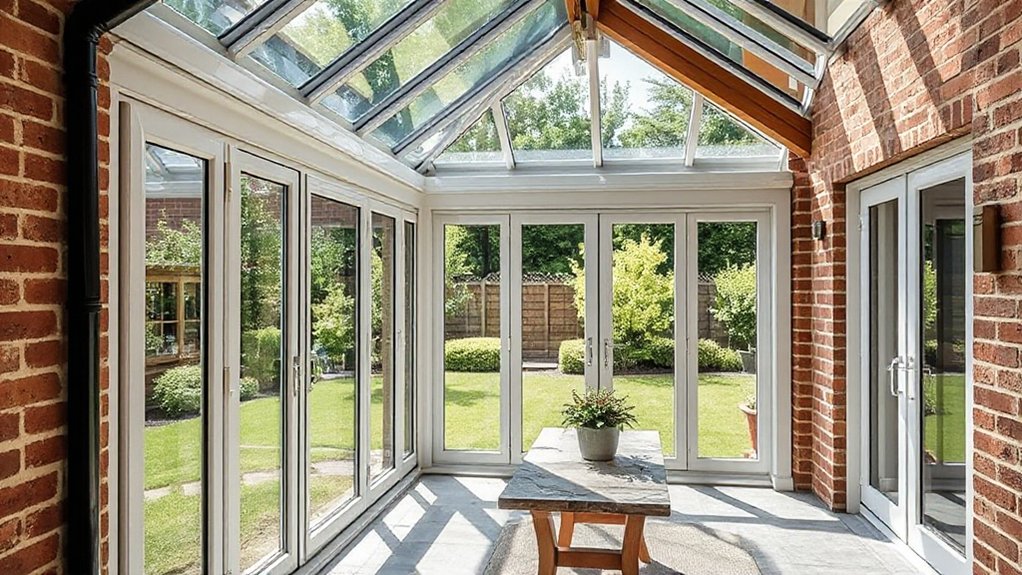
You’ll want to weigh UPVC, aluminum, and timber on value drivers like initial cost, maintenance, and durability.
UPVC often wins on price and upkeep, while aluminum offers longevity with a slimmer frame and better performance in harsher climates.
Timber can boost perceived warmth but requires ongoing care.
This discussion should map how material choices translate to resale value, affecting long-term ROI and buyer appeal.
UPVC Value Impact
UPVC is the most cost-effective and low-maintenance option for conservatories, and its value impact hinges on durability, insulation, and resale appeal. You’ll see robust market appeal when UPVC durability translates to lower upkeep and predictable performance, while material aesthetics influence buyer perception of modern integration.
1) Predictable costs: upfront savings boost return on investment and shorten payback periods.
2) Consistent insulation: better thermal efficiency supports year-round usability and resale attractiveness.
3) Broader demand: a familiar, neutral finish appeals to a wider buyer pool, reducing negotiation friction.
In practice, you should balance frame quality, glazing options, and finishes to maximize perceived value. When you optimize these levers, UPVC supports solid value gains without sacrificing reliability or market appeal.
Material Longevity Pros
Material longevity is a key value lever when choosing conservatory construction, and the three primary materials each offer distinct durability profiles that buyers weigh alongside cost and aesthetics. You’ll weigh UPVC for low maintenance and corrosion resistance against aluminum’s structural rigidity and weather resilience, plus timber’s natural insulation and renewal potential.
UPVC ages gracefully with minimal upkeep but may show wear in exposed climates and roof design slots. Aluminum delivers longevity with slim sightlines, yet can transfer more heat without proper insulation. Timber offers timeless appeal but requires ongoing treatment and periodic refinishing to maintain performance.
In garden aesthetics, material choice drives long-term visual harmony, while roof design implications influence thermal behavior and maintenance cycles. Assess lifecycle costs, warranty coverage, and resale impact to clarify which material best sustains value.
Natural Light: How Conservatories Change Brightness

Natural light is a key driver of perceived brightness in conservatories, and its impact varies with roof type, glazing, and orientation. You’ll notice that broad, glass-heavy roofs maximize daytime luminosity, while tiled or hybrid roofs modulate glare and heat.
Glazing choices affect diffusion and heat retention, influencing consistency across seasons. Orientation matters: south-facing setups deliver steady illumination but risk overheating, whereas north-facing layouts emphasize even, soft brightness.
Real-world benefits hinge on predictable light quality, not just quantity, driving usable hours and perceived space.
3 key factors shape outcomes:
- Roof design choices directly affect daylight penetration and thermal comfort.
- Glazing technology shifts diffusion, glare, and energy performance.
- Orientation and shading controls stabilize brightness year-round.
This reflects natural innovation and light enhancement in market-ready conservatories.
Space Utility: How Much Extra Living Space Really Adds Value
Putting more usable space on your home’s footprint often translates into tangible value, but how much depends on layout, market demand, and how the space is used. You’ll quantify utility by footprint efficiency, usability, and compatibility with existing rooms.
Extra living space boosts appraisal values when it supports daily routines, not just size. Consider return-on-cost: high-quality finishes and durable controls lift value more than sheer square footage.
Garden aesthetics can amplify appeal if the space blends with outdoor landscaping and screening, while interior lighting quality drives perceived space and function.
Avoid wasted zones; plan circulation that respects existing doors and heat/cold zones. In markets with active remodeling, buyers reward flexible layouts, multiuse areas, and predictable maintenance costs.
Target practical, reversible improvements that maximize usable hours and resale attractiveness.
Location Within the Home: Best Spots for a Conservatory
Placing a conservatory at the ideal housefront maximizes curb appeal and resale value, so you should weigh access, visibility, and foot traffic from the street.
Garden-view orientation boosts natural light and perceived space, while facing away from harsh afternoon sun preserves comfort and energy use.
On the ground floor, proximity to main living areas and easy accessibility from entry points matters for daily use and potential family or buyer appeal.
Optimal Housefront Placement
Where in your front of the house should a conservatory go to maximize value and daily utility? Placement matters for curb appeal and usable space, not just looks. A strategic spot aligns with traffic flow, natural light, and future resale perception, delivering steady value alongside daily satisfaction.
Consider these angles:
1) Align with the main entrance for clear circulation and immediate impact.
2) Position on a sunlit facade to boost perceived warmth and energy savings.
3) Reserve a centered, balanced frontage that enhances housefront aesthetics and marketability.
Key benefits:
- Improved curb appeal through coherent roofline and proportion.
- Enhanced room adjacency for practical daily use.
- Stronger first impressions that support value metrics.
Garden-View Orientation Benefits
Choosing a garden-view orientation for a conservatory maximizes both daily enjoyment and resale appeal by aligning sun exposure with usable space. You benefit from a practical framework: select placements where garden orientation concentrates daylight during peak activity, letting you enjoy meals, work, or relaxation with consistent natural light.
Prioritize rooms adjacent to living areas so daylight flows into common zones, enhancing perceived space and energy efficiency. Consider seasonal sun paths; south-facing angles deliver longer winter illumination, while east or west alignments capture morning or afternoon warmth without overheating.
Track glare and shading options, ensuring windows face safe, private garden views. Balance exposure with privacy and maintenance needs, since easier-framed orientations reduce upkeep while preserving perceived value through favorable daylight quality and integrated outdoor connectivity.
Sunlight exposure remains a key measurable factor.
Ground Floor Accessibility Proximity
When evaluating ground-floor placement for a conservatory, prioritize proximity to high-traffic living spaces and primary entry routes to minimize circulation friction and maximize daily usability.
Your choice hinges on accessibility, proximity, and how it integrates with existing layouts, doors, and thresholds. A well-placed conservatory boosts daily flow, while misalignment creates bottlenecks and underutilized space.
- Proximity to the kitchen or dining area enhances seamless indoor–outdoor dining and resale appeal.
- Adjacent access to the living room or family zone strengthens usability for gatherings and relaxing routines.
- Clear routes to main entryways improve weatherproofing, security, and convenience for daily ingress.
Ground floor positioning maximizes usability, supports energy efficiency, and strengthens market value through pragmatic, accessible design choices.
Timberframe vs Modular: Which Holds Value Longer?
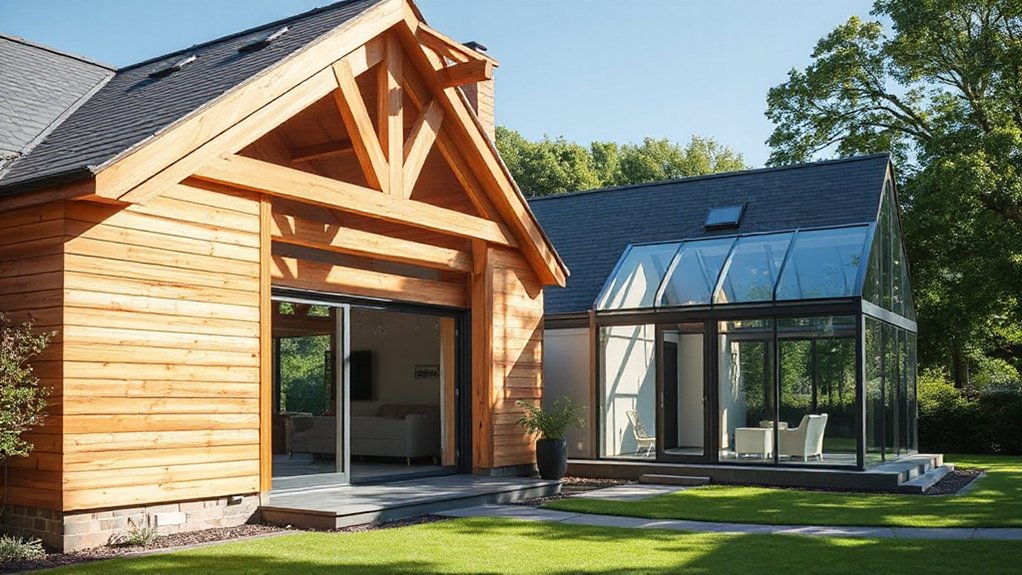
Timberframe and modular builds each carry distinct value trajectories, and your choice should hinge on long-term resale appeal, construction quality, and maintenance costs. You’ll weigh how timber’s tactile permanence versus modular speed and factory precision influence perceived durability, finish consistency, and insurer confidence.
In markets with mixed-age stocks, timberframe can signal heritage value and landscape integration, appealing to buyers seeking craft and warmth. Modular offers rapid occupancy, scalable standards, and tighter warranties, which can translate to lower perceived risk for future purchasers.
The key is how well the design aligns with interior aesthetics and exterior harmonization with surroundings. Consider resale timing, local housing cycles, and expected demand for low-maintenance upkeep when forming your decision.
Avoid overreliance on novelty; focus on lasting appeal and proven performance.
Maintenance and Long-Term Costs: What to Expect
Maintenance and long-term costs hinge on durability, upkeep demands, and the efficiency of your chosen build strategy. You’ll weigh ongoing maintenance, energy use, and potential glazing replacements against upfront savings, framing a clear cost trajectory. Over time, a high-quality conservatory can outperform in value if you balance materials, sealing, and ventilation.
Consider how garden integration and interior aesthetics interact with long-life components to sustain appeal and function.
1) Prioritize low-maintenance glazing and robust frames to minimize future service calls.
2) Plan for seasonal ventilation, reducing heating loads without compromising comfort.
3) Align finishes with existing interiors to protect resale value while preserving design coherence.
In practice, predictable upkeep minimizes surprises, protecting market value and ensuring continued enjoyment.
Regulatory Hurdles: Permits, Zoning, and Compliance
Managing regulatory hurdles for conservatories demands a practical, market-aware approach: permits, zoning, and compliance can shape project feasibility, costs, and timing more than you’d expect.
You’ll need to gauge building codes early, since code requirements drive materials, insulation, and safety standards that affect both design and budget.
Planning permissions determine whether your glass extension qualifies as a permitted development or requires formal approval, influencing timelines and contingency planning.
Zoning restrictions can limit footprint, height, or usage, potentially forcing redesigns or relocations.
You should compare local authority guidance against your plan to avoid, or minimize, post-approval changes.
Engage early with planning departments, document compliance across structural, electrical, and drainage aspects, and build in review buffers to reduce costly delays.
Market Trends: Are Conservatories Gaining Ground?
Market trends show conservatories gaining traction as homeowners weigh value, cost, and lifestyle impact against traditional extensions. You’re weighing long‑term benefits against upfront uncertainty, with demand shifting toward flexible spaces that blend garden aesthetics and indoor living.
As a result, market data shows steady adoption, though buyers scrutinize durability and maintenance. Here’s what matters:
- Budget alignment: upfront costs vs. long‑term energy savings and resale appeal.
- Design practicality: daylight potential, heat gain control, and seasonal use.
- Quality signals: material selection, build quality, and the project’s effect on structural integrity.
You’ll benefit from conservative projections and clear timelines, ensuring the conservatory integrates with existing layout while preserving garden aesthetics and structural integrity.
Decision accuracy improves when you compare options against standard extensions.
Resale Scenarios: Detached vs Terraced Homes
Detached and terraced homes yield different resale dynamics when conservatories are considered.
In detached properties, buyers often expect seamless garden integration, so a well-executed conservatory can boost perceived space and flow without compromising privacy.
In contrast, terraced homes face tighter plot constraints; conservatories must avoid crowding internal layouts and provoking overshadowing issues, or resale gains may be muted.
You’ll see stronger value signals where the extension enhances practical living areas, not just aesthetics, and aligns with garden access and daylight.
Interior aesthetics matter: cohesive finishes, appropriate glazing, and muted junctions with the original architecture support broader market appeal.
Value Drain Scenarios: When Conservatories Hurt Prices
Conservatories don’t always add value, and in some setups they can drag prices down. You’ll see price dips when the structure feels out of place, poorly insulated, or mismatched to neighborhood norms.
To understand why, focus on market signals and buyer expectations. Historical trends show that the value impact isn’t uniform across eras or styles, while Cultural influences shape what buyers perceive as quality and utility.
Consider these scenarios:
1) Outdated designs that clash with the home’s architecture
2) Subpar insulation or glazing that inflates running costs
3) Limited usable space due to awkward layout
If any of these apply, the perceived cost of retrofit rises, dampening offer expectations and market speed.
Replacing an Old Conservatory: Is an Update Worth It?
Replacing an old conservatory can be a smart upgrade when it addresses energy inefficiency, outdated aesthetics, or layout flaws that suppress usable space and market appeal.
You’re evaluating whether a replace‑instead upgrade yields better value than a retrofit, considering cost, speed, and disruption.
An updated structure often improves insulation, glazing performance, and thermal comfort, which can translate to smaller energy bills and steadier resale momentum.
From a market perspective, potential buyers expect seamless garden integration and a coherent home flow, so the new design should align with existing architecture rather than feel tacked on.
If you pursue an aesthetic enhancement that preserves daylight while reducing maintenance, you increase usable space without sacrificing curb appeal.
In short, a well‑executed replacement can deliver meaningful value.
Financing, Tax, and Insurance Considerations
Financing options and upfront costs shape your return, so you should compare loan terms, interest rates, and potential grants or incentives before deciding.
Tax implications—like VAT treatment, capital allowances, and potential impact on property tax—affect overall affordability and resale value.
Insurance considerations, from premiums to coverage for structure, glazing, and liability, influence ongoing costs and risk exposure as you evaluate conservatories versus extensions.
Financing Implications and Costs
To evaluate financing implications and costs, you’ll want to map out upfront expenses, ongoing carrying costs, and potential tax or insurance impacts. This analysis is practical, market-aware, and focused on how financing shapes value, not just price.
You’ll compare loan options, interest rates, and repayment horizons against project risk and home equity. Be wary of hidden costs that affect cash flow and resale appeal, including maintenance and energy-efficiency upgrades that bolster garden aesthetics and structural integrity.
Consider the total cost of ownership over time, not just the initial outlay.
- Assess upfront costs versus financing terms to gauge break-even timing.
- Weigh monthly payments against expected value in market conditions.
- Align insurance premiums with installation quality and risk management.
Tax and Insurance Considerations
When evaluating a conservatory, you should weigh how financing terms, tax treatment, and insurance impact total value, not just the upfront price.
In practice, tax rules vary by jurisdiction and by structure (annex, extension, or standalone structure), so you’ll want a precise estimate of depreciation, VAT, and any transfer taxes that could alter return.
Financing costs matter: interest rates, loan terms, and potential subsidies can tilt the cost of ownership beyond the sticker price.
Insurance considerations include coverage for glass, frames, and cladding, plus replacement timelines and any higher premiums for risk categories.
Eco-friendly materials can reduce running costs and may influence premiums, while aesthetic appeal often drives resale value.
Align the project with market expectations to protect value while maintaining durability, efficiency, and compliance.
Designing for Wider Appeal: Accessibility and Adaptability
Designing for wider appeal means prioritizing accessibility and adaptability from the outset, so your conservatory or extension doesn’t become a niche feature. You’ll maximize market breadth by embedding practical design choices that appeal to families, aging buyers, and remote workers.
Consider how simple access, flexible layouts, and future-ready systems translate into real value.
- Accessibility improvements drive faster saleability and broader buyer pools.
- Adaptability features reduce future renovation costs and increase perceived longevity.
- Clear pathways from indoor to outdoor spaces boost usability and curb appeal.
Frequently Asked Questions
Do Conservatories Always Boost Resale Value?
Conservatories don’t always boost resale value, but they can when matched to design flexibility and expected buyer preferences. Consider design flexibility and material durability to guarantee broad appeal, avoiding niche styles that limit demand and reduce market value.
Which Room Gains Most Value From a Conservatory?
A conservatory mainly adds value to living areas, so you’ll gain most from the lounge or kitchen. Design versatility and natural light boost appeal; you’ll find higher market interest in spaces that feel bright, flexible, and connected.
Do Extensions Outperform Conservatories in Value?
Extensions generally outperform conservatories in value. You gain stronger market appeal, higher resale potential, and predictable ROI. Design flexibility and construction durability strengthen this edge, making extensions a pragmatic, market-focused choice for lasting value.
How Does Local Market Affect Conservatory Value?
Market trends show conservatory value hinges on your property type and location. You’ll see stronger gains with modern designs on family homes, while smaller flats underperform. Consider nearby comps, demand shifts, and timing to optimize investment.
Is a Conservatory More Cost-Effective Than an Extension Long-Term?
A conservatory is generally more cost-effective long-term if maintenance costs stay low and design flexibility attracts buyers. You’ll weigh upfront price against ongoing upkeep, energy efficiency, and resale appeal, balancing cost maintenance against design flexibility and market demand.
Conclusion
In short, conservatories can boost light, appeal, and usable space, but they rarely outpace full extensions on value. You’ll usually recoup more with a well-executed extension that adds liveable area and function. Think of it like investing in a kitchen renovation vs. a sunroom: both winning, but one yields higher resale traction. For buyers, a thermally efficient, well-integrated conservatory helps; for market returns, prioritize space and practicality that align with your home’s style and location.