To clean and seal natural stone tiles or countertops, start by removing loose debris with a soft broom or microfiber cloth. Use a pH-neutral cleaner tailored to your stone type, and mix at the lowest effective concentration. Apply to a small area, agitate gently, then rinse thoroughly and dry with a lint-free towel. Test sealers on a hidden spot, apply thin coats per instructions, and reseal every 1–3 years to keep protection strong; more tips await.
Why Stone Stays Easy to Clean and Seal
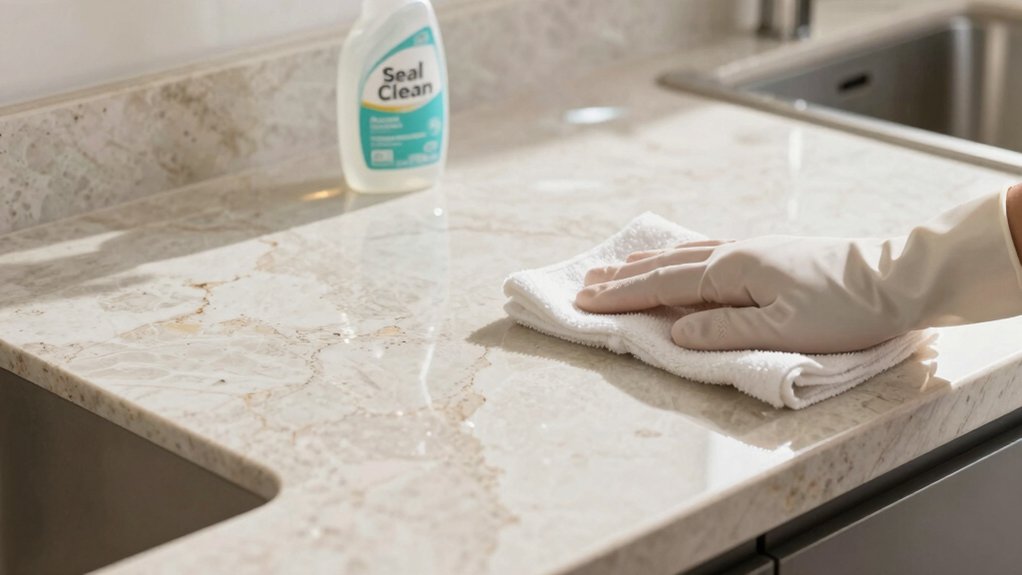
Stone stays easy to clean and seal because its surface is compact and nonporous when properly finished. You’ll notice minimal absorption, so spills sit briefly on the surface and wipe away with little effort. This low porosity reduces staining risk and makes routine maintenance straightforward.
You’ll also benefit from consistent surface hardness, which resists scratches and preserves a uniform feel under high-traffic use. Proper finishing pays off: a high-quality seal can further minimize moisture ingress without altering the stone’s appearance.
Regular, light cleaning preserves the finish and maintains porosity control over time. Understand that stone porosity and surface hardness work together to determine cleanability and seal longevity. When finished correctly, your stone remains resilient, easy to wipe, and less prone to lasting damage.
How to Choose Cleaners for Marble, Granite, and Travertine
To choose the right cleaners for marble, granite, and travertine, start by matching the product to each stone’s porosity and finish. You’ll select gentler formulas for honed or matte surfaces and more robust options for shiny, sealed finishes.
For marble, prioritize products labeled pH-neutral or mildly acidic only if explicitly approved by the stone’s manufacturer, and avoid anything abrasive or acidic that could etch.
For granite, use pH-balanced cleaners with proven chemical compatibility to granite compounds; avoid ammonia and citrus.
Travertine requires alkaline-free formulas that won’t dissolve calcium carbonate, with careful attention to sealant compatibility.
Always verify chemical compatibility with existing sealers and finishes. Test on a hidden area first, and follow label directions precisely for best results.
Clean Stone Safely: A Step-by-Step Guide
After selecting the right cleaners, you’re ready to clean stone safely. Begin by removing loose debris with a soft broom or microfiber cloth, then dust frequently to prevent scratch buildup.
Mix cleaners as directed, using the lowest effective concentration to protect stone integrity. For stone etching risks, avoid acidic or highly alkaline products; opt for neutral formulations suitable for marble, granite, and travertine.
Apply cleaner to a small area, agitate gently with a microfiber pad, and rinse thoroughly with clean water to prevent residue. Dry with a lint-free towel to prevent water spots.
Inspect guidance for sealer compatibility if you plan future protection, and wipe any spills promptly to avoid staining.
Store cleaners away from children and pets, and label containers clearly.
Test and Apply a Sealer for Durable Protection
Begin by confirming the stone is clean and fully dry, then test the sealer on a small, inconspicuous area to guarantee compatibility and color change. If the test area absorbs evenly and shows no adverse reaction within 24 hours, proceed with sealer testing on the full surface.
Use a clean applicator, working in thin, uniform coats to avoid streaks. Follow the manufacturer’s instructions for dwell time and ventilation, and avoid oversaturation that could cause puddling.
After application, wipe any excess and ensure a treated edge matches the rest of the surface. Allow proper cure time before light use, protecting from moisture and contaminants.
For durability, apply a second coat only if the sealer manufacturer recommends it, documenting results for future reference to ensure lasting protection through sealer application.
Maintenance Routines to Keep Stone Looking New
Maintenance routines keep stone looking new by establishing a regular cadence of cleaning, inspection, and timely care. You establish a weekly wipe-down with a pH-neutral cleaner to remove surface residue without dulling the finish. Dry thoroughly to prevent water spots and mineral deposits.
Inspect for etching, chips, or grout wear after heavy use, addressing issues before they worsen. For polishing, use appropriate polishing techniques only on sealed surfaces, avoiding abrasive cleaners that can scratch.
When stains appear, apply targeted stain removal methods promptly, following product directions and testing first in an inconspicuous area. Protect high-traffic zones with mats and avoid acidic spills.
Schedule professional resealing as recommended by your stone’s sealer, typically every 1–3 years, to maintain depth, color, and protective strength.
Frequently Asked Questions
How Often Should I Reseal Natural Stone Countertops?
You should reseal every 1–3 years, depending on usage and stone type. Follow a practical maintenance schedule, observing wear patterns and talking with a pro if you notice fibers or staining. This sealing frequency keeps countertops protected and pristine.
Can Lemon Juice Damage Stone Surfaces?
Yes, lemon juice can damage stone surfaces due to acid etching, especially on calcium-based stones. You’ll want to avoid it; check sealant compatibility first, and use pH-neutral cleaners to prevent acid etching and preserve finish.
Which Stains Are Toughest to Remove From Stone?
Pencil stains and oil spills are the toughest to remove. You’ll tackle them with a poultice, gentle agitation, and proper seal maintenance; you’ll blot, don’t rub, and repeat until the stone resumes its pristine, polished look.
Is Steam Cleaning Safe for Marble and Travertine?
Steam cleaning marble and travertine isn’t recommended due to steam cleaning risks; it can damage seals and etch stone. For marble safety, avoid high heat and moisture; use gentler cleaning, blot spills, and reseal as needed.
Do All Stone Sealers Affect Color or Gloss?
Yes, not all sealers affect color or gloss in the same way; some provide color enhancement while others only seal. You’ll see gloss alteration with solvent-based products, but many water-based sealers minimize color change and preserve sheen.
Conclusion
Seal smartly, safeguard stone, and simplify upkeep.
Sound strategies start with selecting the right cleaner, suited for marble, granite, or travertine, then spotting surface stains.
Scrupulous steps—spot test, sweep, wipe, seal—serve as sturdy armor against spills.
Schedule steady maintenance: wipe after use, re-seal as recommended, and store solutions safely.
Stick to simple routines, stay consistent, and your stone stays stunning, smooth, and strong for years.