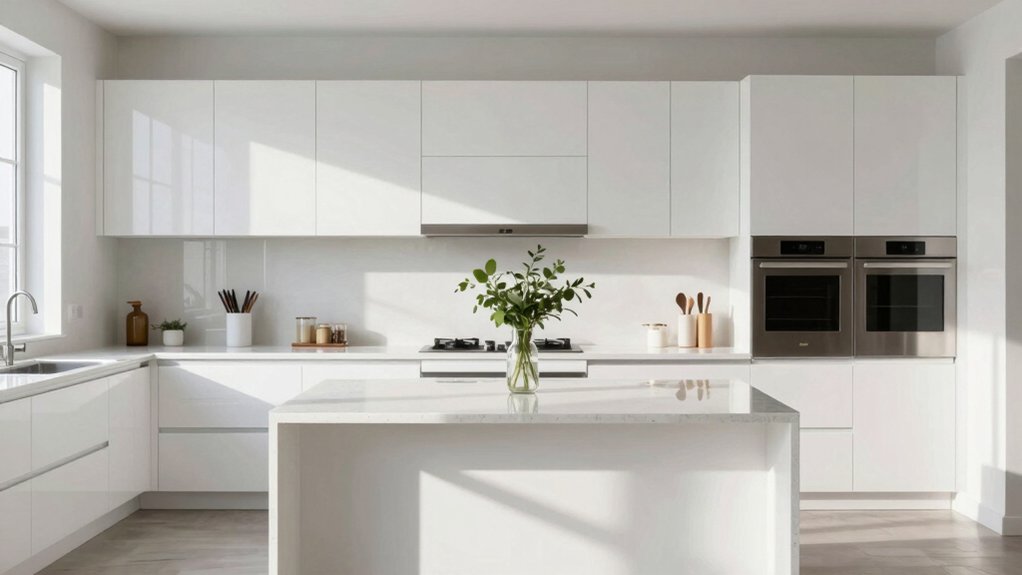
Start by evaluating your needs: map workflow, note bottlenecks, and target reliable storage. Set a realistic budget with 10-15% contingency, then prioritize essential upgrades. Choose a layout that boosts efficiency—L, U, or open—focusing on the work triangle and appliance placement. Pick durable materials and finishes that resist moisture and fingerprints, and maximize storage with deep drawers, pull-out pantry shelves, and floor-to-ceiling cabinets. Plan lighting for mood and task clarity. If you keep going, you’ll uncover more design refinements.
Assessing Your Kitchen Needs

To assess your kitchen needs, start with a thorough check of current functionality, layout, and storage to spot bottlenecks and wasted space. You’ll perform a kitchen evaluation that maps workflow from prep to cleanup, noting layout assessment gaps and how space supports daily routines.
Examine storage capacity, pinpoint clutter hotspots, and plan organized solutions to minimize friction. Evaluate appliances for performance and efficiency, considering energy-saving upgrades that reduce costs without sacrificing ease.
Align goals with renovation planning: increase storage, modernize aesthetics, and strengthen safety features. Clarify how features support your cooking routines and comfort, then translate insights into targeted changes.
Setting a Realistic Budget
Setting a realistic budget starts with a clear baseline: assess your current kitchen, define renovation goals, and translate them into a target dollar amount.
You’ll establish a solid foundation by researching average costs for materials, appliances, and labor in your area, then align those figures with your design priorities.
Allocate 10-15% of the total budget as a contingency to cover unexpected expenses, preventing you from derailing your plan.
Prioritize essential features and upgrades to ensure spending reflects both form and function, while keeping costs in check.
Track expenses and stay within your financial capacity by considering financing options such as savings, home equity loans, or credit when needed.
Your financial capacity guides every material choice and upgrade, shaping a feasible, stylish kitchen.
Choosing the Ideal Kitchen Layout
Choosing the ideal kitchen layout starts with the workflow: the classic work triangle should keep stove, sink, and refrigerator within 4-9 feet to minimize steps. You’ll arrange layout options to balance efficiency and style, prioritizing space optimization and ergonomic comfort.
In a modern kitchen, common layouts include L-shaped, U-shaped, and open-concept design, each suited to different spaces and routines. Plan appliance placement to reduce travel time, supporting smooth flow and traffic between zones.
An open-concept design enhances sociability, expanding sightlines while preserving defined work zones. Align the layout with daily tasks, ensuring functional design that supports cooking, cleaning, and social moments.
Selecting Durable Materials and Finishes

Durable materials define both the look and longevity of a modern kitchen. You’ll choose materials and finishes that balance aesthetics with practicality, so your space stays timeless.
Start with natural stone countertops, like granite or quartz, for resilience against scratches, heat, and stains.
For hardware, matte and brushed metal finishes mask fingerprints while delivering a sleek edge.
Reclaimed wood and bamboo add warmth and sustainability without sacrificing longevity.
High-gloss finishes, laminates, and acrylics offer moisture resistance and easy upkeep, preserving their shine over time.
Prioritize certifications and clear maintenance requirements to ensure safety and sustained appeal.
When selecting materials, weigh sustainability, moisture resistance, and overall performance.
Your goal: a cohesive, durable, and elegant kitchen that ages gracefully.
Maximizing Storage and Functionality
Need more storage without sacrificing style? You’ll maximize storage by deep, wide drawers for pots, pans, and utensils, improving accessibility. Use vertical space with floor-to-ceiling cabinets and wall-mounted open shelving for extra storage options. Install pull-out pantry shelves and rotating racks to efficiently organize food items and small kitchen essentials.
Employ dividers, organizers, and labeled containers within cabinets to keep items orderly and easy to find. Integrate multi-functional islands with built-in storage, including drawers and cabinets, to enhance workspace and conceal clutter. Favor storage solutions that emphasize space optimization and efficient organization.
Custom solutions tailored to your kitchen cabinets and storage accessories *unfasten* cleaner sightlines, while wall-mounted shelving and pull-out pantry enhance daily usability with concise, purposeful design.
Planning Lighting and Ambience
You’ll start by layering lighting—ambient for mood, task for prep, and accent to highlight architectural details.
Under-cabinet and overhead fixtures eliminate shadows and shape the flow, while dimmable controls let ambience shift with activity and time of day.
Pair this with LED efficiency and strategic placement above islands and dining zones to set a balanced, inviting kitchen from the moment you step in.
Layered Lighting Strategies
Layered lighting in a kitchen means combining ambient, task, and accent layers so you can adjust brightness for any activity or mood. You’ll use dimmable LED ceiling lights for flexible general illumination that supports both daily tasks and evenings.
Under-cabinet lighting brightens countertops, boosting task lighting for chopping, reading measurements, and plating.
Accent lighting highlights architectural features or decorative elements, such as LED strips behind open shelves or above cabinets, adding depth and texture.
Plan lighting placement based on work zones and natural light sources to ensure even brightness without glare or shadows.
This layered lighting strategy relies on purposeful lighting fixtures and a thoughtful mix of ambient, task, and accent lighting to refine space, mood, and efficiency.
Ambience-Centric Controls
Ambience-centric controls center planning on how lighting sets mood and guides activity. You shape a kitchen where layered lighting blends ambient, task, and accent fixtures to support every task and mood.
Use under-cabinet LED lighting for prep zones to stabilize focus and atmosphere. Dimmable switches let you tune lighting intensity, enhancing mood control while conserving energy.
Prioritize natural light where possible, balancing brightness with privacy through smart window treatments. Modern lighting controls, including smart switches and voice activation, enable quick adjustments as your activities shift.
Consider a cohesive system of ambient lighting, accented highlights, and functional task lighting to create depth. With thoughtful ambiences, you optimize usability, comfort, and elegance throughout the space.
Coordinating the Renovation Timeline
Coordinating the renovation timeline starts with a clear, flexible plan that maps every phase from demolition to finishing. You build a renovation timeline that centers on project milestones, so you can see progress at a glance and adapt as issues appear.
Scheduling trades—electricians, plumbers, and installers—becomes a single, coordinated sequence, reducing conflicts and idle time. Incorporate buffer periods of 10-15% of total duration to absorb unexpected costs or delays without derailing overall deadlines.
Regular progress monitoring and open communication with contractors keep momentum, enabling swift adjustments and timely milestone reviews. Establish deadlines for each task, then track adherence through concise updates and shared dashboards.
This disciplined project management approach minimizes delays, maintains coordination, and ensures the project stays on track toward a polished, on-schedule finish.
Adding Personal Touches and Final Review

As you wrap up, start with a thorough walkthrough to make certain every design detail and function aligns with your initial goals. You’ll verify that appliances, fixtures, and finishes operate safely and smoothly before finalizing the project.
Organize warranty documents, manuals, and maintenance contacts for easy access and ongoing care of appliances and materials.
Add personal touches like decorative lighting, artwork, or plants to reflect your style and create a welcoming, polished space.
Use this final review to identify any adjustments or touch-ups needed to achieve cohesion across textures, colors, and layout.
Document maintenance schedules and save contact details for service.
The result is a polished space that feels intentional, functional, and inviting.
Conclusion
With a clear plan in hand, you’ll transform your kitchen into a modern haven you actually enjoy every day. You’ve assessed needs, chosen durable finishes, and mapped a smart layout that maximizes space and flow. Budget stays realistic, storage is optimized, and lighting elevates every moment. Your renovation timeline stays on track, and personal touches shine through. The result isn’t just a room remodel—it’s a revolution in daily living, so stunning it could blind your old, dull kitchen. Enthusiasm, released.