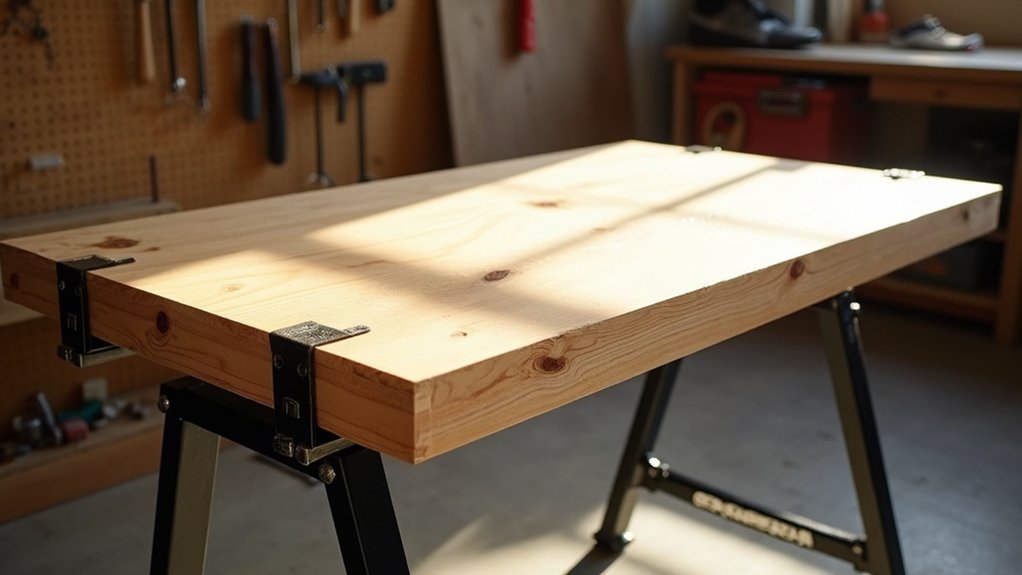
A folding workbench is your portable workspace that folds away when you’re done, yet stays sturdy enough for precise tasks. You get a flat surface, built-in supports, clamps, and storage without sacrificing stability thanks to robust hinges and solid framing. It fits tight spaces, from a small garage to a balcony workshop, and it’s easy to set up or collapse in minutes. Ready to weigh options, choose features, and see how it could fit your projects? Keep going.
What Sets a Folding Workbench Apart for Small Spaces
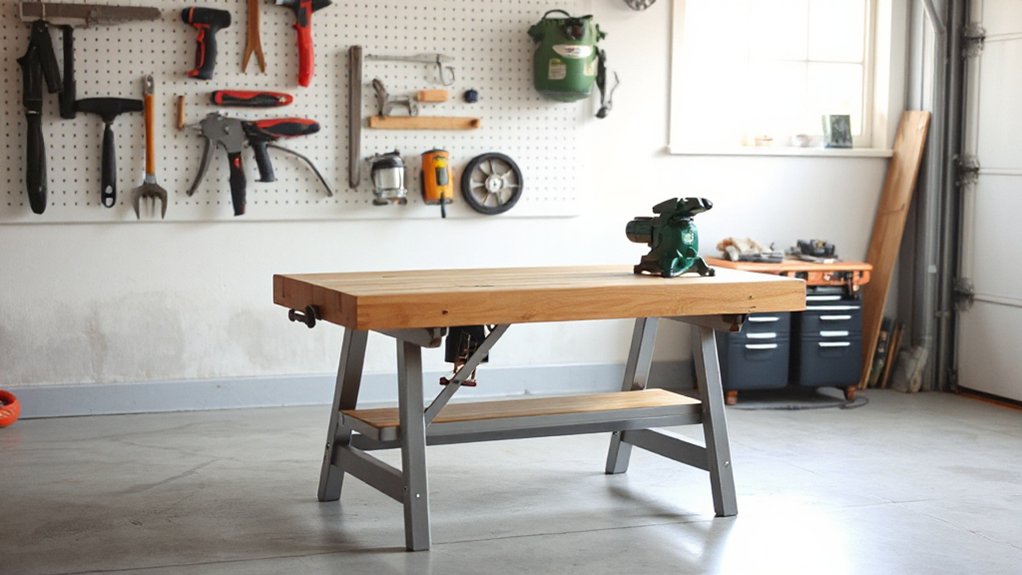
Folding workbenches shine in tight spaces because they’re designed to collapse into a compact footprint without sacrificing stability. You’ll notice how quick it’s to deploy, with locks and hinges that hold firm under load.
In small areas, portability matters: you can move the bench between rooms, workshops, or trucks without dragging bulky furniture. The design emphasizes portable storage, letting you tuck clamps, tools, and measuring aids into integrated organizers rather than scattering them across the bench.
Space optimization isn’t just about saving floor space; it’s about keeping essential gear accessible where you work, so setup and cleanup stay efficient.
Precision construction and sturdy materials ensure durable performance, even in constrained environments. This combination makes folding workbenches distinctly suited to compact, adaptable workflows.
How Folding Workbenches Work: Mechanics and Stability
Folding workbenches use simple, robust folding mechanisms to deploy a stable work surface quickly. You’ll rely on clear hinge and lock services and a solid frame to maintain level support during use.
We’ll examine how these mechanisms interact with stability features like bracing, leg locks, and load distribution to keep the bench steady.
Folding Mechanisms Overview
When you deploy a folding workbench, you’ll encounter a set of interlocking hinges, latches, and supports that transform a compact frame into a stable work surface. You’ll engage hinges that permit folding to a flat profile and deploy to full height.
Latches secure panels and braces, preventing accidental collapse during use. Supports, such as telescoping legs and pneumatic or torsion assists, provide vertical rigidity and distribute loads evenly.
The mechanism governs both setup speed and stability, so you’ll value smooth, audible confirmations that parts are locked. Adjustable height lets you tailor the bench to reduce strain and improve precision for different tasks.
Locking mechanisms ensure all joints hold under load, resisting creep and wobble. Overall, the folding mechanism pairs quick deployment with reliable, repeatable performance.
Stability and Support Systems
Favor cross-braced frames and adjustable feet that compensate for uneven floors, keeping the work area level. When the bench folds, quick-release mechanisms must engage securely, preventing sudden collapse.
Consider how leg geometry distributes weight: a wide stance reduces tipping, while diagonal braces enhance torsional rigidity. A stable surface improves accuracy, reduces fatigue, and supports repeatable cuts or assemblies.
An ergonomic design minimizes reach and strain, while aesthetic appeal aligns hardware finishes with your shop style. In short, dependable stability underpins safe, productive operation.
Must-Have Features for a Folding Workbench
A folding workbench must reliably support your projects, so prioritize features that enhance stability, portability, and versatility. You want a solid base with locking legs, a wide stance, and quick-release mechanisms that resist wobble. Look for a fold-and-lock system that stays rigid when opened, and a tabletop that resists bowing under midweight tasks.
Ergonomic design matters: comfortable working height, accessible clamps, and easy one-handed adjustments keep you efficient. Material should be durable yet manageable, with corrosion resistance and minimal maintenance.
Aesthetic appeal isn’t vanity; it signals build quality and consistency in your shop. Consider integrated storage for tools and accessories, modular endpoints for clamps, and simple fold-down legs that fit your space.
Prioritize reliability, adaptability, and finish quality to maximize long-term usefulness.
Step-by-Step Set Up and Quick Fold-Down
Need to set up quickly? Follow these steps in order for a clean, functional bench. Unfold the legs, lock the hinge, and guarantee the top aligns with the frame. Extend supports until they click, then verify stability by applying light pressure on all corners.
Mount any optional accessories after zero play is achieved to prevent rattle during use. Fold-down is the reverse: release locks, retract supports, and collapse to a compact footprint.
When stored, position the bench so that weight isn’t concentrated on hinges or feet, protecting longevity. For everyday tasks, arrange tools within easy reach to boost efficiency—this is your shortcut for efficient work sessions.
This approach emphasizes Storage solutions and ergonomic design, delivering quick, repeatable setup without fuss.
Size, Weight, and Load Capacity Guidelines
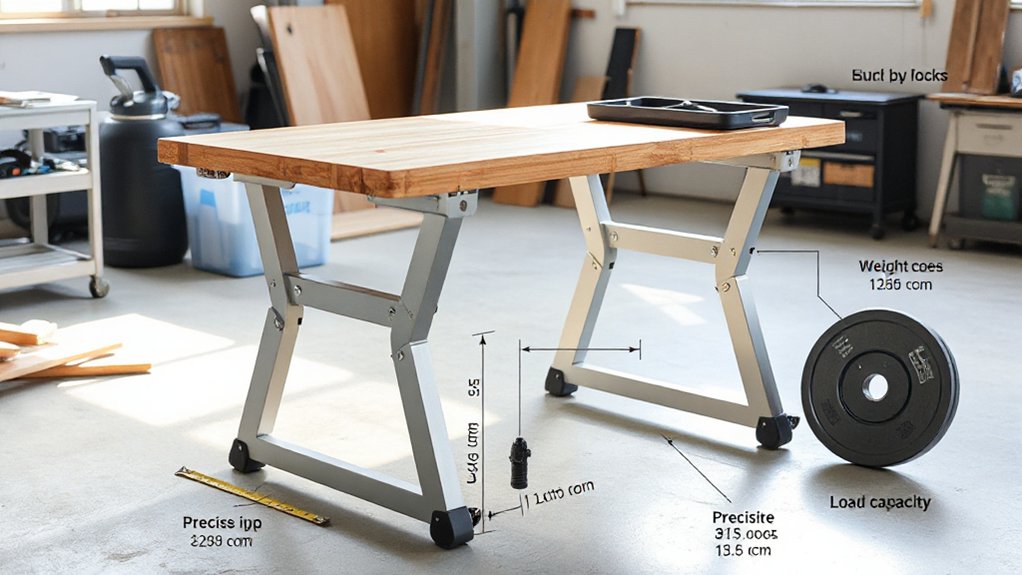
You’ll want to start with clear size and weight guidelines to guarantee the workbench fits your workspace and supports your tools.
We’ll cover maximum load capacity, recommended material weights, and how to balance stability at different extensions.
Use these baselines to plan safe use and quick, accurate setup for every job.
Size And Weight Guidelines
Prioritize a stable base with robust hinges that preserve level operation when deployed. Consider material weight to balance portability with durability; lighter kits save space, heavier builds improve rigidity.
Keep in mind your typical projects, as thickness and edge profile influence clamping opportunities and workflow. A well-balanced design reduces fatigue and supports ergonomic design, letting you work without awkward postures.
When selecting, evaluate how the bench complements your aesthetic appeal and blends with existing tools. Finally, verify that storage and transport setup align with your space constraints and frequency of use, preventing clutter and trips.
Load Capacity Guidelines
To guarantee dependable performance, assess the bench’s load capacity alongside its size and weight. You’ll want a clear match between your workpiece demands and the bench’s rated capacity, ensuring stability under load. Consider both static and dynamic loads; operators push, clamp, and twist, so design margins matter.
Follow manufacturer specifications for maximum load per work surface and per leg, and account for accessory weight from vises and clamps. Workstation ergonomics matter: a higher payload can shift center of gravity and increase fatigue if you overreach.
Safety features, like lockable legs and non-slip feet, reduce collapse risk during use and folding. Choose a bench with documented performance tests and simple reassembly instructions to preserve consistency during setup and breakdown.
Materials and Construction: Impact on Stability and Longevity
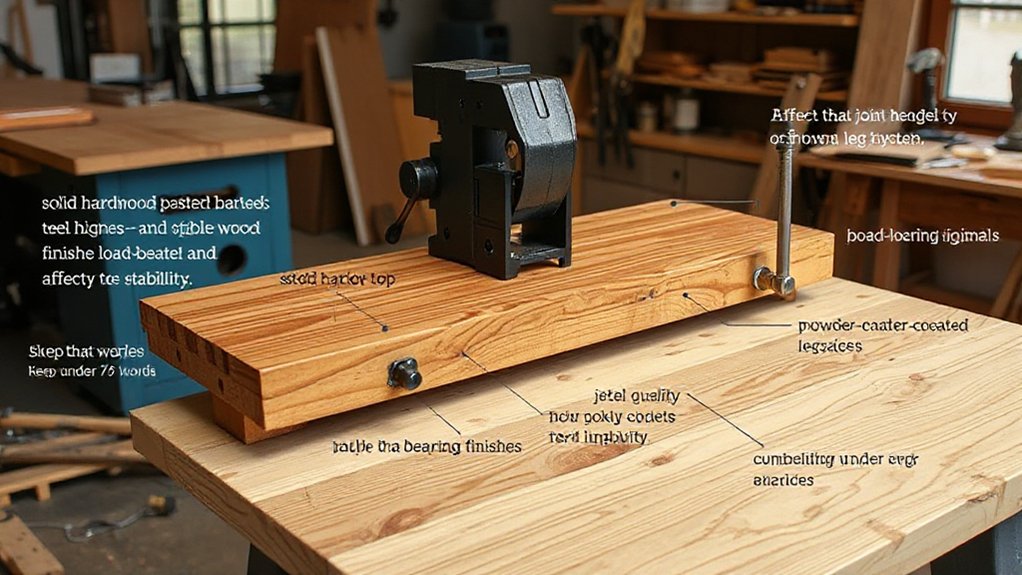
Materials and construction directly affect a folding workbench’s stability and longevity. You influence stiffness through frame geometry, joint quality, and fastener choice. Use solid lumber or engineered panels with consistent dimensioning to resist flex under load; avoid warped stock.
Material durability matters most in load zones, where repeated stress can cause creep or wear. Select hardwoods or high-grade composites for critical rails and legs.
Construction techniques matter too: precise mortise-and-tenon, sturdy corner brackets, and reinforced hinges minimize wobble when unfolded. Pay attention to weight distribution, ensuring feet sit flat on the floor and transfers of load are balanced.
Fastener torque, alignment checks, and protective finishes prevent corrosion and surface degradation. Inadequate durability or sloppy construction erodes accuracy, safety, and long-term performance.
Real-World Uses: Projects That Benefit From a Folding Bench
A folding workbench shines in projects that demand quick setup, stable support, and easy storage. You rely on a portable workspace when you’re moving between rooms, garages, or outdoor job sites.
The bench’s fold-and-lock legs provide reliable height and rigidity without tools, so you waste no time calibrating or squaring surfaces. Tasks like assembly, sanding, or paint touch-ups benefit from a flat, forgiving top and instantly accessible clamps.
Its space saving design lets you stash it in nooks, closets, or around vehicles, freeing floor space for other uses. You’ll appreciate the ability to deploy a sturdy bench into improvised work areas, then collapse it for transport.
In short, frequent projects gain consistency, speed, and convenience with this practical setup.
Maintenance Tips to Extend Your Bench’s Lifespan
Regular maintenance keeps a folding workbench reliable and long‑lasting, so inspect hinges, legs, and clamps after each project and address issues before they worsen. Start with tightening fasteners and lubricating pivot joints to prevent play and misalignment.
Clean surfaces to remove dust, debris, and solvents that can degrade coatings. Check the tabletop for scratches that might harbor cracks; seal or resurface as needed to preserve flatness and accuracy.
Store your bench in a dry, level area to avoid warping and corrosion. Implement a simple maintenance routine: quick inspections weekly, thorough checks monthly, and a mid‑season refresh of hardware.
This practice protects ergonomic design by maintaining stable working height and smooth motion, while sustaining aesthetic appeal through clean lines and consistent finish.
Consistency yields reliability and extended lifespan.
How to Choose the Right Folding Workbench for You
Choosing the right folding workbench starts with clarity about your workspace and tasks; assess how you’ll use it, then match features to those needs.
Start with height and footprint, guaranteeing comfort for your most common tasks and ease of storage. Look for a stable frame, reliable locking, and sturdy leg supports that won’t shift under load.
Prioritize a work surface that resists wear, with a finish that cleans easily and stands up to solvents. Consider modular enhancements like tool hooks, clamping, or built‑in measurement guides to boost efficiency.
Ergonomic design matters: adjustable height, comfortable grip points, and balanced weight distribution reduce fatigue.
Also weigh aesthetic appeal: a clean, professional look helps you stay organized.
Finally, compare warranty, setup time, and portability to ensure dependable, long‑term performance.
Frequently Asked Questions
Can Folding Benches Be Used as Permanent Workstations?
Yes, folding benches can serve as permanent workstations if chosen right and set up properly. You’ll want a sturdy frame, reliable joints, and a comfortable work surface.
Use portable storage nearby to keep tools organized, and guarantee the height is adjustable to suit your tasks and posture. When you lock it in, verify stability, and consider a dedicated power strip or lighting.
With these features, you gain a durable, space-saving, adaptable workstation.
Do Folding Workbenches Require Special Tools for Setup?
Did you know 73% of DIYers save time by choosing foldable benches?
You don’t need special tools to set up a folding workbench—just tighten the existing hardware and follow the quick instructions.
It’s designed for portable storage and adjustable height, so you can raise or lower it to suit the task.
No pneumatic or electric tools are required; you’ll assemble with a standard wrench or screwdriver, then secure, level, and start working efficiently.
How Long Do Folding Workbenches Typically Last?
A folding workbench typically lasts many years with proper use, maintenance, and solid construction. You’ll maximize workbench durability by choosing high-quality materials and robust hardware.
Expect about 5–15 years for average setups, longer with frequent use and smart storage. Material longevity improves with rust-resistant finishes and reinforced joints.
Avoid overloading for extended periods to preserve alignment. Regularly check hinges and latches, lubricate moving parts, and store dry.
Prioritizing craftsmanship and upkeep ensures lasting Workbench durability and material longevity.
Are There Weight Limits for Accessory Attachments?
Yes, there are weight limits for accessory attachments. Accessory compatibility varies by model, so check the manufacturer’s specs for each item you plan to add.
Exceeding the stated weight capacity can destabilize the workbench or cause damage. Use attachments within the listed weight capacity and secure them properly.
If you’re unsure, contact support or consult the manual. Prioritize safety and precision to maintain performance and prevent injuries.
Can Folding Benches Be Mounted to Walls or Cabinets?
Wall mounting is possible, and cabinet integration is common with proper supports. You can attach folding benches to studs or solid backings using reinforced brackets and a level installation.
Then secure to nearby cabinets if the setup is designed for it. Make certain weight limits are respected, and use fasteners suited to your wall type.
When mounted, you’ll enjoy space savings and stable work surfaces, with quick deployment and reliable return to storage.
Conclusion
A folding workbench transforms tight spaces into capable workzones without sacrificing stability. It folds away when you’re done, so you gain room for other tasks. In fact, studies show a typical benchtop setup can boost user productivity by up to 25% once you aren’t chasing tools around a cluttered area. With solid hinges, clamps, and a flat, durable surface, you get dependable support for assembly, sanding, and painting—wherever your projects take you.