Glasgow HMO licensing hinges on property layout, occupancy, and tenancy structure, not intent. You qualify based on three or more unrelated tenants sharing facilities, with proper room sizes, egress, and compliant amenities. From registration to grant, gather owner details, occupancy plans, and tenancy outlines, then respond fast to requests and keep accurate rent disclosures. Stay on top of fire safety, electrical tests, and periodic reassessments. Maintain a compliance calendar to avoid delays and release steady occupancy—more specifics ahead.
What Counts as a Glasgow HMO?
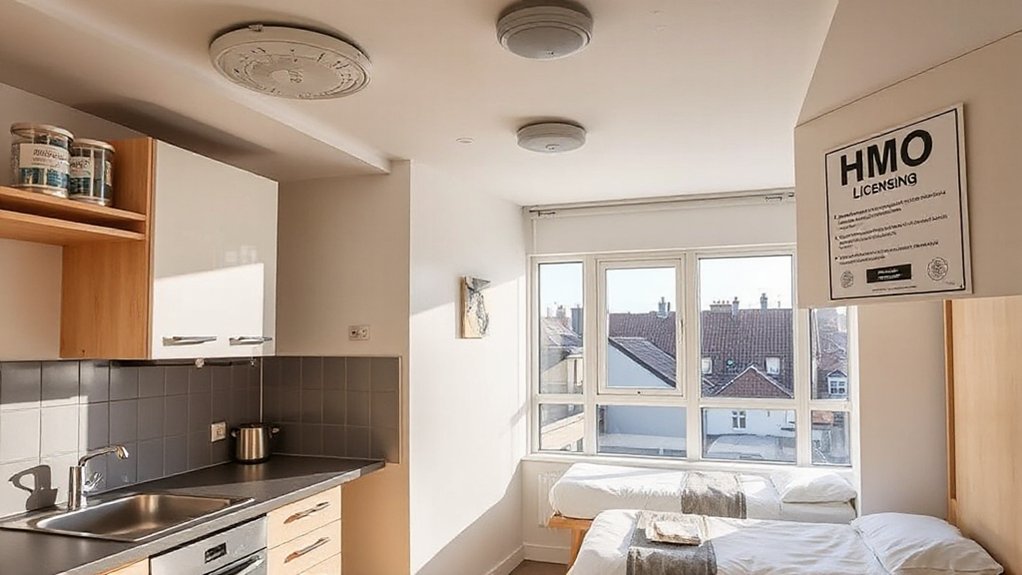
In Glasgow, a House in Multiple Occupation (HMO) is a dwelling where three or more unrelated tenants share Kitchen, bathroom, or toilet facilities, and at least one of these exacting criteria is met: the house is occupied by more than two people who aren’t part of the same family, or it’s rented out on a room-by-room basis.
You’ll determine HMO status by layout, occupancy, and tenancy structure, not by intent. Consider how shared facilities, room count, and tenancy type influence licensing thresholds and design implications.
HMO taxation and Rental income shape cash flow, so map how these factors affect profitability alongside compliance costs. You’ll benefit from precise room configurations, compliant common areas, and documented occupancy to streamline permits and ongoing management.
Is Your Property Eligible Under Glasgow HMO Rules?
You’ll start by verifying the Eligibility Criteria, ensuring your property size, layout, and tenancy plans meet Glasgow’s HMO standards.
Next, review Licence Exemption Highlights to determine if your property may qualify for an exemption or requires formal licensing.
Consider this a design check: precise dimensions, compliant amenities, and clear occupancy rules to guide your next steps.
Eligibility Criteria Check
Determining whether your Glasgow property qualifies as an HMO hinges on clear, objective criteria: the number of occupants, room arrangements, and shared facilities. You’ll assess occupancy thresholds, beds and spaces, and whether kitchens, bathrooms, and common areas are adequately shared or reserved.
If more than two unrelated tenants share facilities, you’re likely in HMO territory, prompting stricter licensing. Layout matters: verify each occupant has proper room size, egress, and privacy, with clear designation of communal zones.
Compliance also hinges on fire safety readiness, electrical integrity, and ventilation standards, so verify equivalents to Glasgow’s baseline expectations.
When planning updated spaces, factor in marketing strategies and renovation costs to maintain investor value while meeting design and safety goals. Clear documentation helps you demonstrate eligibility during applications and inspections.
Licence Exemption Highlights
Licence exemptions can save you time and money, but only if you know which properties fall outside Glasgow’s HMO licensing net. In this section, you’ll identify practical boundaries that determine eligibility, focusing on property configurations, tenancy types, and occupancy limits.
You’ll assess whether your Centre of Operations, facility standards, and shared amenities align with exemption criteria, avoiding unnecessary licensing costs while maintaining compliance. When considering licence exemptions, you’ll be mindful of legal deferrals that can affect timelines and reporting duties, ensuring you align with policy intent without overcommitting resources.
This approach prioritises clarity, consistency, and risk-aware planning for your portfolio’s future.
- Eligibility boundaries by property type and occupancy
- Documentation and verification requirements for exemptions
- Impact of legal deferrals on licensing timelines
Step-By-Step: Glasgow HMO Licensing From Registration to Grant
Guiding Glasgow’s HMO licensing process starts with clear registration and ends with a grant decision, with each step building on precise documentation and timely submissions.
You begin by compiling owner and property details, then complete the registration form meticulously to prevent back-and-forth.
Next, you prepare occupancy plans, room sizes, and tenancy outlines, ensuring alignment with Glasgow’s licensing criteria.
During the interim, you anticipate requests for additional information and respond promptly to avoid delays.
You’ll track deadlines, verify landlord qualifications, and demonstrate compliance readiness for every questionnaire.
As submissions advance, your focus remains on delivering accurate rent control disclosures and ensuring tenant rights are clearly reflected in the documentation.
The grant decision hinges on data integrity, prompt responsiveness, and a stringent adherence to the design-centered licensing workflow.
Fire Safety Requirements for Glasgow HMOs
Fire safety in Glasgow HMOs is non-negotiable: plans must prove you’ve engineered robust safeguards from the outset, not as an afterthought. You’ll implement fire alarm systems that provide early detection, stable power, and clear audible/visual signals across all floors.
Coordinate evacuation procedures that minimize confusion, designate assembly points, and rehearse with occupants. Guarantee compartmentalisation limits spread, with clearly marked escape routes and protected route timing.
Regular maintenance, testing, and documentation demonstrate ongoing compliance and readiness.
- Fire alarm systems: integration, maintenance schedule, testing cadence
- Evacuation procedures: clear roles, muster points, drill frequency
- Structural safeguards: compartmentation, signage, and unobstructed exits
Room Standards and Occupancy Limits for Glasgow HMOs
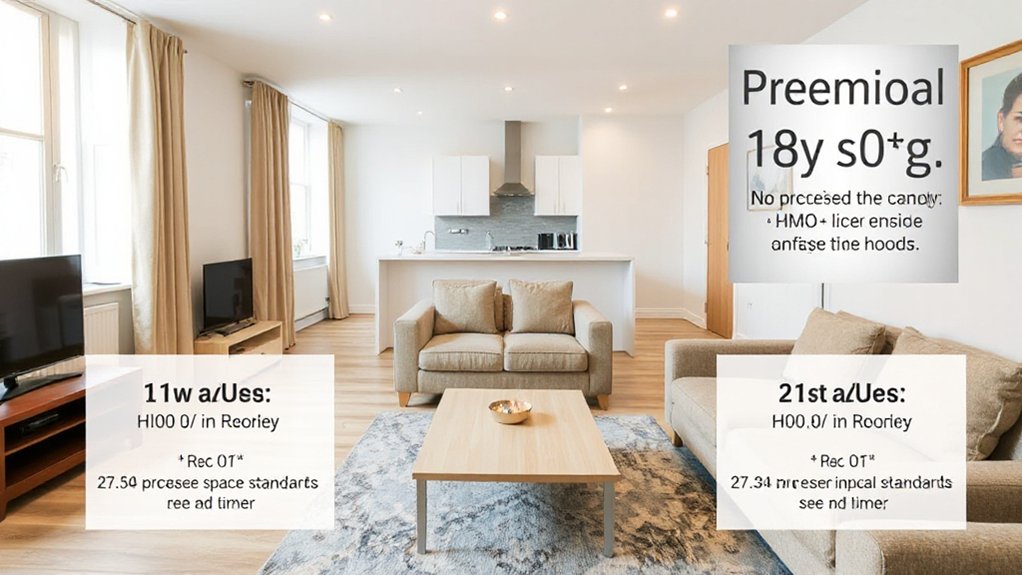
You’ll align room size standards with practical living patterns, ensuring each space meets minimum area and ceiling height requirements while prioritizing comfortable layouts.
We’ll balance occupancy level limits with safe, scalable design, so every HMO optimizes space without compromising routine movement or privacy.
With clear safe egress requirements in mind, we’ll establish verifiable metrics for room function, occupant load, and emergency routes to support compliant, efficient designs.
Room Size Standards
- Room insulation considerations tied to perceived space comfort
- Heating standards impact on usable floor area perception
- Precise measurements to prevent noncompliant variances
Occupancy Level Limits
Consider typical layouts: bedrooms sized for single occupancy, shared spaces sized to minimize crowding, and corridors that enable easy movement without bottlenecks. Room occupancy must align with design-focused space utilization principles, ensuring furniture and circulation fit without compromising egress or daylight.
You’ll apply caps that reflect actual usable area, subtracting fixed installations and storage that reduce live space. Documented limits should be transparent to tenants and inspectors, with fast references for revisions as layouts evolve.
This approach prioritizes predictable, compliant living environments.
Safe Egress Requirements
Are egress paths truly reliable in every Glasgow HMO design, and how do room standards enforce that reliability? You assess egress by confirming clear, unobstructed escape routes, properly sized doors, and unobstructed floor space that supports swift movement during emergencies.
Room standards dictate minimum doorway widths, ceiling heights, and corridor turning radii, ensuring occupants aren’t boxed in. Emergency lighting activates automatically, guiding you toward exits when visibility drops.
You also verify that stair access, landings, and final exit doors meet required dimensions, with clearly marked signage to minimize confusion. Across all units, occupancy calculations prevent crowding, preserving safe egress under peak conditions.
- Verified escape routes and signage consistency
- Adequate emergency lighting and power continuity
- Compliance-driven door and corridor dimensions
Annual Approvals and Renewal Timelines for Glasgow HMOs
In Glasgow, annual approvals and renewal timelines for HMOs are governed by a structured process designed to guarantee ongoing compliance, safety, and design integrity. You’ll submit renewal applications before the current license expires, with documented evidence of property standards, fire safety, and any required alterations.
Timelines hinge on the licensing authority’s decision windows, typically balancing inspection findings, incomplete compliance ratings, and updated design parameters. Expect clear milestones for submission, validation, and notice of decision, followed by stipulated conditions to maintain licensing eligibility.
You should anticipate periodic reassessments aligned with changes to occupancy, room counts, or fire safety equipment. Property valuation data and rental income streams may inform financial viability reviews, ensuring continued market relevance while sustaining regulatory adherence and property quality.
Tenant Registration and Landlord Registration Obligations in Glasgow
Glasgow’s licensing framework for HMOs feeds directly into broader registration obligations, so you’ll align tenant and landlord registrations with existing compliance processes. You’ll implement a streamlined registration workflow that captures Tenant privacy considerations and clearly defines Landlord responsibilities, ensuring data handling aligns with local guidance.
Your process should document tenants’ occupancy details, consent preferences, and verified contact information, while safeguarding sensitive data through restricted access and audit trails. For landlords, your system records ownership status, responsible contact, and license metadata, linking it to renewal timetables and compliance checks.
Consistency across registers reduces duplication, supports enforcement, and improves resident confidence. You’ll monitor updates to policy changes and integrate them into ongoing operational standards.
- Alignment between tenant and landlord records
- Privacy safeguards and data access controls
- Clear assignment of landlord responsibilities
Top Compliance Pitfalls for Glasgow HMOs and How to Avoid Them
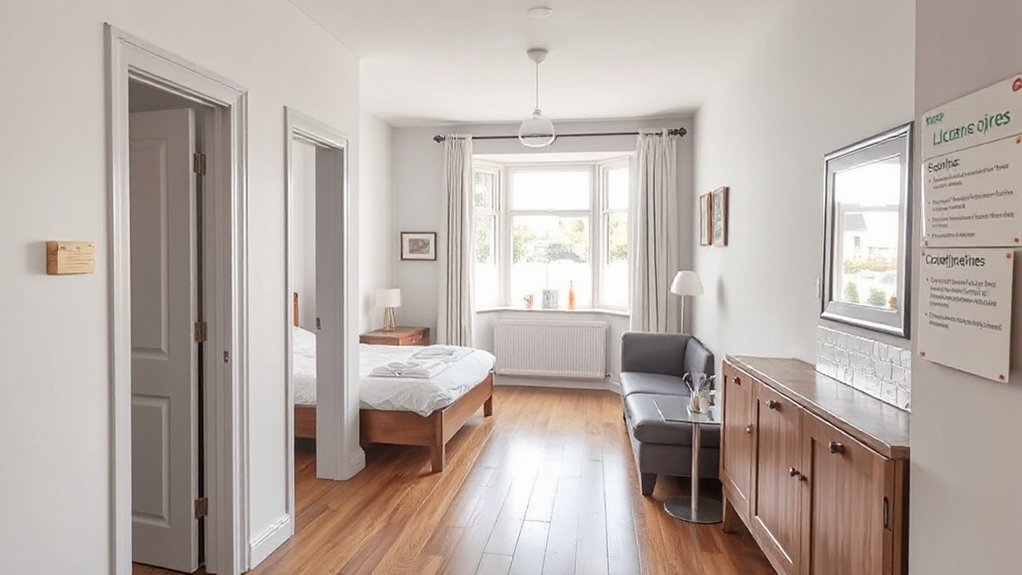
To avoid costly, time-consuming noncompliance, you should map out the most common pitfalls in Glasgow HMOs and implement targeted controls that address them upfront. You’ll protect occupancy quality by aligning licensing, fire safety, and electrical standards with the city’s expectations, and you’ll document progress for audits.
Pitfalls include inconsistent rent control practices that spark disputes and missing secure storage for tenant data, risking privacy breaches. You’ll design a centralized compliance calendar, assign owners for checks, and automate reminders for annual safety inspections, gas certificates, and record-keeping.
Prioritize tenant privacy by limiting access permissions, using anonymized data where possible, and documenting consent. Build escape routes, accessibility, and signage into standard unit layouts, and verify maintenance workflows against a formal policy to prevent backlog.
Continuous monitoring keeps operations resilient and defensible.
A Practical Glasgow HMO Compliance Checklist to Maximise Occupancy
A practical Glasgow HMO compliance checklist starts with a clear, design-driven framework that ties licensing, fire safety, and electrical standards to everyday occupancy goals. You align standards with strategy, ensuring every room contributes to safety, value, and predictable rental income.
Your checklist translates regulatory requirements into tangible actions that preserve property valuation while maximizing occupancy efficiency.
- Schedule regular safety audits, update fire doors, and verify escape routes to protect occupants and property value.
- Streamline licensing compliance, electrical testing intervals, and record-keeping to stabilize rental income and confidence from tenants.
- Integrate value-focused improvements (amenities, lighting, acoustics) with occupancy metrics to boost valuation metrics and attract longer-tenancy.
Frequently Asked Questions
How Long Does the HMO License Typically Last?
A typical HMO license lasts five years. You should plan ahead for license renewal, and keep track of compliance deadlines to avoid gaps in authorization while maintaining rigorous safety and design standards for your property.
Are There Any Exemptions for Student Properties?
Yes, student accommodation often enjoys property exemptions from HMO licensing, though specifics vary. You should verify exemption criteria for your property, ensuring it clearly falls under student accommodation usage and that design-focused standards meet local guidance.
Do HMOS Require Electrical Installation Condition Reports (EICRS)?
Yes, HMOs require electrical installation condition reports (EICRs) for electrical safety. You must meet inspection requirements, schedule regular assessments, and maintain records, ensuring fittings, wiring, and circuits comply with current standards in your design-focused property.
What Penalties Exist for Unlicensed HMOS?
Penalties for unlicensed HMOs punish persistently, with provisioning powerfully punitive fines, potential forfeiture, and facility forfeiture. You face licensing process scrutiny, enforcement actions escalating swiftly, so secure compliance, satisfy standards, and safeguard spaces before authorities arrive.
Can a Property Be Restricted to Fewer Occupants?
Yes, a property can have occupant limits, enforcing occupant caps through occupancy declarations and licensing conditions. You’ll face property restrictions that specify maximum occupants per unit, room, or overall dwelling, guiding design, safety, and compliance from the outset.
Conclusion
I’ve tested a theory: strong, proactive HMO compliance unleashes steadier occupancy and fewer costly delays. In Glasgow, your license hinges on clear room standards, fire safety, and timely renewals—tied together by precise registrations and ongoing inspections. If you design your process like a meticulous project—checklists, scheduled audits, and quick remediation—you’ll not only pass inspections, you’ll build trust with tenants and regulators. So, invest in robust systems now; the payoff is consistent occupancy and fewer surprises later.