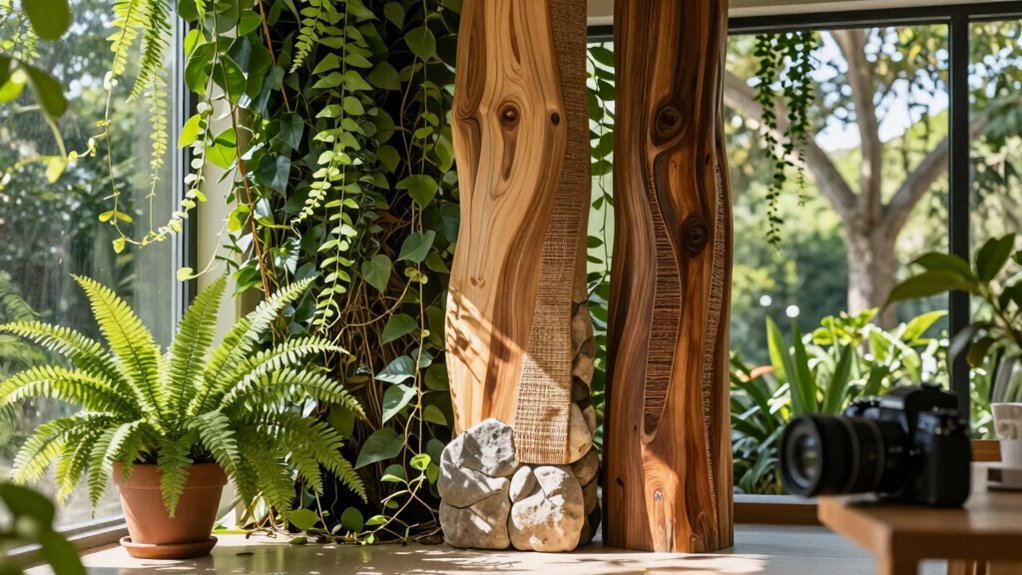
The three pillars of biophilic design are Nature in the Space, Nature of the Space, and Natural Analogues. Nature in the Space brings plants, water features, and natural light into your environment to boost mood and focus. Nature of the Space shapes layouts and views to evoke calm, curiosity, and ease. Natural Analogues use biomimicry and tactile textures to simulate outdoor experiences. Together, they enhance well-being, collaboration, and productivity—and there’s more you can explore beyond this overview.
Nature in the Space
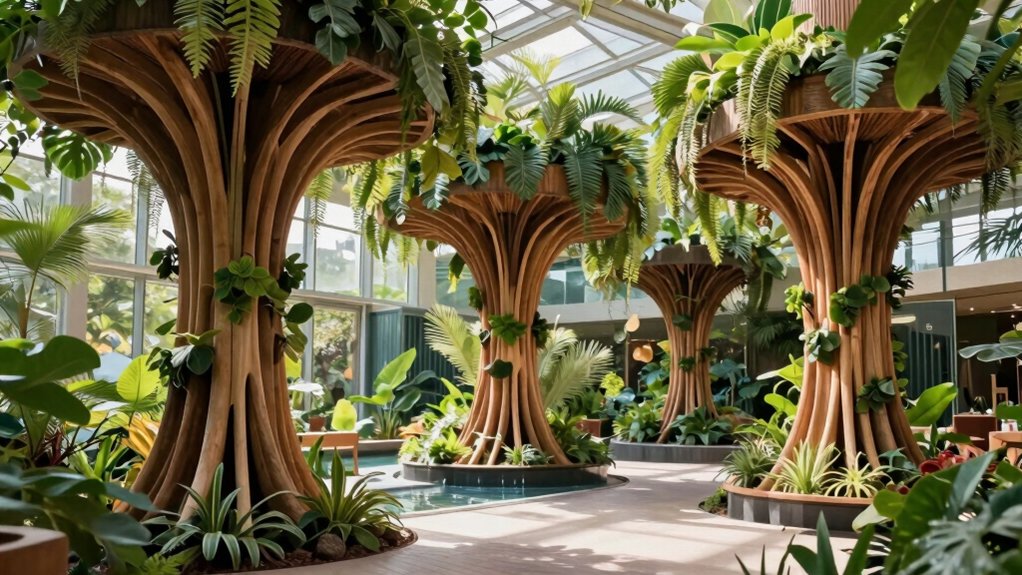
Nature in the Space brings the outdoors inside, using plants, water features, and natural materials to create environments that feel alive. You’ll heighten daily well-being by integrating natural elements that promote a strong connection to nature.
Visual access to gardens, natural landscapes, and water bodies stimulates positive emotion and sharper thinking, while natural light floods work areas, kitchens, and lounges with warmth.
You’ll also notice that non-visual connections—the sounds of water, textures like wood and stone, and fresh air—deeply immerse you in nature, reducing stress.
Prioritize green spaces and accessible outdoor areas such as courtyards or rooftop gardens to sustain interaction. This practical, client-aware approach supports biophilic design goals: observable natural elements, meaningful connections, and continuous environmental comfort.
Nature of the Space
You’ll shape the space to align with evolutionary preferences, guiding how people perceive and move through it.
Favor views of open landscapes, water, and broad vistas to promote calm and ease of experience, while using elements of height or mystery to spark curiosity and exploration.
Evolutionary Preferences
Humans evolved with a taste for open landscapes, water, and broad horizons because these cues signal safety and resources. You’ll notice how natural preferences guide design choices that support calm, focus, and connection.
When spaces resemble natural environments, elevated views or semi-enclosed refuges, you feel safer and more at ease, tapping into ancestral settings that reduce stress.
Natural elevation and varied terrain ignite curiosity and exploration, aligning with innate evolutionary tendencies you carry.
By incorporating biophilic elements, natural forms, and thoughtful textures, you create environments that nurture relaxation and well-being.
Your project benefits from environments that visually and spatially reference nature, leveraging these evolutionary preferences to foster engagement, comfort, and sustained attention without distraction.
Spatial Explorations
Exploring the space itself shapes how people feel and behave. You design with spatial arrangements that create prospect, refuge, mystery, and risk, so environments invite you to move, pause, and respond.
When you incorporate open vistas, water features, and elevated views, you align with innate preferences and invite natural elements into daily life. Elevation and exploration attract attention, provoking curiosity rather than conformity, while mystery invites safe risk that fuels engagement.
Structures like skyscrapers or mezzanines demonstrate how elevation can become a meaningful part of space design, offering vantage points that calm or energize, depending on pacing.
Natural Analogues
Natural analogues use artificial nature mimetics and cohesive material harmony to evoke the outdoors without real elements. You’ll notice how biomorphic shapes, wood and stone textures, and moss walls create a calm, familiar environment that supports comfort and reduces stress.
Artificial Nature Mimetics
Artificial nature mimetics bring the outdoors inside with care and practicality. You’ll choose artificial nature mimetics to create a natural analogue without the upkeep, delivering a natural feel with minimal effort.
Use organic shapes and textured surfaces to mimic real textures, guiding the eye and touch toward comfort. Incorporate natural-patterned elements to establish rhythm and visual interest, while faux woodgrain adds warmth without harvesting resources.
Water features, even in small forms, introduce movement and a calming ambiance that echoes real environments. These techniques help reduce maintenance while enhancing harmony and order.
Cohesive Material Harmony
To achieve cohesive material harmony, choose textures, colors, and patterns that work together across spaces, so nothing feels discordant or out of place. You’ll create a calm, inviting environment by aligning natural elements with deliberate restraint.
Natural analogues rely on consistent earth tones, organic textures, and cohesive patterns to build harmony across rooms. Use materials such as stone, bamboo, and cork to reinforce a tactile, biophilic connection without overwhelming senses.
Aim for a balanced mix where each surface supports the next, avoiding visual noise. When you combine woodgrain textures with subtle textiles and stone accents, you establish a unified story of nature.
This approach minimizes sensory overload while maximizing well-being through carefully chosen natural materials and harmonious composition.
Benefits and Impacts of Biophilic Design
Biophilic design isn’t just about pretty plants—it’s about real, measurable gains for people and performance. When you bring natural elements into spaces, you boost well-being and reduce stress, helping you feel calmer during demanding days.
Biophilic environments support mental health by lowering anxiety and depression indicators, so you stay more present and engaged. You’ll notice improved connectivity between colleagues and spaces, as nature-focused layouts encourage collaboration and smoother communication.
With higher productivity and creative output, your teams convert attention into better outcomes, while fatigue drops as occupants experience more restorative, human-centered environments.
Use eco-friendly materials and thoughtful textures to reinforce these benefits, making your spaces healthier, happier, and more resilient. In short, design that honors nature enhances health, performance, and satisfaction.
Practical Implementation Strategies
Practical implementation starts with simple, tangible steps you can take today to bring nature into daily work life. You’ll begin by incorporating natural elements like plants and water features, plus natural lighting, to create immediate visual and sensory connections with the outdoors.
Favor natural materials—wood, stone, and organic fabrics—to evoke textures found in the environment and reinforce a warm, human-centered feel. Design elements should emphasize access to nature; ensure views of open landscapes, water bodies, or natural vistas whenever possible.
Integrate green walls or indoor gardens to improve microclimates and provide direct access to nature. Use biomorphic shapes and natural patterns in furniture and decor to mirror natural forms and promote calm, cohesive spaces.
Case Studies and Examples
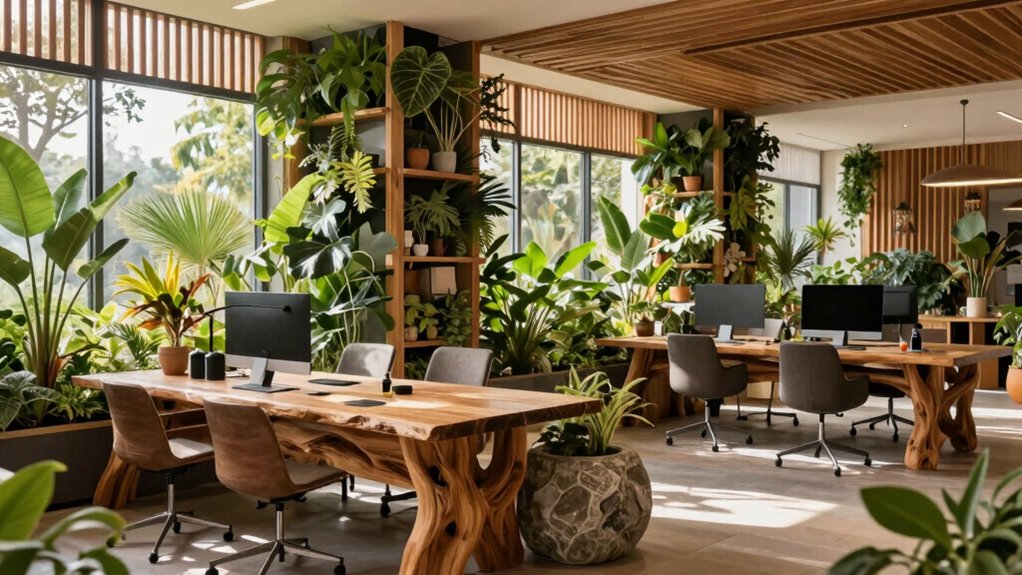
How do real-world spaces bring biophilic design to life? You experience natural elements woven into daily work and living areas, turning concepts into tangible benefits.
Case studies like the Amazon Spheres show how natural light, plant displays, and organic shapes create a built environment that boosts well‑being and connectivity.
The Eden Project demonstrates Natural Analogues, using plant-inspired patterns and natural materials to blur boundaries between indoors and outdoors.
Bosco Verticale highlights Nature of the Space with vertical gardens that reconnect residents to nature in the space.
Googleplex’s indoor gardens and water features exemplify integrating all three pillars, combining beauty and function.
These examples prove that biophilic designs can be practical, scalable, and deeply human in nature.
Conclusion
You’ll design with intention, weaving real nature into daily life. The three pillars—Nature in the Space, Nature of the Space, and Natural Analogues—become your practical toolkit: living materials, daylight and views, textures, patterns, and biomimicry all align with how people move, work, and heal. One striking stat: spaces with biophilic design can boost productivity by up to 15%. Start small—instant impact, lasting comfort, and a healthier, more engaged client experience.