A side return extension is a moving target, like a moving wall that shifts with each choice you make. You’ll face a range of costs driven by size, design, location, and materials, plus hidden adds from foundations, utilities, and permissions. You’ll want clarity on what you can gain for your budget as regional rates and build quality pull you in different directions. Start with the basics, and the numbers will start to align—or reveal where compromises matter most.
How Much Do Side Return Extensions Cost by Region and Style
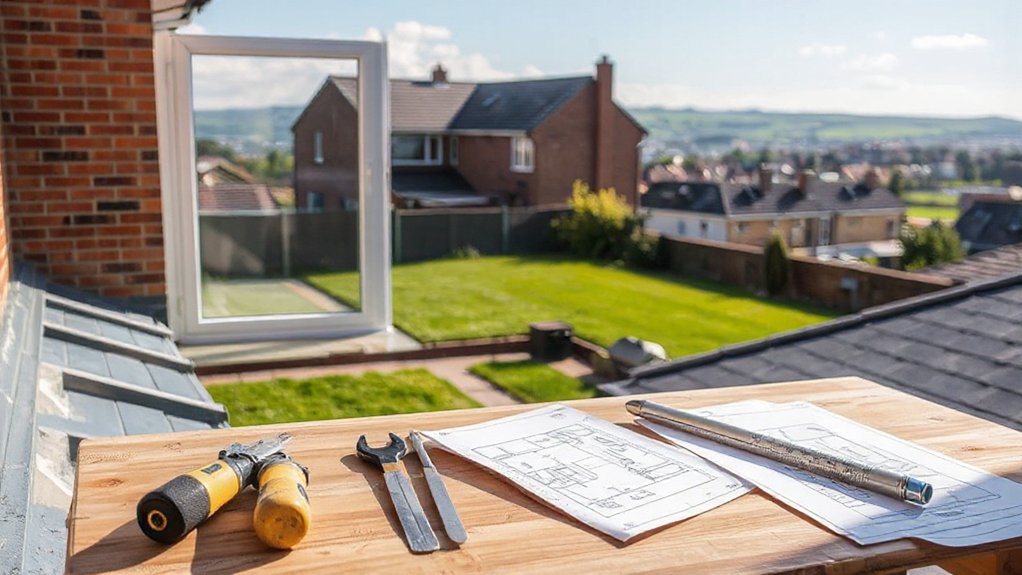
The cost of side return extensions varies considerably by region and design style, reflecting differences in labor rates, material availability, and regulatory requirements. You assess regional labor efficiency, permit processes, and climate-influenced construction methods to estimate base pricing.
In high-demand urban areas, expect elevated rates for skilled trades and expedited timelines, while rural regions typically offer lower labor costs but longer project durations.
Style influences structure, finishes, and complexity, with contemporary or minimalist schemes often reducing ornamental expenses versus traditional designs requiring specialty carpentry and detailing.
Landscaping options impact site preparation and drainage planning, potentially altering core costs through added groundwork or mitigation measures.
Interior design trends shape finish selection, influencing material costs and installation familiarity.
Track shifts in standards to maintain accurate budgeting and alignment with client expectations.
What Drives Side Return Costs: Size, Layout, and Materials
Size, layout, and materials are the primary cost drivers for a side return extension. You assess size by footprint and floor area, noting that every additional square meter increases structural, insulation, and finishing work.
Layout influences complexity: irregular shapes, corner joins, and openings add fabrication and labor time, raising subcontractor rates.
Materials selection directly affects unit costs and installation duration; heavier framing, higher-performance glazing, and premium finishes incur premium pricing.
You must consider structural implications of extensions, such as beam sizing and wall reinforcement, which translate to upfront engineering fees.
Landscaping ideas and exterior integration influence site constraints and drainage planning, impacting overall allowances.
Interior decoration remains a downstream consideration, but budget-conscious choices here can streamline trades and reduce total project risk without compromising function.
Single-Story vs. Double-Story: Which Delivers Better Value?
Consider how a single-story extension offers simpler construction and faster completion, potentially reducing upfront risk and disruption.
Compare that to a double-story design, which delivers more floor area per footprint but introduces higher structural complexity and ongoing costs.
You’ll weigh short-term savings against long-term value, focusing on total build cost per usable square meter and the implications for resale value.
Single-Story Value Comparison
If you’re weighing single-story versus double-story side return extensions, the core decision hinges on overall footprint, construction complexity, and long-term value.
In this single-story value comparison, you assess usable area per cost unit, structural demands, and permit constraints. A single-story addition typically offers shorter build times, simpler foundations, and fewer loads to the existing frame, translating to predictable budgeting and reduced risk.
Yet, it may yield limited interior flexibility and lower vertical volume for landscaping aesthetics and natural light.
By contrast, a double-story yields more floor area without widening the footprint, often increasing perceived value despite higher upfront costs and complexity.
Consider how interior decor choices—ceiling height, window placement, and sightlines—align with your objectives for flow, daylight, and future adaptability.
Double-Story Cost Efficiency
Double-story extensions typically deliver more usable floor area without expanding the building footprint, but this comes with higher upfront costs and greater structural complexity. You should weigh the incremental space against added foundation, framing, and roofing requirements, as well as potential ± geotechnical considerations.
In many scenarios, double-story configurations optimize habitable volume per external footprint, improving value retention through enhanced room proportions and potential property resale appeal. However, you must account for increased planning permissions, damp-proofing strategies, and longer construction timelines that affect lifecycle costings.
When evaluating value, compare per-square-meter costs and projected energy performance, factoring in insulation, glazing, and thermal bridging. Landscaping ideas and interior decor choices influence perceived space utility, yet remain secondary to structural efficiency and long-term maintenance implications.
Foundations and Structural Work: Hidden Expenses
Foundations and structural work often conceals hidden costs that can considerably alter the overall price of a side return extension. You assess ground conditions, confirm load paths, and specify structural elements with precision to avoid overruns.
Excavation depths, underpinning, and reinforced concrete footings drive material and labor rates, while temporary supports and shoring add overhead. You must account for potential remedial work if unsuitable soil or groundwater is encountered, which can elevate timelines and engineer fees.
Budget for design concessions that alter wall alignments or beam specs, impacting finishing costs. Landscaping costs may arise when site access changes or temporary landscape features require restoration post-construction.
Permit application fees should be planned upfront to prevent delays and ensure compliance with local planning and building regulations.
Utilities to Plan For: Mains, Drainage, and Wiring
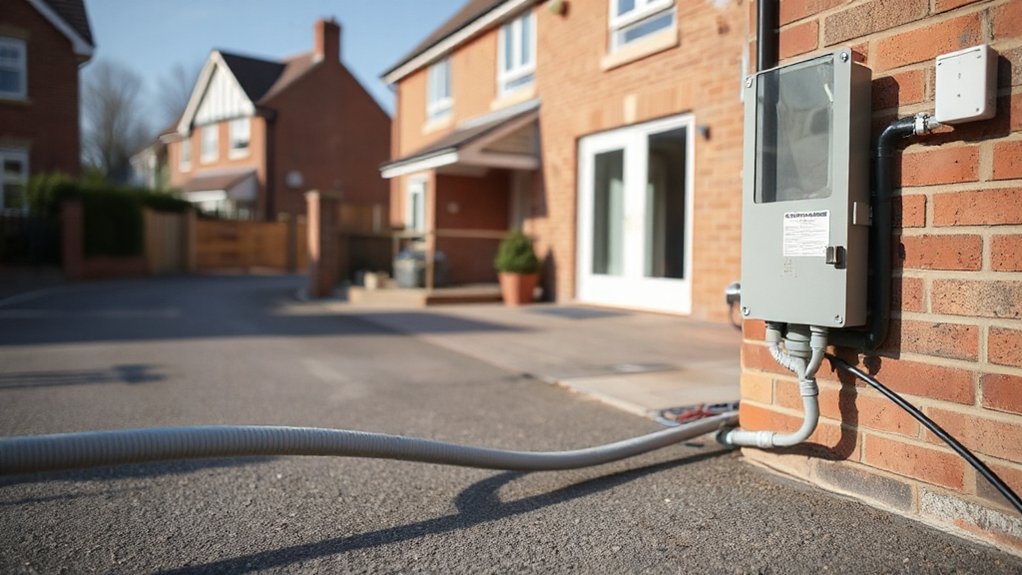
You’ll need to map your mains, drainage, and wiring early, identifying service locations and potential constraints for the side return extension.
Plan connection points, accessibility for future maintenance, and any upgrades required to support added load or new fixtures.
This groundwork informs cost estimates and sequencing, ensuring utilities are integrated without disruption to your project timeline.
Mains Setup Essentials
Mains setup is the foundation for all utilities in a side return extension, requiring careful planning of electrical supply, water and drainage lines, and overall metering arrangements. You’ll map supply routes, assess metering proximity, and confirm service capacity with the utility provider.
Guarantee robust protection for circuits, identify required isolation points, and specify future-proofing for additional loads. Coordinate mains, submains, and distribution boards to minimize loss and maximize efficiency.
For drainage, align invert levels with existing sewer or adopt a dedicated lateral, detailing trap locations and venting for compliance. Wiring must anticipate lighting, outlets, and appliances while preserving fire-rated separations.
Consider landscaping ideas to conceal visible runs and support exterior aesthetics, and anticipate interior decoration so finishes accommodate access panels and maintenance. Plan now to avoid costly rearrangements later.
Drainage And Wiring Planning
You should conduct a site survey to identify existing services and potential conflicts, then develop a schematic that aligns with structural implications of a side return extension.
Specify drainage gradients, trap locations, and access for maintenance, while ensuring correct venting and soil conditions.
For electrical, map circuits, outlets, and appliance loads, prioritizing outdoor-IoT readiness and weatherproof enclosures.
Coordinate with landscape design to conceal retractable routing and preserve aesthetics, and with interior decor to minimize invasions into finished spaces.
Document approvals, permits, and testing procedures to guarantee compliance, safety, and long-term reliability.
Planning Permissions and Permits: What You Need to Budget
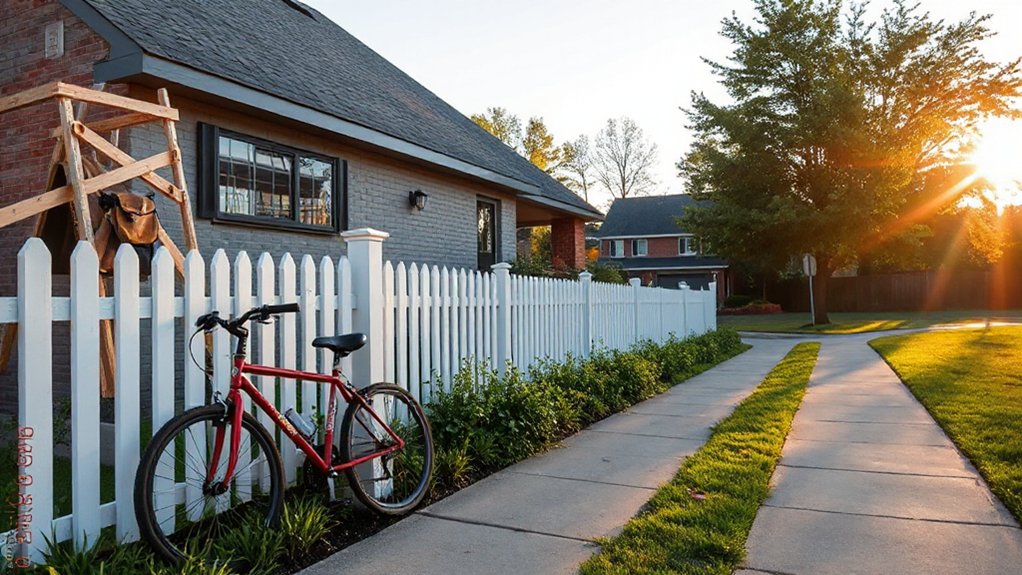
Planning permissions and permits are a critical upfront consideration, since the required approvals determine whether a side return extension can proceed and what costs to budget for. You must identify jurisdictional requirements, applicable building regulations, and potential planning constraints before committing resources.
Schematic designs should reflect compliance needs while minimizing revisions that add delay and expense. Consider interior lighting implications and how shading, fire safety, and access routes affect approvals.
Landscaping design considerations may influence planning outcomes, particularly for boundary treatments and drainage. Early engagement with authorities can clarify permitted dimensions, materials, and timescales, reducing uncertainty.
Prepare for submission fees, potential conditions, and solicitor costs to avoid budget overruns.
- Identify regulatory requirements and deadlines
- Assess how interior lighting and landscaping design impact approvals
- Budget for fees, conditions, and professional services
Windows and Doors: Budgeting for Light and Access
Optimizing light and access starts with a clear plan for window placement and sizes that align with your side return layout.
Consider the budget implications of glazing type, operability, and compliance with local daylighting and egress requirements.
This discussion focuses on Lightful Access Planning and Window Budget Considerations to balance illumination goals with construction costs.
Lightful Access Planning
- Strategic window and door placement for light and flow
- Integration with interior decor and exterior landscaping options
- Performance targets aligned to cost and maintenance considerations
Window Budget Considerations
Prioritize sizing and operability that optimize natural illumination without compromising daylight control or accidental glare. Consider maintenance intervals, warranty terms, and compatibility with existing brickwork and insulation strategies to prevent future remediation costs.
Landscaping options influence sightlines, privacy, and outdoor integration, so account for planting maturity and shading devices in lifecycle costing.
Security considerations—locking mechanisms, multipoint hardware, and frame reinforcement—affect both upfront price and risk mitigation, ensuring compliant, durable, and aesthetically cohesive results.
Finishes and Insulation: Heating, Interiors, and Comfort
When it comes to finishes and insulation for a side return extension, the goal is to minimize heat loss while maximizing comfort and durability. You select materials with proven thermal performance, compatible with existing structure, and straightforward maintenance.
Prioritize wall treatments that reduce cold bridging and enhance acoustic values, while preserving interior aesthetics. Furniture placement considerations should align with flow, lighting, and thermal zoning to maintain even comfort.
Insulation strategy includes cavity insulation, airtight seals, and rated framing solutions to sustain steady temperatures. Finish choices must resist moisture and encourage longevity, with compatible substrates and detailing for long-term performance.
Precision in detailing prevents drafts and ensures efficient HVAC operation for year-round comfort.
- Furniture arrangement
- Wall coverings
- Thermal segmentation
Cost-Saving Design Levers: Where to Cut Without Sacrificing Quality
As you optimize a side return extension, you can trim costs without compromising performance by targeting high-impact, low-risk areas where durability and efficiency matter most. Focus on load-bearing decisions, structural details, and envelope performance to capture early-value savings.
Use standardized components and modular detailing to reduce customization without sacrificing longevity. Prioritize low-maintenance materials with proven warranties, and align insulation strategy with realized energy savings to justify the upfront spend.
Landscaping ideas should integrate with drainage and sun exposure to minimize long-term maintenance while preserving site usability.
In interior decor, select timeless, serviceable finishes and consistent color palettes to limit future replacement cycles.
Document performance criteria for windows, doors, and roof assemblies to protect quality while enabling informed trade-off decisions.
Common Mistakes to Avoid at the Design Stage
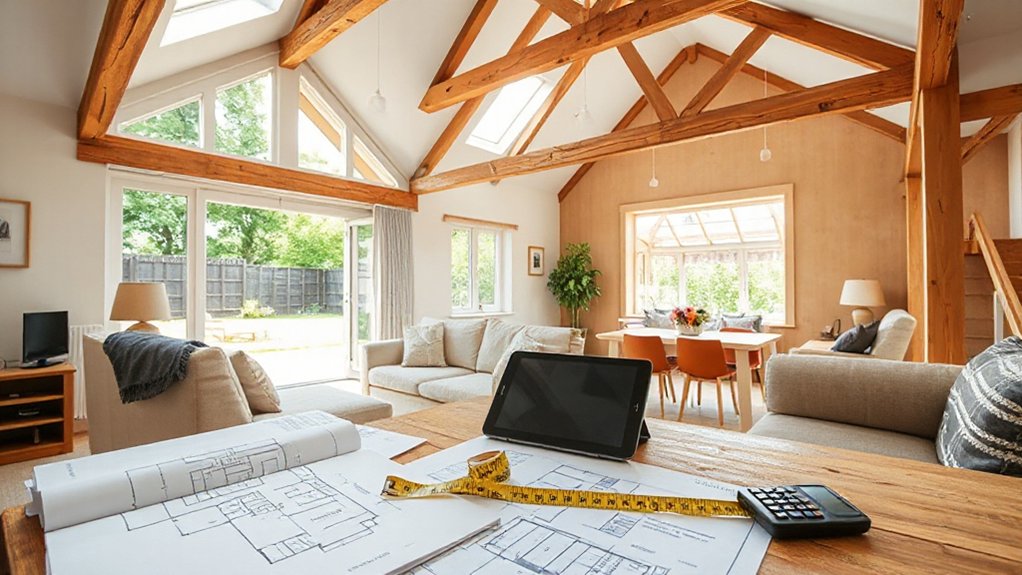
Common design-stage mistakes often stem from premature optimization or insufficient attention to site-specific constraints. You must assess structural, drainage, and daylight implications before detailing layouts or elevations. Failing to coordinate with existing services drives costly changes later, especially when services fall outside practical routing.
Prioritize accurate, measurable constraints to avoid rework in later phases. Neglecting landscaping costs and interior decoration implications during early planning can skew budgets and schedules, creating misaligned expectations. Maintain a clear record of constraints, decisions, and rationale to support informed trade-offs and smoother approvals.
Anticipate daylight, privacy, and thermal performance to prevent retrofit pressure. Align client goals with regulatory requirements and buildability to minimize risk.
- Define constraints early to prevent costly redesigns
- Balance budgets by correlating landscaping costs with layout options
- Integrate interior decoration considerations into spatial planning
How to Build a Realistic Budget and Timeline
To build a realistic budget and timeline for a side return extension, start by defining a detailed scope that translates design intent into measurable activities, costs, and milestones. You then construct a work breakdown structure enumerating tasks, dependencies, resource needs, and risk buffers.
Allocate contingency funds for scope changes and site constraints, and establish a sponsor-approved milestone schedule with start and finish dates. Calibrate durations using historical data and supplier lead times, integrating critical path analysis to identify float.
Incorporate landscaping ideas, ensuring exterior work aligns with drainage and access requirements while preserving future maintenance costs. For interior phases, specify finishes, fixtures, and interior decoration standards with billable quantities.
Document change-control procedures, approval gates, and reporting cadence to maintain traceability and enable timely decision-making. Periodically revalidate assumptions against progress and market conditions.
Quick Reference: Regional Ranges and Style Toggles
Regional ranges and style toggles serve as a concise reference for aligning project specifications with locality-specific costs and aesthetic conventions. They enable quick, accurate adjustments to scope without renegotiating core requirements.
You’ll map regional cost bands to site constraints, then apply style toggles to facility finishes, ensuring consistency with local expectations. This framework supports disciplined decision-making in landscape design and interior decor, reducing guesswork while preserving design intent.
Use it to calibrate materials, labor, and permitting timelines, keeping critical path intact.
- Regional cost bands guide budget alignment for landscape design and interior decor outcomes
- Style toggles adjust finishes, fixtures, and textures to suit locality aesthetics
- Documentation flags deviations early, maintaining compliance and scope integrity
Frequently Asked Questions
How Long Does a Side Return Extension Typically Take?
A side return extension typically takes several weeks to a few months, depending on complexity and approvals. You should plan for design considerations, material selection, and coordination with trades, ensuring you monitor progress and manage deviations proactively.
What Is the Impact of Your Land Slope on Costs?
Undeniable realities aside, you’ll face modest increases when land grading and slope stability are required. You gauge costs by slope and drainage needs, ensuring land grading and slope stability measures minimize risk and maximize structural integrity.
Do Warranties Apply to Structural and Finish Work?
Warranties typically apply to both structural work and finishes, with coverage defined by contract. You should expect structural guarantees for load-bearing elements and all-encompassing warranty coverage for workmanship, materials, and alignment, subject to specified exclusions and maintenance prerequisites.
How Do Council Restrictions Affect Project Scope?
Restriction awareness shapes your scope: council constraints dictate planning permissions and building regulations, narrowing design options and requiring approvals before construction. You must align plans, document submissions, and comply with local authority conditions to proceed.
Can Existing Trees Affect Foundation Requirements?
Yes, tree roots can affect foundation requirements, potentially compromising stability if neglected. You should assess root proximity, soil conditions, and load paths to guarantee foundation stability, using professional examination and mitigations like root barriers or underpinning if necessary.
Conclusion
You’ll finish with a clear path to a balanced budget and a solid timeline, avoiding costly surprises. By weighing region, style, and whether you opt for single- or double-story layouts, you’ll pinpoint value without compromising quality. Track foundations, utilities, and design levers early, and you’ll sidestep common mistakes that derail projects. A well-planned side return extension isn’t just a dream—it’s a precise, almost legendary undertaking that pays dividends in space, light, and function.