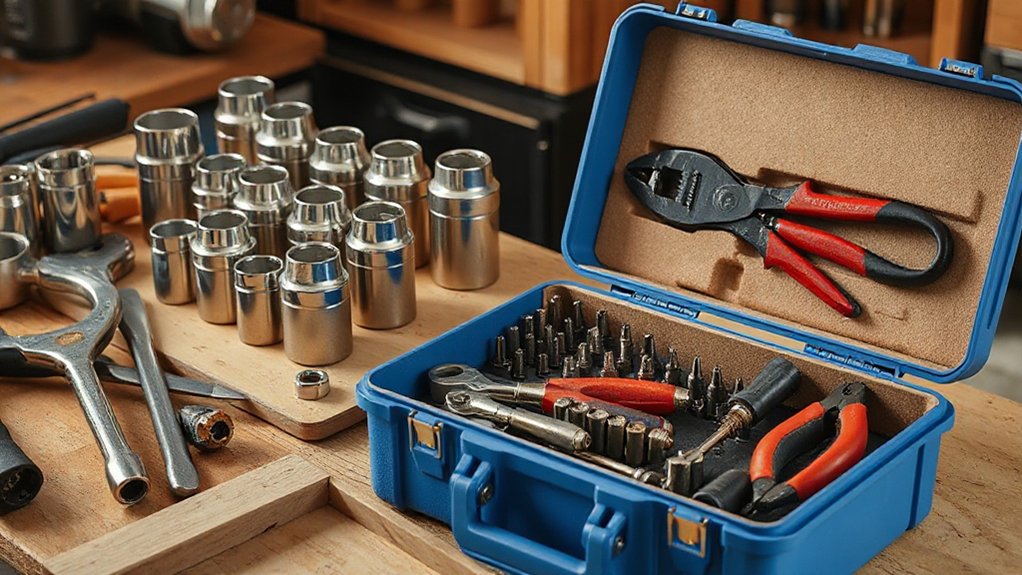
Craftsman tool sets vary from compact, essentials-focused kits to extended ranges that cover more demanding projects, so you’ll want to match scope to your tasks. Look for core reliability—ergonomic grips, solid bit tolerances, and durable metals—along with clear labeling and organized compartments. Check compatibility across sockets, bits, and accessories and consider warranty terms and real-world durability notes. If you’re steering toward quick fixes or renovations, weigh each kit’s breadth against your budget, then you’ll see how the choices stack up for you. You’ll uncover more specifics soon.
What You Get in Craftsman Tool Sets for Home Projects

Craftsman tool sets for home projects typically bundle a core assortment of sockets, wrenches, screwdrivers, and bits that cover common maintenance tasks. You’ll find standardized sizes that address fasteners across typical DIY projects, alongside organizers and carry cases designed for quick access.
Tool set versatility matters: the range of socket sizes, screwdriver types, and bit selections determines whether you can tackle electronics, plumbing, or carpentry with minimal swapping. Build quality and material choices influence durability under repeated torque.
The bundle often reflects a brand reputation built on consistency and warranty support, not just price. You evaluate whether the included ratchets, extensions, and magnetic trays align with your power goals and expected workloads, weighing reliability against scope.
In the end, you measure value by performance, longevity, and how well the set supports your ambitious plans.
Core vs. Extended Kits: Choosing the Right Scope
Core kits bundle the essentials for quick-start projects, offering a compact selection of sockets, wrenches, and bits that cover common tasks without overwhelming you with options. You’ll evaluate scope by comparing what’s included, how fast you can tackle a project, and the friction of accessory needs.
Extended kits add sizes, specialty drivers, and auxiliary bits, increasing versatility but inviting choice fatigue if you overbuy. Look for clear categorization of extension options, such as deeper socket ranges or metric-plus-imperial sets, to avoid gaps mid-task.
Consider kit upgrade paths: can you add modules later without retooling a full set, and are upgrades modular or forced purchases? A pragmatic balance yields power without paralysis, aligning tool breadth with your project cadence and future-proofing your workshop.
Durability and Warranty You Can Trust With Craftsman
Durability is the cornerstone of Craftsman’s appeal, but you should scrutinize the specifics beyond broad guarantees. You’ll assess material quality, finish resilience, and tool longevity under real-world use, not marketing fluff.
Look for solid metal construction, reinforced joints, and socket retention that won’t loosen under torque. Warranty coverage matters, yet you must confirm what it protects—parts, labor, or both—and the process to claim it without excessive downtime.
Durability testing should be documented, preferably with independent results, showing performance across cycles, impacts, and temperature ranges. You’ll value tools that resist wear while maintaining accuracy, even after repeated disassembly and reassembly.
Consider regional support and authorized service centers, because a strong warranty only helps when you can access prompt, competent service.
Best Quick-Fix Craftsman Sets for Around the House

If you’re after quick, practical fixes around the house, these Craftsman sets deliver essential tools in compact packages you can grab on the fly. Each kit prioritizes core drivers, wrenches, and quick-release bits, letting you tackle jams, loose hardware, and minor repairs without a full toolkit.
The selection emphasizes reliability over hype, with clearly labeled compartments that reduce rummaging and improve efficiency. Expect durable cases, molded foam inserts, and tools sized for one-handed use, so you maintain control during fast, decisive work.
Craftsmanship meets practical value, supporting rapid problem-solving without overwhelming you with excess. Consider how craftsman branding reinforces expected performance, and ensure each piece aligns with tool safety norms to avoid shortcuts and injuries.
Balanced Mid-Range Kits for Renovations
For renovations, these mid-range Craftsman sets strike a careful balance between breadth and build quality, offering a broader selection of drivers, bits, and metric and SAE wrenches without tipping into premium pricing.
You’ll find solid core tools paired with efficient organizers, enabling quick swaps between tasks and reduced downtime. The kits emphasize reliability over flashy extras, delivering consistent torque and dependable bit engagement in daily renovation work.
Budget options exist within this tier, but you’ll still encounter robust construction, plated finishes, and corrosion resistance that survive frequent use. Premium selections aren’t absent, yet these kits stay accessible, valuing practicality over bragging rights.
Heavy-Duty Craftsman Kits for Ambitious Projects
When tackling ambitious projects, heavy-duty Craftsman kits deliver rugged components built to endure repetitive abuse and demanding tasks, prioritizing torque reliability and tool longevity over sheer volume. You’ll notice reinforced casings, high-torque ratchets, and metal-gear drives that resist wear under constant use.
However, footprint counts: bulkier kits demand substantial storage and transport planning, not just raw muscle. Power tool accessories blend essential bits, bits, and bits again, but you should assess compatibility across brands and hex standards before committing.
Build quality is solid, yet some aluminum housings show flex under peak loads, and warranty terms deserve close review. Storage solutions matter as much as torque, so choose modular organizers and secure cases.
For ambitious projects, these kits offer durable performance, with clear emphasis on reliability and system cohesion.
Hand Tools vs. Power Tools: Pairing for Efficiency

Do you pair hand tools with power tools for max efficiency, or lean too heavily on one side? You should assess tradeoffs, not instincts. Hand tools excel in control, precision, and fine finish, especially where you demand feel and feedback.
Power tools deliver speed, consistency, and reduced fatigue on repetitive tasks, yet they can overwhelm with torque and noise. The ideal pairing leverages ergonomics and comfort: choose grips, balance, and vibration dampening that minimize strain.
In practice, assign hand tools for setup, adjustment, and delicate operations; reserve drills, impact drivers, and saws for bulk material work. Prioritize safety features—blade guards, automatic shutoffs, and ergonomic handles—across both types.
Reassess periodically as projects scale, tools improve, and tolerance requirements tighten.
Organizing Your Craftsman Kit: Storage and Transport
Organizing your Craftsman kit starts with a practical layout for storage and transport. You’ll want clearly labeled drawers or bins that separate hand tools, bits, and fasteners, reducing search time under pressure.
Prioritize tool organization that minimizes movement, with dedicated trays for frequently used items and secure mounts for power tools during transit. Choose a case system that locks securely, resists vibration, and stacks efficiently for quick loading.
Consider modular organizers that adapt to project scope, not just current needs. Transport convenience hinges on a balanced weight distribution and ergonomic handles.
Regularly purge mismatched parts and dull blades to preserve efficiency. Maintain consistent placement rules so teammates share the same system, eliminating chaos and error.
This disciplined approach delivers reliability, speed, and ready-to-work confidence.
Budget Guide: Finding the Right Craftsman Set Without Overpaying
When you’re shopping for a Craftsman set, prioritize Budget-Friendly Tool Sets that meet your real needs rather than the biggest bundle. Consider Value-Based Purchase Tips that weigh tool quality, warranty, and brand reliability against price.
Watch for Hidden Costs To Watch like shipping, inserts, or upgrade options that can bump the total. This spotlights a balanced approach: you want dependable tools without paying for features you won’t use.
Budget-Friendly Tool Sets
If you’re shopping for a Craftsman tool set on a budget, you’ll want a clear plan that balances essential basics with future-proof versatility, rather than chasing the lowest price alone. Budget-friendly options exist, but they must deliver durable construction and reliable performance.
Prioritize a core kit that includes a quality ratchet, a solid bit set, and a versatile screwdriver assortment, then expand only as needs grow. Compare tool material, warranty terms, and compatibility with common accessories to avoid gaps.
Seek sets with clearly labeled inventories and real-world performance notes, not marketing hype. Budget options can offer affordable quality if you assess grip comfort, weight distribution, and ease of repair.
Balance cost with resilience to ensure long-term value and consistent, powerful results.
Value-Based Purchase Tips
To get real value from a Craftsman set, focus on what you actually need today and what’ll still matter tomorrow, rather than chasing the lowest sticker price.
Start by mapping tasks you’ll tackle this year and estimate how often you’ll use each tool. Prioritize versatility over sheer quantity, and verify that essentials are solid, ergonomic, and durable.
Compare sets by tool count, material quality, and warranty terms, not bravado. Check brand reputation in professional reviews and long-term performance reports, then cross-check with customer reviews to gauge real-world reliability and service experiences.
Be wary of bundled extras that inflate price without practical benefit. Invest in a thoughtfully chosen core lineup, upgrade only when a clear, necessity-driven advantage appears.
Hidden Costs To Watch
Hidden costs can surprise you even after you’ve settled on a seemingly solid Craftsman set, so you should plan for more than the sticker price. You’ll evaluate total cost, not just upfront payment, by identifying pricing pitfalls before purchase.
Look beyond bulk discounts and intro offers to understand how tool sets are priced across retailers, including bundle substitutions and accessory requirements. Consider warranty terms, return policies, and extended-service fees that may apply later.
Watch for shipping charges, tax differences, and handling surcharges that quietly inflate the total. Compare model-year updates that render older inventories less desirable, driving higher prices for newer configurations.
Stay disciplined: demand transparent quotes, request itemized invoices, and objective benchmarks to avoid hidden fees and justify every dollar spent.
Craftsman Ecosystem: Compatibility With Sockets, Bits, and Accessories
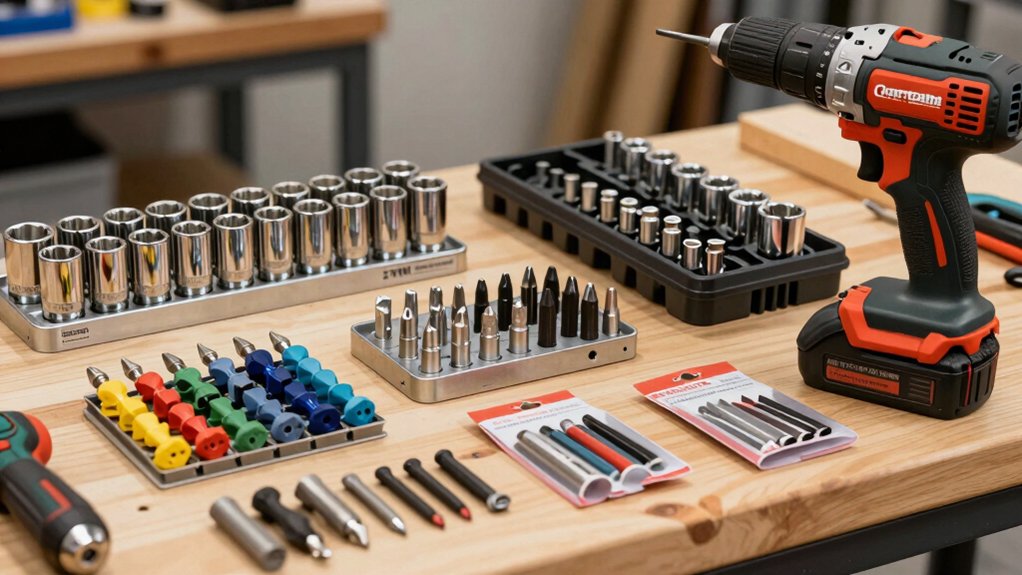
You’ll want to assess the Socket Compatibility Matrix to see which Craftsman kits play nicely with common sizes and drive types.
Consider the Bit Accessory Range to gauge whether you’re covered for Phillips, Torx, hex, and specialty bits across sets.
Finally, check the Accessory Thread Standards to confirm consistent fitment with adapters and extensions for future upgrades.
Socket Compatibility Matrix
The Socket Compatibility Matrix in the Craftsman ecosystem maps which sockets, bits, and accessories work together across different tool lines, vendors, and drive sizes. You’ll see alignment hinges on standardized interfaces and documented tolerances, not guesswork.
It objectively catalogs drive types (Sq, Hex, Torx), nominal sizes, and chamfered lips that influence engagement strength and durability under load. Critical gaps appear where vendors diverge on accessory standards, creating mismatch risk in high-torque applications.
The matrix highlights cross-compatibility, noting where adapters or converters preserve life, and where they degrade performance or void warranties. It’s a practical tool for planning assemblies, reducing rework, and confirming that every component meets established accessory standards.
For pros, it translates complexity into actionable, power-oriented purchase choices.
Bit Accessory Range
How broad is Craftsman’s Bit Accessory Range when it comes to compatibility with sockets, bits, and accessories across the ecosystem? You’ll find a broad cross-section designed to pair with Craftsman sockets and power tools, but breadth isn’t depth by default.
The lineup emphasizes core bit profiles—Torx, Phillips, slotted, hex, and impact variants—with a focus on durability and quick-change compatibility. Yet, some cheaper bundles skew toward standard lengths and limited stepless adapters, which can constrain specialized projects.
Bit storage matters: organized cases help you avoid misplacements, yet sizes and formats aren’t always consistent across tool families. If you value accessory versatility, you’ll appreciate modular sets, but expect occasional fit nuances when mixing older and newer components.
Accessory Thread Standards
Are Craftsman accessory threads standardized across sockets, bits, and attachments, or do mismatches surface when mixing generations? You’re evaluating how screw thread standards align across the ecosystem, and the answer matters for throughput.
In practice, Craftsman uses common hex and drive interfaces, but subtle variances persist between product lines and generations. Expect occasional compatibility gaps between older sockets and newer attachments, especially when cross-branding or mixing metric-like fine pitches with standard imperial threads.
For real efficiency, verify nut and bolt compatibility before heavy use, and test fit under load rather than assume universal threading. Document thread counts, pitches, and receptacle depths to prevent silent failures.
In short, standardization exists, yet vigilance guarantees uninterrupted performance and torque integrity.
Real-World Tips: Maximizing Value and Longevity
Because small, thoughtful choices—like proper storage and routine maintenance—significantly extend a tool set’s life, you’ll get more value from a Craftsman collection over time. You evaluate kits by build quality, material grade, and replacement policy, not hype. Prioritize secure cases, labeled compartments, and rust resistance; a tidy toolbox reduces wear and misplacement.
Schedule regular blade and bit checks, lubrication, and torque verification on fasteners to prevent hidden damage. Avoid cheap, disposable components that inflate long-term costs. Invest in high-torque drivers and magnetic trays to speed DIY projects without sacrificing precision, then trust that professional tools survive heavy use.
Document wear patterns and rotate tasks to balance load. With disciplined upkeep, you preserve performance, ensuring consistent results across demanding home improvements and pro-style routines.
How to Evaluate a Craftsman Kit Before Buying
When evaluating a Craftsman kit, start by checking build quality and material grades across the included tools, not just the advertised count. You want steel hardness, spring tolerance, and handle integration that won’t loosen under load. Inspect for consistent finishes, precise primaries, and subdued tool chatter in operation.
Compare brand reputation claims against independent reviews and actual field performance, not glossy marketing. Assess ergonomic design: grip contours, weight distribution, and tool balance, because comfort translates to control and fewer fatigue failures.
Look for a clear warranty, replacement policy, and verified MET/ANSI certifications where applicable. Consider component variety that matches your tasks, and confirm that bit sets, ratchets, and sockets thread smoothly.
Decide based on measurable quality signals, not hype, to maximize long-term reliability and power.
Practical Comparisons: Top Craftsman Sets for Different Homeowners
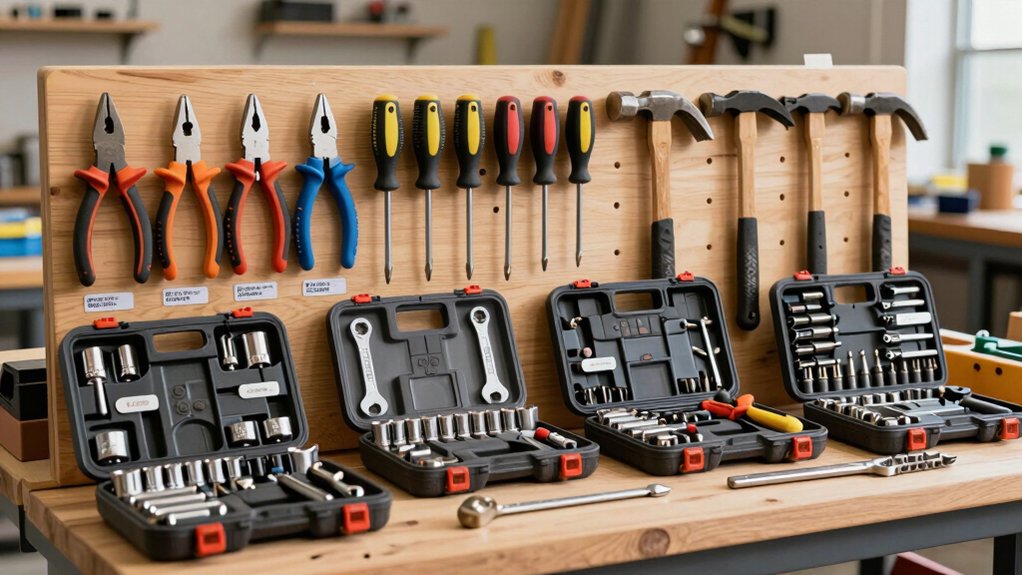
Different homeowners have different tool needs, so the best Craftsman sets vary by task, budget, and tolerance for ongoing maintenance.
In practical terms, you’ll compare core configurations, kit breadth, and accessory quality across popular models. Assess grip comfort, bit tolerances, and metal hardness, because durability under repeated use matters more than flashy packaging.
Brand reputation informs reliability across years of projects, but customer reviews reveal real-world performance, noise, and rust resistance that specs miss.
For power users, prioritize sets with high-torque drivers, full socket ranges, and modular organizers that resist chaos on busy job sites. Be wary of filler pieces; value lies in essential, interoperable components.
Weigh warranty support and ease of replacement, then decide which Craftsman suite genuinely matches your home-improvement ambitions.
Frequently Asked Questions
How Do Craftsman Sets Fit Into Different Tool User Levels?
Craftsman sets scale with user levels: you begin with beginner tools, progress to professional sets as your grip tightens and projects demand; you’ll upgrade thoughtfully, weighing durability, precision, and coverage before selecting the ideal tool kit.
Which Craftsman Kit Offers the Best Return on Investment?
You’ll get the best ROI from sets with solid a-to-z warranties and all-encompassing tool assortments; compare prices, assess durability, and weigh brand reputation against price. You’ll prioritize value, efficiency, and long-term performance for empowered, decisive buying.
Do Craftsman Sets Include Specialty Bits and Drivers?
Symbolism threads your choice: yes, craftsman sets include specialty bits and drivers, though bit compatibility varies and accessory options differ. You should scrutinize each kit’s tools, ensuring the bits align with drills, impact drivers, and project demands.
How Easy Is It to Upgrade From One Craftsman Kit to Another?
Upgrading is straightforward if you pick a compatible kit; tool storage matters, and kit compatibility can limit options. You’ll appreciate modular storage, but evaluate bit sizes, drive types, and sizing to maintain power and seamless expansion.
Are Craftsman Tools Covered by a Lifetime Warranty for Homeowners?
Yes, Craftsman tools are covered by a lifetime warranty for homeowners, with broad warranty coverage. You’ll enjoy homeowner benefits like repair or replacement, though exclusions apply; read terms closely to evaluate coverage scope and any required proof.
Conclusion
If you’re choosing a Craftsman kit, weigh scope, durability, and warranty before buying. Compare core vs. extended sets to match your projects, and verify socket sizes, bit types, and accessory compatibility across kits. Look for mid-range options that balance variety with quality, and note real-world usage notes from homeowners. Think of it like assembling puzzle pieces; a well-matched kit locks into place smoothly, like gears turning in a reliable machine.