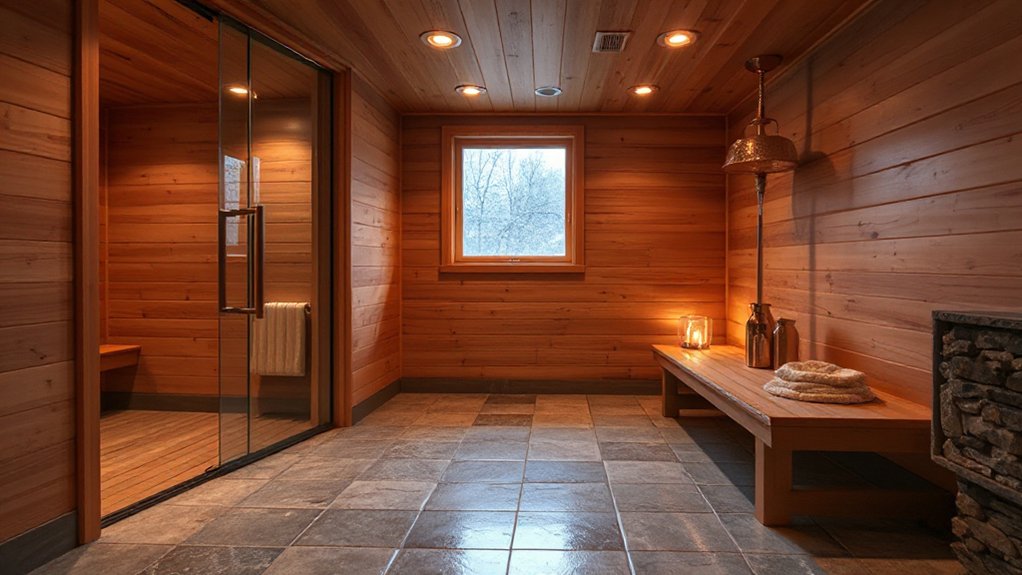
If you want something unique, that can also add value to your home, then this might be the answer, your own basement sauna.
You’ll determine the best basement sauna type for your space by evaluating footprint, ceiling height, and access routes, then confirm that ventilation, moisture control, and electrical load meet safety standards. Plan dedicated circuits, GFCI protection, and proper wiring while sizing insulation and moisture barriers to handle humidity. Consider lighting and bench support with structural feasibility, then align material choices with your budget and local codes. Start with a precise layout to uncover unseen constraints and opportunities.
Choose the Right Basement Sauna Type for Your Space
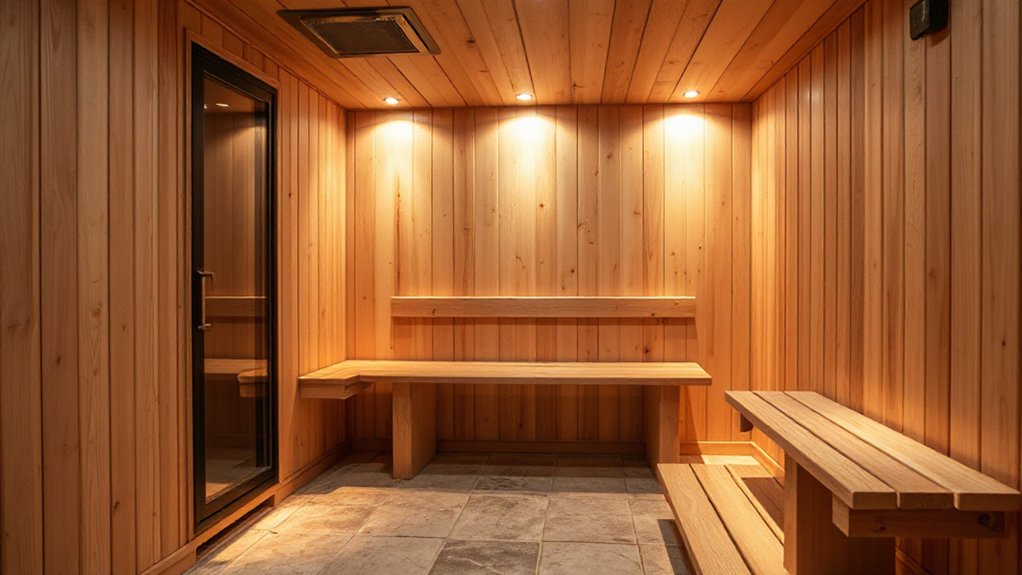
Choosing the right basement sauna type begins with evaluating space constraints, electrical capabilities, and moisture control. You assess room dimensions, ceiling height, and potential ventilation routes to determine feasible layouts.
Next, you compare sauna heater options, considering power supply availability, fuel type, heat transfer efficiency, and safety features. The choice between traditional dry, infrared, and steam variants hinges on how quickly you desire heating, humidity levels, and user comfort.
You also consider enclosure materials, insulating strategies, and door placement to minimize heat loss.
Finally, align your selection with Sauna interior design goals, ensuring wall finishes, benches, and control panels integrate with aesthetic and functional requirements.
Document electrical restrictions, maintenance needs, and warranty terms to support a durable, compliant installation.
Assess Space, Layout, and Structural Constraints
Evaluating space, layout, and structural constraints requires a precise appraisal of the basement environment and its suitability for a sauna installation. You should map available footprint, ceiling height, and access routes, noting any obstructions or load-bearing elements.
Assess existing finishes for compatibility with humidity and heat, and confirm electrical capacity meets sauna heater specifications. Prioritize efficient flow: define door placement, bench configuration, and clearance for maintenance.
Consider vibration and impact on adjacent rooms; implement alignment to structural studs and joists to minimize movement. Incorporate decorative lighting and moisture-rated fixtures in a plan that preserves safety and aesthetics.
Evaluate sound transmission and plan soundproofing techniques to reduce disruption, ensuring compliance with code requirements while maintaining ease of service access. Document findings to guide subsequent design decisions.
Plan Ventilation and Moisture Control for Basements
Ventilation and moisture control are critical to basement sauna viability, and you should establish a robust plan before any enclosure work begins. You design a moisture management strategy by identifying concrete walls, low-permeability framing, and potential humidity sources.
Implement a dedicated humidity regulation plan that accommodates seasonal fluctuations and occupant use. Specify ventilation systems with intake and exhaust paths that avoid direct steam recirculation and premature corrosion of metal components.
Use a dew point assessment to prevent condensation on cold surfaces, and select vapor barriers and sealants appropriate for high-temperature, high-humidity environments.
Include a continuous exhaust routing to the building’s exterior and consider humidity monitoring points to verify performance.
Document maintenance intervals to sustain long-term effectiveness and occupant comfort.
Electrical, Plumbing, and Building Considerations
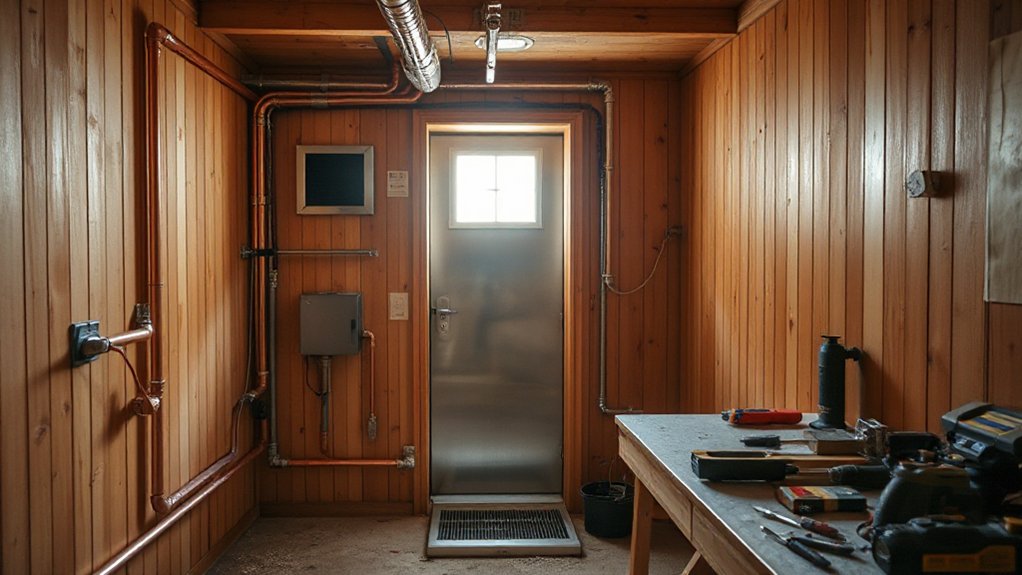
Before building a basement sauna, you must integrate electrical, plumbing, and structural considerations into the project plan to guarantee safety, code compliance, and long-term performance.
You address electrical wiring and load calculations, dedicated circuits, GFCI protection where required, and enclosure access for inspections.
Plumbing fixtures, drainage, venting, and any condensate management must align with local codes.
Structural elements require load-bearing assessments, moisture barriers, and thermal bridging mitigation.
The design minimizes trip hazards and maintains clearances around panels and equipment.
- Confirm electrical service capacity and circuit layouts with a licensed electrician.
- Specify waterproof, code-compliant plumbing connections and drainage routing.
- Verify enclosure framing, studs, and insulation tolerate moisture and heat.
- Plan access panels, service clearances, and seismic or structural considerations as applicable.
Materials, Finishes, and Safety for a Cozy Sauna
To create a cozy sauna, select materials and finishes that withstand heat, humidity, and frequent moisture exposure while meeting safety standards and code requirements.
Choose dimensionally stable woods, corrosion-resistant fasteners, and vapor barriers that minimize thermal bridging. Use low-emission, moisture-tolerant panels for interior seams to reduce mold risk, and apply finishes rated for high heat without off-gassing.
Install sauna lighting that’s sealed, rated for damp environments, and positioned to avoid heat concentration on occupants. Guarantee electrical components remain accessible and comply with retrofit or new-construction codes.
Consider aromatherapy options integrated through certified dispensers or diffusers with appropriate heat ratings and ventilation.
Prioritize automatic safety devices, such as overheating and door-release mechanisms, and document maintenance schedules for filters, seals, and gaskets.
Frequently Asked Questions
How Long Does It Take to Install a Basement Sauna?
Typically, it takes 1–2 weeks for installation, depending on finishes and permits. You should plan for precise sauna insulation and electrical wiring, ensuring codes are met. You’ll coordinate inspections, grounding, and moisture barriers, maintaining safe, compliant working conditions throughout.
What Is the Typical Cost Range for Basement Saunas?
A typical basement sauna costs roughly $4,000 to $12,000, depending on materials and finish; you’ll balance sauna materials and installation. Consider ventilation requirements, wiring, insulation, and heater type to stay within budget, avoid costly overruns, and optimize performance.
Can I Relocate a Finished Sauna Later Easily?
Yes, you can relocate a finished sauna, but consider portability limits, wall wiring, and floor finish. Sauna relocation requires careful planning with certified electricians, reinforcing structures, and potential modular components for a portable sauna versus fixed installations.
Do Basements Require a Dedicated Sauna Heater Exhaust?
Yes, basements require dedicated exhaust ventilation for a sauna heater. Guarantee proper exhaust venting, clearance, and air flow to prevent moisture buildup and maintain safe operation; inadequate ventilation risks carbon monoxide and humidity-related damage.
Are Portable Saunas Effective for Basement Use?
Portable sauna is moderately effective for basement use, but you’ll notice lower humidity and heat consistency than full-size units. The effectiveness comparison favors dedicated rooms; you gain portability, while performance depends on insulation, venting, and timer controls.
Conclusion
To finish, you’ll guarantee safety, reliability, and comfort by validating space, ventilation, and electrical capacity before installation. Document all clearances, moisture barriers, and GFCI-protected circuits, then select heat sources, benches, and controls rated for basement environments. Adhere to local codes and manufacturer instructions, maintain proper insulation and humidity management, and implement routine inspections. With meticulous planning, your basement sauna becomes a durable, serene retreat—unquestionably the single most transformative renovation you’ll undertake, beyond compare.