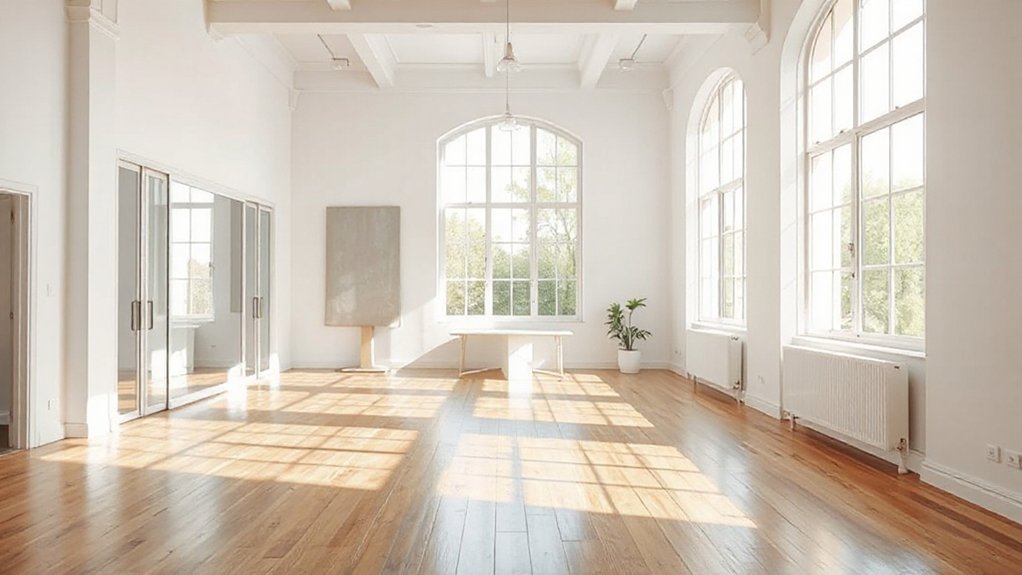
To maximize natural light in converted commercial properties, map your windows and obstructions, then optimize layout to align work zones with daylight paths. Choose high-performance glazing with low-emissivity coatings and glare control, and use vertical and horizontal layouts that distribute light evenly while preserving views. Implement exterior shading and reflective interior finishes to reduce heat gain and enhance brightness year-round. Automate daylight harvesting and maintain clean glazing; stick with sustainable materials. If you keep exploring, you’ll discover deeper strategies.
Assessing Daylight Potential in Existing Windows

To evaluate daylight potential in existing windows, start by mapping window locations, sizes, and orientations and compare them to the building’s usable interior areas. You’ll quantify daylight availability with metrics like daylight factor, window-to-wall ratio, and potential glare, then identify gaps where glazing can be optimized.
Consider iterative shading and spacing adjustments that preserve privacy while maximizing luminous efficiency. Integrate urban greening strategies adjacent to facades to enhance ambient daylight diffusion and reduce heat gain.
Assess acoustic insulation alongside light performance to ensure comfort without tradeoffs. Document constraints from structural elements, HVAC plenums, and fire-rated assemblies, proposing targeted retrofit options such as low-emissivity glazing, skylight inserts, or slender glazing mullions.
Conclude with a prioritized action plan aligned to sustainability goals and energy models.
How to Read a Space for Daylight: Orientation Basics
Which directions matter most for daylight? You’ll map a space by its sun path and solar angles, translating geometry into daylight potential. Begin with room orientation and window lines, noting where openings capture direct sun and where shading helps regulate glare.
Track projected sun arcs across seasons, using simple sketches or software cues to anticipate peak exposure. Consider ceiling height, floor plate, and dominant axis to gauge light diffusion; longer sightlines boost perceived brightness when strategically lit from multiple elevations.
Use obstructions—adjacent buildings, trees, or internal partitions—to predict shading patterns and reflectivity. Optimize layouts by aligning work zones with natural glow while preserving views.
In practice, modest shifts in orientation can yield consistent daylight without sacrificing energy or comfort.
Prioritizing Window Orientation for Brightness
Window orientation should drive brightness strategy, not merely window count. You assess how the building’s footprint, surrounding context, and site constraints influence daylight access before selecting openings.
Prioritize window placement that aligns with solar orientation to maximize midday and afternoon light while minimizing glare and overheating. In practice, map sun paths across seasons and heighten verticals and glazing at faces receiving consistent daylight.
Favor longer façades toward open sky or reflective surfaces, and staggered proportions to reduce shadows from adjacent structures. Your approach should integrate shading strategies, mullion spacing, and operable vents to sustain comfort without compromising brightness.
Document daylight metrics early—illuminance targets, uniformity, and contrast—and iterate during draft designs. This disciplined method sustains efficiency, aesthetics, and occupant well-being through responsible solar orientation decisions.
Choosing Glazing That Boosts Brightness and Efficiency

- Prioritize window coatings that optimize glare reduction without dulling brightness.
- Select glass insulation that minimizes heat flow while maximizing daylight.
- Use insulated glazing units with tempering or laminated layers for safety and strength.
- Evaluate frame materials for thermal breaks and sustainable sourcing.
This approach keeps interiors luminous, energy-efficient, and resilient, aligning with responsible retrofits and long-term performance.
Designing Glazing Layouts to Maximize Interior Visibility
Prioritize vertical and horizontal glazing scales that optimize daylight distribution without causing glare, relying on calibrated apertures and shading where needed. Glass enhancements, such as low-emissivity coatings and selective tints, reduce heat gain while preserving color fidelity and readability of interiors from outside.
Use modular glazing bands to create legible interior horizons that assist orientation and wayfinding. Document sightline metrics, verify with mockups, and iterate based on occupant feedback to sustain a bright, comfortable, and energy-efficient environment.
Layout Strategies: Opening Sightlines and Improving Flow
You can open sightlines to connect key zones, guiding natural light through shared spaces while preserving privacy where needed.
By prioritizing enhanced flow, you’ll improve spatial circulation and reduce bottlenecks, supporting a livelier, more sustainable footprint.
We’ll explore layout strategies that balance openness with defined routes to optimize light, movement, and function.
Opening Sightlines, Enhanced Flow
Opening sightlines and improved flow are about guiding the eye and the path through a converted space so occupants can move efficiently without feeling crowded. You’ll align openings, furniture, and verticals to reduce obstacles, while preserving daylight penetration and material honesty.
Consider acoustics and structure as integrated design drivers, not afterthoughts.
- Use low-profile partitions to maintain sightlines while defining zones.
- Align doorways and openings with primary light axes to amplify brightness without glare.
- Employ consistent material palettes and reflective surfaces to enhance perceived space.
- Introduce subtle vertical cues—columns or built-ins—that support interior acoustics and structural reinforcements.
This approach keeps circulation intuitive, supports sustainable finishes, and preserves daylight-led ambience.
Spatial Circulation Improvements
To optimize spatial circulation, align openings and pathways with the building’s primary light axes while preserving daylight and sightlines. You’ll maximize natural illumination by designing through-access routes that skim walls and avoid blocking skylights.
Orient corridors and reveals to minimize shade casting on work zones, so daylight travels deeper into rooms. Prioritize open sightlines between reception, work areas, and common spaces, reducing awkward detours and enhancing wayfinding.
Use furniture arrangement to cue flow; place low-profile pieces to maintain line of sight, and cluster seating to support quick progressions without obstructing sun paths. Integrate acoustic treatment where circulation interfaces meet quiet zones, balancing sound with openness.
Choose modular formats to reconfigure as needs shift, sustaining daylight, reuse, and adaptability. Continuous evaluation guides iterative refinements for sustainable circulation improvements.
Practical Strategies to Invite Daylight Into Every Zone
Natural daylight must reach every zone, so start with a zoned daylight plan that maps how windows, skylights, and reflective surfaces illuminate each area. You’ll align openings to occupancy patterns, minimize glare, and preserve contrasts for depth, all while supporting Historical preservation and acoustic treatment goals.
- Map daylight zones by function and light quality.
- Prioritize skylights in depth areas, clerestories for perimeter rooms.
- Calibrate reflectors and light shelves to bounce daylight without oversaturation.
- Integrate automated shading and dimming linked to occupancy sensors.
This approach keeps systems sustainable, maximizes usable daylight, and respects historic fabric. You’ll document maintenance access and upgrade compatibility, ensuring resilient performance and a refined, daylight-driven workflow across the property.
Surfaces That Reflect Daylight Effectively
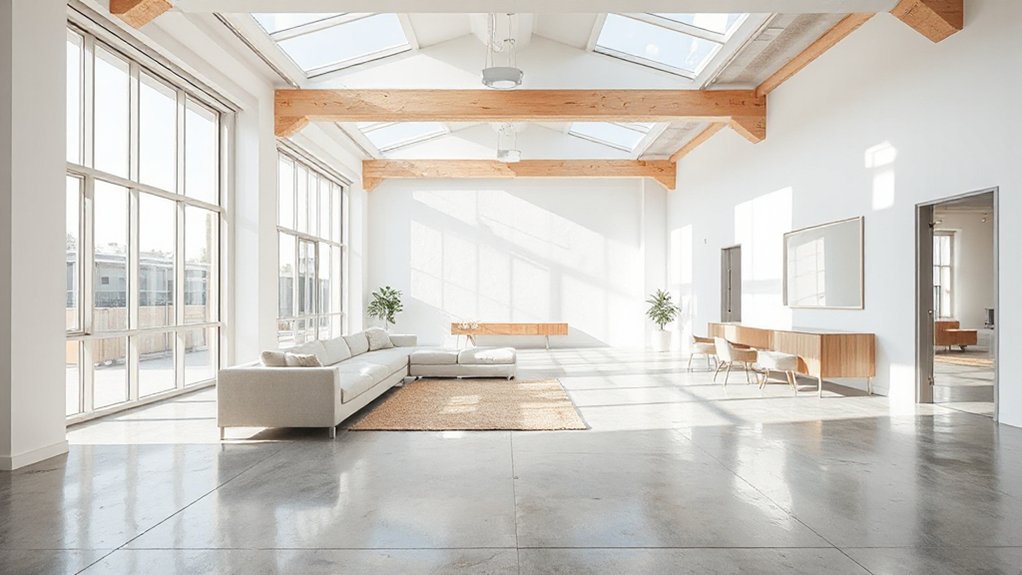
You’ll want reflective wall surfaces and daylight-friendly finishes that amplify available light without adding glare.
Consider materials and hues that bounce brightness softly, reducing the need for artificial illumination. This sustainable approach keeps spaces legible and energy-efficient while supporting a cohesive, modern aesthetic.
Reflective Wall Surfaces
- Select high-reflectance wall finishes with diffuse reflectivity to minimize hotspots.
- Use light, cool-toned palettes that preserve color accuracy and enhance perceived brightness.
- Prioritize seamless joints and smooth textures to prevent glare and uneven reflections.
- Incorporate durable, low-maintenance coatings that resist fading and cleaning abrasion.
Think strategically about materials, finish coats, and lighting coordination. Reflective surfaces optimize daylighting, enabling smaller radiators or fixtures.
Daylight-Friendly Finishes
Use matte whites, light grays, and pale pastels on walls and ceilings to sustain a neutral, luminous base. For floors, select high-reflectance, durable surfaces like polished concrete or ceramic tile with a light finish, avoiding glossy sheens that trap heat.
Window tinting can modulate glare without sacrificing perceived brightness, preserving true daylight quality.
Plan exterior and interior layouts around plant placement to break harsh shadows and create living light diffusion.
Maintain contrast control with strategic accents and sustainable coatings that resist fade, ensuring consistent daylight performance over time.
Light-Colour Palettes for Walls, Ceilings, and Furniture
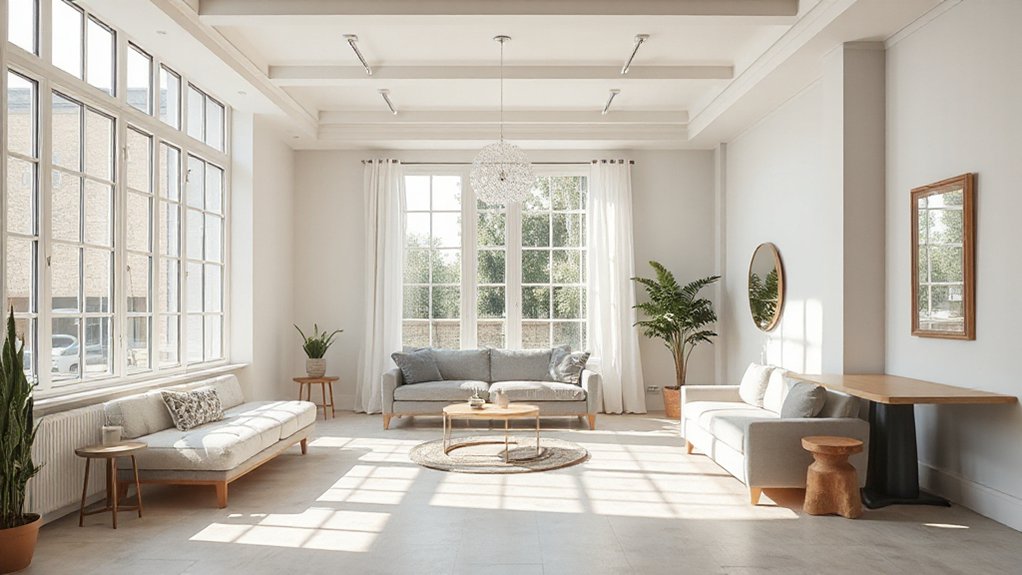
Choosing light-color palettes for walls, ceilings, and furniture hinges on maximizing reflected daylight while maintaining a cohesive, sustainable aesthetic. You’ll balance brightness with depth, selecting finishes that endure while staying true to color psychology principles and paint durability.
- Opt for soft, warm whites or pale grays to expand perceived space without glare.
- Use slightly tinted whites on ceilings to boost luminance without overpowering rooms.
- Pair cool wall tones with warm furniture accents to sustain visual cohesion.
- Prioritize low-VOC, durable paints that resist fading under diffuser daylight.
This approach preserves daylight fidelity, supports energy efficiency, and keeps furnishings timeless.
Layering Light: Task, Ambient, and Accent Sources
Layering light in converted commercial spaces hinges on balancing task, ambient, and accent sources to sustain clarity and energy efficiency. You optimize workflow by pairing task lighting with focused zones near desks, counters, and workstations, using directional Lighting fixtures to minimize glare.
Ambient layers, like ceiling luminaires or wall washes, create a comfortable baseline without washing out daylight cues. Accent lighting highlights architectural features, textures, or artwork, adding depth without increasing energy demand.
Choose dimmable options and tune color temperatures to match time of day and activity. Guarantee power sources are accessible and labeled, with discreet wiring and surge protection.
Together, these layers support performance, reduce fatigue, and preserve daylight integrity while maintaining a sustainable electrical footprint.
Freeing up Sightlines With Open Plans and Strategic Zones
Open plans facilitate sightlines by reducing partition clutter and guiding circulation, while strategic zones preserve focus and safety. You’ll balance openness with defined areas to sustain productivity and energy efficiency in urban renewal contexts and compliant commercial zoning.
- Align layouts to maximize daylight corridors and minimize obstructions.
- Use low-profile partitions and transparent materials to maintain visibility.
- Design zones with clear circulation paths and acoustic considerations.
- Integrate programmable controls that adapt to occupancy and daylight levels.
In practice, this approach sustains transparency without compromising privacy or safety. You’ll preserve long sightlines for supervision and wayfinding while creating productive pockets.
The result: a flexible, sustainable plan that respects urban renewal goals and commercial zoning constraints, enabling brighter interiors and smarter, resilient use of space.
Window Treatments That Maximize Daylight Without Glare

As you optimize daylight from your open-plan strategy, selecting window treatments that boost natural light while preventing glare becomes a practical, sustainable choice. You’ll prioritize solutions that preserve views and reduce contrast without washing out color.
Window films provide controllable diffusion and UV reduction, maintaining clarity while minimizing glare on screens and work surfaces. They’re unobtrusive, easy to maintain, and applicable to a range of glazing types.
Curtain styles should complement daylight distribution, favoring light, breathable fabrics or minimalist profiles that don’t obstruct sightlines. Consider duo or layered approaches: films for glare control, paired with sheer curtains to modulate brightness softly.
Choose finishes and installation heights that harmonize with ceiling lines and task zones, sustaining energy efficiency and visual comfort.
Thermal Comfort While Increasing Daylight
You’ll balance daylight gains with thermal loads by pairing smart fenestration and shading to keep interior temps comfortable.
Consider daylight-thermal metrics that guide design decisions, ensuring radiant and convective heat are controlled without sacrificing openness.
This sets a measurable path for sustainable comfort as you increase daylight exposure.
Daylight and Thermal Balance
Strategically balancing daylight with thermal comfort is essential when increasing natural light in converted commercial spaces. Thoughtful glazing, shading, and ventilation choices prevent overheating while maximizing luminance.
- Prioritize high-performance glazing layouts that respect Historical preservation and minimize thermal bridges.
- Use operable shading and selectively tinted glass to modulate solar gain without compromising daylight quality.
- Integrate passive ventilation strategies and controllable airflow to sustain comfortable temperatures year-round.
- Verify structural integrity during retrofits, ensuring added glazing doesn’t compromise beam connections or loads.
This approach blends technical rigor with sustainable design, delivering bright interiors without sacrificing comfort or heritage value.
You’ll achieve consistent daylight penetration, stable thermal conditions, and a refined aesthetic that respects existing fabric while supporting modern occupant needs.
Comfort Metrics for Design
Use adaptive thermal comfort standards to determine acceptable time windows when internal temperatures drift with sun exposure.
Prioritize envelope strategies that maintain comfort without sacrificing daylight, such as responsive shading and high-performance glazing.
Integrate natural ventilation as a control lever to relieve unintended heat buildup while preserving visual connection to exterior spaces.
Plan for acoustic insulation to prevent disturbances that may force occupants to operate HVAC at higher power.
Document metrics, monitor outcomes, and adjust approaches to sustain comfort and sustainability.
Skylights and Clerestories: Options and Feasibility
Skylights and clerestories offer a direct path to daylight in converted commercial spaces, but their feasibility hinges on structure, orientation, and thermal performance. You’ll assess load implications, roof direction, and insulation gaps before committing to skylight installation or clerestory feasibility studies. Precision planning minimizes heat gain and glare while maximizing daylight symmetry.
- Evaluate structural capacity and risk of leaks to guarantee durable skylight installation.
- Align roof orientation with sun path to optimize daylight transfer year-round.
- Compare glazing options (low-e, double/triple glazing) for thermal control.
- Model shading, condensation, and ventilation impacts to preserve interior comfort.
Invest smarter with weather-tight prototypes and performance data. Target sustainable outcomes, minimize energy use, and preserve building envelope integrity while boosting natural light penetration.
Outdoor Shading’s Role in Year-Round Brightness
How does outdoor shading influence year-round brightness in converted commercial spaces? Outdoor shading moderates solar gain without sacrificing daylight, letting you control heat and glare while preserving the luminance you need.
In hot seasons, variables like overhangs, louvers, and shading trees trim high-angle sun, reducing cooling loads and preserving interior brightness through diffuse daylight.
In cooler periods, properly angled shading minimizes incidental heat loss while still admitting sufficient light, supporting natural ventilation and reducing reliance on artificial lighting.
Select systems with adjustable, low-maintenance components to suit seasonal shifts. Integrate shading with façade design to harness daylight when possible and block it when necessary.
This approach sustains bright interiors sustainably, aligning with energy targets and occupant comfort.
Daylight-Friendly Colour Psychology for Mood and Productivity
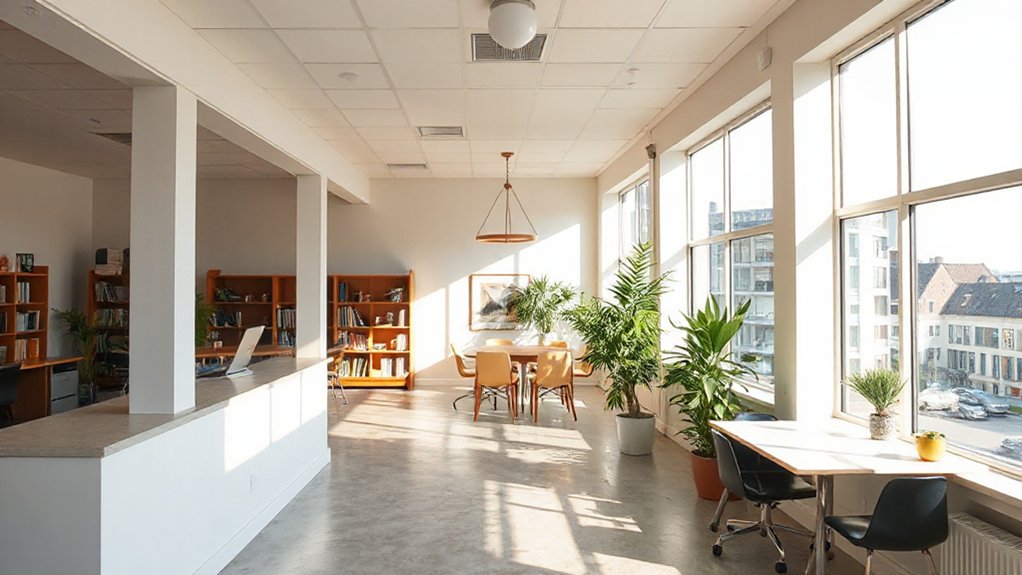
You’ll align daylight-driven palette shifts with the building’s natural light to maintain true colors throughout the day.
Mood boosts emerge from carefully chosen hues and contrasts that respond to changing daylight, keeping spaces inviting without glare.
This approach supports productivity by balancing color temperature, saturation, and contrast to optimize focus and well-being.
Daylight-Driven Palette Shifts
- Schedule lighting and paint choices to mirror outdoor light temperature changes.
- Favor cool-toned whites for morning glare control and warm tones for afternoon warmth.
- Pair high-reflectance surfaces with muted accents to preserve legibility and reduce fatigue.
- Validate palettes with daylight simulations to confirm consistency from dawn to dusk.
Mood Boost Through Hues
Harness daylight-friendly hues to elevate mood and productivity by aligning color temperature and saturation with natural light shifts throughout the day. You’ll leverage color psychology to shape daily rhythms, choosing temperature ramps from cool to warm that mirror sun position while preserving focus zones.
Implement subdued saturation in high-contrast work areas and reserve brighter accents for collaborative spaces, enabling subtle progressions that don’t fight daylight. Color therapy informs material choices, where textiles and finishes reflect illumination, reducing glare and refracting light evenly.
Maintain a natural ambiance by integrating earthy neutrals with strategic pops that energize without overwhelming. Document measurable outcomes: perceived well-being, task accuracy, and dwell time.
Sustainable interiors align performance with optics, ensuring long-term illumination harmony across occupancy patterns and seasonal changes.
Productivity With Color Contrast
Daylight-responsive color contrast leverages perceptual differences in hue, value, and saturation to guide attention, reduce fatigue, and sustain focus across varying daylight conditions. You’ll harness daylight psychology to sharpen tasks, minimize errors, and preserve energy throughout the workday.
Implement color signals that align with natural cycles and material sustainability, avoiding over-saturation that harms clarity. Use high-contrast pairings for critical interfaces and softer tones for backgrounds to reduce glare without sacrificing legibility.
- Establish primary tasks with bold, perceptually distinct colors
- Pair neutrals with strategic accents to cue sequences
- Align wall and furniture tones with daylight transitions
- Test for contrast accessibility across windows and screens
Color contrast supports productivity by balancing visibility and calm, reinforcing daylight psychology in a sustainable, efficient environment.
Simple Measurements to Quantify Daylight Impact
To quantify daylight impact in a converted commercial space, start with simple, repeatable measurements that directly relate to occupant comfort and energy use. You’ll track daylight factor, illuminance at desk height, and hourly daylight autonomy to gauge usable daylight.
Use calibrated light meters at representative workstations to capture peak, average, and minimum lux during typical hours. Combine this with room dimensions and glazing area to compute the daylight factor and potential glare indices, informing placement and shading decisions.
Record occupancy patterns and HVAC feedback to link natural light with energy use. Historical preservation and acoustic considerations shape glazing choices, frame alignment, and reverberation-friendly floor plans.
Keep data consistent across seasons, enabling sustainable, measurable improvements without compromising heritage values or acoustic performance.
Cost-Effective Upgrades and Maintenance for Lasting Brightness
Smart, budget-conscious upgrades extend brightness without compromising heritage or acoustics. You’ll pursue cost-conscious enhancements that keep structure integrity while maximizing daylight performance through practical fixes and smart systems.
- Prioritize lighting automation to tune daylight harvesting, reducing artificial load when sunlight suffices.
- Upgrade reflective surfaces and low-emissivity glazing around skylights to amplify brightness with minimal heat gain.
- Install energy-efficient LEDs paired with motion and daylight sensors for targeted, responsive illumination.
- Integrate Solar energy options like PV-ready roofing and battery storage to offset daytime usage and maintain brightness through cloudier periods.
Maintenance focus: clean glazing seals, inspect louvers, and monitor controls quarterly. This approach sustains brightness, lowers operating costs, and aligns with sustainable heritage preservation.
Frequently Asked Questions
How Do You Measure Daylight Effectiveness in a Converted Space?
You measure daylight effectiveness by luminance levels and daylight factor, then compare against targets during habitable hours, while monitoring daylight autonomy. You optimize with blinds, sensors, and shading, balancing artificial lighting and energy efficiency for sustainable performance.
Which Wall Orientations Yield the Most Usable Daylight?
You lean on sunlit arcs like rivers in Tellus; east or west façades yield the most usable daylight. You optimize window placement, install shading solutions, and design for glare control, maximizing efficiency without sacrificing style or sustainability.
Can Small Glazing Changes Transform Interior Brightness Significantly?
Yes, small glazing changes can noticeably boost interior brightness, especially with thoughtful curtain walls and transoms. You’ll improve interior aesthetics, while boosting energy efficiency, by optimizing daylight distribution, glare control, and thermal performance with sustainable materials.
What Are Budget-Friendly Fixes to Reduce Glare yet Increase Light?
Glare fades like night into day; you balance brightness with crisp interior color and thoughtful window treatments. You swap harsh reflections for softened light, using sustainable, technically sound fixes that keep spaces stylish, functional, and energetically efficient.
How Do Occupancy Patterns Affect Daylight Performance Readings?
Occupancy patterns shift daylight performance readings; you’ll see peaks and troughs that drive architectural aesthetics adjustments while respecting historical preservation. You adapt shading, layouts, and scheduling to sustain sustainable lighting, ensuring occupants experience consistent, energy-efficient illumination throughout the day.
Conclusion
You can prove a small theory: brighter spaces boost well‑being and productivity more than you expect. By embracing daylight strategies—from reading windows to optimizing glazing, layouts, and shading—you’ll see measurable gains in energy efficiency and occupant mood. It’s not magic; it’s physics plus design. As you test and iterate, you’ll uncover sustainable, cost‑effective upgrades that last. Trust the daylight data, stay curious, and let your converted spaces reveal their true luminosity.